Newsroom
View news releases and announcements distributed by EZ Newswire, the trusted source for business news.
John J. Malm & Associates Obtains $495,000 Settlement in Roadway Defect Motorcycle Injury Case Against City of Chicago
The Illinois personal injury law firm of John J. Malm & Associates has secured an out-of-court settlement of $495,000 on behalf of a motorcyclist and his passenger who were seriously injured after their motorcycle struck a dangerous roadway defect on Chicago’s Lake Shore Drive.
The claim arose from a motorcycle crash in the 2000 block of South Lake Shore Drive, where a pavement buckle that had previously been patched, but never properly repaired, created a raised section of asphalt resembling a speed bump. The defect created a hazardous condition for motorists traveling along one of the city’s busiest lakefront corridors.
At the time of the crash, the plaintiffs were traveling southbound on Lake Shore Drive as part of a group of three motorcycles riding together. As the riders proceeded through the area, they encountered the raised pavement buckle in the roadway.
Witness testimony became an important part of the case. The two motorcyclists riding with the plaintiffs both provided eyewitness accounts during the litigation. Each testified that they observed a vehicle traveling ahead of the motorcycles strike the raised section of pavement, bottom out, and emit sparks before losing control and leaving the roadway.
Moments later, the plaintiffs’ motorcycle encountered the same roadway defect. When the motorcycle struck the raised pavement buckle, the sudden elevation change caused the bike to bottom out violently, sending sparks from the underside of the motorcycle and destabilizing the vehicle. The operator lost control, and both riders were ejected from the motorcycle as it left the roadway, resulting in significant injuries to the driver and his passenger.
The motorcycle operator suffered severe traumatic injuries, including a brain bleed, skull fracture, and separated shoulder, requiring emergency medical treatment and follow-up care. His passenger, who was also his wife, sustained a concussion, wrist injuries, hip injuries, and multiple soft tissue contusions because of the crash. Both plaintiffs required medical treatment following the incident.
The claim against the City of Chicago alleged that the dangerous roadway condition was caused by a pavement buckle that had been patched but never properly repaired, leaving a raised portion of asphalt that functioned much like an unintended speed bump in the roadway. According to the plaintiffs, the condition posed a particular danger to motorcyclists, whose vehicles have lower ground clearance and are especially vulnerable to abrupt changes in roadway elevation.
The City of Chicago argued that it had not yet undertaken permanent repair of the roadway defect due to municipal budget constraints and broader infrastructure priorities. The City also asserted a legal defense based on municipal tort immunity under Illinois law. Under the Illinois Local Governmental and Governmental Employees Tort Immunity Act, municipalities are often protected from liability for discretionary policy decisions, including how public funds are allocated for infrastructure repairs.
Attorneys for the plaintiffs argued that the City nevertheless had a duty to maintain the roadway in a reasonably safe condition for motorists. The case focused on whether the failure to properly repair the pavement buckle constituted a breach of that duty.
Evidence gathered during the case included witness testimony, documentation regarding the roadway condition, and analysis of the patched pavement buckle that had created the raised surface in the roadway. The testimony from the two accompanying motorcyclists was particularly significant because it demonstrated that another vehicle had struck the same roadway defect moments earlier, producing sparks and losing control before the plaintiffs reached the location. This sequence of events helped establish that the roadway condition posed a serious hazard to motorists traveling through the area.
Motorcycles are particularly susceptible to roadway hazards because they rely on two wheels for stability and generally have far less ground clearance than passenger vehicles. A raised pavement buckle, especially one encountered at highway speeds, can cause the underside of a motorcycle to strike the pavement, potentially destabilizing the bike and causing the rider to lose control.
Lake Shore Drive is one of Chicago’s most heavily traveled roadways, carrying large volumes of commuter and recreational traffic along the lakefront each day. Maintaining the roadway surface in safe condition is critical to ensuring that motorists can travel safely through the area.
Lead attorney Marilynn Frangella of John J. Malm & Associates represented the injured plaintiffs in the case. “This case involved a pavement buckle that had been patched but never properly repaired, leaving a raised section of asphalt that created a dangerous hazard for motorists,” Frangella said. “Our clients suffered serious injuries when their motorcycle suddenly encountered the raised surface, and they were thrown from the bike. The evidence showed that the City had constructive notice of the dangerous roadway condition and failed to correct it.” When a municipality has notice of a hazardous roadway defect, Illinois law requires them to take steps to repair it.
Through fierce advocacy, John J. Malm & Associates reached a $495,000 settlement, resolving the claims brought by both injured plaintiffs.
Chicago personal injury attorney, John Malm, explained that the case highlights the importance of roadway safety and municipal responsibility. “Motorcyclists are uniquely vulnerable to roadway defects because even relatively small changes in pavement elevation can cause a motorcycle to lose control,” Malm said. “Illinois law requires municipalities to maintain roadways in a reasonably safe condition to prevent a crash.”
The settlement reached by the firm compensates the injured couple for their medical treatment and injuries and brings the litigation to a conclusion. For the plaintiffs, the resolution allows them to finally move forward after a serious and traumatic crash.
About John J. Malm & Associates Personal Injury Lawyers
John J. Malm & Associates is an Illinois personal injury firm that serves clients throughout the Chicagoland area and its western suburbs with offices in Naperville and St. Charles. Our top-rated personal injury lawyers represent injured victims of automobile accidents, medical malpractice, product liability, work injuries, nursing home abuse and neglect, dog attacks, slip and fall, premises liability, wrongful death, and other accident and injury claims. For more information, visit www.malmlegal.com.
Disclaimer
This press release was distributed by Law Firm Newswire.
Media Contact
John Malm
John J. Malm & Associates
marketing@malmlegal.com
+1 630-527-4177


Watson Farley & Williams Selects Laurel as Its Global AI Time Platform
International law firm Watson Farley & Williams (WFW) will roll out Laurel to all 800 fee earners across its international network, establishing a single, firmwide platform for recording time and understanding how work happens.
WFW selected Laurel as its global AI Time platform following an extensive and market-wide evaluation process.
The firm identified Laurel as the platform best positioned to deliver compliant, automated time collection and meaningful visibility into work across matters, teams, and clients. It will deploy Laurel globally with a structured implementation plan to ensure rapid adoption and integration into day-to-day workflows.
Joby Tyler, Chief Information Officer at Watson Farley & Williams, said:
“Our evaluation process was deliberate and thorough. We needed a platform that could operate at global scale while integrating seamlessly into how our lawyers’ work. Laurel stood out for end-user experience, its ability to capture and structure time data efficiently and accurately, and turn this into actionable insights. Feedback from existing customers was incredibly positive, the deployment so far has been fast and smooth, and the Laurel team responsive and agile.”
Lindsey Keeble, Managing Partner at Watson Farley & Williams, added:
“We are excited to team up with Laurel as our global AI time partner. This is one of many strategic steps we are taking on our innovation journey. It will help us better understand how work actually gets done across our offices, while also making daily life easier for everyone who records time. With clearer visibility and a smoother process, we’ll be able to make better decisions, improve client service and move toward a more modern, practical way of working.”
Ryan Alshak, CEO and co-founder of Laurel, said:
“WFW ran a world-class evaluation process which set the bar for how law firms will evaluate their time and billing needs in the age of AI. Their decision to partner with Laurel and deploy across all 800 fee earners is a signal of their commitment to build the leading data-driven law firm. We are excited to partner with one of world’s leading firms to deliver that outcome.”
Emil Dyrvig, Chief Revenue Officer at Laurel, added:
“Selecting a single global platform and committing to full firmwide adoption from day one is a decisive move. WFW is not experimenting but are operationalizing AI across their entire organization. That is exactly what it takes to unlock real value.”
About Laurel
Laurel is the world’s first AI time platform for professional services firms. The company's AI transforms how organizations track, analyze, describe, and optimize their most valuable resource: time. By automating work time and connecting time data to business outcomes, Laurel enables firms to increase profitability, improve client delivery, and make data-driven strategic decisions. Founded in 2018, Laurel serves many of the world's largest accounting, consulting and law firms. For more information, visit www.laurel.ai.
About Watson Farley & Williams
Watson Farley & Williams is an international law firm with a focus on the energy, infrastructure and transport sectors. With offices in Athens, Bangkok, Dubai, Dusseldorf, Frankfurt, Hamburg, Hanoi, Hong Kong, London, Madrid, Milan, Munich, New York, Paris, Rome, Seoul, Singapore, Sydney and Tokyo our 700-plus lawyers work as integrated teams to provide practical, commercially focused advice to our clients around the world. For more information, visit www.wfw.com.
Media Contact
Alexa Guerra
alexa@laurel.ai


Elithair’s Hair Loss Report Highlights Male Confidence Dip as 55% of British Men Worry About Their Hairline
Elithair, a leading hair transplant clinic certified by the Turkish Health Ministry, recently released its new study, “Hair Loss Impact: U.K. Hair Confidence Report 2026,” examining how hair loss affects men’s self-confidence, social experiences, and mental well-being across the United Kingdom. Elithair conducted the research in collaboration with Censuswide in November 2025, surveying 2,000 U.K. men aged 18 and older.
The report provides insight into how appearance-related pressures — particularly hair loss — are shaping confidence and behaviour in an era of increased social comparison.
The research uncovered that over half of men (55%) were worried about their hairline receding, with 48% also reporting that their hairline is likely to impact their self-confidence. The concern is even stronger among younger men, with 65% of men aged 18–24 reporting that their hairline affects their confidence.
Hair loss was cited as one of several appearance-related factors that influence men’s confidence in the report. Respondents ranked teeth (68%), weight (66%), build and muscles (52%), complexion and skin (50%), and hairline (48%) as the features most likely to affect self-confidence.
While hair concerns ranked fifth overall, they were among the most prominent when respondents were asked which factors were “highly likely” to impact confidence. In that category, hairline concerns ranked third (21%), followed closely by hairstyle (20%).
Notably, the impact of hair loss is keenly felt amongst respondents. According to the survey, men experiencing hair loss were more likely to report negative feelings about their appearance, including feeling older (34%), unattractive (27%) and unhappy (25%). By contrast, having a full head of hair was associated with feelings of confidence (48%), happiness (38%) and attractiveness (37%).
This underscores the rising interest in hair transplantation, which has become one of the most effective long-term solutions for hair loss. According to the ISHRS, more than 700,000 hair transplant procedures are performed worldwide each year, highlighting the growing global interest in surgical hair restoration and the empowerment people can find in restoring their hairline.
It’s also important to recognise the connection between appearance and an individual’s sense of wellbeing and confidence. Elithair’s research revealed that a quarter of all men (25%) say that their appearance negatively impacts their mental health.
In particular, younger generations are more likely to say their appearance negatively impacts their mental health, with 18–24-year-old men being almost two times more likely to report that their appearance negatively impacts their mental health than men aged 25–34.
Dr. Abdulaziz Balwi, co-founder and medical director at leading hair transplant clinic Elithair, discusses the effects of hair loss on mental well-being and shares advice for those experiencing a loss of confidence:
“Hair changes can deeply influence how a person feels, often leading to feelings of low self-esteem, anxiety, or even depression. Because hair is so closely linked to identity and personal appearance, thinning or loss can make individuals feel less confident or attractive and may cause them to withdraw from social or romantic situations. Despite how common it is, there is still a great deal of stigma surrounding hair loss, which can make individuals hesitant to speak openly about their experiences."
"When dealing with the emotional side of hair loss, it’s important to start by opening up about the way you’re feeling, whether that’s to a partner, friend, family member or licensed therapist. Discussing your feelings with others can bring comfort and help you see your experience from a more balanced point of view."
"Alongside emotional support, maintaining a consistent scalp and hair care routine is key. Even small things like using the right products for your hair type or implementing a consistent wash routine can improve appearance and self-esteem."
"When hair loss becomes more severe, it’s important to visit a qualified dermatologist or trichologist who can assess the cause and recommend appropriate treatment options. Depending on the type of hair loss, treatments may include medications, targeted therapies, or hair transplants designed to encourage healthy regrowth. These approaches not only enhance appearance but can also significantly boost personal confidence.”
Methodology
Elithair surveyed 2,000 nationally representative males in the U.K. aged 18-plus on the topics of appearance, confidence, and wellbeing in relation to physical attributes. The research was in collaboration with Censuswide and was conducted between November 18, 2025 and November 20, 2025.
About Elithair
Elithair is the largest hair transplantation clinic in the world, based in Istanbul, and has successfully treated over 150,000 patients so far. Led by founder Serdar Öztürk and co-founder Dr. Abdulaziz Balwi, the clinic offers leading, innovative procedures in the field of modern hair treatments. These procedures are unique to the practice and Dr. Balwi’s many years of experience in the industry. Now, Elithair brings its high-quality standards and Turkish expertise to the U.K. For more information, visit elithairtransplant.com.
Media Contact
Sash Opacsiti
contact@elithairtransplant.com


Transtek Advances Cellular Remote Patient Monitoring Solutions to Support Scalable Chronic Care
In response to the recent surge in the adoption of remote care models by healthcare providers, Transtek, a leading provider of remote patient monitoring (RPM) devices and solutions, has updated its medical-grade devices, connectivity technology, device management dashboards, and fulfillment services for telehealth partners. The company is open and scalable, allowing devices to be integrated into customers’ solutions, and leverages its expertise to help customers realize greater value, potential, and outcomes.
These improvements are designed to support chronic disease management while reducing the operational complexity often associated with remote monitoring programs. They simplify deployment and improve patient engagement.
Cellular Connectivity Simplifies Remote Patient Monitoring
A common barrier to RPM adoption is the technical complexity patients face during device setup. Many traditional monitoring setups involve smartphone pairing, app downloads, and stable internet connections, which may be challenging for some users.
Transtek has addressed these issues by developing cellular-enabled RPM devices with built-in 4G connectivity, allowing patients health data to be transmitted automatically without requiring smartphones or home Wi-Fi networks. By removing several setup steps, Transtek’s devices can help improve patient participation while reducing the technical support demands placed on healthcare providers.
“Our goal is to make remote monitoring as simple and reliable as possible for both patients and providers,” the company noted. “When devices connect automatically, healthcare teams can focus more on care delivery rather than technical troubleshooting.”
Transtek Devices and Solutions support Chronic Care Programs
Transtek’s ecosystem combines cellular-connected devices with a device management dashboard, giving healthcare providers real-time oversight to efficiently manage remote monitoring programs. The company offers a portfolio of connected RPM devices, including:
- Blood pressure monitors
- Weight scales
- Blood glucose monitors
- Pulse oximeters
Patient readings are transmitted automatically to the device management dashboard, where clinicians can access real-time health data to monitor trends and intervene when necessary. By integrating devices and platforms into a single monitoring ecosystem, Transtek aims to help healthcare providers deploy RPM programs more efficiently for diverse patient populations.
Advancing Healthcare Providers as RPM Adoption Grows
As remote monitoring becomes more widely adopted, healthcare providers are increasingly focused on solutions that balance clinical value with operational efficiency. Transtek’s approach emphasizes device reliability, simplified deployment, and scalable infrastructure that can support growing patient monitoring programs.
The company’s cellular device architecture helps reduce common deployment challenges such as connectivity issues, device configuration, and inconsistent patient usage — factors that can affect the success of RPM initiatives.
With remote patient monitoring playing a growing role in chronic care management, Transtek continues to expand its technology portfolio to support healthcare providers seeking practical and scalable monitoring solutions.
About Transtek
Founded in 2002, Transtek has established itself as a globally recognized leader in the manufacturing and supply of advanced medical devices, providing innovative device solutions to meet diverse healthcare needs. With more than two decades of healthcare technology experience, Transtek offers dedicated solutions for remote patient monitoring (RPM), chronic care management (CCM), and digital health programs. The company uses cellular and Bluetooth-enabled technologies to enhance the efficiency and accessibility of remote healthcare. Its connected medical devices seamlessly integrate with healthcare platforms, providing reliable, real-time data that empowers healthcare professionals to make informed decisions and improve patient outcomes. For more information, visit www.transtekcorp.com.

Opkey Introduces Design Studio Suite of Agentic-AI Capabilities That Slashes Cloud Application Implementation Timelines in Half
Opkey, provider of the leading Cloud Application Lifecycle Management (CALM) platform for Oracle, Workday, Salesforce, Coupa and more, today announced the launch of Opkey Design Studio a groundbreaking suite of agentic AI capabilities that extends Opkey’s platform to automate and standardize cloud application discovery and design from statement of work (SOW) creation through configuration.
Design Studio addresses one of the most challenging phases of cloud application implementations — discovery and design — which has traditionally been manual, fragmented, and high-risk. By applying agentic AI across SOW creation, discovery, design thinking and configuration, Opkey empowers systems integrators to accelerate delivery, improve traceability from sales to delivery, reduce rework, and focus teams on higher-value transformation and change management activities.
"Systems integrators face increasing pressure to deliver enterprise application programs faster with fewer resources while managing aggressive timelines and tight customer budgets," said Grae Gray, Executive Vice President of Strategic Innovation and Excellence at Opkey. "Opkey Design Studio transforms this equation by automating manual tasks that have historically consumed significant time and introduced risk. Our agentic AI approach brings continuous intelligence and traceability from SOW through configuration, helping eliminate scope creep, reduce delivery risk and protect margins, ultimately enabling SIs to deliver faster and more predictable programs while improving profitability and scalability."
Agentic AI Purpose-Built for Managing Cloud Application Lifecycles
Unlike horizontal LLM tools, Opkey Design Studio is powered by Argus, the industry’s first domain-specific model trained on decades of expertise and 200-plus terabytes of enterprise application and performance data. Opkey’s 20+ AI agents manage every phase of the application lifecycle — Define, Design, Configure, Test, and Train. SI partners receive their own secure copy of Opkey's AI to train on internal IP and best practices, ensuring differentiated methodologies and optimal design recommendations tailored to each firm’s delivery model.
Key capabilities include:
- SOW creation and automation: End-to-end traceability from statement of work through delivery, reducing scope creep and project overages.
- AI-powered discovery: Digital questionnaires with an AI copilot trained on comprehensive enterprise application knowledge, streamlining requirements, gathering and design thinking.
- Visual design set canvas: Modern, intuitive interface, enabling architects to visualize designs and make changes with drag-and-drop simplicity.
- BPMN-compliant business process modeling: AI-powered business process mapping, automating documentation and ensuring alignment between IT and business stakeholders.
- Design validation: Automated validation against system requirements, ensuring clean deployment from the start.
- Automated configuration: Direct system configuration from validated design sets, complete with unit testing, approval tollgates, and notifications.
- Unified project management: Visibility, traceability and enterprise-grade data security and compliance across the entire application lifecycle
Measurable Business Impact
Opkey Design Studio delivers significant competitive advantages for systems integrators:
- Up to 50% faster Oracle and Workday implementations through automated discovery, design and configuration.
- Reduced delivery effort by automating manual work, reducing reliance on manual FTE-heavy processes, and enabling consultants to focus on advisory services.
- Improved margins through reduced rework, lower risk, and optimized resource utilization.
- Increased project velocity, allowing firms to manage higher volumes of concurrent implementations and stand-up new business faster.
- Enhanced bid competitiveness with predictable delivery timelines and reduced costs.
- Superior customer experience through modern digital tools and faster alignment on future-state business processes.
Industry Recognition and Partner Validation
"Opkey frees us to focus our teams on business consulting rather than configuration consulting. By automating so many crucial yet time-consuming steps, we're able to reduce timelines by a third, giving 15–20 consultants per project the freedom to focus on providing their expert business guidance, rather than getting tied up in configuration quagmires,” said Howard Engle, Vice President, Solutions, Argano Oracle Business Unit. “We're able to plan, scope, and deliver implementations in 9–12 months — a process that used to take 18 months. We're reducing project costs by millions while actually reducing risk by leveraging automated testing and governance from day one."
"Opkey's agentic AI approach represents a meaningful advancement for systems integrators facing the challenges of enterprise modernization," said Mickey North Rizza, Sr. Vice President at IDC. "The platform brings continuous intelligence across the enterprise application lifecycle, addressing critical pain points around delivery speed, predictability, and margin protection."
Availability
Opkey Design Studio is available immediately for Oracle and Workday Systems Integrator partners. For more information, visit www.opkey.com/design-studio or contact sales@opkey.com.
Discover more about Opkey:
- Recent News: Discover more about this partnership and others in our Opkey Newsroom
- Customer Success: See how global leaders achieve operational excellence on our Customers Page.
- Product Innovation: Learn how Opkey’s Agentic AI-powered platform protects application investments by streamlining workflows and reducing risk.
- Insights & Trends: Stay ahead of industry shifts by reading the Opkey Blog.
About Opkey
Opkey is the leading Cloud Application Lifecycle Management (CALM) platform for Oracle Fusion, Workday, Salesforce, Coupa, and more. In a world where most large application initiatives struggle to achieve their expected benefits, Opkey delivers breakthrough value by reducing manual effort by 80%, enabling 30% faster go-lives, and lowering downtime risk by 92%.
Powered by Argus—the industry’s first domain-specific AI model trained on decades of expertise and more than 200 terabytes of enterprise application and performance data — Opkey’s 20+ AI agents manage every phase of the lifecycle: Define, Design, Configure, Test, and Train, helping organizations achieve faster ROI with lower risk.
Unlock the full value of your cloud application investments with Opkey. Learn more at Opkey.com.
Trinetix Joins SAP PartnerEdge Service Track to Expand Consulting Portfolio
Trinetix announced it has joined the SAP® PartnerEdge program in the Service track, expanding its consulting and managed‑services capabilities for SAP solution design, development, implementation and integration guidance.
The company said the partnership will help strengthen its global portfolio of services aimed at simplifying SAP technology landscapes and supporting enterprise modernization initiatives. “The collaboration reflects our commitment to reducing the complexity of enterprise systems and encouraging organizations to adopt clean‑core innovation,” said Sam Ferrise, CTO of Trinetix.
Trinetix provides support for SAP technology adoption, user enablement and digital adoption programs powered by WalkMe. The company said its work has helped enterprises reduce SAP technology‑related help‑desk tickets by 30%, accelerate onboarding by 25-40% and improve day‑to‑day productivity by 15-25%. It also reported up to $7 million in annual operational savings for clients through lower support demand, reduced training effort, and faster processing in financial workflows.
Following its experience scaling WalkMe across SAP environments, Trinetix said it joined SAP PartnerEdge to further expand its consulting potential in solution design, implementation and integration.
Boris Bukengolts, Chief Growth Officer (North America) at Trinetix, emphasizes the strategic importance of this expansion for client growth. “Our clients are seeking more than just standard implementation; they are looking for a design-forward, intelligent approach to modernization. Joining SAP PartnerEdge allows us to blend our deep expertise in AI-driven experience and automation with the power of the SAP ecosystem, ensuring our clients achieve a clean core that is ready for the future of intelligent business.”
About Trinetix
Trinetix is a global custom software development partner that brings ambitious ideas to life. Trinetix helps its clients to transform the way their business operates, serves, navigates industry changes, and sets new market standards. Trinetix specializes in delivering design-forward, award-winning technology solutions. As a strategic technology partner, Trinetix crafts a tailored user experience that also drives top and bottom-line growth. Trinetix team of experts in Al, GenAl, machine learning, automation, mobile, cloud, user experience, and full platform and product development have delivered thousands of successful engagements over the past 15 years. Headquartered in Nashville, Tennessee, Trinetix employs more than 1,000 industry professionals, operating across three continents, including the United States, Europe, and Latin America. For more information, visit www.trinetix.com.
About SAP
As a global leader in enterprise applications and business AI, SAP (NYSE: SAP) stands at the nexus of business and technology. For over 50 years, organizations have trusted SAP to bring out their best by uniting business-critical operations spanning finance, procurement, HR, supply chain, and customer experience. For more information, visit www.sap.com.
About WalkMe
WalkMe, an SAP company, pioneered the world’s leading Digital Adoption Platform, enabling organizations to navigate the change brought on by technology. Leveraging over a decade of experience, WalkMe’s platform integrates generative AI to deliver proactive, accessible, and actionable insights. Our context-aware solutions guide users through any workflow, identifying and resolving digital friction to ensure seamless execution of critical processes across all departments. Trusted by global leaders like IBM, Nestlé, ThermoFisher Scientific, and the U.S. Department of Defense, WalkMe empowers organizations to maximize software ROI and drive people-centric digital transformation. For more information, visit www.walkme.com.

Sanya Yazhou Bay Science and Technology City (YZBSTC) Shines at Oceanology International 2026
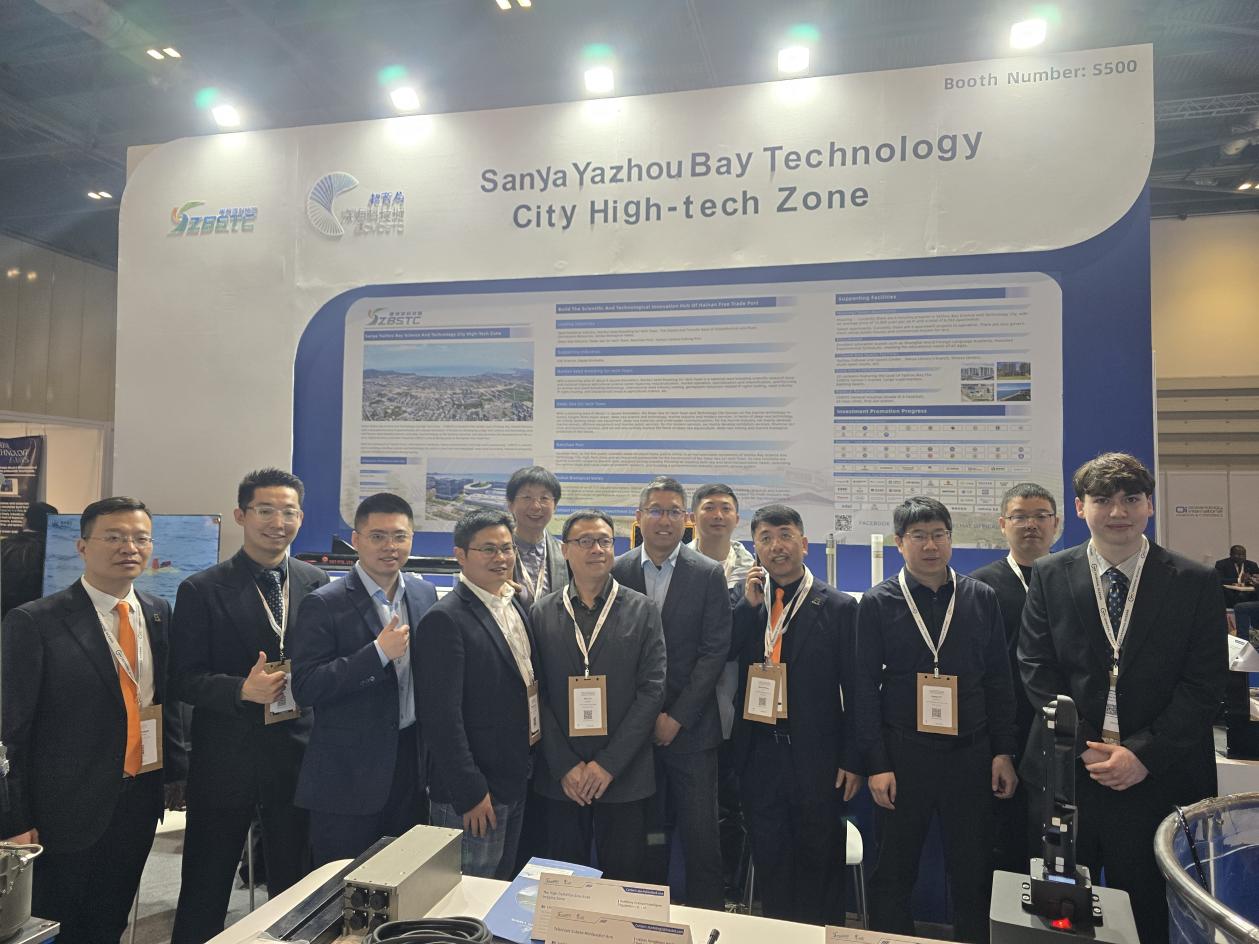
On March 10 (local time), the Oceanology International 2026 (Oi2026), the world's premier ocean technology exhibition, officially opened in London, UK. Sanya Yazhou Bay Science and Technology City Administration, together with China Merchants Sanya Deep-Sea Technology City Development Co., Ltd., led a delegation of marine enterprises and institutions from YZBSTC to participate in this key global exchange platform for the ocean technology and marine science communities.
At the exhibition, the YZBSTC pavilion attracted professional visitors across the world. Representatives of YZBSTC's enterprises exchanged views with counterparts from international marine technology companies and research institutes on product features, application scenarios, and potential cooperation. They also held in-depth discussions on marine equipment R&D, product applications, and international market expansion.
In this exhibition, YZBSTC Administration organized a group of marine enterprises from the park, including Peneson Offshore Tech Sanya, Haidilong (Hainan) Intelligent Equipment, Hainan CathayBot Technology, and Hainan Hengsheng Intelligent Technology. Nearly 30 advanced marine technology products were exhibited, covering deep-sea equipment, ocean observation, intelligent navigation, and other technological fields, which fully demonstrated the strong R&D capabilities of YZBSTC's enterprises in deep-sea equipment manufacturing, underwater detection technology, and marine intelligent equipment.
This participation in the Oi2026 is an important measure for YZBSTC to help its marine technology enterprises "go global." Through this professional international platform, the enterprises of YZBSTC have not only showcased their technological achievements but also connected with upstream and downstream partners in the global marine industry chain, further expanding opportunities for international cooperation.
In the future, relying on the opening-up advantages of the Hainan Free Trade Port, YZBSTC will continue to build and upgrade platforms for international exchange and cooperation, empower more marine technology enterprises to participate in global industrial chains, and bring more "Intelligent Manufacturing in YZBSTC" to the global stage.

The PEO Link Commemorates More than 20 years of Guiding Businesses Through Strategic PEO Partnerships
The PEO Link is celebrating over two decades of advancing its mission of helping businesses navigate the complex professional employer organization (PEO) landscape. The highlights a milestone rooted in advisory-driven guidance, strategic alignment, and a commitment to matching employers with the right co-employment partners for their operational needs.
Lee Chapman, founder and CEO of The PEO Link, built his career inside the PEO space and recognized early on that companies needed a more consultative approach. Years spent representing single providers revealed a recurring pattern: every business had distinct operational dynamics, yet many were offered similar, one-size-fits-all solutions. That realization led him to establish The PEO Link 21 years ago as a brokerage designed to align companies with PEO partners suited to their structure, risk profile, and aspirations. “Every organization has its own complexity,” Chapman says. “I believe positive outcomes will follow if those distinctions are acknowledged.”
The broader PEO landscape has expanded considerably over the past decade. According to the report from the National Association of Professional Employer Organizations (NAPEO), industry revenue has risen to over $410 billion since 2012, reflecting significant adoption among small and mid-sized employers.
The same research notes that businesses engaging a PEO experience double the median growth of comparable firms, alongside a 16% increase in profitability and a 27% return on investment through cost savings alone. Additional findings indicate 12% lower employee turnover and a greater likelihood of long-term continuity. “These metrics show an environment in which outsourced HR infrastructure supports strategic business performance,” Chapman states.
The problem, according to The PEO Link, is that perceptions about PEOs often remain narrow. “Many executives initially associate the model with payroll processing alone. Payroll is essential, but it represents only one component within a much broader framework,” Charles Schattenberg, president of The PEO Link, explains. The PEO Link notes that a PEO operates through a co-employment partnership in which employer responsibilities are shared under a unified structure. This arrangement extends into human resources administration, employee benefits design, workers’ compensation oversight, compliance guidance, safety programs, and risk mitigation. In that sense, a PEO functions like an outsourced executive resource.
This distinction is integral to understanding the model’s potential. “A payroll service completes a task. A PEO participates in stewardship. Incentives align around long-term health when accountability is shared,” says Karlos Funes, chief revenue officer. Through co-employment, employees are reported under the PEO’s federal employer identification number, creating fiduciary responsibility that encourages sustained engagement. The relationship tends to carry an embedded interest in workforce stability, regulatory alignment, and benefit competitiveness.
For business owners, this structure can shift daily priorities. Administrative demands that once consumed leadership bandwidth, such as multi-state payroll, benefits administration, or workers’ compensation management, are consolidated within one integrated system. As stated by NAPEO, 52% of companies with 10 to 49 employees that use a PEO offer retirement plans, compared with 23% of similar firms without one. The PEO Link suggests that access to scaled benefit programs contributes to talent attraction and employee satisfaction, both of which may influence retention and productivity.
However, such advantages depend heavily on selecting an appropriate partner. The PEO market encompasses providers with varied industry specializations, underwriting philosophies, service models, and technology platforms. Construction firms, healthcare practices, manufacturing operations, and professional services companies often require distinct configurations. The PEO Link emphasizes that a brokerage structured to evaluate those nuances can therefore add meaningful clarity.
The company approaches this responsibility through a proprietary evaluation framework. The process begins with comprehensive discovery. Client interviews explore payroll systems, timekeeping infrastructure, claims history, safety protocols, workforce demographics, growth projections, and succession considerations. Financial modeling and benefits benchmarking follow. Only after this assessment does the firm approach select PEOs whose capabilities align with the client profile.
Erik Bednarz, chief operating officer, emphasizes discipline in this stage. “Representation begins with listening,” he says. “Sourcing the right PEO partner becomes powerful when it reflects real operational detail, not surface-level assumptions.” Competitive proposals are then negotiated, with attention to rate structure, service scope, and long-term scalability. Once a client selects a provider, The PEO Link remains engaged through implementation and ongoing monitoring. As organizations expand or adjust strategy, relationships are reassessed to confirm continued alignment.
This lifecycle perspective reflects a belief that growth trajectories evolve. Businesses that double in size, expand geographically, or introduce new service lines may require different underwriting tolerances or benefits architecture. Ongoing evaluation supports adaptability within the co-employment model, helping ensure that infrastructure keeps pace with ambition.
The PEO Link notes that the brokerage segment of the PEO industry has also expanded as awareness increases. Greater participation can introduce opportunities for education around consultative depth. Schattenberg observes that sustainable advisory work demands both market access and analytical rigor. “Scale opens doors, but discernment determines which doors to walk through,” he says. Schattenberg adds that longstanding relationships across the PEO landscape enable The PEO Link to negotiate competitive arrangements while maintaining a consultative lens.
Parallel investment in technology and insurance expertise further informs this approach. The PEO Link observes that healthcare design remains a primary driver of PEO adoption, particularly among small and mid-sized employers navigating rising benefit expectations. By integrating insurance agency capabilities and underwriting insight, The PEO Link aims to interpret trends in medical inflation, network configuration, and risk pooling with greater precision. This breadth of perspective may complement partnerships with private equity firms seeking operational efficiency across portfolio companies.
The PEO Link’s franchise platform, established in 2025, is the first of its kind in the PEO brokerage space, further driving the firm's growth. Franchisees operate within an established framework that supports carrier contracts, proposal modeling, negotiations, and compliance oversight.
Overall, the evolution of PEO brokerage reflects a broader shift in how businesses think about workforce infrastructure. Within that shift, The PEO Link positions itself as an intermediary focused on alignment, stewardship, and long-term value. Its strategic planning centers on the belief that innovation across payroll platforms, HR information systems, analytics dashboards, and compliance automation will continue to reshape what effective co-employment can look like.
As these tools advance, partnerships with technology providers and advisory networks expand the firm’s ability to respond to emerging market needs. Chapman sees this adaptability as essential to the firm’s identity. “Longevity comes from curiosity,” he says. “If we remain open to emerging tools and evolving client needs, relevance will follow.”
About The PEO Link
Lee Chapman entered the PEO industry in 1999 at just 19, quickly distinguishing himself as a top-performing sales professional for major payroll and staffing firms. Recognizing that no single provider could meet every employer’s needs, he founded The PEO Link to offer true brokerage choice. For more information, visit thepeolink.com.
Media Contact
Lee Chapman
info@thepeolink.com
Haven Exceeds $10 Million in Revenue as Company Continues National Expansion
Haven has exceeded $10 million in revenue, marking a significant financial milestone as the accounting, finance, and tax platform continues expanding its operations nationwide.
The company's revenue growth reflects sustained adoption of its integrated platform among businesses seeking consolidated oversight of bookkeeping, tax compliance, and financial reporting. As Haven expands across the United States, the milestone represents both operational scale and continued geographic reach.
Exceeding $10 million in revenue positions Haven within a new stage of growth, demonstrating recurring demand for unified financial infrastructure designed to support businesses managing multi-state operations and layered tax compliance requirements.
Scaling Responsiveness Alongside Revenue
Haven's financial expansion corresponds with increasing platform volume. To date, the company has:
- Tracked more than $2.4 billion in startup spend
- Identified over $30 million in tax credits and savings for clients
- Maintained an average client response time of approximately four minutes
- Built a team with more than 100 years of combined accounting and tax experience, including professionals from KPMG, PwC, and Deloitte
These figures provide context for the revenue milestone. As transaction volume increases and multi-entity reporting becomes more common, consolidated oversight becomes increasingly critical.
Revenue exceeding $10 million reflects the scale at which Haven's integrated accounting, finance, and tax infrastructure is now operating. The milestone coincides with Haven's continued expansion across the United States. The company serves businesses operating in multiple jurisdictions, supporting clients navigating varying tax compliance requirements and reporting standards across state lines.
National growth introduces coordination demands across state lines. Remote hiring introduces new accounts payable and bill pay variables. Entity structures may require consolidated reporting across subsidiaries or operating units. As businesses expand, managing accounts receivable and invoicing across jurisdictions adds further complexity.
Haven's platform centralizes these variables within one coordinated framework, aligning bookkeeping and tax oversight across jurisdictions. As Haven expands its national footprint, revenue growth reflects both geographic scale and operational depth.
Founder Perspective on Financial Milestone
Founder and CEO Cyrus Shirazi said the revenue milestone reflects sustained client confidence. "Crossing $10 million in revenue represents continued trust in our integrated accounting, finance and tax platform," Shirazi said. "Businesses expanding nationally require coordinated financial oversight. This milestone reinforces that consolidated infrastructure is increasingly necessary."
Shirazi added that revenue growth is a product of structural alignment rather than short-term acceleration. "Our focus remains on building financial systems that scale with operational complexity," he said. "Revenue growth follows when that system works consistently."
Client communication operates through dedicated Slack channels supported by internal monitoring systems that track response times. The company maintains an average response time of approximately four minutes across client workflows. Preserving responsiveness while surpassing $10 million in revenue demonstrates structural scalability. As more businesses rely on the platform, timely financial clarity remains central to the company's operating model.
Exceeding $10 million in revenue marks a key stage in Haven's development as it continues expanding nationally. The milestone signals financial momentum while reinforcing the company's emphasis on unified oversight across bookkeeping, tax compliance, and reporting.
As businesses expand geographically and regulatory requirements evolve, demand for integrated accounting, finance and tax systems continues to increase. Haven's revenue milestone reflects sustained adoption of its platform and positions the company for continued national growth.
About Haven
Haven is an accounting, finance, and tax platform built to serve the financial infrastructure needs of growing businesses — including startups, law firms, creative agencies, e-commerce brands, crypto businesses, recruiting firms, PC-MSOs, and companies managing multiple entities. Operating across multiple jurisdictions, Haven centralizes bookkeeping, corporate tax preparation, tax credit identification, multi-entity reporting, bill pay, invoicing and more within a single coordinated system. As financial requirements evolve for SMBs expanding across states and managing layered entity structures, Haven delivers consolidated oversight intended to reduce fragmentation and improve structural clarity. The platform has tracked more than $2.4 billion in startup spend and identified over $30 million in tax credits and savings for clients. With national reach and a team bringing more than 100 years of combined tax experience, Haven continues broadening access to integrated accounting and tax infrastructure for businesses navigating growth. For more information, visit www.usehaven.com.
Media Contact
Use Haven
ronald@tryhaventax.com

Haven Broadens Market Focus to Include SMBs as Demand Increases for Unified Finance Infrastructure
Haven has announced it is broadening its market focus to include small and mid-sized businesses seeking consolidated accounting, finance, and tax infrastructure. The expansion extends the company's integrated platform to a wider segment of businesses operating across multiple jurisdictions, managing layered entity structures, and navigating increasingly complex compliance requirements.
The decision reflects sustained inbound demand from SMB operators looking for unified financial oversight rather than fragmented accounting relationships. Haven will continue delivering bookkeeping, corporate tax preparation, credit identification, accounts payable/bill pay, accounts receivable/invoicing, and coordinated reporting within a single structured platform.
Founder and CEO Cyrus Shirazi said the expansion is aligned with how operational complexity has evolved within the broader SMB market.
"We've consistently seen that financial complexity is no longer limited to one segment of companies," Shirazi said. "Many small and mid-sized businesses are hiring across states, managing multiple entities, and facing increasing compliance exposure. Broadening our market focus allows us to extend consolidated financial infrastructure to those businesses."
Addressing Increasing Financial Complexity in SMBs
The SMB segment has evolved significantly as digital commerce, remote hiring, and multi-state operations have become more common. Many small and mid-sized businesses now operate across multiple jurisdictions, manage accounts payable and receivable across state lines, and operate under multiple legal entities.
These structural realities create coordination requirements that extend beyond periodic bookkeeping and annual tax filings. Haven is extending access to its current integrated accounting, finance, and tax platform to serve a broader range of businesses.
The platform centralizes:
- Bookkeeping and financial reporting
- Corporate tax preparation and compliance
- Identification of eligible tax credits
- Multi-entity reporting coordination
- Accounts payable and bill pay
- Accounts receivable and invoicing
Rather than requiring businesses to manage separate relationships for bookkeeping, tax filings, and compliance oversight, Haven aligns these functions within a unified structure.
To date, the platform has tracked more than $2.4 billion in startup spend and identified over $30 million in tax credits and savings for clients. As the company broadens its market scope, that same infrastructure will be applied to a wider segment of SMBs encountering operational complexity.
Haven's integrated platform centralizes oversight across these variables. Financial data is maintained within one coordinated system, allowing bookkeeping and tax considerations to align. Accounts receivable and invoicing are monitored in conjunction with revenue reporting. Entity-level reporting is consolidated within the broader financial structure. By broadening its market focus, Haven is extending this model to SMBs seeking structured oversight rather than siloed services.
Building Financial Systems Designed for Complexity
Haven currently serves businesses nationwide and will continue expanding its national presence as part of its broader growth strategy. The broadened SMB focus represents a strategic extension of its platform rather than a shift in core mission. Cyrus Shirazi emphasized that the company's objective remains consistent.
"Our focus has always been on building financial systems designed for complexity," he said. "As more small and mid-sized businesses encounter multi-state operations and layered compliance requirements, extending our platform to serve them is a natural progression."
By broadening its market focus, the company is increasing access to consolidated financial infrastructure while maintaining its integrated delivery model. As Haven expands its market reach, the company will maintain its established engagement standards.
Client communication operates through dedicated Slack-based workflows supported by internal monitoring systems. Haven maintains an average response time of approximately four minutes across client channels, reinforcing timely engagement as platform adoption grows.
Operational scale also requires technical depth. Haven's team includes professionals with more than 100 years of combined tax experience, including backgrounds at KPMG, PwC, and Deloitte. This expertise supports tax compliance oversight across jurisdictions and entity structures.
The company's expansion into the SMB segment does not alter its operating philosophy. Haven will continue emphasizing consolidated oversight, centralized reporting, and continuous engagement across bookkeeping and tax functions.
About Haven
Haven is an accounting, finance, and tax platform built to serve the financial infrastructure needs of growing businesses — including startups, law firms, creative agencies, e-commerce brands, crypto businesses, recruiting firms, PC-MSOs, and companies managing multiple entities. Operating across multiple jurisdictions, Haven centralizes bookkeeping, corporate tax preparation, tax credit identification, multi-entity reporting, bill pay, invoicing and more within a single coordinated system. As financial requirements evolve for SMBs expanding across states and managing layered entity structures, Haven delivers consolidated oversight intended to reduce fragmentation and improve structural clarity. The platform has tracked more than $2.4 billion in startup spend and identified over $30 million in tax credits and savings for clients. With national reach and a team bringing more than 100 years of combined tax experience, Haven continues broadening access to integrated accounting and tax infrastructure for businesses navigating growth. For more information, visit www.usehaven.com.
Media Contact
Use Haven
ronald@tryhaventax.com

Rebalance Capital Named to ImpactAssets 50 as an Emerging Impact Manager
Rebalance Capital today announced it has been selected as an Emerging Impact Manager on the 2026 ImpactAssets 50™ (IA 50®), the definitive guide to impact investing fund managers globally. Now in its fifteenth year, the IA 50 is the most recognized and respected resource of its kind in the impact investing sector.
The 2026 IA 50 includes three categories: the core list of fund managers, an Emerging Impact Managers list, and a list of Emeritus Managers comprising managers who have been on the list for more than five years. Of the 193 firms spanning this year's lists, the Emerging Impact Managers category highlights newer fund managers demonstrating clear impact objectives, a track record in impact investing, and U.S. investor accessibility.
Rebalance Capital invests in Series A and B fintech and workforce tech companies that help the 80 million American households that are living paycheck to paycheck earn more and build lasting wealth. The firm backs B2B2C, infrastructure, and marketplace companies and provides founders with access to decision-makers at large financial institutions and employers, along with hands-on support in corporate finance, human capital, and impact strategy.
"We built Rebalance Capital around a conviction that America’s most urgent social problem is also its biggest overlooked market: the 80 million households with $4 trillion in purchasing power that have been locked out of economic mobility. Being named to the IA 50 validates what our founders prove every day — that investing in the products and infrastructure that provide working Americans the opportunity to earn more and build wealth unlocks both impact and investment performance," said Josh Tanenbaum, co-founder and managing partner of Rebalance Capital. "This recognition from ImpactAssets reflects the rigor behind that conviction."
"Being recognized by ImpactAssets alongside some of the most respected names in impact investing is a meaningful milestone, but what drives us is the work itself. Every day, our portfolio companies are building the tools that give working Americans a real shot at financial security, said Barr Even, co-founder and managing partner of Rebalance Capital. “That's the opportunity we saw when we started Rebalance, and this recognition affirms that the market is catching up to what our founders have known all along."
ImpactAssets 50 selections are made by an independent review committee of 13 globally recognized industry leaders, following a multi-stage process that leverages both qualitative and quantitative analysis led by ImpactAssets Capital Partners.
“Across the IA 50, we see sustained investor commitment to affordability and economic development strategies that strengthen communities and expand access to opportunity,” said Margret Trilli, CEO and CIO of ImpactAssets and ImpactAssets Capital Partners. “From affordable housing and community development to capital for small businesses and underrepresented entrepreneurs, these managers are directing capital where it can help build an inclusive economy while delivering competitive financial returns. That alignment between impact and performance is what continues to drive momentum in the market.”
The full IA 50 database is available at impactassets.org/IA-50.
About Rebalance Capital
Rebalance Capital is a venture capital firm investing in the future of work and wealth — for all. The firm backs Series A and B fintech and workforce tech companies building products and infrastructure that help the 80 million American households living paycheck to paycheck earn more and build lasting wealth. Learn more at www.rebalancecap.com.
About ImpactAssets
ImpactAssets is an impact investing trailblazer dedicated to changing the trajectory of the planet's future and improving the lives of all people. As a leading impact investing firm, ImpactAssets offers deep strategic expertise to help its clients define and execute on their impact goals. Founded in 2010, ImpactAssets increases flows of money to impact investing in partnership with its clients through its impact investment platform, philanthropic solutions, and field-building initiatives, including the IA 50 database of private debt and equity impact fund managers. ImpactAssets has more than $5 billion in assets, working with purpose-driven individuals and their wealth managers, family offices, foundations and corporations. ImpactAssets is an independent 501(c)(3) organization. Learn more at impactassets.org.
About ImpactAssets Capital Partners
ImpactAssets Capital Partners (IA Capital) is an SEC-registered investment adviser specializing in impact investing for institutional investors, including foundations, corporations, and family offices. IA Capital offers a full range of custom services, including investment and impact strategy design, sourcing and origination, due diligence, portfolio construction, monitoring, risk management, and reporting. IA Capital also structures and manages bespoke fund vehicles for aligned investor cohorts, providing support from mandate design and formation to capital raising, deployment, and administration. As a subsidiary of its non-profit parent entity, ImpactAssets, IA Capital works across both market-rate and impact-first investing approaches to help clients align capital with mission. For more information, visit impactassetscapital.com.
About ImpactAssets 50
ImpactAssets 50™ (IA 50®) is the definitive guide to impact investing fund managers globally. The publicly available database is composed of experienced and emerging private debt and equity impact investment fund managers committed to generating positive impact. The IA 50 2026 reflects the innovation and exponential growth of impact investing that the IA 50 has helped to spotlight over the last 15 years. For more information, visit impactassets.org/ia-50.
Disclaimer
The IA 50 is not an index or investable platform and does not constitute an offering or solicitation to buy or sell securities or a private placement, or recommend specific products. Nor is this an endorsement of any of the listed fund managers. It is not a replacement for due diligence. Additional details on the selection process are available on IA 50's website.
Media Contact
Josh Tanenbaum
josh@rebalancecap.com
Gregory Agency
impactassets@gregoryagency.com


Archie Visitors Earns Triple Recognition Across Major Review Platforms as Visitor Management Software Gains Momentum
Archie, a workplace management platform that helps companies run modern offices, is gaining recognition for its visitor management software as the category rapidly expands. In 2026, the platform earned recognition across three major software review ecosystems — appearing in G2’s Top 25 Visitor Management Software Products, Capterra’s Visitor Management Shortlist, and receiving the SoftwareReviews Emotional Footprint Award — signaling strong user satisfaction as more companies adopt digital visitor management tools.
As companies rethink workplace security and office operations, software designed to manage visitors is quietly becoming one of the fastest-growing layers of workplace technology. The company’s Archie Visitors product is designed to digitize front-desk operations, improve workplace security, and streamline how organizations welcome and manage guests across offices.
While estimates vary by research firm, most agree that visitor management has evolved into a multi-billion-dollar software category growing at a double-digit rate. Grand View Research projects the global visitor management system market will grow from $1.87 billion in 2024 to $3.98 billion by 2030, while Fortune Business Insights estimates the market was worth $2.16 billion in 2025 and forecasts growth from $2.45 billion in 2026 to $6.77 billion by 2034.
Across these projections, the trend is clear: companies are investing more in software that digitizes reception, strengthens workplace security, and connects visitor workflows to broader office operations.
That shift is now showing up in software review data.
Three Prestigious Awards Confirm Archie’s Strong User Ratings
In 2026, Archie’s visitor management platform received recognition across three major software review ecosystems. The product appeared in G2’s Top 25 Visitor Management Software Products, ranked on Capterra’s Visitor Management Shortlist, and received the SoftwareReviews Emotional Footprint Award.
While each ranking uses a different methodology, they share a common foundation: all rely heavily on verified user reviews, buyer activity, or product usage signals. Rather than reflecting analyst opinion or vendor submissions, these rankings are largely based on how software performs in real workplace environments.
Taken together, the triple recognition suggests Archie is emerging as one of the leading vendors in a category that is becoming increasingly important as organizations modernize front-desk operations.
A Competitive Market with Different Types of Vendors
The visitor management category includes both specialized front-desk platforms and broader workplace management systems that include visitor tools alongside desk booking and room scheduling features.
Archie’s performance across these rankings also stands out when compared with several well-known visitor management and workplace software vendors:
- On Capterra’s 2026 Visitor Management Shortlist, Archie achieved the highest overall score (95/100), ahead of platforms such as OfficeSpace and Robin (both 91) and Tactic (86).
- In SoftwareReviews’ Emotional Footprint Awards, Archie also ranked among the highest-scoring products in the visitor management category, outperforming vendors including VisitUs Reception, EVA Check-in, and Eptura Visitor based on user sentiment and customer relationship metrics.
- Meanwhile, in G2’s 2026 Best Office Software Products list, Archie placed #8 overall, ahead of several widely recognized workplace and visitor management solutions such as Envoy Visitors (#14), FacilityOS (#17), Envoy Workplace (#18), OfficeSpace (#19), The Receptionist (#20), OfficeRnD Flex (#21), and Tactic (#23).
Archie’s triple recognition also highlights the growing role that review platforms now play in enterprise software buying decisions.
Review Data Is Becoming a Stronger Signal in Workplace Software
For workplace software buyers, rankings from G2, Capterra, and SoftwareReviews increasingly serve as an early filter when building a shortlist of potential vendors.
That is particularly true in categories like visitor management, where many platforms offer overlapping features, and it can be difficult to compare products based solely on feature lists.
Because these rankings depend on recent review activity and verified customer feedback, they tend to reflect current product experience more accurately than long-term brand awareness alone.
That makes multi-platform recognition more meaningful than a single award or badge. A product that performs well across multiple review frameworks is more likely to demonstrate strength across several dimensions at once, including usability, customer satisfaction, adoption, and trust.
As companies continue modernizing workplace operations, those signals are becoming an increasingly important way to identify which vendors are gaining traction in the rapidly evolving visitor management market.
About the Ranking Methodologies
Each of the three review platforms uses a different framework to evaluate software performance:
- G2 combines customer satisfaction scores with market presence indicators derived from verified user reviews submitted on its marketplace.
- Capterra’s Shortlist evaluates products using a weighted combination of user ratings and popularity metrics such as review activity and buyer interest.
- SoftwareReviews’ Emotional Footprint Awards, published by Info-Tech Research Group, focus on customer sentiment, measuring factors such as trust, product impact, fairness, and likelihood to recommend.
Because eligibility for these rankings depends on a minimum number of recent verified reviews, the results are designed to reflect current user experiences rather than long-term brand recognition alone.
About Archie
Archie is a modern workspace management platform that helps companies run flexible, efficient, and people-first workplaces. With tools for desk and room booking, visitor management, hybrid work coordination, and workplace analytics, Archie gives teams everything they need to stay organized and connected. Trusted by thousands of organizations, Archie is known for its intuitive design, fast user adoption, and seamless integrations with the tools teams already use. Learn more at archieapp.co.


Fluence Opens Public Access to Its GPU Cloud as AI infrastructure Demand Accelerates
Fluence, a decentralized compute platform, has opened public access to Fluence Console, a self-serve portal that lets developers provision GPUs across more than 70 independent data centers in over 30 regions. The move targets a growing gap in the market as AI teams face persistent capacity constraints, volatile pricing, and lengthy procurement cycles when scaling training and always-on inference.
AI infrastructure demand is changing in two important ways. Training runs continue to expand in size, while inference is increasingly becoming a permanent workload that needs stable, predictable compute. That shift is pushing more organizations to look beyond traditional hyperscale supply models, where capacity can be regional, pricing can vary sharply by configuration and commitment terms, and access to top-tier GPUs often requires longer-term contracts.
Fluence’s approach aggregates certified enterprise-grade capacity from Tier III and Tier IV facilities and exposes it through a single control plane. In practice, Fluence sources GPU inventory from multiple providers and makes it available through one console, with region-specific availability and pricing visible before deployment. Fluence says this model increases transparency and price competition by letting customers choose where to run workloads based on cost, latency, and locality.
Inventory and Deployment Options
Fluence Console currently lists more than 1,400 GPUs across 32 regions and 71 data centers, spanning popular profiles such as RTX 4090, A100 80GB, H100 80GB, H200, and L40S, depending on region and availability.
Users can deploy GPU Containers, Virtual Machines, or Bare Metal and launch infrastructure in seconds. The goal is to make it straightforward to go from selection to a running environment without bespoke vendor negotiations or one-off provisioning flows.
Example starting rates on Fluence include:
- H200 from $2.96/hr
- H100 80GB from $1.24/hr
- A100 80GB from $1.22/hr
- RTX 4090 from $0.48/hr
(Prices vary by region, configuration, and current availability.)
Transparent Pricing and Predictable Spend
Fluence is positioning transparency as a core differentiator. The company says it aims to keep spend predictable by publishing rates directly in the console and letting users compare options across locations and providers. As one benchmark, Fluence lists NVIDIA H200 at $2.96/hr, compared with published or commonly cited on-demand rates such as $6.30/hr (CoreWeave), $7.90/hr (AWS), and $10.84/hr (Google Cloud), noting that competitor pricing can vary significantly by region, instance type, and whether usage is on-demand or commitment-based.
Global Footprint and Locality Options
Because inventory is sourced from multiple independent data centers, Fluence’s GPU capacity spans a wide set of geographies. Current listings include locations across the U.S., U.K., Canada, France, Poland, Norway, Finland, Singapore, Japan, India, Germany, and Australia. Fluence says this footprint is designed to help teams place workloads closer to users, support data-locality requirements, and diversify infrastructure risk across multiple facilities rather than relying on a single provider region.
Getting Started
Fluence says new users can begin in a few steps:
- Sign in to Fluence Console.
- Choose a deployment type: GPU Containers, Virtual Machines, or Bare Metal.
- Select GPU model, GPU count, and configuration.
- Choose a region and data center.
- Top up balance and launch.
About Fluence
Fluence is a decentralized compute platform that aggregates capacity from independent, enterprise-grade data centers and provides access through a unified console. The company is focused on resilient, lower-cost compute for AI, Web3, and general-purpose workloads. Fluence has raised $14 million from investors including 1KX, Multicoin, and Tiger Global. The network is governed by the Fluence DAO, and its native token FLT is used for governance, staking, and network coordination. For more information, visit www.fluence.network.

NodeLink Unveils NX1, Powering the “Living Room Cloud” and Redefining Global Digital Infrastructure
NodeLink today announced the launch of its flagship hardware node, the NX1, marking a bold step toward decentralizing the world’s digital backbone.
With the NX1, regular homes can become small but powerful edge computing hubs. NodeLink aims to build a more resilient, user-powered internet where participants can also earn network rewards.
Moving Away From Centralized Cloud Systems
Today’s cloud market is dominated by a few large corporations. While the internet is supposed to be decentralized, most data and computing power still sit in massive centralized data centers. This concentration has led to higher costs, slower speeds in some regions, environmental pressure, and reduced digital control for users.
NodeLink was created to offer a different approach.
Instead of relying on distant data centers, the company uses a Decentralized Physical Infrastructure Network (DePIN) model. This system distributes computing power closer to users.
Introducing the NX1: The “Living Room Cloud”
At the core of NodeLink’s ecosystem is the NX1, a high-performance node designed to unlock unused CPU and RAM capacity within households. The NX1 enables localized processing for AI workloads, secure data transmission, and low-latency applications.
This “Living Room Cloud” model reduces dependency on centralized bottlenecks while increasing network resilience and scalability. Each deployed NX1 becomes a foundational pillar of a globally distributed infrastructure layer.
Benefits For NX1 Users
NodeLink ensures participation is mutually beneficial. NX1 operators receive five years of premium digital services at no additional cost, including:
- Enterprise-grade VPN for enhanced privacy
- Integrated ad blocker for optimized browsing
- AI-driven cybersecurity protection
- Advanced network optimization tools
By hosting the device, users improve their own security and performance while contributing to the wider network.
Building the “DePIN of DePINs”
NodeLink’s vision goes beyond a single network. The NX1 is designed to support multiple future DePIN projects. These could include services focused on computing, storage, mapping, and other infrastructure needs.
Instead of building their own physical networks, new projects can launch directly on NodeLink’s system. This makes NodeLink a foundational layer for decentralized infrastructure.
Supporting the Next Era of the Internet
As global digital demand grows, NodeLink aims to build a more distributed and resilient internet.
Participants move from being passive users to active infrastructure contributors. In return, they can earn network-based rewards while helping power global connectivity.
According to NodeLink, the next phase of the internet will not be built only in large data centers. It will also be powered from homes around the world.
About NodeLink
NodeLink focuses on Decentralized Physical Infrastructure Networks (DePIN). The company connects unused household computing power with global digital demand. Its goal is to create a community-powered internet where participation is rewarded, and connectivity is shared. For more information, visit nodelink.now or connect on X (Twitter), Telegram, LinkedIn, Facebook, Instagram, and Medium.
Media Contact
NodeLink PR Team
legal@nodelink.now

Assembled Launches Brand Studio to Make AI Support Feel Personal Again
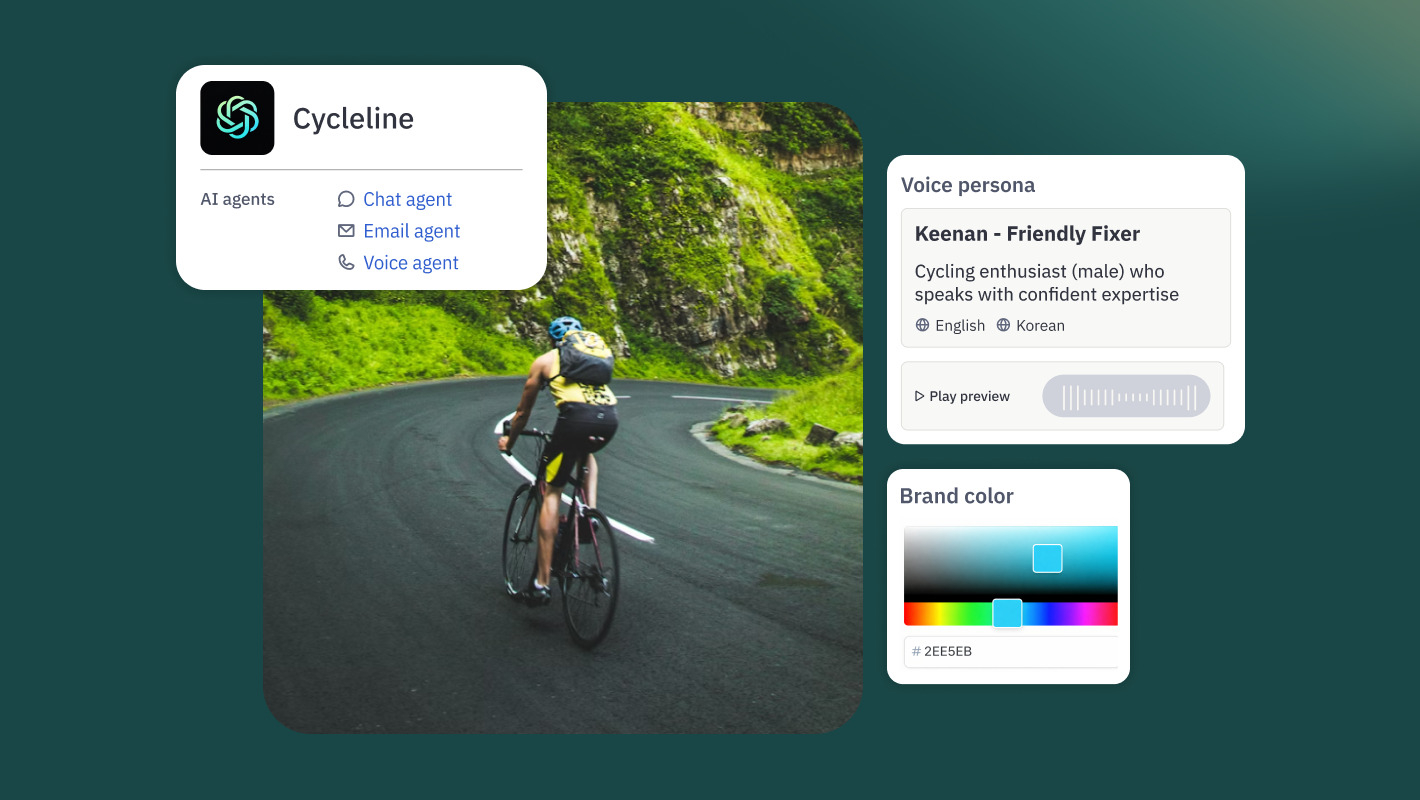
Assembled, the AI customer support orchestration platform, today announced the launch of Brand Studio, a new platform feature that allows businesses to create, manage, and deploy distinct AI agent identities across multiple brands and channels from a single location. With Brand Studio, companies managing multiple brands can now give each customer-facing AI agent its own personality, voice, knowledge base, and visual identity, without the operational complexity of managing them separately.
"Consumers today don’t want to feel like their support needs are getting farmed out to a chatbot, which means that as AI-powered customer service becomes more commonplace, the brands that win will be those that use it to get more personal, not less," said Ryan Wang, co-founder and CEO of Assembled. "Brand Studio was built for the reality that many enterprise companies manage multiple brands and brand personas. Now they can give each of those profiles a distinct, tailored AI support experience without adding operational overhead.”
Consumer expectations are already outpacing most AI deployments. Recent research uncovered that 73% of consumers expect companies to understand their unique needs and expectations, yet the majority of AI support agents still route every customer through the same generic experience. With Assembled’s Brand Studio, companies can move beyond one-size-fits-all voice and chat agents and toward a roster of specialized AI personas, each calibrated to a specific customer need state.
By designing unique personas across support functions, teams can create a customer support experience that builds brand loyalty through personalization at scale.
Key capabilities of Brand Studio include:
- Centralized multi-brand management: One place to control multiple brand identities across all support channels.
- Customizable agent personas: Configure how AI agents look and sound from chat avatars and brand colors to voice and communication style.
- Unlimited brand scaling: Scale the number of brands without adding operational complexity.
- Integrated testing and QA: Preview, test and tune new agents across channels from a single window before going live.
Companies, like Thrasio, are using Brand Studio to expand their businesses, differentiate support for different market segments, and address regional variations in brand requirements, saving millions of dollars.
"Managing nearly 20 brands across our business means every customer interaction has to feel intentional,” said Gershwin Exeter, chief experience officer at Thrasio. “Before using Assembled’s Brand Studio, expanding our AI employee to match the culture and personality of each brand was cumbersome — at best. Now we can build and manage unique profiles for each brand from a single place. The operational complexity is replaced with a focus on customer centricity and satisfaction, resulting in an impressive 94% CSAT. Brand Studio has been a game-changing capability that allows us to continue to provide best-in-class support for our customers."
Brand Studio is generally available to Assembled customers today. For more information, visit www.assembled.com.
About Assembled
Assembled is the modern, unified platform for managing in-house teams, BPOs, and AI agents. The company's comprehensive solution includes AI agents for chat, voice, email, and SMS; an AI copilot to assist human agents; and advanced workforce management tools to forecast, schedule, and monitor blended workforces. Founded in 2018 by machine learning engineers from Stripe, Assembled serves hundreds of leading companies, including Stripe, Robinhood, Canva, and Intercom. The company has raised $71 million from NEA, Emergence Capital, and top angels, with more than 130 employees across San Francisco, New York, London, and remote locations. Learn more at www.assembled.com.
Media Contact
Katy Goldstein
katy@katygoldsteincomms.com
Campfire Launches Ember Agents, Bringing Always-On AI Workers to Finance and Accounting Teams
Campfire, the AI-native ERP built for modern finance teams, today announced the launch of Ember Agents: a suite of AI workers that handle accounting and finance operations continuously in the background, without being asked.
Ember Agents are built on Accounting Intelligence, Campfire's proprietary foundation model trained specifically on accounting data. The model understands chart of accounts structure, vendor patterns, and what a clean set of books should look like. That foundation powers agents that can match transactions, process AP and AR, manage accruals, flag anomalies, run period-over-period flux analysis, and prepare close packages — with enough confidence to proactively act, not just suggest.
"Most accounting teams are running lean right now — the work keeps growing and the headcount doesn't," said John Glasgow, founder and CEO of Campfire. "Ember Agents were built to serve as the newest members of your team. Our customers aren't trying to replace their accountants. They're trying to give their accounting team back the hours that have been consumed by manual work."
Ember Agents launches with two modes:
- Continuous agents run 24/7, handling recurring operational work like transaction matching, AP and AR processing, anomaly detection, and accruals management.
- On-demand agents run on a schedule — period-over-period flux analysis, close prep, board reporting — added directly to a team's monthly close checklist and running the same way every period.
Every agent action is logged, sourced to the underlying GL data, and reviewable before it posts. Built-in confidence thresholds let teams control exactly how much the system acts versus surfaces for review, with the ability to expand autonomy as trust grows.
Campfire customers are already seeing the impact. "If you're not using Agents, it's a problem," said Nigel Glenday, CFO and COO of Masterworks. "The future of finance is agentic, and if your head's not here, you're not going to remain competitive. Campfire's agents are leading the way."
The launch follows a period of significant customer momentum for Campfire. Fast-growing companies including Replit, Decagon, and PostHog are already running a 5x faster close on the platform, with customers reporting up to 70% savings in operational expenses and teams scaling revenue dramatically without adding finance headcount.
Ember Agents is available in beta today for existing Campfire customers. Finance teams not yet on Campfire can book a demo at campfire.ai/demo.
To learn more about Ember Agents, read the full announcement or join our live demo on Tuesday, March 17 at 10 am PT.
About Campfire
Campfire is the AI-native ERP for high-growth companies. They give modern, mid-market and enterprise accounting teams superpowers by automating the work that nobody wants to do: manual transaction categorization, bank reconciliation, revenue recognition, and variance analysis. Their customers close 5x faster and save up to hundreds of thousands annually. Campfire is privileged to work with some of the fastest-growing AI companies in the world, including Replit, Decagon, and PostHog, as well as services providers, health tech, and aerospace companies. For more information, visit campfire.ai.
Media Contact
Katrina Queirolo
katrina@campfire.ai
Mainspring Recovery Reports on 2026 Substance Use Trends in Virginia
Mainspring Recovery, a Virginia-based addiction treatment provider, says its clinical leadership is closely monitoring the evolving overdose landscape and will continue sharing insights on the issue as new public health data emerge. As providers working directly with individuals affected by substance use disorders, Mainspring professionals say the changes reflected in state and national data mirror many of the challenges they are observing in treatment settings.
Virginia enters 2026 with signs of measurable progress in overdose mortality, alongside continued strain across emergency and behavioral health systems. The Virginia Department of Health (VDH) reports 1,403 overdose deaths among Virginia residents in 2024 (preliminary data as of January 2026), a 43% decrease compared to 2023. In 2023, the state recorded 2,463 overdose deaths, following several years of elevated mortality during the peak of the synthetic opioid surge.
State officials caution that overdose death data remain provisional until investigations and toxicology testing are finalized, a process that can take months. Recent-year counts may change as additional cases are certified. National data reflect a similar shift. The U.S. Centers for Disease Control and Prevention (CDC) reported a substantial decline in provisional overdose deaths in 2024 compared to 2023, marking the first broad national downturn after years of increases. Public health experts describe the current moment as a potential turning point, though not a resolution.
Fentanyl Continues to Drive Risk
Despite the decline in total overdose deaths, fentanyl remains the dominant substance associated with fatal outcomes in Virginia. According to VDH, approximately 79% of overdose deaths in 2023 involved fentanyl or related synthetic opioids.
The continued presence of fentanyl in the illicit drug supply contributes to elevated overdose risk because of:
- High potency relative to heroin or prescription opioids
- Frequent mixing with other substances
- Variability in drug composition and strength
VDH notes that overdose deaths are often classified across multiple drug categories, meaning a single case may involve more than one substance. This polysubstance pattern complicates prevention and treatment efforts. Even with declining mortality, fentanyl’s dominance suggests that the underlying risk environment remains unstable.
Emergency Departments and EMS Activity Remain Elevated
Fatal overdoses represent one dimension of substance use impact. In 2023, VDH recorded 21,881 drug overdose-related emergency department visits across the state. That same year, emergency medical services responded to 31,360 substance use-related incidents. Emergency department surveillance is updated more frequently than finalized death data and can serve as an early indicator of changing trends. However, like mortality data, these figures are considered preliminary and subject to revision. Providers note that many individuals who survive an overdose require immediate follow-up care, particularly structured treatment options that can support stabilization and relapse prevention.
Dr. Nicole Erkfitz, LCSW, chief operating officer at Mainspring Recovery, stated:
“An overdose is not just a medical emergency. It is a moment where the body, the brain, and a person’s life are all signaling that something must change. The period immediately following an overdose is one of the most critical opportunities for intervention. Physically, tolerance has shifted, which dramatically increases the risk of another and often fatal overdose. Emotionally and psychologically, many individuals are in a rare moment of clarity where they are more open to support and change. Structured treatment during this window can stabilize the person medically, address the underlying substance use disorder, and connect them to a recovery community before the cycle continues.”
Broader Health Consequences Persist
Substance use in Virginia continues to influence other public health indicators. VDH reports that injection drug use remains a documented risk factor in a portion of acute hepatitis C cases. Additionally, injection drug use accounted for approximately 6% of new HIV diagnoses in the state in recent reporting, underscoring the broader infectious disease implications of substance use. These secondary impacts highlight that even as overdose mortality trends improve, substance use disorders continue to intersect with chronic health conditions, behavioral health challenges, and community-level strain.
What Treatment Providers Are Observing in 2026
Across Virginia, treatment providers describe a clinical landscape characterized by increasing complexity rather than volume alone.
Common themes reported in 2026 include:
- Higher rates of co-occurring anxiety, depression, and trauma-related symptoms
- Continued relapse vulnerability associated with fentanyl exposure
- Greater demand for outpatient models that allow individuals to maintain employment or family responsibilities
Structured outpatient programs, including partial hospitalization and intensive outpatient services, have become central components of the treatment continuum in many communities. Providers indicate that continuity of care, particularly following emergency stabilization plays a significant role in sustaining recovery gains.
Yitzy Halon, co-founder of Mainspring Recovery, says:
“In 2026, one of the realities providers are facing is that the clinical needs of patients often conflict with the practical demands of life. Many individuals would benefit from starting their recovery journey in a residential level of care, but responsibilities like employment, parenting, and financial pressures make stepping away for that length of time extremely difficult. At the same time, insurance pressures often require providers and clients to step down to lower levels of care before someone is fully stabilized, which can increase vulnerability to relapse."
"Because of this, partial hospitalization and intensive outpatient programs have become essential parts of the treatment continuum. These models allow individuals to receive structured, clinically robust care while still maintaining critical life responsibilities. Providers across the field are becoming increasingly creative in how they deliver these services, offering virtual programming, evening treatment tracks, and even programs that include childcare, because the priority remains the same: removing barriers so that people can access the help they need and build a stronger foundation for recovery. Recovery does not happen in isolation from real life. Our job as providers is to build treatment models that meet people where they are so they can still receive the level of support they need.”
While provider observations offer on-the-ground perspective, public health authorities emphasize that long-term trend confirmation depends on finalized state and federal reporting.
A Cautious Turning Point
The decline in overdose deaths represents meaningful progress for Virginia after years of record-breaking mortality. At the same time, fentanyl’s continued presence, high emergency department utilization, and ongoing infectious disease risks suggest that sustained investment in prevention, harm reduction, and treatment access remains essential. As 2024 data is finalized and 2025 provisional figures mature, policymakers and providers alike will be watching whether current improvements reflect a durable shift or a temporary downturn within a complex and evolving public health challenge.
About Mainspring Recovery
Mainspring Recovery serves adults struggling with substance use disorders, including those facing co-occurring mental health challenges. It is a state-licensed and CARF accredited rehab with treatment centers in Dumfries and Triangle (NoVA) and Lynchburg (Central Virginia) offering compassionate, evidence-based care across VA. Our clients are seeking not just sobriety, but long-term healing, life skills, and a sense of purpose, and we’re here to walk that journey with them. For more information, visit www.mainspringrecovery.com.
Media Contact
Dr. Nicole Erkfitz
Mainspring Recovery
nerkfitz@mainspringrecovery.com
Enrollment Opens for Virtual Prep Academy of Washington Serving Students Statewide
Enrollment is now open for the 2026–2027 school year at Virtual Prep Academy of Washington, a tuition-free online public charter school serving students in grades K-12 statewide.
Virtual Prep Academy of Washington offers families a flexible online learning option that combines rigorous academics with the structure and support of live instruction from certified teachers. The program brings a college-preparatory approach to virtual learning, helping students build strong academic foundations while learning from home.
A Rigorous Online Learning Experience
Students at Virtual Prep Academy of Washington benefit from a structured online environment designed to support both flexibility and academic accountability.
Students benefit from:
- Prep-school expectations with public school access: Students receive rigorous academics in a tuition-free online environment.
- Live instruction from certified teachers: Students participate in structured classes rather than self-paced worksheets.
- Flexible learning without sacrificing quality: Families get the benefits of online education with strong academic accountability.
- Opportunities to accelerate: Students can access advanced coursework and college-credit options.
- A partnership with families: Parents stay connected to their child’s learning while teachers lead instruction.
Enrollment Information
Enrollment is open to Washington students in grades K-12 who reside in the state. To enroll, families must complete a choice transfer request form as part of the application process. Families can learn more or apply at washington.virtualpreparatoryacademy.com/admissions or call (509) 866-4106.
Frequently Asked Questions About Online School
What makes online learning different from in-person schooling?
Students complete the same curriculum and meet the same academic standards required in traditional public schools. The key difference is that lessons take place online, giving families flexibility in where and how learning occurs.
Why might families choose online school?
Online learning appeals to families seeking flexibility, personalized support, safety, or a different learning environment. It can work well for students who need a different pace or a schedule that better aligns with their daily lives.
How can parents help their child succeed?
Parents can encourage success by helping establish consistent routines, celebrating effort, monitoring progress through the learning platform, and staying in communication with teachers.
What helps students stay engaged?
Clear expectations, regular encouragement, check-ins, and consistent routines can keep students motivated. Engagement often increases when students feel supported and recognize their own growth.
What equipment is needed for online school?
Most students need access to a computer, a reliable internet connection, and a quiet space for schoolwork. Some schools may provide laptops for eligible families — contact the school directly to learn more.
Do online students interact with others?
Yes. Online schools offer social opportunities through live lessons, collaborative projects, clubs, and school activities, helping students connect with peers while learning.
What if our family decides to change schools later?
Online schools follow state standards, which helps ensure students stay academically aligned with other schools. If your needs change, staff can help guide your family through next steps.
About ACCEL Schools
ACCEL Schools is an educational service provider to more than 100 public charter schools serving K-12 students across the United States. The organization directly manages or supports brick-and-mortar, online, and hybrid schools tailored to the needs of the communities they serve. ACCEL Schools supports a range of innovative educational models, including college prep, career and technical, classical, dropout prevention, and other specialized academic pathways. For more information, visit accelschools.com.
About Virtual Preparatory Academy of Washington
Virtual Preparatory Academy of Washington is a tuition-free online public charter school that brings college-preparatory learning to families across Washington. Students learn through live instruction with certified teachers, high academic expectations, and personalized support. By combining the flexibility of online education with rigorous coursework and college-credit opportunities, Virtual Prep prepares students for success in college and beyond. For more information, visit washington.virtualpreparatoryacademy.com.
Media Contact
Warren Cohn
warren@rocketshippr.com
John J. Malm & Associates Secures $300,000 Policy-Limits Settlement for Woman Severely Injured in Violent American Bulldog Attack
John J. Malm & Associates announced today that the firm has secured an out-of-court settlement for the policy limits of $300,000 on behalf of an Illinois woman who sustained severe and life-threatening injuries after being attacked by an American bulldog inside the dog owner’s home.
The incident occurred when the plaintiff was at the residence and, at the request of the dog’s owner, attempted to let the dog out of its crate. As she opened the crate door, the American bulldog suddenly lunged forward and attacked her without warning, biting her multiple times and causing extensive wounds to both hands, both arms, and her head. The most serious injury involved a large portion of skin being torn from her left elbow. Due to the violent and unprovoked nature of the incident, the dog was later euthanized.
At the hospital, the plaintiff’s lacerations caused her blood pressure to fall to a critical level, leading to hemorrhagic shock. She was admitted as a trauma patient for emergency stabilization. A few days later, she underwent surgery to repair the large elbow wound and remained under close medical monitoring.
“This was a terrifying and unexpected attack inside a home where our client had every reason to believe she was safe,” said Naperville dog bite attorney John J. Malm. “She was simply helping the dog’s owner by opening the crate when the bulldog suddenly and violently attacked her. We worked to ensure she received the full policy limits available to help her recover from these life-altering injuries.”
Case Overview and Investigation
The firm launched a comprehensive investigation to document the facts and circumstances surrounding the bulldog’s behavior and the attack. Witness accounts confirmed the dog had been whining inside its crate and that, the moment the plaintiff opened the door, it burst out and began biting her repeatedly.
Medical records, trauma reports, and surgical documentation detailed the severity of the wounds and the plaintiff’s rapid decline into hemorrhagic shock. Photographs and medical imaging captured the extent of the injuries, including the large deep-tissue wound on her left elbow.
Animal control documentation and veterinary records regarding the bulldog’s removal and euthanasia further underscored the severity of the attack.
Injury, Treatment, and Long-Term Impact
The plaintiff suffered deep bite wounds to her hands, arms, and head, including a significant avulsion injury to the left elbow that required surgical repair.
Her injuries triggered hemorrhagic shock, prompting immediate trauma admission. After stabilization and several days of inpatient care, she underwent surgery to address the severe elbow wound.
She continues to experience limited mobility, hypersensitivity, and pain in her left arm, along with emotional distress commonly experienced by victims of sudden, violent dog attacks.
Liability and Legal Issues
Under the Illinois Animal Control Act, individuals who own or keep a dog are strictly liable when the animal injures a person who is lawfully present and has not provoked the attack.
In this case, the plaintiff was lawfully present in the home and was acting at the dog owner’s request when she attempted to let the dog out of its crate. The severity of the dog’s response, coupled with the need for trauma care and surgery, demonstrated the dangerous nature of the incident.
The firm’s legal analysis included documentation of medical damages, ongoing treatment needs, and non-economic harms, including disfigurement, emotional trauma, and the lasting impact on the plaintiff’s daily life.
Why Serious Dog Attacks Can Occur Inside the Home
Incidents like this highlight a pattern sometimes seen in severe dog attacks occurring in residential settings. Even dogs familiar to their owners may exhibit sudden aggression when stressed, confined, or anxious. When a dog is released from a crate or other confined space, that stress can escalate quickly.
“These cases are especially difficult because victims are often helping a friend, family member, or acquaintance when the attack occurs,” said Illinois dog bite litigation attorney John J. Malm. “But when a dog causes traumatic and life-altering injuries, the law is clear: the responsible parties must be held accountable.”
Damages and Policy-Limits Recovery
The $300,000 policy-limits settlement reflects the severity of the plaintiff’s injuries and the extensive medical care required. The settlement covers trauma admission, surgery, imaging, pain management, and follow-up care, as well as long-term limitations, scarring, and other permanent effects.
“This attack was sudden and devastating, and the consequences will follow our client for years,” said Malm. “Our team ensured that every aspect of her recovery, physical, emotional, and financial, was represented in the damages claim. Securing the full policy limits was necessary and appropriate given the harm she endured.”
Insurance Coverage Issues in Residential Dog Attacks
Dog attacks that occur inside a residence often raise complicated insurance coverage questions, particularly when the injured person is visiting the home or assisting the dog’s owner.
Coverage may depend on how the homeowners policy defines who qualifies as an “insured” or what circumstances trigger liability coverage. Questions can arise regarding whether the injured person was a guest, a volunteer assisting the owner, or otherwise lawfully present on the property.
At John J. Malm & Associates, our attorneys regularly navigate these complex coverage issues to determine who is entitled to assert a claim, identify all available insurance policies, and ensure that injured clients receive the full benefits and protections the law affords.
Dog Safety and Owner Responsibility
Dog owners have a legal and moral responsibility to manage potential risks, particularly when a dog shows signs of stress or agitation. Situations involving confined dogs, such as animals inside crates or cages, can sometimes lead to unpredictable behavior if the animal is anxious or agitated.
“People often underestimate how quickly a dog’s behavior can escalate,” Malm noted. “Responsible handling and awareness of warning signs are critical to preventing violent incidents like this one.”
About John J. Malm & Associates Personal Injury Lawyers
John J. Malm & Associates is an Illinois personal injury firm that serves clients throughout the Chicagoland area and its western suburbs with offices in Naperville and St. Charles. Our top-rated personal injury lawyers represent injured victims of automobile accidents, medical malpractice, product liability, work injuries, nursing home abuse and neglect, dog attacks, slip and fall/premises liability, wrongful death, and other accident and injury claims. For more information, visit www.malmlegal.com.
Disclaimer
This press release was distributed by Law Firm Newswire.
Media Contact
John Malm
John J. Malm & Associates
marketing@malmlegal.com
+1 630-527-4177

Sea to Ski Celebrates Over 20 Years of Setting the Standard in Managing Premium Vacation Homes
Sea to Ski Property Management celebrates over 20 years of bringing excellence in second-home management. Led by principal owners Rufus Frost and Dave Kunz, the company positions itself as the ultimate solution for homeowners in Park City, Utah, seeking a reliable, trustworthy way to manage their premium vacation properties.
Rather than offering rudimentary maintenance, they deploy a tech‑enabled, systems‑driven approach to ensure that when owners arrive, whether for a holiday weekend or a full season, their home is ready, configured, secure, and turnkey.
“Our clients don’t want to worry about filters, furnaces, or oxygen systems every time they fly in,” explained Frost. “We list serial numbers, track installation years, and set automated alerts to keep a vigilant eye across all systems. The home is ready before they ever step in.”
Founded in 2005, the company keeps this proactive systems oversight at the crux of its methodology. Frost notes that for large mountain residences with multiple boilers and multiple furnaces the margin for error is small. Sea to Ski documents each subsystem with exhaustive detail, logs maintenance via proprietary software, and triggers automated notifications for things like HVAC filter changes or snow‑removal readiness.
“We understand the meticulous care that needs to be taken for a home,” said Frost. “So, we remain hyper-focused on proactive management and utilizing software to upkeep the basic functionality of the home, so the owner doesn’t have to be preoccupied with it, ever.”
Another pillar is their strategy with homeowners building custom homes. Rather than entering a property post‑handoff, Sea to Ski often works with homeowners during construction, mapping the layout, systems, and warranties from day one. “When the homeowner gets their keys, we’re already the home manager,” said Kunz. “This reduces friction, ensures continuity of data, and gives owners a single reference point for all home‑care matters.”
These turnkey concierge services can translate into trusted readiness for the owners. Whether the fridge is stocked with the preferred wine on arrival, the outdoor lights are timed, snow cleared, or the home is decorated for the holidays with trim and tree in place, the company orchestrates every move with precision and personalization.
Sea to Ski’s tiered service model — Bronze, Silver, and Gold — allows owners to select the level of engagement from essential maintenance to full lifestyle‑concierge support. This modularity, Frost noted, is aimed at fostering transparency and clarity.
Rather than reactive management, Sea to Ski upholds a long-view stewardship model that understands the distinct rhyme of second-home ownership. “Managing these homes requires a balance of hospitality and engineering, ensuring that aesthetic details meet the standards of mechanical systems,” added Frost. “We aim to keep homes performing at their best, no matter how often they’re used.”
As Sea to Ski looks beyond Park City toward other mountain‑resort markets in Colorado, Montana, and California, the underlying message lies in building trust by documenting every boiler, tracking every furnace, automating alerts, integrating with the homeowners, and delivering a home that simply ‘works’ the moment the homeowners arrive.
“For owners who may hover between continents or spend a few short weekends a year at the property, that operational reliability can become the value proposition rather than the property itself,” noted Frost.
After two decades of combining technology and transparency, guided by market expertise and a global perspective, Sea to Ski Property Management is defining the new benchmark for trusted care.
About Sea to Ski Property Management
Founded by Rufus Frost, Sea to Ski Property Management is a premier, boutique service provider specializing in the care of private, non-rental luxury vacation homes and homeowner associations in Park City, Utah. With over 20 years of local expertise, the company delivers a concierge-first approach, focusing on proactive, in-house maintenance and bespoke, high-end services. Consistently recognized for excellence, the firm prioritizes security and convenience for discerning homeowners. To learn more, visit www.seatoski.com.
Media Contact
David Kunz
dkunz@seatoski.com



Turn your news into performance
EZ Newswire is the only news platform connecting the most influential organizations with the most trusted media outlets.