Newsroom
Official news releases and announcements from organizations worldwide, distributed by EZ Newswire.
IPX Names Ja Rule President of Its Celebrity Board of Advisors and Founding Member
NEW YORK, NY, October 27, 2026 (EZ Newswire) -- IPX, an agentic operating system and on-chain launchpad for intellectual property, announced today that Ja Rule has been named president of its celebrity board of advisors and a founding shareholder. The Grammy-nominated, multiplatinum artist is also a celebrity co-founder of the company.
As president of the celebrity board of advisors, Ja Rule advocates for and co-writes the script on how artists, athletes and creators on the platform own and retain their IP — shaping the structure for how their projects are financed and produced, and ensuring fans also have a seat at the table.
Ja Rule, president of IPX’s celebrity board of advisors, said, "I'm a creative first, and I've seen firsthand what can happen to artists who don’t own their work. When I create IP, I make sure every show is my IP, on purpose, so that content will be ours, forever. That’s why IPX is a game-changer for the industry, empowering celebrities, creatives and fans alike. We’re rewriting the script on how celebrities own and retain their IP."
"Ja Rule's partnership has been a game-changer; his creative vision centers on ownership and touches film, TV, livestreaming, music and animation," said Brendan McCafferty, founder and CEO of IPX. "He truly knows what it takes to build original IP from scratch, time and again. His vision for artists as creators, entrepreneurs and owners is synonymous with what we're building at IPX: a platform to help them bring new projects to life and connect more directly with their fans."
About IPX
IPX Exchange is the agentic operating system for intellectual property where celebrities can give their fans a real seat at the table with real rewards in real IP. Its platform is designed to help creators and rights holders greenlight original projects, finance and produce them, engage sponsorship and reach distribution from one platform. IPX is based in Miami. Learn more at ipx.exchange.
Media Contact
Melrose PR
ipx@melrosepr.com

Empacer Launches Voice-First AI Business Assistant for Small Business Owners
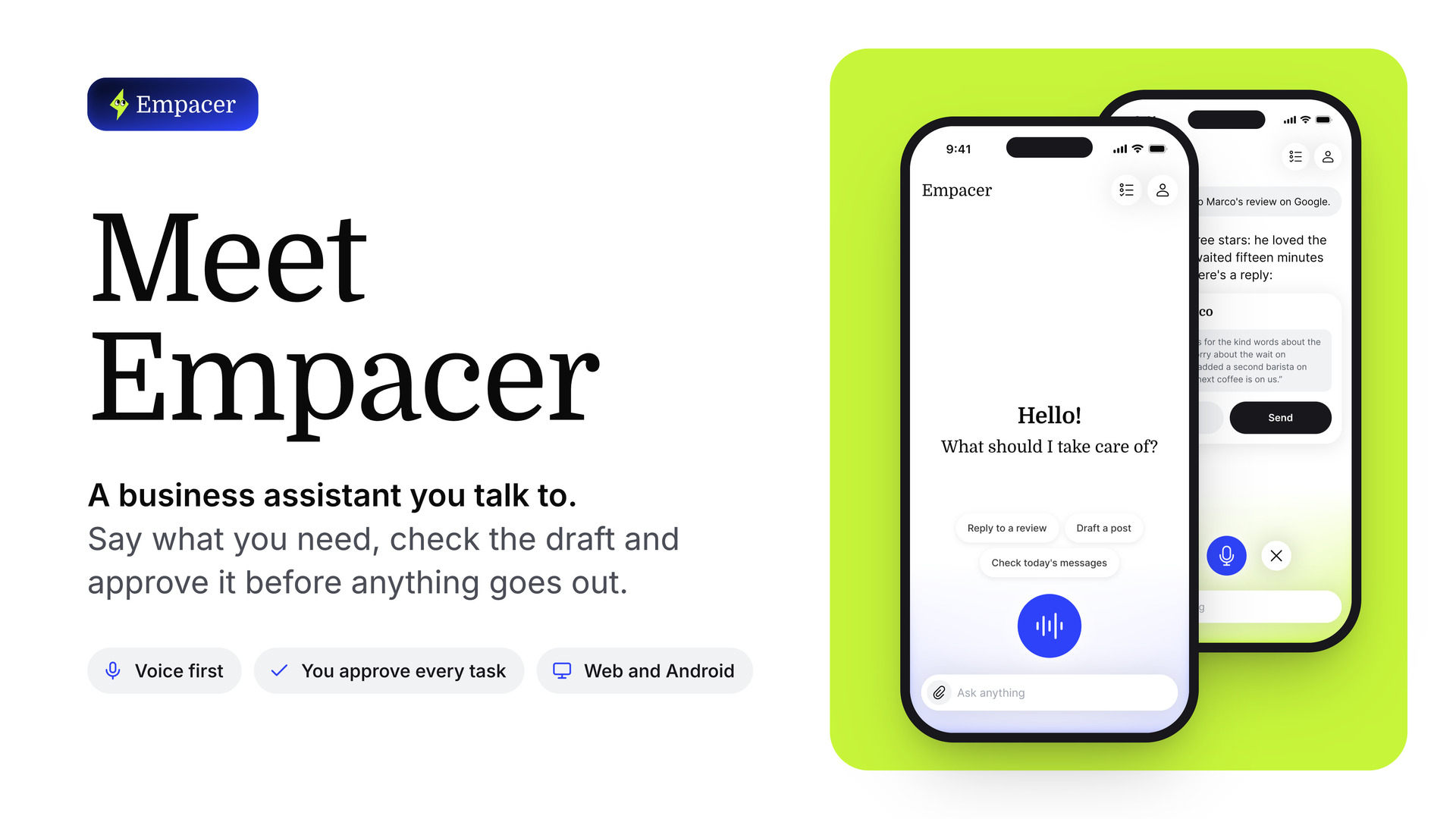
LIMASSOL, Cyprus, October 27, 2026 (EZ Newswire) -- Empacer has launched a voice-first AI business assistant for owners of small and medium businesses. Owners say or type what they need, such as a post from a photo, a reply to a customer or a plan for the week, and Empacer prepares the work with their business details. The owner checks the result and decides whether it goes out.
Built for owners who are also the whole team
Empacer is built for people who run small and medium businesses where the owner is also the whole team. Nail studios, hair salons, barbershops, auto repair shops, cleaning services, bakeries and photographers are typical examples. The owner spends the day with clients or on the job, while messages and admin pile up on the phone.
Empacer takes on the everyday tasks around that work: customer replies, social posts, documents and planning the week. Photos the owner already has become posts and captions for review. A customer question about Saturday hours becomes a reply in the business's tone. A price list or an invoice attached to a request becomes a clean document or a summary.
Voice first, with text one tap away
Voice is the main way to give Empacer a task. Owners tap the voice button and say what they need, or type in the "Ask anything" field when talking isn't convenient. Photos, price lists and invoices can be attached to any request. Empacer works for the owner and doesn't take calls from customers.
Instead of filling out a long form, the owner answers a few short questions about the business by voice or text. The answers come back as short facts in About you, where the owner can check and correct them. When Empacer has to guess something, like the business's tone of voice, it marks the fact as a guess. When a detail is missing, like a price, Empacer asks the owner instead of making up an answer.
Every result waits for the owner's approval
Each result arrives as a card with the post, reply, plan or document. The owner can edit a line, tell Empacer what to fix, decline the draft or approve it. By default, nothing is sent until the owner approves it, so the card is the moment to check names, dates and numbers before anything goes out.
Empacer asks to connect a tool only when a task needs it, and a separate screen shows what access is requested before the owner agrees. It works with more than 1,000 tools, including Instagram, Facebook, Google Calendar, Gmail and Notion. Available actions depend on the tool, the account and the permissions the owner grants. Without a connected tool, the finished work stays in Empacer, where the owner can open it or share it to another app.
Empacer doesn't use chats or business data to train its own AI models, and the AI providers it's built on don't use that data to train theirs. Owners can correct or delete anything Empacer keeps about their business.
On the web and Android
Empacer runs in the browser at app.empacer.com on a computer, phone or tablet, and as Empacer for Business on Google Play. An iOS app is coming soon. Until then, iPhone users can open app.empacer.com in the browser. One account keeps the same tasks, files and settings on every device.
Learn more at empacer.com and see how Empacer works.
About Empacer
Empacer is an AI business assistant for small and medium business owners, provided by EMPACER LIMITED. Owners say or type what they need, such as a post from a photo, a reply to a customer or a plan for the week, and Empacer prepares a draft with their business details. By default, nothing is sent until the owner approves it. Empacer runs on the web and on Android, with an iOS app coming soon, and connects to more than 1,000 tools. It does not take calls from customers, and chats and business data are not used to train AI models.
Media Contact
Empacer PR Team
organic@empacer.com
Plates4Less Publishes Private Number Plate Guide Following Concerns Over Misleading AI Advice
SWANSEA, United Kingdom, October 27, 2026 (EZ Newswire) -- Motorists looking for reliable advice about personalised number plates now have a new consumer resource, as Plates4Less publishes a comprehensive guide to the UK private registration market.
- New consumer guide launched: The UK Private Number Plate Market Explained helps motorists understand registration values, buying and selling, DVLA procedures and how to avoid costly mistakes.
- Six areas of concern identified: Plates4Less' review found inaccurate, incomplete or potentially misleading advice across AI-generated answers and online forums.
- Protecting motorists: Drawing on nearly 30 years of industry experience, the guide explains how the market works and how owners can protect valuable registration marks.
The UK Private Number Plate Market Explained has been created to help motorists understand how personalised registrations are valued, where to buy and sell them safely, how DVLA procedures work and how to protect their registration rights.
The guide follows a review by Plates4Less of advice provided by ChatGPT, Claude, Gemini, Google's AI-powered search results and online forums. Conducted during September and October 2026, the review identified six areas of concern where information was inaccurate, incomplete or potentially misleading when assessed against DVLA guidance and specialist industry knowledge.
The findings highlight the importance of checking advice before making decisions involving valuable registrations, particularly where misunderstandings about ownership, transfers or certificate expiry could have serious financial consequences.
A guide to understanding private number plate values
One of the most common questions motorists ask is: How much is my private number plate worth?
There is no single formula for valuing a personalised registration. Its potential value depends on factors such as the combination of letters and numbers, readability, associations with names or initials, desirability, comparable registrations and current market demand.
AI-generated valuations can provide a starting point, but they may not reflect the full market, available alternatives or the price a registration could realistically achieve. An advertised price is not necessarily the same as its eventual selling price.
The guide explains the factors that influence registration values and why motorists should consider the wider market before deciding to buy, sell or retain a cherished plate.
The DVLA plays a central role in the private plates market, administering registration rights and selling previously unissued registration marks. AI tools know this and so give the most eminence to DVLA (because they are a Government Agency) in its answers.
Previously issued registrations are also bought and sold through specialist dealers and private sellers. Motorists relying solely on AI-generated recommendations may therefore overlook suitable registrations already in circulation or receive suggestions that are unsuitable for their vehicle.
Incorrect advice can put valuable registrations at risk
The Plates4Less review also identified concerns about advice relating to DVLA procedures, retention certificates, expiry deadlines, vehicle age restrictions and private transactions.
One particularly important issue involves motorists changing the registration assigned to a vehicle. Owners wishing to keep an existing cherished registration generally need to follow the correct DVLA procedure to remove and retain it before assigning another registration. Failure to follow the required process can put their entitlement at risk.
Expired entitlement certificates present another potential problem. Motorists should check the applicable DVLA deadlines and requirements rather than assume that an expired entitlement can always be reinstated.
Private purchases also require care. Buyers need to understand what they are purchasing, verify the seller's position and ensure the correct procedures are completed. Receiving paperwork or being named as a nominee should not be mistaken for completing all the necessary steps to secure and use a registration.
The new guide brings these issues together in one place, covering safe buying and selling, registration transfers, retention, legal display requirements and common fraud risks.
Plates4Less: “We wanted to provide a reliable source of information”
Antony Clark, Marketing Manager at VRM Swansea | Plates4Less, said: “We're increasingly hearing from customers who have purchased unsuitable private registrations after relying on misleading advice, and from owners who have been given unrealistic valuations by AI tools.
“AI-generated answers are becoming increasingly prominent in online searches, sometimes appearing directly in Google results without people specifically asking for them. Our review identified six areas where advice could be inaccurate, incomplete or misleading.
“The problem isn't exclusive to AI. Information shared through online forums and social media can also be misleading, even when people are genuinely trying to help.
“We felt there was a real need for a clear, accessible guide explaining how the UK private number plate market actually works. Whether someone wants to know what their plate is worth, where to find a particular registration, how to sell safely or how to protect a plate they already own, we want to help them make informed decisions.”
A lasting resource for private number plate owners
Established in 1997, Plates4Less has nearly 30 years of experience helping motorists and businesses find, buy, sell, transfer and protect personalised vehicle registration marks.
The company hopes the guide will serve as a lasting reference for motorists researching registration values, comparing buying options or checking the procedures involved in managing a cherished registration.
As AI tools increasingly influence how consumers research products and services, Plates4Less believes accessible, specialist information is essential to help motorists distinguish reliable guidance from incomplete or misleading answers.
Read the guide: The UK Private Number Plate Market Explained
About Plates4Less
Plates4Less is a trading name of VRM Swansea Ltd, the only Swansea-based private registration mark specialist, established in 1997. The firm helps motorists and businesses find, buy, sell, transfer and protect personalised vehicle registration marks, including those available through the DVLA and the wider secondary market. For more information, visit plates4less.co.uk.
Disclaimer
Plates4Less (a trading name of VRM Swansea Ltd) is an independent private registration specialist and is not affiliated with, endorsed by, or an agency of the DVLA or the UK Government. The information contained in this release and the referenced guide is provided for educational and informational purposes only and does not constitute formal legal, administrative, or financial valuation advice; motorists are advised to verify their specific requirements directly with the DVLA prior to completing any transaction. All product and brand names mentioned—including ChatGPT, Claude, Gemini, and Google—are trademarks or registered trademarks of their respective owners and are cited solely for editorial identification and comparative commentary.
Media Contact
tony@plates4less.co.uk

Trybit Highlights Shift Toward Stablecoins as Primary Payment Rail for Cross-Border Merchants in Latin America
PANAMA CITY, Panama, October 27, 2026 (EZ Newswire) -- Trybit, an international crypto payment gateway with more than five years of operations across global markets, today published an analysis detailing a fundamental structural shift across Latin America’s digital economy: cross-border enterprises are increasingly adopting stablecoins as their primary transaction infrastructure rather than relying on legacy banking systems.
While sovereign instant-payment systems — such as Brazil’s PIX, Mexico’s SPEI, and Colombia’s PSE — have successfully optimized domestic transactions, their architectures generally require a local commercial banking entity. As a result, foreign online businesses selling software, digital entertainment, gaming, and professional services across Latin America face severe integration bottlenecks. Traditional credit card rails frequently expose these merchants to high decline rates, foreign exchange friction, and broad category restrictions. Consequently, digital dollars have evolved from a supplementary checkout option into a mission-critical revenue channel.
According to data compiled by Chainalysis, Latin America’s digital asset economy reached $593.8 billion in transaction volume in the 12 months ending June 2026 — a 9.8% year-over-year expansion that outpaced broader global averages. Stablecoins served as the primary growth driver:
- Cross-Border Commerce: Stablecoins represented approximately 32% of all cross-border crypto value in Latin America by mid-2026.
- Brazil: Leading the region at $252.5 billion in total value, Brazil’s stablecoin market expanded 495% year-over-year, while corporate and retail wallets holding $10,000 or more in stablecoins grew 347%.
- Mexico: Ranking fifth globally for cross-border cryptocurrency volume, Mexico’s cross-border stablecoin corridors handled $1.8 billion in June 2026 alone—a fourfold increase since early 2024—alongside $8.4 billion in Q2 stablecoin service inflows.
- Regional Uptick: Colombia recorded $3.5 billion in Q2 stablecoin service inflows with an overall market growth of 13.8% ($29.1 billion), while Argentina’s market climbed 15.3% to $88.5 billion.
Market stakeholders emphasize that commercial utility is leading the migration. In the Chainalysis report, ABCripto’s Julia Rosin underscored that enterprise adoption of stablecoins is pacing ahead of both retail consumers and legacy financial institutions, while Bitso’s Ben Reid, global head of stablecoins, pointed to persistent inflation, currency volatility and capital controls as key drivers, adding that in Brazil stablecoins have been primarily a B2B tool.
“For international merchants serving Latin America, stablecoins are no longer an experimental billing alternative — they are the core payment system, largely because traditional domestic rails were never architected for cross-border accessibility,” said the CEO of Trybit. “When a settlement rail transitions into a merchant’s primary financial pipeline, enterprise expectations shift entirely. Businesses are no longer asking for proof of concept; they expect payments to go through when traffic peaks, payouts to leave on schedule, and screening of incoming funds that keeps their capital free from freezes.”
As local exchanges mature — with domestic Brazilian platforms capturing 12.5% of total inflow volume — enterprise infrastructure requirements will center on high availability, automated liquidity conversion, and proactive AML risk mitigation to bridge global commerce with regional demand.
About Trybit
Trybit is a global crypto payment gateway built for scalable online businesses. The platform accepts and processes 40+ cryptocurrencies and stablecoins with 99.9% uptime over the past 12 months and ensures payment confirmations from 20 seconds and volume-tailored terms. Trybit's toolset includes AML screening of incoming transactions, auto conversion into supported stablecoins, API payouts, static wallets, and other tools for crypto payment processing. For more information, visit trybit.com and follow Trybit on Telegram and X.
Disclaimer
This press release is provided for informational purposes only and does not constitute financial, investment, legal, or tax advice. Trybit operates as a digital payment processing provider. Third-party data, metrics, and commentary cited from Chainalysis, ABCripto, and Bitso are included strictly for contextual reference and do not constitute an explicit endorsement, corporate affiliation, or strategic partnership. Forward-looking statements regarding market scale, consumer adoption, and transaction volumes represent present operational expectations and are subject to regulatory, macroeconomic, and technical contingencies.
Media Contact
support@trybit.com

Renfro Brands Adds DKNY to Portfolio in New Exclusive Licensing Partnership
WINSTON-SALEM, NC, October 27, 2026 (EZ Newswire) -- Renfro Brands, a leading designer, manufacturer, and marketer of socks, legwear, and apparel, today announced a new licensing partnership with DKNY, naming Renfro the exclusive licensee for DKNY men's and women's socks and women's hosiery, as well as DKNY SPORT men's and women's socks, across the United States and its territories and possessions, Canada, Mexico, and select markets throughout Latin America and the Caribbean.
Launching Fall 2027, the partnership will bring a renewed fashion focus to DKNY's socks and hosiery business. Renfro will work closely with DKNY to develop collections that capture the brand's distinctly New York point of view while elevating product, presentation, and storytelling across the category.
The goal is to realize the full potential of socks and hosiery within the DKNY portfolio, positioning the categories as an integral part of the DKNY wardrobe with the same consideration, fashion authority, and relevance as the brand's apparel and accessories.
"DKNY has an unmistakable point of view. It is modern, confident, and inherently New York, and we believe socks and hosiery should express that same fashion authority," said Kadian Langlais, Chief Brand Officer of Renfro Brands. "Our ambition is to unlock the full potential of these categories, creating collections that feel as considered and desirable as the apparel. At Renfro, we take brand stewardship seriously. We understand the responsibility that comes with a brand of this stature, and we see tremendous opportunity to pair DKNY's equity with our category expertise, consumer insight, and retail relationships to build something exceptional."
Building on DKNY's Momentum
The partnership comes at a significant moment for DKNY. A key brand in G-III Apparel Group's owned portfolio, DKNY continues to build momentum as it looks to expand further across categories, channels, and geographies.
"Renfro brings deep expertise in the category, strong retail relationships, and a proven track record of stewarding globally recognized brands," said Jeff Goldfarb, Executive Vice President of G-III. "We believe they are the right partner to bring a fresh perspective to the category while remaining true to the fashion, quality, and New York attitude that define DKNY."
The first collection developed under the partnership will debut for Fall 2027 at select department stores, specialty retailers, e-commerce accounts, and other authorized channels across the licensed territory.
A Strategic Addition to Renfro's Fashion Portfolio
The addition of DKNY further enhances Renfro's portfolio of globally recognized brands, complementing its existing fashion offerings with a distinct contemporary perspective. The partnership creates opportunities to broaden consumer reach, deepen retail partnerships, and drive incremental growth, reinforcing Renfro's commitment to building long-term value across its diverse portfolio.
About Renfro Brands
Founded in 1921, Renfro Brands is a leading designer, manufacturer, and marketer of socks, legwear, and apparel. For more than a century, the company has combined consumer insight, design, innovation, sourcing, marketing, and retail expertise to build and steward a diverse portfolio of owned and licensed brands across fashion, athletics, outdoor, work, and wellness. Renfro Brands' portfolio includes owned brands Soffe, HOTSOX, and K.Bell, with the acquisition of Soffe expanding the company's portfolio into activewear, alongside licensed brands including Polo Ralph Lauren, New Balance, Dr. Scholl's, Wolverine, and Free Country. Headquartered in Winston-Salem, North Carolina, Renfro Brands has a global footprint, with offices in Europe and Japan, as well as a dedicated fashion office in New York City. This international presence strengthens the company's ability to leverage global insights, design expertise, and market knowledge to support its diverse portfolio of brands. For more information, visit renfro.com.
About DKNY
Founded in New York in 1989, DKNY is a global fashion and lifestyle brand inspired by the energy and attitude of New York City. Known for its modern approach to dressing, DKNY offers apparel, accessories, and lifestyle products through a global network of retail, wholesale, digital, and licensing partners. DKNY is owned by G-III Apparel Group. For more information, visit dkny.com.
Media Contact
Renfro Brands
mediainfo@renfro.com

Inception Fertility Expands Donor Identity Programs, Offering Greater Transparency and Choice in Family Building
HOUSTON, TX, October 27, 2026 (EZ Newswire) -- Inception Fertility™, a leading provider of comprehensive fertility services across North America, today announced the expansion of its donor identity disclosure program with the introduction of two new options — Early Disclosure and Identified Donor – across its family of fertility brands, including its clinical network, The Prelude Network® (Prelude), and its donor programs, MySpermBank and MyEggBank.
Available through MySpermBank, MyEggBank, and participating clinics part of The Prelude Network, the Early Disclosure Program allows donors to consent to sharing their identifying information with recipients following a confirmed birth, rather than waiting until the donor-conceived individual reaches adulthood.
The Identified Donor Program, available through MySpermBank, allows intended parents to select donors who are open to exchanging identifying and contact information from the outset, creating the opportunity for a known donor relationship from the beginning of the family-building process.
Traditionally, Open ID Release programs allow donor-conceived individuals to request identifying information about their donor upon reaching age 18. Inception’s expansion of this model is designed to provide greater transparency, choice, and opportunities for connection for families pursuing donor-assisted reproduction.
"At Inception, we recognize that building a family through donor-assisted reproduction is an incredibly personal journey, and every family has different expectations about the role donor identity and connection may play in their lives," said TJ Farnsworth, founder and CEO of Inception Fertility. "By expanding our donor identity programs, we're giving intended parents greater choice and flexibility while creating opportunities for transparency and connection that can extend well beyond the initial family-building process."
As part of its commitment to making donor-assisted reproduction more inclusive, MySpermBank is also accepting applications from LGBTQ+ men interested in participating in its Identified Donor Program.
Historically, FDA donor eligibility requirements have created barriers for some LGBTQ+ men seeking to donate sperm through traditional anonymous donor programs. MySpermBank's Identified Donor Program provides an alternative pathway in which prospective donors may be evaluated under applicable FDA requirements for directed or known donors, subject to individual eligibility assessments and appropriate screening and testing.
The program reflects Inception's broader commitment to expanding participation in donor-assisted reproduction while maintaining rigorous clinical, safety, and regulatory standards.
"Family building looks different for everyone, and we believe donor programs should reflect the diversity of the families and individuals they serve," added Daragh Castaneda, Vice President, Donor Programs at Inception. "Our goal is to provide more inclusive, thoughtful options that empower intended parents and donors to make informed decisions about their participation in the family-building journey."
The expanded donor identity programs build on Inception's growing portfolio of fertility services, including the recent launch of MySpermBank, a digital-first platform designed to simplify the process of finding and selecting sperm donors.
Backed by fertility specialists, geneticists, and laboratory scientists within The Prelude Network®, MySpermBank combines comprehensive donor screening, detailed donor profiles, and educational resources to help intended parents navigate donor-assisted reproduction with greater confidence.
Together with MyEggBank and The Prelude Network, these expanded offerings underscore Inception's ongoing commitment to advancing reproductive care through innovation, transparency, and personalized support.
To learn more about Inception Fertility and its donor programs, please visit inceptionfertility.com.
About Inception Fertility
Inception Fertility™ (Inception) is a family of fertility brands committed to helping patients build their own families. Built by patients for patients, Inception's purpose is to achieve the highest bar in experience, science, and medicine in an effort to enhance each patient's experience and achieve better outcomes.
Inception's medical experts are leading pioneers in fertility care. Our doctors are some of the first to use breakthrough assisted reproductive technologies (ART) — including in vitro fertilization (IVF), preimplantation genetic testing (PGT), and fertility preservation services — and they continue to lead the industry by building on these technologies by through development, research, and thought leadership.
Through its growing family of national organizations — which includes The Prelude Network®, the fastest-growing network of fertility clinics and largest provider of comprehensive fertility services in North America; MyEggBank®, one of the largest frozen donor egg banks in North America; BUNDL Fertility™, a multi-cycle fertility service bundling program; HavenCryo™, a long-term reproductive preservation and storage solution provider and NutraBloom®, a premium lifestyle brand with expertly formulated supplements to support individuals' health and wellness goals for preconception — Inception is working to deliver on its promise to push the envelope of what is possible for exceeding patient expectations.
About The Prelude Network
The Prelude Network® (Prelude), the fastest-growing network of fertility clinics and largest provider of comprehensive fertility services in North America, is the clinic network of Inception Fertility™ — a family of fertility brands that touches every part of the fertility journey, from diagnostics and treatment to financial accessibility.
Each clinic, as part of Prelude, is committed to delivering the highest level of personalized fertility care by the nation's leading reproductive endocrinologists, embryologists and practitioners by focusing on an excellence in science, medicine and the patient experience. The growing Prelude Network has more than 90 total locations nationwide, offering a wide range of fertility services including egg freezing, IVF, genetic testing, LGBTQ+ fertility options, and egg/embryo storage, among others.
Those clinics within Prelude include Aspire Fertility Austin (Texas); Aspire Fertility Dallas (Texas); Aspire Fertility San Antonio (Texas); Aspire Fertility Houston (Texas); Advanced Fertility Center of Chicago (Illinois); Center for Reproductive Medicine (Florida); Indiana Fertility Institute (Indiana); IVFMD (Florida); Main Line Fertility (Pennsylvania); NYU Langone Fertility Center (New York); NYU Langone RSNY (New York); Pacific Centre for Reproductive Medicine (Canada); Pacific Fertility Center (California); Regional Fertility Program (Canada); Reproductive Biology Associates (Georgia); Reproductive Science Center of New Jersey (New Jersey); Tennessee Fertility Institute (Tennessee), and The Reproductive Medicine Group (Florida).
About MySpermBank
MySpermBank, part of The Prelude Network®, connects intended parents with rigorously screened sperm donors to help you build your family. Browse our diverse donor catalog, explore detailed donor profiles with genetic screening, and choose from IUI, ICI, and IVF vial options. Whether you're a solo parent by choice, part of an LGBTQ+ family, or navigating infertility, our team provides compassionate support and comprehensive education resources throughout your donor sperm journey. Start your path to parenthood today.
About MyEggBank
As a leading fresh and frozen egg donor bank, MyEggBank is committed to providing aspiring parents and donors with the best egg donation experience. Whether you’re looking to how to donate eggs or find an egg donor, we’re here to meet you exactly where you are. MyEggBank offers one of the largest egg donor databases, as well as egg donor programs and financing options to help aspiring parents navigate egg donor costs. For our egg donors, in addition to generous compensation and pay, we also offer support throughout the egg donation process. Contact us today to learn more about the egg donor application process, egg donor search, egg donor screening, genetic testing, and more.
Media Contact
Mia Humphreys
mhumphreys@kruppagency.com
+1 239-297-6592
Global Broker ZX Capital Markets, Founded by Hadi Zaarour, Celebrates Its Third Anniversary
LIMASSOL, Cyprus, October 27, 2026 (EZ Newswire) -- ZX Capital Markets (ZXCM Group), the global forex and CFD brokerage founded by Hadi Zaarour in 2023, is celebrating its third anniversary with significant operational milestones, an expanding international client base and new developments across its technology offering.
Since its launch, ZXCM has processed more than $100 million in client withdrawals, paid $7 million in rebates to introducing brokers (IBs) and recorded approximately $200 billion in cumulative trading volume. These milestones accompany the onboarding of thousands of new clients and the continued development of the group’s global business.
Expanding Globally, Strengthening Relationships
With strong foundations in the Middle East and North Africa, ZXCM continues to broaden its international reach, onboarding clients from across global markets and building relationships with partners worldwide.
The group’s team now comprises close to 50 people worldwide, reflecting the scale of the business it has built over three years. As its client and partner networks grow, ZXCM’s focus remains on developing the people, technology, and service capabilities needed to support that expansion.
“When we started ZXCM, we wanted to build a business on honesty and fairness, and make sure those principles were reflected in how we operate every day,” said Hadi Zaarour, founder and CEO of ZXCM Group. “The figures matter because there are people behind them: clients who trust us with their money, partners who build their businesses alongside ours, and a team that works hard to deliver. We are grateful to everyone who has contributed to these first three years.”
The $7 million paid in IB rebates also marks the contribution of the group’s partner network to its development. Building lasting relationships with introducing brokers remains an important part of ZXCM’s international growth strategy.
New Applications and the Next Phase of Innovation
Alongside its commercial expansion, ZXCM has developed new applications and broadened its digital offering, including the ZXCM Social Trader app. The group plans to build on this progress through further investment in technology and the continued development of tools and services for clients and partners.
ZXCM is also preparing to introduce a highly advanced artificial intelligence product being developed in partnership with a European technology company. Further details will be revealed in an upcoming announcement, providing an early glimpse of the developments taking shape behind the scenes.
The initiative forms part of the group’s wider plans for the coming year, with additional products, service developments and surprises planned for its growing international community.
Looking Ahead to the Fourth Year
As ZXCM enters its fourth year, its priorities include expanding its international client base, strengthening partner relationships and continuing to improve the experience it delivers across its services.
The anniversary also provides an opportunity to recognise the employees, clients and business partners whose contributions have supported the group’s development from its founding in 2023 to its current global operations.
“We are proud of what we have achieved in three years, and we have much more to do,” Zaarour added. “We are building for the long term, investing in our people and working on developments that we look forward to sharing over the coming year. There are quite a few surprises ahead. Our promise remains the same: No Games, Just Trading.”
About ZX Capital Markets (ZXCM)
ZXCM is a global forex and CFD brokerage founded in 2023. With a strong presence in the MENA region and expanding global markets, ZXCM offers institutional-grade solutions for forex, commodities, indices, shares, and cryptocurrencies. Our mission is to revolutionize trading experiences, providing transparency, advanced infrastructure, and localized strategies. Our commitment to setting new industry standards of trust and professionalism is evident in our rapid growth and the accolades we have received. The firm was established by Hadi Zaarour, a seasoned industry leader with nearly two decades of experience, whose focus on clarity and innovation has positioned ZXCM as one of the region’s fastest-growing financial service providers. Learn more at zxcm.com.
Disclaimer
Trading Forex, Contracts for Difference (CFDs), and digital assets involves significant financial risk due to leverage, volatility, and market unpredictability, which can result in the loss of your entire invested capital; past performance is no guarantee of future returns, and these instruments are not suitable for all investors. ZX Capital Markets (ZXCM Group) is operated in accordance with applicable financial authorities, and services are strictly not directed to, or intended for use by, residents of jurisdictions where such distribution would breach local laws or regulations (including the United States and Canada). Additionally, this announcement contains forward-looking statements regarding planned product releases and international expansion that are based on current management expectations and subject to operational risks, regulatory approvals, and change without prior notice.
Media Contact
Ethan Stone
media@zxcm.com

Brief Strategic Family Therapy Institute Executive Director Joan Muir Honored by Marquis Who’s Who
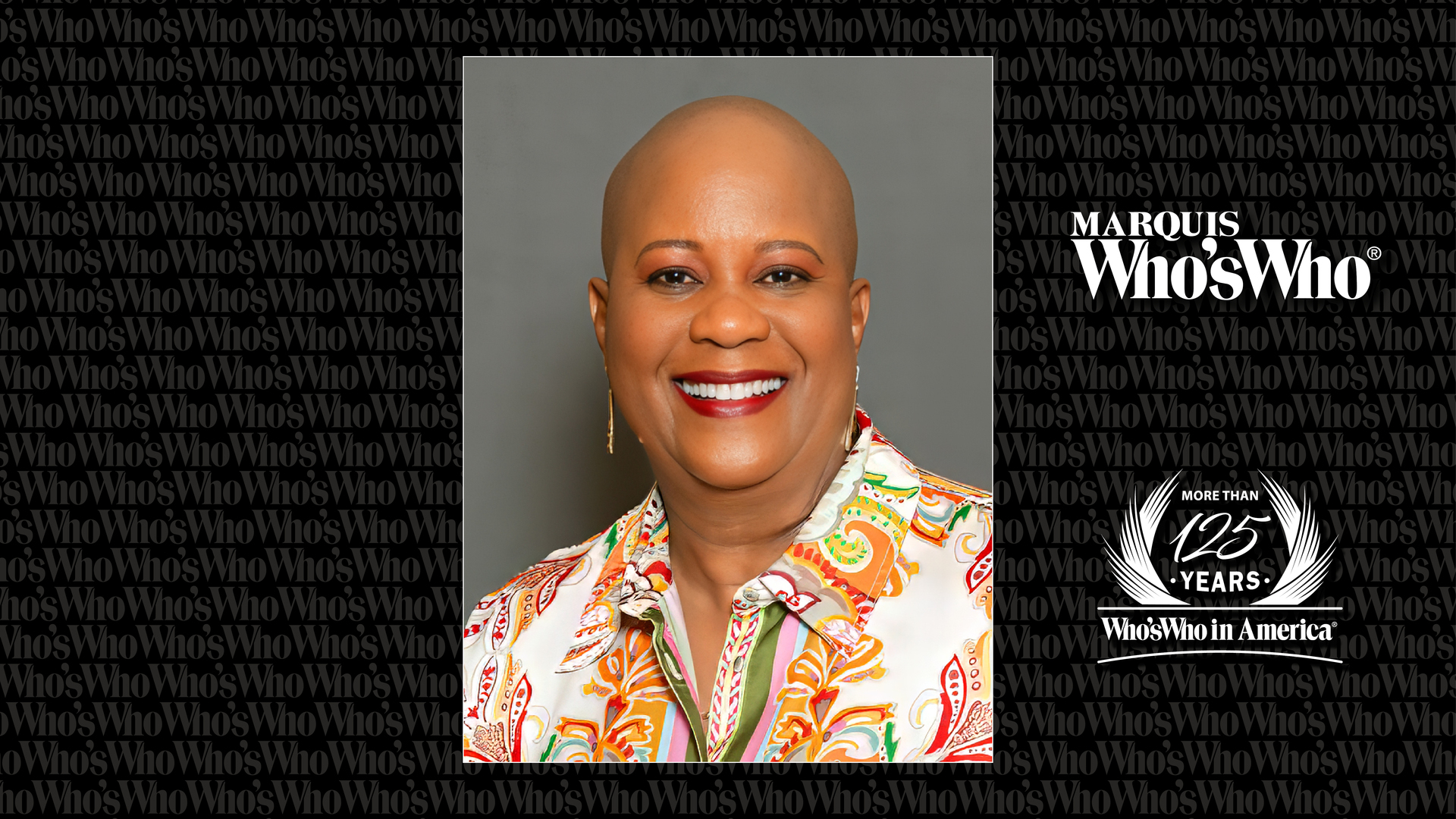
FORT LAUDERDALE, FL, October 26, 2026 (EZ Newswire) -- The executive director of Brief Strategic Family Therapy Institute, Joan A. Muir, PhD, has been honored by Marquis Who’s Who for her distinguished career as a clinical psychologist and her leadership in expanding access to evidence-based mental healthcare.
Dr. Muir has served as executive director of the Brief Strategic Family Therapy Institute at the University of Miami's Miller School of Medicine since 2007 and has been a licensed psychologist since 1996.
Developing a Notable Dissemination Model for Brief Strategic Family Therapy
Dr. Muir developed the dissemination model for Brief Strategic Family Therapy (BSFT), an intervention developed by a team of researchers at the University of Miami designed for families of adolescents with substance use and delinquent behavior. The dissemination model lays out requirements for municipalities and community agency executives on engaging families and the selection and training of therapists to build successful BSFT programs.
Under her leadership, the BSFT Institute has implemented the model across 35 states, as well as abroad in Sweden, Puerto Rico, and Hong Kong. Dr. Muir’s achievements include establishing three BSFT programs in Sweden, starting with the city of Stockholm, and nine programs across New York City funded by the New York City Administration for Children's Services.
Advancing the Field of Evidence-Based Therapy
In her role at the Brief Strategic Family Therapy Institute, Dr. Muir has watched the field shift substantially since she began her career three decades ago, toward specialized, evidence-based psychotherapies developed for specific populations and problems. As examples, she points to Brief Strategic Family Therapy and Dialectical Behavior Therapy for Borderline Personality Disorder developed by Dr. Marsha Linehan and her team at the University of Washington for their groundbreaking approaches that have driven measurably better outcomes in mental health treatment.
"Each began the same way: a small group of psychologists identified a problem in their community and pursued research to solve it, without knowing how far the work would eventually reach," said Dr. Muir.
For Brief Strategic Family Therapy, the research was inspired by a group of Cuban psychologists at the University of Miami, led by Dr. Jose Szapoznik, to address challenges experienced by Cuban immigrant and refugee families arriving in Miami. That intervention expanded to African American and Caucasian families over 40 years of research. In 2024, Dr. Muir led the BSFT Institute through a major transition, its acquisition by Empower Community Care, an emerging leader in the global dissemination of evidence-based therapies.Education and Professional Affiliations
Dr. Muir earned a Master of Arts in clinical psychology from Fordham University in 1989 and a Doctor of Philosophy in clinical psychology from the same institution in 1995. She completed a predoctoral fellowship at Yale University School of Medicine in 1993 and postdoctoral fellowships at Columbia University and the New York State Psychiatric Institute in 1995.
Dr. Muir remains actively involved with the Association of Black Psychologists, where she served as secretary of the national association and president of the South Florida chapter, which awarded her the chapter's Healing through Leadership Award in 2025. In addition, she has been the recipient of a research fellowship from the National Institute of Mental Health. She has been a member of the American Psychological Association since 1990.
Making an Impact on Clinical Psychology
Dr. Muir retired as executive director of the BSFT Institute in December 2025. Looking ahead, she intends to continue expanding her work to reach families from diverse backgrounds while ensuring her services remain accessible to those who can afford them and those who cannot. She maintains a private practice in Plantation, Florida.
About Joan A. Muir
Joan A. Muir, PhD, is a licensed clinical psychologist with more than 30 years of experience advancing evidence-based mental healthcare. From 2007 through 2025, she served as executive director of the Brief Strategic Family Therapy (BSFT) Institute at the University of Miami Miller School of Medicine, developing the dissemination model that expanded the intervention across 35 states, Sweden, Puerto Rico, and Hong Kong. Dr. Muir is actively involved with the Association of Black Psychologists, where she has served as national secretary and president of the South Florida chapter, and is a longtime member of the American Psychological Association. She holds a doctorate in clinical psychology from Fordham University, completed fellowships at Yale and Columbia universities, and maintains a private practice in Plantation, Florida.
About Marquis Who's Who
Since 1899, when A. N. Marquis printed the First Edition of Who’s Who in America®, Marquis Who’s Who® has chronicled the lives of the most accomplished individuals and innovators from every significant field of endeavor, including politics, business, medicine, law, education, art, religion and entertainment. Who’s Who in America® remains an essential biographical source for thousands of researchers, journalists, librarians and executive search firms around the world. The suite of Marquis® publications can be viewed at the official Marquis Who’s Who® website, marquiswhoswho.com.
Media Contact
info@marquisww.com
Summary.com Launches EDGE AI to Answer Leaders’ Toughest Questions With Executive Book Summaries
PHILADELPHIA, PA, October 26, 2026 (EZ Newswire) -- Soundview, Inc., the company behind Summary.com, today announced the launch of EDGE AI, a new feature that brings the insights of Executive Book Summaries® to the challenges professionals face at work every day. Users ask a specific business question and receive a focused answer drawn exclusively from Soundview’s library of Executive Book Summaries.
Built for managers, executives, entrepreneurs, and professionals, EDGE AI brings together relevant ideas from several Executive Book Summaries tailored to the user’s challenge. Questions can range from rebuilding trust within a team and delivering difficult feedback to leading a turnaround or maintaining momentum through uncertainty.
Sample questions include:
- “How do I rebuild trust on my team?”
- “How do I give feedback that actually lands?”
- “How do I lead through uncertainty?”
- “How do I run a one-on-one that isn’t just a status update?”
- “How do I build a culture that holds up as we grow?”
The result is a complete response that connects business concepts to the challenge at hand.
EDGE AI draws on the frameworks, strategies, and concepts from a library of more than 1,500 Executive Book Summaries. A question such as “How do I turn a failure into a lesson my team remembers?” brings together relevant thinking from multiple summaries into one focused answer, with links to each source summary for deeper exploration. Responses can be read online or downloaded as PDFs.
“Executive Book Summaries have always been about getting busy professionals to the ideas that matter,” said Josh Clement, President of Soundview. “EDGE AI changes the starting point. Instead of picking a book, you start with the challenge in front of you, and the answer comes straight from summaries our own editors have written and vetted.”
Built on Human Expertise
Every Executive Book Summary continues to be written, edited, and narrated by Soundview’s team of professionals. That work provides the foundation for EDGE AI.
For professionals balancing the challenges of today’s complex business environment, EDGE AI offers another way to put Soundview’s business learning resources to work: start with a current challenge and receive an answer grounded in the books that define modern business thinking.
EDGE AI is available now and included with a Summary.com subscription. To learn more and ask a business question, visit summary.com/edge-ai.
About Soundview, Inc. (Summary.com)
For nearly 50 years, Soundview has worked with authors and publishers to bring the ideas in leading business books to busy professionals around the world. Through Summary.com, the company offers Executive Book Summaries and business learning resources covering leadership, management, strategy, and professional development. Learn more at summary.com.
Media Contact
Jane Yugatan
Summary.com
service@summary.com
+1 484-730-1270

Ojin Launches Human+, an AI Roleplay Training Platform Where Employees Practice Hard Workplace Conversations With Lifelike AI Characters
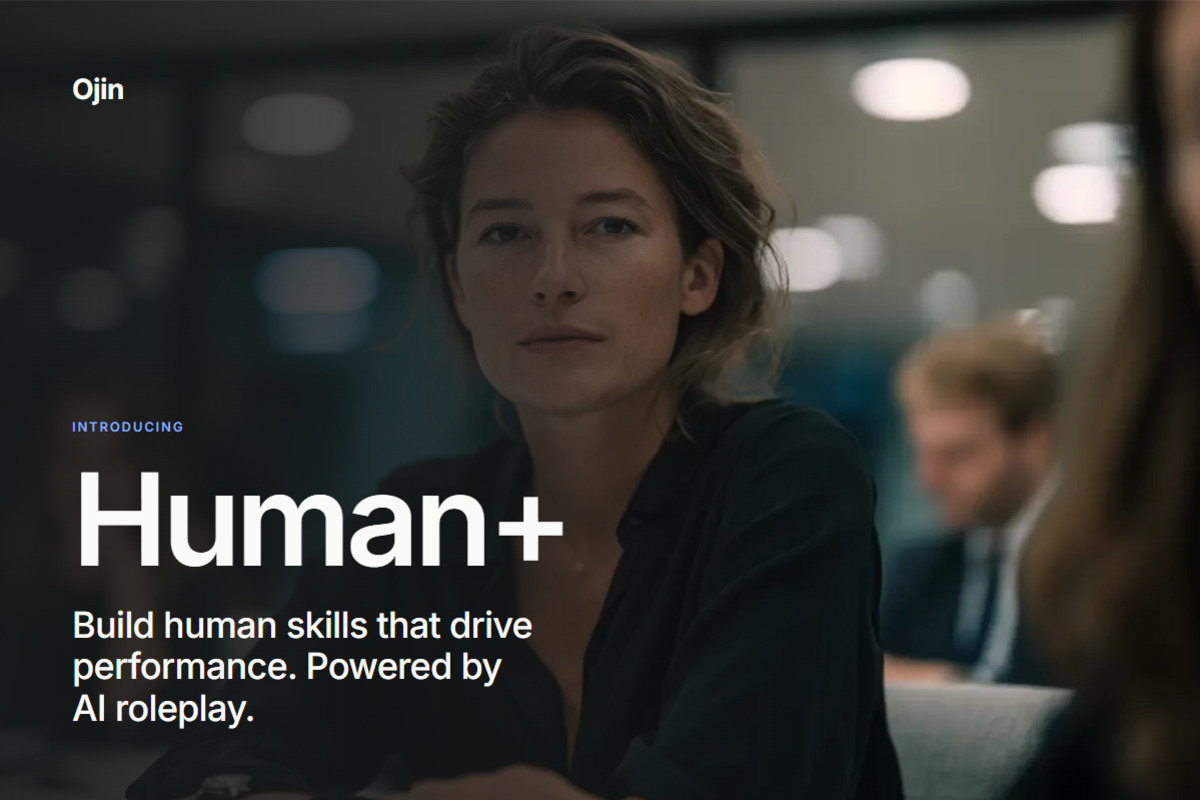
BERLIN, Germany, October 26, 2026 (EZ Newswire) -- Ojin, the Human AI Company, today announced the launch of Human+ by Ojin, an AI roleplay training platform for corporate learning and development. Human+ lets employees rehearse difficult workplace conversations live, out loud, with AI characters that have a real face and voice, then certifies who is ready and measures the results.
Most corporate training ends at a completion record. Employees finish an e-learning course, but leaders cannot tell who can actually handle the objection, the de-escalation, or the difficult feedback conversation. Live roleplay with trainers or actors is expensive and hard to schedule, and manager-led practice varies from one manager to the next.
The gap shows up wherever the conversation matters. A sales rep can complete product training and still lose the deal on the first objection. A manager can finish a leadership course and still avoid a difficult feedback conversation. A new hire can clear onboarding and still not be ready to speak to a customer. In regulated industries such as pharmaceuticals and financial services, companies need to show that employees can apply the rules in a live conversation, not just that they finished a module. A completion record proves attendance, not competence, which leaves organizations exposed when a rep misstates a product claim or mishandles a complaint.
Closing that gap the traditional way is expensive. Live workshops need trainers or actors, venues, and often travel, and they pull employees away from their work. Manager-led coaching takes hours from senior staff for every new hire. Because these programs are hard to scale, most employees get only a handful of practice sessions before they face the real conversation.
With Human+, Ojin closes those gaps through on-demand practice and assessment that every employee gets in the same way.
How Human+ Works
Human+ is built around four modules that take an employee from learning to verified skill.
- Learn: An AI coach teaches from the company's own onboarding material, product specifications, and policies.
- Roleplay: Employees practice spoken conversations with full-body AI avatars rather than talking heads. The avatars detect fine details of conversational delivery in real-time and respond to how each learner engages, pushing back or opening up as the conversation unfolds.
- Assessment: Unscripted certification scenarios test whether an employee is ready before they speak to a customer, patient, or direct report. This is designed for regulated, high-stakes roles.
- Real-time analytics: Fully customizable analytics track per-person and team-level performance as employees practice, showing skill progress rather than course completion and guiding what each employee works on next.
Companies can build any learning, roleplay, or certification session they need, trained on their own data and shaped to their own standards and skill philosophy. Use cases include cold calls, objection handling, customer service de-escalation, negotiation, feedback, manager conversations, new-hire onboarding, compliance, and certification. Human+ runs in more than 70 languages, so global teams train in the language they work in.
Beyond Sales Training
Many AI roleplay tools focus only on sales calls. Human+ is designed for the full range of conversations employees struggle with, from sales and customer service to leadership coaching, management, and compliance. It serves enterprise L&D, sales enablement, HR, and risk teams, including in regulated industries such as pharmaceuticals and financial services. Ojin also offers Human+ to universities and private school groups.
Practice-Based Training Drives Results
Ojin designed Human+ around the four outcomes training leaders are measured on: pipeline influenced by better-prepared sales teams, shorter time to productivity for new hires, lower spend on live workshops, and less manager time spent on routine coaching. In real-world deployments, practice-based training delivers more than $120 million in pipeline influenced, 60% shorter time to productivity, €800,000 in annual training costs avoided, and $700,000 in manager time returned.
Built With European Enterprise Requirements in Mind
Headquartered in Berlin, Ojin built Human+ to be SOC 2 Type II certified, GDPR compliant, aligned with the EU AI Act, and compliant with Saudi Arabia's Personal Data Protection Law (PDPL). Customers can choose dedicated infrastructure for data sovereignty, including dedicated model hosting.
Ojin owns its entire technology stack, so customers can deploy, configure, and modularize Human+ around their own needs. Human+ integrates with a customer's existing data sources, follows the customer's own compliance and security policies, and keeps customer data inside the customer's environment if desired.
That stack is Ojin's real-time Human AI Agent technology, which already powers interactive AI characters for global enterprise brands. It produces lifelike avatars that hold a real-time, natural spoken conversation rather than playing back recorded video.
"Companies spend a fortune on training, and most of it stops at a completion record," said Christian Mio Loclair, founder and CEO of Ojin. "Nobody learns a hard conversation by watching a video about it. You learn it by having it, getting it wrong in a safe place, and trying again. Human+ gives every employee that practice in their own language and gives leaders proof of who is ready before the real conversation happens."
"We spent years building AI characters that can hold a real-time conversation with a face and a voice," Loclair added. "Training is where that matters most, because the point is to feel like you are talking to a real person."
Availability
Human+ by Ojin is available now to enterprises and academic institutions worldwide. Organizations can book a demo at ojin.ai/human-plus.
Frequently Asked Questions (FAQs)
What is AI roleplay training, and how is it different from e-learning or an LMS?
AI roleplay training lets employees practice a conversation out loud with an AI character that responds in real time. With e-learning, they read or watch content and click through. Human+ by Ojin is an AI roleplay platform: employees talk live with a lifelike character that has a face and voice, can be interrupted, and pushes back. An LMS tracks who finished a course. Human+ shows who can actually handle the conversation.
Is Human+ only for sales training?
No. Human+ covers sales calls, objection handling, customer service de-escalation, negotiation, feedback, manager conversations, onboarding, and compliance. It also comes with ready-made coaches for onboarding, compliance, and manager skills from day one.
How do we certify every rep can handle an objection before they speak to a customer?
With Human+, reps take an Assessment session: an unscripted spoken exam against an AI customer, with no coaching and no human assessor. Each session is scored on skills, with the transcript behind every score. Managers can see who is certified and where each rep is weak before that rep talks to a real customer.
Can Human+ be used for compliance training in regulated industries like pharma and financial services?
Yes. Companies can build certification scenarios from their own rules. Examples are a pharma rep presenting a new indication, or a financial adviser explaining a product within regulatory limits. Each certification is backed by a scored, transcribed record of the conversation, not just a completion record.
What security and compliance standards does Human+ meet?
Human+ is SOC 2 Type II certified, GDPR compliant with a DPA available, aligned with the EU AI Act, and compliant with Saudi Arabia's PDPL. It is built by Berlin-based Ojin.
Can AI roleplay platforms run in our own cloud or on-premise?
Human+ can. Its sovereign deployment runs on dedicated infrastructure with model hosting and a stack customized to the customer’s compliance and security policies. It connects to the customer’s own infrastructure and keeps their data inside their environment.
How many languages does Human+ support?
More than 70, so global teams can train in the language they work in.
Can we build scenarios from our own content and policies?
Yes. Companies can build any learning, roleplay, or certification session from their own data, shaped to their standards and skill philosophy.
How do we measure whether training improved performance?
Human+ tracks skill progress per person and per team as employees practice, not just course completion. Ojin reports a 60% reduction in time to productivity in real-world use.
Who is behind Human+?
Human+ is built by Ojin, the Human AI Company, founded by CEO Christian Mio Loclair and based in Berlin. It runs on the same real-time Human AI Agent technology that powers Ojin's interactive characters for enterprise brands.
About Ojin
Ojin makes Human+, where employees practice hard workplace conversations live with AI characters that have a real face and voice. It runs on Ojin's real-time Human AI Agent technology. Founded in 2020 and headquartered in Berlin, Germany, Ojin (formerly Journee) is operated by Journee Technologies GmbH and led by founder and CEO Christian Mio Loclair. Its products include Human+, Human Agents, the Human Presence and Human Portrait face models, and the Ojin Model API. Learn more at ojin.ai.
Media Contact
Neil Coleman
COO, Ojin
neil.coleman@ojin.ai
America’s Top Young Innovator 2026 Honors Shalaan Umar as Young Inventors Gain International Recognition
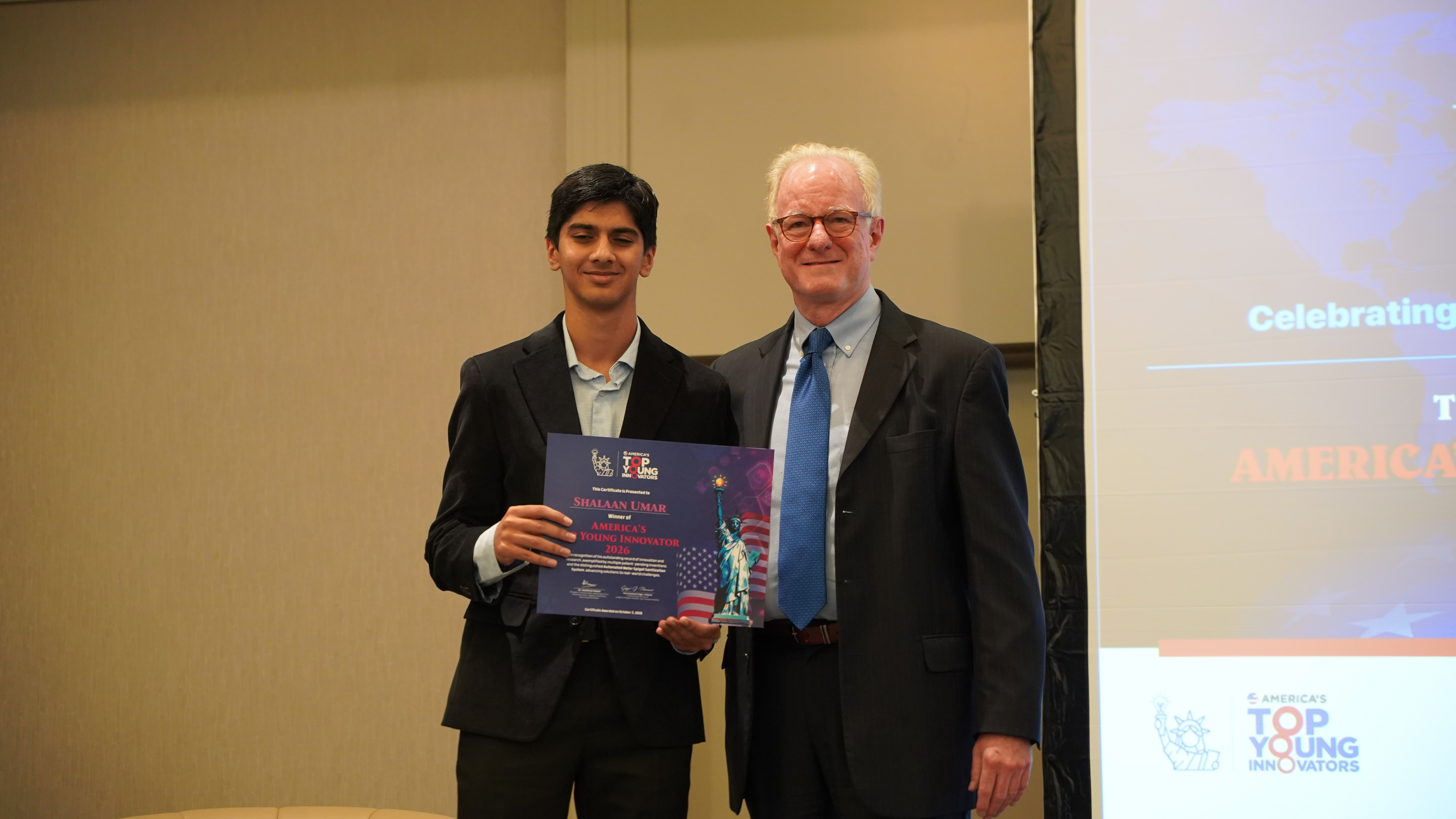
DALLAS, TX, October 26, 2026 (EZ Newswire) -- Shalaan Umar has been named America’s Top Young Innovator 2026, earning one of the highest distinctions in the annual innovation competition that recognizes exceptional young minds developing original solutions to real-world challenges.
Umar earned the prestigious title for his outstanding portfolio of scientific research and multiple patent-pending inventions, particularly his Automated Water Spigot Sanitization System, an innovative solution addressing hygiene, water scarcity, and public health challenges. His achievement exemplifies the competition’s mission to recognize young inventors whose creativity, scientific ingenuity, and technological contributions demonstrate the potential for meaningful societal impact.
Organized by the International Academy of Innovation, Research and Entrepreneurship (IAIRE), America's Top Young Innovators has emerged as an international platform celebrating outstanding student-led innovation, bringing together promising young researchers, inventors, and entrepreneurs working to address some of the world's most pressing challenges.
America's Top Young Innovator 2026: Category Winners
Five additional prestigious awards recognized outstanding achievements across emerging scientific and technological disciplines.
Siddhi Pareek, Maryam Bhat, and Giaa Warikoo received the Best Innovation in AI in Healthcare Award, recognizing their exceptional application of artificial intelligence to advance intelligent healthcare solutions.
Rishi Sai Poola, Ismael Zaidi, and Qasim Ahmad earned the Best Innovation in Genetics & Healthcare Award for their pioneering scientific research and innovative applications of genetics and biotechnology to address critical healthcare challenges.
Suhani Sharma received the Best Innovation in Sustainability & Engineering Design Award, recognizing her exceptional design thinking, user-centered engineering, and development of sustainable solutions.
Ansh Pathak, Ansh Gandhi, and Eashaan Dispenza were honored with the Best Innovation in Aerospace Award for developing an innovative solution aimed at removing space debris from Earth's orbit, contributing toward safer and more sustainable space exploration.
Zahra Fatima Khan earned the Best Innovation in Mental Health Award for her human-centered innovation addressing critical challenges in mental well-being.
UAE's Top Young Innovator 2026: International Excellence
The competition's growing international reach was further demonstrated through UAE's Top Young Innovators 2025–26, the UAE edition of the initiative, which recognizes exceptional young inventors and provides a pathway to the global finals of America's Top Young Innovators.
The winners were determined through a rigorous, two-stage evaluation process, beginning with independent assessments by the distinguished international judging panel, followed by public voting that attracted over 28,000 voters from across the UAE. Combining expert scientific evaluation with extraordinary public participation, the competition celebrated not only exceptional technological innovation but also the growing enthusiasm for young inventors and scientific excellence across the nation.
Danell Koshy Gijo and Habel Jacob Gijo, representing GEMS Legacy School and Our Own Indian School, emerged as the UAE's Top Young Innovators 2026 for EyesON, an AI-powered assistive technology designed to help visually impaired individuals navigate independently using intelligent object detection and real-time guidance.
Other distinguished category winners included Maanya Lalithraj, Chloe Jreije, and Noah Choucair of Dubai American Academy for PathoScan, an innovation advancing early colorectal cancer detection, and Rianna Chaudhui and Arham Kidwai of GEMS Modern Academy for NeuroPen, an AI-enabled approach to early detection of neurodegenerative diseases.
UAE Schools Recognized for Innovation Excellence
The UAE competition also honored educational institutions demonstrating exceptional leadership in cultivating young innovators, advancing future-ready education, and fostering a culture of scientific creativity and technological excellence.
GEMS Legacy School, Dubai, and Our Own Indian School, Dubai, received the prestigious Innovation Excellence Award for nurturing the winners of UAE's Top Young Innovator 2026, demonstrating their outstanding institutional commitment to developing exceptional young inventors and researchers.
GEMS Legacy School, Dubai, earned two additional distinctions: the Innovation Spirit Award for recording the highest student participation in the competition, and the Leading School for Girl Innovators Award for achieving the highest number of entries submitted by female students, reflecting its exceptional commitment to inclusive innovation.
Delhi Private School, Sharjah, received the AI/ML Trailblazer Award for submitting the highest number of innovations focused on Artificial Intelligence and Machine Learning, demonstrating leadership in emerging technologies.
Al Ain British Academy, GEMS Our Own English High School, and Habitat School – Al Jurf were honored with the Sustainability Champion Award for their outstanding contributions to innovations aligned with the United Nations Sustainable Development Goals (UNSDGs), highlighting their commitment to nurturing environmentally conscious young innovators.
Together, these institutional honors recognize schools that are transforming education by empowering students to become creators of technology, pioneers of scientific discovery, and innovators capable of addressing global challenges.
Evaluated by a Distinguished International Judging Panel
The competition brought together an eminent judging panel featuring internationally recognized experts from NASA, the World Health Organization, the United States Air Force, and the artificial intelligence industry. Chaired by Dr. Hashima Hasan, NASA Astrophysicist and Program Scientist, the panel included Dr. Peter Guida, Radiation biologist at NASA; Dr. Zisis Kozlakidis, Head of Laboratory Services and Biobanking at WHO's International Agency for Research on Cancer; Omar Syed, AI, Blockchain and technology expert from NASA Glenn Research Center; Sage J. Phoenix, former U.S. Air Force combat mission commander; and Ben Gold, AI strategist and founder of AI Academy for All.
The distinguished panel evaluated innovations for originality, scientific rigor, technical merit, and real-world impact, with final UAE results determined through a combination of expert evaluation and public voting.
Inspiring the Next Generation of Global Innovators
Through America's Top Young Innovators and its international editions, DiscoverSTEM Foundation and International Academy of Innovation, Research and Entrepreneurship continue to champion a powerful vision: empowering young people to move beyond conventional classroom learning and become inventors, researchers, and problem-solvers capable of shaping the future.
About DiscoverSTEM
DiscoverSTEM is a Texas-based research and innovation organization dedicated to nurturing young inventors, scientists, researchers, and entrepreneurs through hands-on scientific research, innovation development, and intellectual property creation. For more information, visit discoverstem.info.
WheelMetrics Launches Free Weekly Stock Screener for the Wheel Strategy
WASHINGTON, DC, October 26, 2026 (EZ Newswire) -- WheelMetrics, an educational and stock-screening platform founded by quantitative investor Adrian Rosebrock, has launched a free online resource identifying stocks and options setups for investors using the Wheel Strategy.
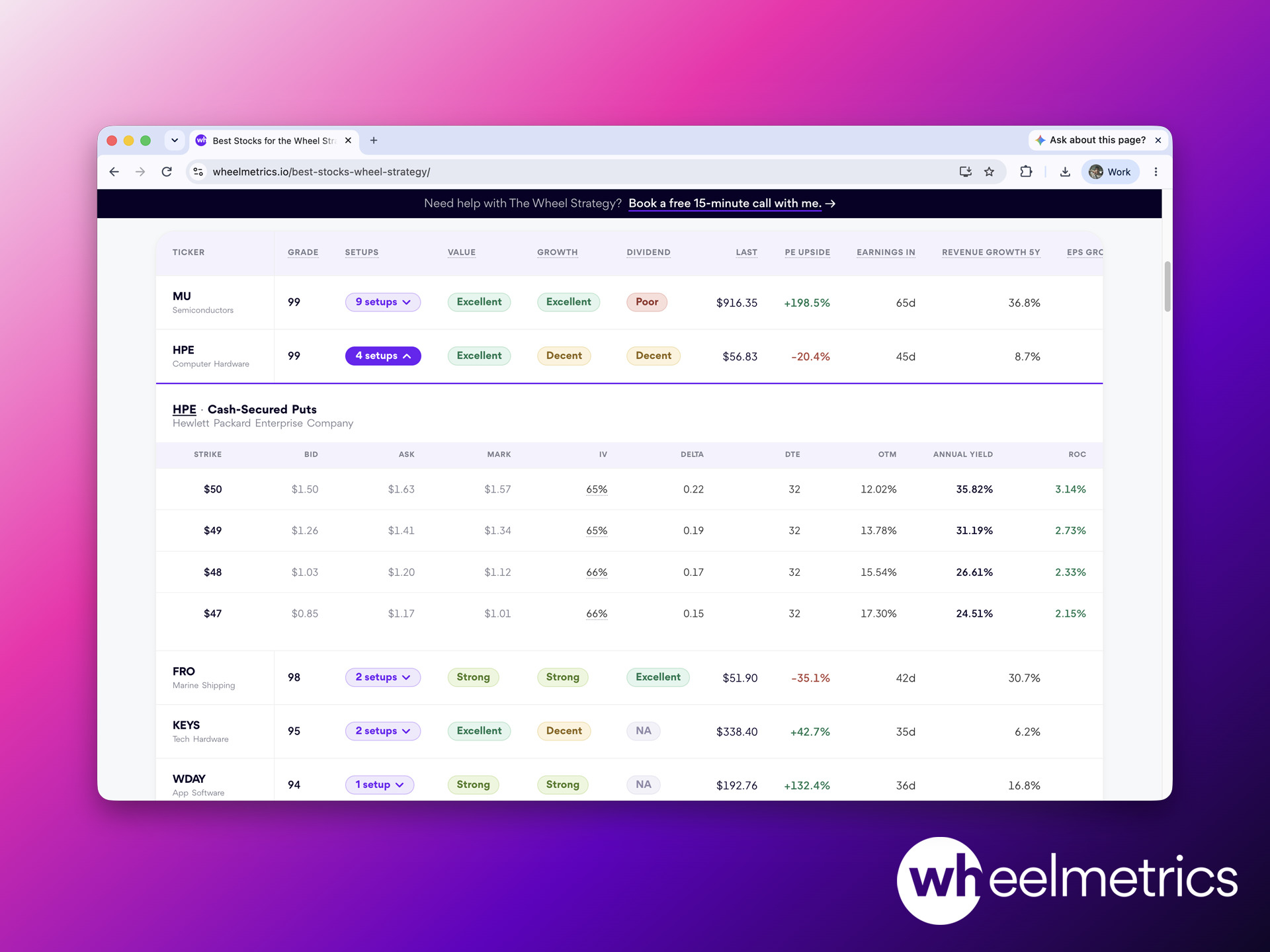
The new "Best Stocks for the Wheel Strategy" page publishes a regularly updated list of companies that pass Rosebrock's fundamental screening process, alongside specific cash-secured put contracts that meet his trading criteria. The page refreshes every Monday and is available to the public without registration or a paid subscription.
The Wheel Strategy involves selling cash-secured puts on stocks an investor is willing to own, accepting shares if assigned, and potentially selling covered calls against those holdings. Although the mechanics are relatively straightforward, selecting suitable underlying companies remains a challenge, particularly when attractive option premiums encourage traders to overlook weaknesses in the businesses themselves.
WheelMetrics approaches the process by evaluating stock quality before examining available options. Each week, Rosebrock's algorithms screen more than 4,000 publicly traded companies across six fundamental factors: valuation, growth, profitability, debt, cash conversion, and dividend quality.
Only companies that satisfy the fundamental criteria advance to the options screening stage, where contracts are evaluated based on delta, time to expiration, annualized yield, open interest, return on capital, and earnings timing.
“When the Wheel Strategy goes wrong, it almost always goes wrong at the stock level, not the options level," said Rosebrock, founder of WheelMetrics. “Get assigned and you own the company. And if you’re assigned on the wrong company with no fundamental floor, it can quickly drop, leaving you holding the bag. Every Monday I start by asking which businesses I’d actually want to hold for six to twelve months, and only then look at the premiums.”
The resource features two screening boards. One focuses on options with 30 to 52 days until expiration, Rosebrock's preferred timeframe, while the other covers weekly contracts and incorporates momentum indicators to provide additional context for trade timing.
The screening system also excludes put contracts scheduled to expire after the underlying company's next earnings report, helping traders avoid positions exposed to scheduled earnings announcements. During periods when few opportunities meet the screening requirements, the published boards may intentionally contain only a limited number of qualifying setups.
Rosebrock developed the system following a career in software engineering and artificial intelligence. He earned a PhD in computer science in 2014, founded the computer vision education platform PyImageSearch, and sold the business in 2021. He subsequently spent five years studying quantitative investing and developing systematic trading methods before founding WheelMetrics.
The newly launched page publishes the output of the same screening process he uses to trade his own capital. Additional research tools, including hourly rescreening during market hours, are available through WheelMetrics Pro.
Rosebrock also maintains a public, real-money Wheel Strategy portfolio established on January 1, 2026. An independent certified public accountant has examined its initial trading results against brokerage records, with findings published in the company's first independent performance verification report.
The review covered January through May 2026 and used agreed-upon procedures to check reported trading figures. It was not an audit or an endorsement of the strategy. Rosebrock has committed to publishing updated CPA verification reports every six months, regardless of whether the portfolio records gains or losses. Under his reporting methodology, put assignments are counted as losses even when the original premium is retained.
About WheelMetrics.io
WheelMetrics is an educational and stock-screening platform founded by Adrian Rosebrock, PhD, to help self-directed investors approach the Wheel Strategy with a systematic process. The platform provides stock selection research, options analysis, and position management resources through free educational content and its WheelMetrics Pro membership. Its screening methodology evaluates company fundamentals before identifying qualifying options contracts. WheelMetrics provides educational and informational resources only, not individualized investment advice. Options trading involves substantial risk, including the potential loss of capital. Past performance does not guarantee future results. For more information, visit wheelmetrics.io.
Disclaimer
The information provided in this release and on WheelMetrics.io is strictly for educational and informational purposes and does not constitute investment, financial, legal, or tax advice, nor a recommendation to buy or sell any security or options contract. WheelMetrics is not a registered broker-dealer or investment adviser. Options trading involves substantial risk, is not suitable for all investors, and can result in the loss of all or more than the initial investment; investors should review the "Characteristics and Risks of Standardized Options (ODD)" at optionsclearing.com before trading. Past performance, real-money portfolio results, and CPA-verified agreed-upon procedures do not guarantee future returns, and individual results will vary based on market conditions, timing, fees, and execution.
Media Contact
Adrian Rosebrock
adrian@wheelmetrics.io
Fraud Teams’ First Responder: Sift Extends Its AI Platform With Fraud Attack Defense Suite
SAN FRANCISCO, CA, October 26, 2026 (EZ Newswire) -- Sift, the ML-native fraud prevention platform serving more than 700 global brands, including Patreon, Turo, and Remitly, now offers the Sift Fraud Attack Defense Suite. The suite is a centralized system of three agents, one for each stage of an attack: Attack Detection Agent, Attack Investigation Agent, and Attack Response Agent.
The suite builds on AI that Sift customers already use. The Sift Score and Workflows decide on every event in real time, the Risk Activity Agent helps analysts investigate account takeover, and the Sift MCP Server (read-only) lets teams connect their own AI tools to Sift data. The Fraud Attack Defense Suite adds the layer that watches for the attack itself.
A fraud attack doesn’t send a warning. It looks like a batch of stolen cards tested with small charges, a wave of fake accounts overnight, or chargebacks that creep up over a weekend. Attack Detection Agent learns what normal looks like for each business, including time-of-day and day-of-week patterns, and alerts the team when traffic breaks from that baseline, so fraud teams are the first to know instead of the last. In its first month, it caught a multi-hour 20x transaction spike at a travel customer and a 13-hour card-testing surge at a retail customer.
Facts & Figures
- What it is: The Sift Fraud Attack Defense Suite, a centralized system of three agents: Attack Detection Agent, Attack Investigation Agent, and Attack Response Agent.
- What it does: Detects a fraud attack as it emerges, shows the accounts and transactions behind it, and pairs every alert with a playbook of next steps.
- Availability: Attack Detection Agent is generally available and included in the core Sift platform. All three stages are available at a foundational level today. Investigate opens the events behind an alert, and Respond provides playbooks and alert tracking. Automated response is planned.
- Control: Your team sets alert sensitivity, moves every alert through its lifecycle, and will choose which responses to automate as they become available.
- Heritage: Part of a platform that has applied machine learning to fraud since 2011, alongside the Sift Score, Workflows, the Risk Activity Agent, and the Sift MCP Server.
- Setup: Runs on the event data customers already send to Sift. No new install, no new fields, no integration work.
- Starter alerts: Five, live from day one: BIN transaction velocity, BIN user velocity, chargebacks, low-value transaction surges, and registration velocity.
- Early results: In its first month, Attack Detection Agent caught a multi-hour 20x transaction spike at a travel customer and a 13-hour card-testing surge at a retail customer.
Why attacks need a first responder
Coordinated fraud attacks are fast, organized, and expensive in analyst time. In Sift’s view, too many teams still meet them with dashboards checked by hand, exports to a business intelligence tool, or a colleague who happens to notice a number that looks off. By then, the attack is already underway.
How the Fraud Attack Defense Suite works
Detect. Attack Detection Agent monitors a business’s traffic continuously and alerts the team when key patterns change against the baselines and rules the team has set. Related detections group into one alert, so a coordinated attack doesn’t flood the queue. Teams can tune each alert’s sensitivity and preview how a setting would have performed against their own traffic. Alerts arrive in the Console, and critical alerts can also go to email.
Investigate. From any alert, one click opens the events behind it, including the accounts, transactions, and attributes that tie them together. Analysts start with a picture of the attack instead of a number that changed.
Respond. Every alert pairs with a playbook of investigation steps and recommended actions. A person moves each alert through a clear lifecycle, from open to acknowledged to resolved or marked a false positive. Every alert stays in a searchable history for audit and post-incident review. The team keeps the decision. Sift does the legwork of surfacing the evidence and the next steps.
Built on the Sift Global Data Network
The suite is built on the Sift Global Data Network, which is powered by more than 1 trillion annual events and signals from 34,000 sites and apps. It learns from activity across merchants and industries. The five starter alerts ship with defaults informed by industry benchmarks, so they are useful on day one. From there, Attack Detection Agent measures each business against its own history, because a threshold built from someone else’s traffic wouldn’t fit. The suite works alongside Sift’s decisioning engine, where the Sift Score and Workflows act on every event in less than 150 ms.
For teams that used to learn about attacks from a downstream number, catching one while it is still underway reduces what it costs. “Attacks need a first responder, not a police report. Your team should never be the last to know, so we built something to sound the alarm as soon as traffic breaks from normal,” said Raj Jain, Chief Product Officer at Sift.
Jain was equally direct about the technology. “Detection today runs on statistical methods, not generative AI, and we won’t dress it up as something else. What makes it an agent is that it does the work for you.”
Attack Detection Agent is generally available now and included in the core Sift platform. Attack Investigation Agent and Attack Response Agent are available at a foundational level today. Sift plans to add reasoning, recommendation, and automation to both, so analysts can start with an investigation already underway and choose to have responses put in place for the attack patterns they trust.
Learn more about the Fraud Attack Defense Suite at sift.com/platform/ai or see it in action at sift.com/demo.
About Sift
Founded in 2011, Sift is the industry-leading fraud prevention platform helping digital brands deliver trust at scale and move business forward with confidence. Backed by a global data network of more than 1 trillion annual events and direct access to fraud experts, Sift helps more than 700 global brands stop fraud, approve more customers, and scale without compromise. Brands including Patreon, Turo, and Remitly rely on Sift to unlock growth and deliver seamless, secure customer experiences. Visit sift.com and follow Sift on LinkedIn.
Media Contact
Arwen Heredia
Sr. Director, Corporate Marketing
press@sift.com
Done Switzerland Expands Operations to Türkiye
BAAR, Switzerland, October 26, 2026 (EZ Newswire) -- Done, a group of companies providing logistics, supply chain management, and financing solutions since 2011, has opened operations in Türkiye and named Filiz Ünal as CEO of Done Türkiye. The move makes Türkiye the group's fourth market alongside Switzerland, Poland, and Ukraine, extending a footprint that already serves more than 400 SME distributors across Eastern Europe and the Black Sea region.
A Market That Banks Aren't Fully Reaching
Türkiye imported about $365.4 billion of goods in 2025. From 2023–2025, 41.8% of Turkish SMEs reported being partially or fully credit-constrained, compared with between 9.5% and 25.2% in the Western Balkan economies covered by the OECD's SME Policy Index: Western Balkans and Türkiye 2026. The report also notes that Türkiye stands out among the economies it covers for SMEs' growing use of capital markets, amid robust growth in private equity and venture capital. Globally, the Asian Development Bank estimates the trade finance gap at $2.5 trillion in 2025, unchanged from 2023 and equivalent to about 10% of global trade, with 80% of banks surveyed expecting demand to keep rising as companies diversify supply chains.
"Despite having one of the region's most developed non-bank financial infrastructures, import-driven SME demand has outgrown what collateral-based lending can absorb. This is the setting Done was built for," saidDmitrii Rivkin, founder of Done, the group of companies, adding that the company works directly with the underlying trade transaction — buying goods from factories on behalf of SME importers — which gives lending partners visibility and risk control over deals that typically fall outside conventional lending criteria.
Leadership in Türkiye
Filiz Ünal will lead Done Türkiye’s operations. She has more than 30 years of experience in Türkiye’s factoring and financial services sector, including serving as Deputy Secretary General of the Association of Financial Institutions, as Secretary General of the Turkish Factoring Association, and as Executive Vice President at Garanti Factoring. At Done Türkiye, she developed the market-entry strategy and operating model and is responsible for partner relations and business development.
How the Model Works
Rather than lending against inventory, Done Switzerland buys goods directly from manufacturers in Europe and Asia on agreed-upon payment terms, stores them in licensed and insured partner-operated warehouses, and releases them to the client only after payment is received. Clients can take a full shipment and pay on arrival, or draw down inventory gradually — an approach Rivkin said reflects the reality that “demand is rarely linear, and inventory does not always move at a predictable pace.” Before placing an order, the company screens each supplier's legal standing, ownership and reputation through due-diligence platforms including AsiaVerify and World-Check from the London Stock Exchange Group, and keeps a time-stamped record of every item in storage that can serve as an independent, auditable trail should a dispute with a supplier reach a court.
A Group Built on Trade, Not Lending
With 15 years of operating experience in logistics, Done, according to company data, completed more than 4,000 transactions in 2025 with 1,808 supplier factories for 417 clients, with an average deal size of $50,000, and posted $315 million in annual turnover. The company says it has recorded no non-payments since it began operating. Done employed more than 250 people across its offices in 2025. Türkiye is the latest addition to a group that already operates in Switzerland, Poland, and Ukraine; the company says it is scoping three further market entries over the next year as it builds out its presence across Eastern Europe and the Black Sea region.
About Done
Done is a global group of companies that has provided logistics, supply chain management, and financing solutions since 2011 and is headquartered in Switzerland. Done offers services to more than 400 SME distributors with operations in Eastern Europe and the Black Sea area (Switzerland, Poland, Türkiye, Ukraine). The founder of the group is Dmitrii Rivkin. Its Turkish business is led by CEO Filiz Ünal, with Anton Skorobogatov, a member of the board of Done Türkiye. The group has run more than 4,000 trade transactions in 2025 with 1,808 suppliers for 417 clients and manufacturers across the globe. For more information, visit done.swiss.
Media Contact
Tetiana Kazanzhy
marketing@done.partners
.jpeg)
From Monaco to Jeddah: Red Sea Yacht Show Positions Jeddah as a New Global Yachting Destination
JEDDAH, Saudi Arabia, October 26, 2026 (EZ Newswire) -- Jeddah, Saudi Arabia’s historic gateway to the Red Sea, is preparing to host the inaugural Red Sea Yacht Show from Oct. 14–17, 2027, at Jeddah Yacht Club & Marina. The event represents a significant step in positioning the city on the global map of luxury yachting and marine tourism, while bringing leading international brands, yacht owners, investors, and industry specialists to one of the world’s most distinctive emerging destinations.
The project’s international journey began in Monaco in Sept. 2026, where Tahaluf and Sela signed an agreement to develop and deliver the new show. The signing was attended by His Royal Highness Prince Saud bin Mishal bin Abdulaziz Al Saud, Deputy Governor of the Makkah Region, who will serve as Chairman of the Red Sea Yacht Show Host Committee.
Under the partnership, Tahaluf and Sela are drawing on international expertise associated with the Monaco Yacht Show while creating a distinctly Saudi experience shaped by Jeddah’s character, hospitality, and maritime heritage. The collaboration is designed to connect the global yachting industry with Saudi businesses and introduce international owners and visitors to the expanding network of marine and tourism destinations across the Red Sea.
Mike Champion, Chief Executive Officer of Tahaluf, said: “The ambition extends far beyond organising a traditional yacht exhibition. The Red Sea Yacht Show is being developed as an international platform connecting the global yachting community with Saudi Arabia’s growing luxury tourism and marine services sectors, opening opportunities for local companies and strengthening the potential for long-term commercial and investment partnerships."
Champion added: “The choice of Jeddah reflects the city’s strategic position on the Red Sea, its established role as an international gateway, and the strength of its marine, tourism, and hospitality offering. Together with continuing investment in infrastructure and destinations across the Red Sea region, these advantages position Jeddah to attract yacht owners, industry leaders, and international visitors."
For Tahaluf, the opportunity also lies in building a sustainable economic ecosystem around the show. Mohaned Mahjoub, Vice President of Tahaluf, said: "The event will connect international companies operating across the yacht sector with Saudi businesses, supporting cooperation, knowledge transfer and investment in maintenance, fuelling, logistics and other specialised marine services."
“The real opportunity lies in building an integrated ecosystem around the yachts themselves by connecting international operators with local companies working in maintenance, fuelling, logistics and other services. This will enable Saudi companies to participate in a market with significant long-term growth potential," said Mahjoub.
That integrated approach will take the Red Sea Yacht Show beyond the concept of a temporary event. By bringing together yacht owners, builders, brokers, operators, luxury brands, and Saudi companies, the show aims to encourage lasting commercial partnerships and expand the participation of local businesses in the value chains supporting the global marine industry.
The visitor experience is also intended to extend beyond the yachts themselves. Subject to final participation agreements, the show will bring together luxury automobiles, collectible art, fine jewellery, haute couture, and private aviation, creating a carefully curated platform at the intersection of business, tourism, and luxury lifestyle.
Jeddah’s appeal as the host city extends well beyond its marina. The Red Sea’s coral reefs, diving sites, natural landscapes, and maritime heritage offer yacht owners and international visitors experiences beyond a conventional marina stay. This combination of a connected city, a distinctive marine environment, and Saudi hospitality provides the show with an identity rooted in its destination.
Existing infrastructure is supporting that ambition. Jeddah Yacht Club & Marina offers more than 95 berths, while new marina developments along Saudi Arabia’s Red Sea are adding capacity for large yachts. Alongside the growth of tourism destinations, hospitality facilities, and specialised services, these developments are strengthening the region’s appeal as part of international cruising itineraries.
Mahjoub said: “The timing of the show reflects the progress being made across Jeddah and the wider Red Sea region. Infrastructure and tourism projects are creating opportunities that were not available to the same extent only a few years ago, providing a foundation for stronger links between Saudi Arabia and the global yacht industry."
The economic opportunity is expected to extend across tourism, hospitality, transport, marine services, and luxury retail as partnerships develop and international brands and participants prepare for the inaugural edition. Tahaluf’s ambition is to establish a sustainable annual platform that attracts visitors and companies, supports the growth of luxury marine tourism and creates enduring commercial opportunities for Saudi businesses.
Mahjoub stressed: “The show’s success will not be measured solely by attendance during the event. Its longer-term value will be determined by the partnerships it establishes, the opportunities it creates for local companies, and its ability to encourage more international yacht owners to discover Jeddah and the Red Sea as a distinctive global destination."
With its inaugural edition scheduled for Oct. 2027, the Red Sea Yacht Show is now entering a critical development phase. The period ahead will allow the organisers to finalise partnerships, confirm participating brands, and create an experience that reflects Jeddah’s international ambitions and the rapid transformation of Saudi Arabia’s tourism and marine sectors.
Media Contact
Ema Linaker
ema@brandlinksme.com

ASMED Founder Dr. Koray Erdoğan to Speak at the 10th World FUE Institute Workshop in Lima
ISTANBUL, Türkiye, October 26, 2026 (EZ Newswire) -- ASMED Surgical Medical Center announced that its founder and medical director, Dr. Koray Erdoğan, will speak at the 10th World FUE Institute Workshop, scheduled for April 21–24, 2027, in Lima, Peru.
The four-day event will bring together hair-restoration professionals for scientific exchange and hands-on learning, according to the organizer's announcement. It will be the institute's tenth workshop edition.
The World FUE Institute (WFI) is an international organization focused on education and knowledge exchange in follicular unit extraction, or FUE. Its activities include research, practical workshops, and educational programs, bringing physicians together to share experience in hair-restoration surgery.
Erdoğan founded ASMED in 2001 and has performed follicular unit extraction, or FUE, since 2004. His professional profile at the International Alliance of Hair Restoration Surgeons records that he co-founded the World FUE Institute in 2016, initially serving as vice president and later as president. He remains listed among the institute's founding members.
The workshop series began in Tenerife, Spain, in November 2016. Subsequent editions have included Istanbul in 2022 and São Paulo, Brazil, in 2025, followed by Limassol, Cyprus, in 2026. The Lima event will continue the series in South America.
Erdoğan attended the ninth workshop in Limassol on May 13–16, 2026. The institute's official photo archive documents that meeting, with galleries from the four workshop days. His speaking engagement in Lima will continue his participation in the institute's international events.
At ASMED in Istanbul, Erdoğan's approach to natural-looking hair transplant results considers hairline design, donor supply, and possible future hair loss together before treatment.
For patients comparing hair transplant clinics and surgeons in Türkiye, ASMED's hair transplant approach explains how individual hair characteristics inform a proposed graft count and coverage plan. It also describes Erdoğan's personal role in consultation, surgical planning, and recipient-site creation.
About ASMED
ASMED Surgical Medical Center is a hair-transplant clinic in Istanbul, Türkiye, founded by Dr. Koray Erdoğan. Its approach aims to achieve natural-looking hair transplant results while considering donor capacity, individualized hairline design, and possible future hair loss. For more information, visit hairtransplantfue.org.
Media Contact
Eren Tatar
Reputo Digital
info@reputodigital.com

Provocative Breast Cancer Awareness Campaign Wants Women to Send Nudes… to Themselves
NEW YORK, NY, October 26, 2026 (EZ Newswire) -- This Breast Cancer Awareness Month, female-owned and led agency YARD NYC is hijacking one of the internet’s most familiar requests, "Send Nudes," asking women to take topless selfies — for themselves. The purpose? To track visual changes in the breasts, which can be an early indicator of breast cancer. YARD NYC is on a mission to empower a new generation of women with awareness and resources at a time when breast cancer is more commonly affecting women under the age of 50.
Based on research published in the World Journal of Clinical Oncology showing that 62.6% of women are not confident they would notice a change in their breasts, the grassroots campaign is asking women to "Send Nudes" to themselves every six months as a reference for any visual changes and hopefully early detection.
"We know every line on our face, every gray hair on our heads, every squish on our bellies," said Ruth Bernstein, CEO of YARD NYC. "Culturally, we're obsessed with all these other bodily changes, but we don't even notice our own tits. So what if we turned the familiar language of sending nudes into a reminder to know your own boobs?"
American Cancer Society research shows that breast cancer rates are rising twice as fast among women under 50 than women aged 50 and older, and research from the American Public Health Association found that 80%–85% of women diagnosed have no family history of breast cancer. Furthermore, women in their 30s tend to think of breast cancer as an "older" woman's problem. But as breast cancer rates rise, YARD NYC is calling on women to save some topless pics, and pay closer attention.
"Breast cancer awareness has a long history of telling women what to worry about. We wanted to give them something to actually do. And to reach a younger generation in a language that feels relevant to them, not like another health warning," said Caroline Seklir, Head of Strategy at YARD NYC. "The idea is that we're normalizing this for a new generation of women that are coming of age in a selfie-driven world, and giving them the power of awareness on their own terms — long before they're of age for a mammogram."
The eye-catching campaign centers on wild postings throughout NYC, which plasters "SEND NUDES" and a QR code on busy intersections like North 7th and Bedford in Williamsburg and near Dimes Square in the Lower East Side. The QR code leads to a campaign landing page at sendnudestoyourself.com that reveals the real recipient of the nudes: yourself, and links to breast health resources for visible signs and symptoms such as unexplained change in size or shape, dimpling anywhere on the breast, and discharge from the nipple, among other signs.
"Send Nudes" is live now through the end of October. In addition to OOH and a dedicated website, YARD NYC is taking to social media to drive online support and is launching limited-edition stickers and merch that mimic dating culture's "You Up?", "Pic?", and more as prompts for women to Send Nudes.
About YARD NYC
YARD NYC is an independent, female-led, creative company that turns brands into beacons of change that move people, businesses, and the world.
Media Contact
Lindsey Schreiber
Toni Lee Communications
lindsey@tonileepr.com

Lucra Adds Real-Money Peer-vs-Peer Play and Tournaments to Devilfish’s Skill Games Platform
NEW YORK, NY, October 26, 2026 (EZ Newswire) -- Lucra, the leading social competition platform, today announced a partnership with Devilfish, the skill-based competition platform where every player faces the same challenge, highest score wins. Through Lucra’s plug-and-play SDK, Devilfish will add real-money peer-vs-peer matches and real-money tournaments to the mini-games already live on its platform. Devilfish’s community of more than 30,000 customers will be able to compete for cash prizes across the United States.
CRWN, the mobile games studio Lucra invested in earlier this year, builds the 90-second, skill-based mini-games in Devilfish’s free-to-play library. With Lucra’s SDK, those same games will support real-money play, and Lucra handles the identity verification, payments, compliance, fraud prevention, and settlement behind it.
Devilfish has built its platform around identity and progression. Players build custom avatars from more than 100 backgrounds, outfits, and traits, then take them into skill competitions. Their avatars appear on the platform’s live plays feed and leaderboards. Players can also join clubs, and Devilfish’s Discord community has grown past 11,000 members.
The Lucra integration introduces two real-money formats on top of that foundation. In peer-vs-peer play, two players go head-to-head on the same CRWN game, and the higher score takes the prize. In tournaments, players enter a shared field, climb a live leaderboard, and compete for a prize pool paid out to the top finishers. Free-to-play competition remains open to every Devilfish player.
“Devilfish did the hard part. They brought CRWN’s games to a community that shows up to compete and cares about where they rank,” said Dylan Robbins, Founder and CEO of Lucra. “Adding real-money play is a short path when the games are running on the platform. Players get to put something behind the scores they’re chasing, and Devilfish gets a monetization layer built for the games its community loves. That’s the advantage of building the content and the competition infrastructure together.”
“We built Devilfish around a simple idea: everyone plays the same challenge, and the highest score wins,” said JJ Williams, Founder and CEO of Devilfish. “Our players already love the skill-based games and push each other up the leaderboards every day. Lucra lets us put real-money infrastructure behind that competition, head-to-head or in tournaments, without changing the games our community already plays. We get to stay focused on the player experience, from the avatars they build to the clubs they compete with, while Lucra handles everything behind the scenes.”
The partnership extends Lucra’s mini-games momentum across digital platforms and shows how partners running CRWN titles can move from free-to-play to real-money competition. Real-money peer-vs-peer matches and tournaments will be available on Devilfish in the U.S. where permitted by law this winter, with a mobile app under development.
About Lucra
Lucra powers competitive loyalty through a plug-and-play SDK, which integrates into apps or websites and enables tournaments, mini-games, and peer-vs-peer competitions, with real-money or rewards. It handles compliance, payments, fraud prevention, and settlement out of the box, so partners can instantly offer gamified experiences without building or managing complex infrastructure themselves. Top entertainment, hospitality, and consumer brands, including Five Iron Golf, Backyard Sports, ChessKings, TouchTunes, and more, use Lucra's white-label technology to power tournaments and challenges, build loyalty, and drive new revenue. Learn more at playlucra.com.
About Devilfish
Devilfish is a skill-based competition platform where every player faces the same challenge, and the highest score wins. Players build custom avatars from more than 100 items, join clubs, and compete on live leaderboards. Devilfish’s community includes more than 30,000 customers and over 11,000 Discord members. Learn more at www.devilfish.com.
Disclaimer
Real-money matches, tournaments, and cash prize competitions powered by Lucra are available only to eligible participants who are at least 18 years of age (or the legal age of majority in their jurisdiction) and residing in U.S. states where skill-based cash contests are permitted by law. Void where prohibited or restricted by law. Lucra handles identity verification, age gating, geolocation compliance, and payment processing to ensure adherence to applicable state and federal regulations.
Media Contact
press@playlucra.com

Eco-Tech Powers Future Living as Chery Enters Globalisation 3.0
WUHU, China, October 24, 2026 (EZ Newswire) -- Chery is embracing artificial intelligence to fundamentally transform its business. As outlined in its long-term vision: "By 2035, Chery will evolve from a traditional automaker into a high-tech extensive ecosystem cluster, and we hope this transformation will, in turn, help change the world."
On Oct. 23, at the theme conference of the 2026 Chery International User Summit, Chery set out the implementation path for its Globalisation 3.0 phase to more than 2,000 users and partners from around the world. The strategy centers on restructuring its organisation, moving its focus forward, and integrating into local markets. Supported by verifiable green and intelligent technologies and a full-lifecycle model of user co-creation, Chery aims to become an integral part of local communities and deliver future living experiences tailored to the diverse needs of global markets.
From Global Product Presence to Deep Global Integration: Chery Strengthens Its Roots in Local Markets
AI is driving Chery into the era of Globalisation 3.0, marking not only a technology-driven business transformation but also a fundamental shift in its global organisational structure and development philosophy. Guided by the principle of looking at the world from China and looking at China from host countries, Chery seeks to better understand and serve diverse markets by embracing local customs, cultures, lifestyles, and practical needs. As Chery advocates, "In somewhere, for somewhere, be somewhere." Globalisation 3.0 is not only about selling products worldwide, but about taking root in and integrating into local markets.
Building on its product and service network spanning more than 130 countries and regions, Chery continues to advance local R&D, manufacturing, and procurement, actively participating in local economic development by creating jobs and contributing tax revenue. From bringing products into markets to integrating its organisation deeply into local markets, Chery hopes to become a corporate citizen and brand respected by local society, building long-term mutual trust with local users, partners, and communities and sharing the fruits of development.
Building the Greener Future with Global Partners
As global climate change and advances in digital technology continue to reshape the industrial landscape, Chery is integrating the philosophy of sustainable development into its global business footprint. During the summit, Chery showcased its sustainability practices and explorations while further encouraging global ecosystem partners to take part in sustainability action. Representatives of partners from Spain, the United Kingdom, Türkiye, South Africa, Indonesia, Mexico, Canada, and other countries and regions jointly launched the "One Nature, One Future" initiative, calling on others to join Chery in focusing on five nature conservation themes — people, land, water, oceans, and climate — and turning shared commitments to nature into concrete action.
Turning Sustainability Commitments into Action with UNICEF and IUCN
In addition, during the summit, Ariela Ann McDonald, regional communications lead for Asia at the International Union for Conservation of Nature (IUCN), shared the story of the global "Cherish the Nature" partnership between IUCN and Chery since 2024. Silvia Danailov, United Nations Children's Fund (UNICEF) representative in Vietnam, shared progress on the children's education programmes that UNICEF has carried out with the support of Chery Group in multiple countries, including Vietnam. UNICEF does not endorse any company, brand, product, or service.
With nature conservation and empowerment through education as the respective focal points of these partnerships, Chery is actively addressing long-term environmental protection and community development needs while serving users worldwide.
Expanding Global User Co-Creation Through Open Ecosystem Collaboration
Chery has long been committed to respecting its users and has won their trust. Chery currently has more than 20 million users worldwide and is extending users' role from people who experience its products to ecosystem co-creation partners. For key opinion leaders (KOLs), key opinion consumers (KOCs), and a wide range of ecosystem partners, Chery is actively exploring new models for opening up ecosystem resources and business collaboration, turning high-tech innovations into practical products that meet user needs. This approach enables more partners to participate in improving product experiences, content communication, and ecosystem value creation. By opening up channels for collaboration, Chery hopes to ensure that technological innovation not only drives product upgrades but also creates new business development opportunities for its partners.
In 2027, Chery will celebrate its 30th anniversary. Standing at this new stage of development, Chery looks forward to working with global partners to embrace the opportunities presented by AI, explore new possibilities for collaboration through innovative thinking, combine technological development with user needs, create new growth opportunities through ecosystem collaboration, and enable technology to better serve people's future lives.
Media Contact
wangxingchen1@mychery.com

Kyiv Court Directs Registration of Complaint Filed on Behalf of Alona Shevtsova
KYIV, Ukraine, October 23, 2026 (EZ Newswire) -- The Pechersk District Court of Kyiv has commissioned Ukraine’s State Bureau of Investigation (SBI) to register information concerning a complaint filed on behalf of Alona Shevtsova, a financial technology executive and CEO of Sends. The decision states the procedural steps required for the complaint to be entered into the formal investigative process, according to media reports from UA.NEWS.
Court Decision and Procedural Requirements
According to public court records, Investigative Judge Oleksiy Sokolov granted the application following a complaint submitted electronically on March 19, 2026.
The court directed the SBI to enter the relevant information into Ukraine’s Unified Register of Pre-trial Investigations and provide the complainant with an official extract confirming registration. The decision took effect upon announcement and was reported as final and not subject to appeal.
Understanding the Registration Process
Ukraine’s Unified Register of Pre-trial Investigations is the official statutory database for recording information concerning reported criminal offenses and procedural filings.
Registration represents a formal administrative step under Ukrainian law that enables competent investigative authorities to examine submitted information. The court’s decision addresses the registration obligation of the SBI and does not constitute a determination regarding the substance, merits, or validity of the information submitted. Any further examination of the circumstances described in the complaint falls strictly within the authority of relevant law enforcement bodies.
About Sends
Sends is a global payments and financial infrastructure platform offering multi-currency accounts, digital wallet support, and cross-border payment solutions for businesses and individuals. For more information, visit sends.co.
Disclaimer
Legal & Procedural Notice: This press release is issued for informational purposes regarding a procedural matter within the judicial system of Ukraine. The direction to register a complaint in Ukraine’s Unified Register of Pre-trial Investigations is a standard statutory procedure under Ukrainian law and does not constitute a judicial ruling, legal finding, determination of guilt or innocence, exoneration, or confirmation of the validity or substance of any allegations. All individuals and entities mentioned retain the presumption of innocence under applicable law unless proven otherwise in a court of law. This release reflects information reported from public court records and third-party media sources; readers and news organizations are advised to independently verify official filings directly through public judicial records.
Media Contact
press@sends.co