
Moye Law Firm Founder Published in Texas Lawyer Magazine Article on Identifying Product Liability Claims in Motor Vehicle Accidents
"The Hidden Defendant: Why Your Motor Vehicle Accident May Be a Product Liability Case" provides a comprehensive framework for recognizing when a standard motor vehicle accident may involve a design, manufacturing, or marketing defect under Texas law.
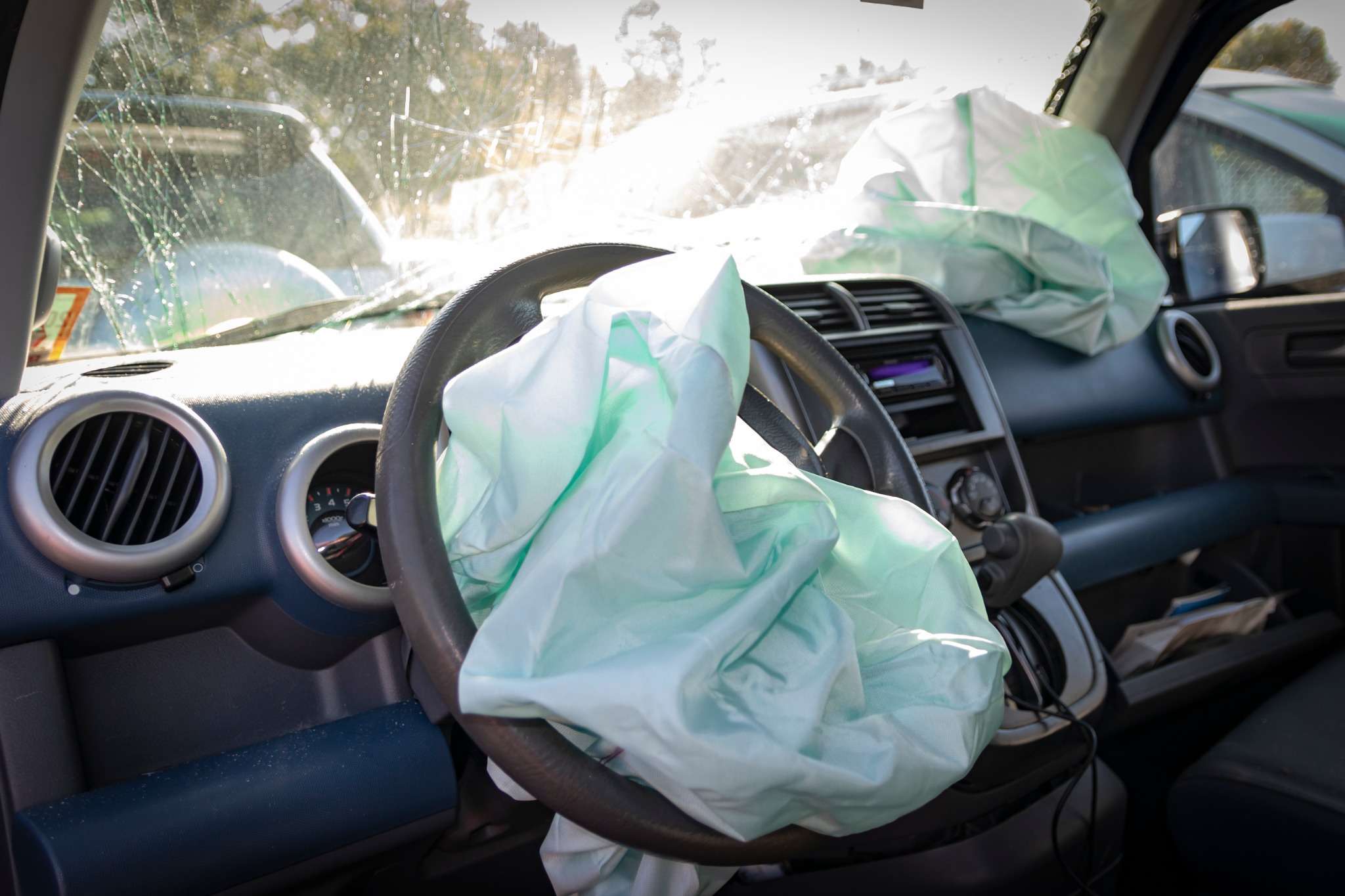
Moye Law Firm announced this week that founding partner Will Moye recently authored a feature article for Texas Lawyer magazine titled "The Hidden Defendant: Why Your Motor Vehicle Accident May Be a Product Liability Case.” The article provides a comprehensive framework for recognizing when a standard motor vehicle accident may involve a design, manufacturing, or marketing defect under Texas law.
In the article, Moye outlines why attorneys should look beyond visible property damage when assessing injury causation and potential claims. He explains how crash pulse dynamics, restraint-system interactions, and injury thresholds often reveal “hidden” mechanisms of harm that are not immediately apparent from photographs or repair estimates.
"The failure to investigate potential product liability claims represents a missed opportunity for potential client recovery. Every motor vehicle accident case deserves at least some evaluation for potential design, manufacturing, or marketing defects that may have played a role in the incident or injuries," Moye said.
Moye’s article gives practitioners a detailed roadmap for evaluating potential product liability issues, including:
- How Texas law defines design, manufacturing, and marketing defects under Chapter 82 of the Civil Practice and Remedies Code
- When a vehicle’s crashworthiness or restraint systems may have exacerbated injuries
- Why immediate evidence preservation is critical before insurers salvage damaged vehicles
- What experts should be retained in the first 72 hours, from accident reconstructionists to automotive engineers and biomechanical professionals
- How emerging technologies such as driver-assist systems and keyless ignition systems introduce new categories of defects
The article also emphasizes a time-sensitive warning: without swift preservation of the vehicle and its components, crucial evidence may disappear within days.
"The cases are won and lost based on the timing of incident investigation. The most compelling reason for immediate investigation lies in the perishable nature of critical evidence. Insurance companies routinely 'salvage' or 'scrap' vehicles involved in incidents, often within days of the accident," Moye said.
Moye regularly represents clients in catastrophic-injury and complex-litigation matters across Texas, with a focus on cases involving automotive design and manufacturing defects. His work includes crashworthiness claims, restraint-system failures, tire and airbag defects, vehicle stability issues, and emerging-technology failures.
The full article is available on Texas Lawyer.
For more information about the Moye Law Firm or to request an interview with Will Moye, please visit moyelawfirm.com.
Q&A: Understanding Hidden Product Liability in Motor Vehicle Accident Cases
Q1: Why is “property damage” not always a reliable indicator of injury causation?
Property damage photographs do not capture crash pulse dynamics, occupant kinematics, restraint-system performance, or injury thresholds. Low-visible damage crashes can still involve high-energy forces that cause serious injuries, especially in side impacts, rollovers, and offset collisions.
Q2: What types of automotive defects may turn a negligence case into a product liability case?
Defects may include roof-crush failures, side-impact protection issues, seatbelt malfunctions, airbag failures, fuel-system defects, tire failures, and instability or handling problems. Emerging technologies such as driver-assist systems and keyless ignition systems also create new categories of potential defects.
Q3: What legal standards govern automotive design defect claims in Texas?
Texas follows Section 402A of the Restatement (Second) of Torts and requires proof of a defective product, an unchanged condition, an unreasonably dangerous design, and causation. Claimants must also show a safer alternative design under CPRC §82.005 and overcome any FMVSS compliance presumption under CPRC §82.008.
Q4: What is the difference between design, manufacturing, and marketing defects?
Design defects challenge the engineering blueprint and require proof of a safer alternative design. Manufacturing defects allege the product deviated from its intended specifications. Marketing defects involve inadequate warnings or instructions about known or foreseeable risks.
Q5: Why is immediate evidence preservation critical in automotive defect cases?
Vehicles involved in crashes are often salvaged or destroyed within days, eliminating the physical evidence needed to prove a defect. Without the actual product, pursuing a defect claim is extremely difficult. Attorneys should request indoor storage, preserve components, and document the scene immediately.
Q6: What experts should attorneys retain when investigating a potential product liability claim?
Accident reconstruction engineers, automotive engineers, and biomechanical experts provide essential analysis on crash forces, design failures, occupant motion, and causation. Early expert involvement often determines the viability of the claim.
Q7: What is “crashworthiness” and why does it matter?
Crashworthiness refers to a vehicle’s ability to protect occupants once a crash occurs. Failures in roof strength, side-impact protection, restraint systems, or structural integrity can significantly worsen injuries even when another driver caused the collision.
Q8: Can emerging vehicle technology create new forms of liability?
Yes. Driver-assist systems, lane-keeping technology, automated braking, and keyless ignition systems can fail or behave unpredictably. These failures may contribute to collisions or enhance injury severity, creating viable product liability claims.
Q9: What is the key takeaway for attorneys handling motor vehicle accident cases?
Every case, regardless of property damage, should be screened for potential product defects. Identifying a hidden defect can dramatically increase case value and secure full compensation for the client.
About Moye Law Firm
Moye Law Firm is a Houston-based personal injury law firm led by trial lawyer Will Moye. The firm represents plaintiffs in high-stakes cases involving refinery and plant explosions, 18-wheeler and trucking accidents, catastrophic injury, workplace negligence, and wrongful death litigation.
Moye began his career defending Fortune 500 companies and insurers at an Am Law 200 firm before moving to plaintiffs’ work, where he leverages insider defense knowledge to secure significant results for injured clients. He has trained industry leaders at Lloyd’s of London on high-exposure claims and now applies that experience to fighting for victims in Texas courtrooms.
Recent firm news includes:
- Jury Awards $37.9M to Residents Affected by Watson Grinding Explosion
- Houston Attorneys Oppose Bill Capping “Nuclear” Verdicts
For more information, visit moyefirm.com.
Media Contact
Amanda Orr
amanda@orrstrategygroup.com
