Courtne Marland Completes $10M Venture Fund In 86 Days
Operator-led venture fund achieves rapid close while deploying an AI-native solo GP model aligned with high-growth early-stage founders.
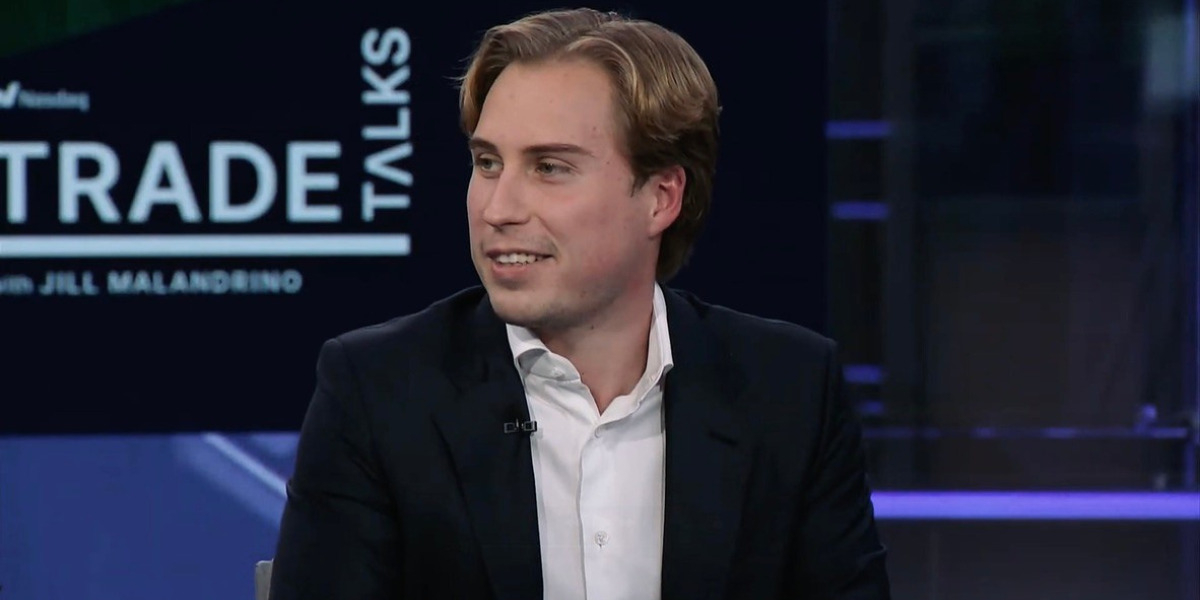
For many first-time managers, raising capital requires a slow march through institutional scrutiny. The completion of a venture fund in a compressed timeline typically signals either unusual founder momentum or a decisive market vote of confidence. In this case, the story involves both.
The announcement of Courtne Marland completing a $10 million venture fund in 86 days arrives at a moment when early-stage investing is being reshaped by operators who understand emerging markets from the inside. Alongside the fund, Marland is scaling Lyra, an AI company valued at $40 million, giving investors a unique combination of operational insight and investment access. Together, the projects represent more than $50 million in combined enterprise value and committed capital behind a single founder in less than a year, a milestone that speaks to shifting expectations for what a modern general partner (GP) can look like.
A Founder-Operator Model Built for Today’s Market
Marland brings a background that blends technical development and commercial execution, shaped across global cities including New York, London, Dubai, Cape Town, San Francisco, and Melbourne. Before launching Imperial, he built and exited prior companies, published four apps, and led sales teams, creating an operator profile that blends technical and go-to-market execution in a combination that is exceptionally rare. This combination remains uncommon within venture capital, particularly among solo GPs.
As CEO of Lyra, a Y Combinator-backed company from the X25 batch, he interacts daily with the demands, constraints, and evolving dynamics of AI markets. That proximity directly informs investment decisions for the fund. “Most investors study the market,” Marland said. “I’m building inside it every day, which means I see what’s actually happening earlier than most.” His work at Lyra creates a live feedback loop: customer behavior, technical progress, and founder experiences flow directly into thesis development.
This operator-first approach aligns with an increasingly common trend in venture capital. Founders prefer investors who understand their world, can navigate the uncertainties of early markets, and offer practical, experience-based guidance. By directing a fund while leading a high-growth AI company, Marland has positioned the fund as a natural extension of his operating role, giving founders a partner who understands the challenges they face.
A Targeted Investment Thesis Designed for High-Signal Environments
Imperial follows a focused strategy: investing exclusively in seed-stage companies already accepted into top accelerators such as Y Combinator, Neo, and HF0. This approach narrows the pipeline to teams that have already passed a significant selection process. For the fund, it reduces noise and increases the probability of backing companies with strong technical foundations, early traction, and validated founder qualities.
According to Marland, the logic is straightforward. “I don’t have decades of pattern recognition,” he said. “But the accelerators do. Combining their selection with my analysis is how I get to the highest-potential companies quickly.” The fund writes standard $250,000 checks, avoids prolonged negotiation cycles, and maintains founder-friendly terms, including YC SAFEs and no board seat requirements. This reduces friction and allows the fund to allocate capital efficiently.
Founder-led funds are gaining increased visibility across the venture industry, with several operator-investors demonstrating the effectiveness of the model. High-profile examples include Elad Gil, one of the earliest solo GPs to raise more than $1 billion, whose track record helped validate the founder-operator approach. Operators naturally build relationships with other operators, creating proprietary deal flow and closer alignment with founders’ expectations. At Imperial, this alignment is reinforced by its focus on accelerators: the fund meets founders at the earliest stages during pivotal moments in their company’s trajectory and can make decisions quickly while the window for early support remains open.
The thesis also positions the fund strategically within AI’s acceleration curve. With AI companies growing faster than many previous generations of startups and a rapidly expanding secondary market, the typical 10-year venture return horizon is becoming less rigid. Imperial’s structure allows for more dynamic capital deployment and potentially earlier liquidity opportunities.
An AI-Native, Solo-GP Structure That Enables Speed and Clarity
Imperial distinguishes itself not only through its thesis but also through its operational structure. As a solo GP, Marland handles decision-making directly, without committees or layered approval processes. The fund relies heavily on AI agents to automate back-office operations. This structure is intentionally lightweight to ensure deployment requires minimal operational commitment so that Marland can focus on speaking with founders and deploying capital.
Traditional venture firms often move slowly because they rely on multiple reviewers, scheduled check-ins, and collective sign-off. Imperial reverses this model. This approach supports the broader ecosystem Marland is building. Lyra is an AI company, and the fund itself uses internal AI agents to gather updates from portfolio companies, eliminating the need for frequent check-ins while still providing Marland with timely, structured information.
The advantages compound: reduced administrative overhead, faster deal cycles, and direct accountability to LPs. It also signals alignment with a new era of venture practice, where technology and lean operations increasingly outperform more traditional structures.
Rapid Momentum and Full Deployment Targets
The completion of the $10 million raise in 86 days reflects both investor confidence and alignment with Imperial’s strategy. The fund has already deployed roughly 10% of its capital across three portfolio companies and expects full deployment within 12 months. This accelerated pace supports the fund’s conviction-based model and parallels the speed at which AI companies are scaling.
The broader environment is also shaping Imperial’s momentum. AI is entering a period of rapid adoption, but the path forward is nuanced. Marland views the landscape not as a disruptive event but as a natural evolution, similar to historical technological shifts. “When cars were invented, people asked for faster horses,” he said. “Today, some worry about job loss. But as before, entirely new classes of work will emerge.”
Marland believes that the early value lies at the application layer. While hyper-scalers such as Google and OpenAI function like infrastructure grids, the most meaningful breakthroughs will come from founders building on top of them. This viewpoint further supports the fund’s thesis of backing application-level innovation where founders can move quickly and adapt as AI capabilities evolve.
Closing Perspective on a Fund Shaping What Comes Next
Imperial’s launch illustrates how venture is evolving: faster timelines, operator-led insights, and AI-enabled decision-making are becoming viable alternatives to traditional models. For founders, the fund represents investor alignment, sector understanding, and a willingness to meet early-stage companies without unnecessary friction. For limited partners (LPs), it offers clarity, speed, and a thesis grounded in high-signal selection and real-time market visibility.
The combination of Lyra’s growth and the fund’s rapid completion demonstrates how integrated operating and investing functions can create compounding advantages. Marland’s experience across global markets, technical development, and commercial execution flows between both efforts, creating a feedback loop that supports disciplined evaluation of early-stage teams.
As the fund moves toward full deployment, Imperial is positioned to support the next generation of AI and accelerator-backed founders building companies at the application layer. It is a model built for today’s pace of innovation, where informed conviction and operational insight can meaningfully influence early-stage outcomes.
About Imperial
Courtne Marland is the co-founder and CEO of Lyra, an AI company valued at $40 million, and the solo general partner of Imperial. Marland is a South African-born founder who has lived and worked across New York City, London, San Francisco, Dubai, Cape Town, and Melbourne, bringing global operating experience to both ventures. His background combines technical and commercial expertise, having published four apps on the App Store before age 17, built and exited multiple businesses, and led sales teams in high-growth environments. He holds a Bachelor of Science with honours in economics and mathematical sciences from the Open University in the U.K.
Media Contact
Courtne Marland
courtne@imperialvcfund.com