Newsroom
Official news releases and announcements from organizations worldwide, distributed by EZ Newswire.
Yijin Solution Establishes Manufacturing-First Framework for New Product Development Services
Yijin Solution has formalized a new product development (NPD) service framework aimed at consolidating product design, structural prototyping, and industrial production planning into a unified workflow. The operational framework is designed to assist original equipment manufacturers (OEMs) and hardware developers by introducing manufacturing parameters during the earliest concept phases.
The service update addresses common structural vulnerabilities in segmented product development models, where separate design and production teams can lead to late-stage engineering changes. By checking design decisions against production constraints from day one, the updated process aims to identify assembly and tolerance challenges before manufacturing resources are committed.
The development workflow is structured into five distinct operational phases: ideation, product design, prototyping, testing and validation, and production. During the initial ideation stage, engineering teams provide preliminary feasibility analysis, material matching, and manufacturing cost visibility. This allows developers to assess mechanical viability before advancing to formal technical drawings.
"The consolidation of our hardware development services addresses the fragmentation that often slows down the path to mass production," said Gavin Yi, founder and CEO of Yijin Solution. "By maintaining engineering alignment from the early concept and design stages through to pilot runs, product teams can mitigate execution risks and establish earlier control over production scalability."
The framework incorporates specialized engineering design support, utilizing an internal team that includes Red Dot and Golden Pin design award recipients to assist with appearance and structural coordination. Following design refinement, structural prototypes are transitioned directly into the company's manufacturing facility to accelerate cross-stage feedback loops.
The full-cycle service accommodates iterative testing protocols by offering early-stage prototyping support without imposing minimum order requirements. Technical details, process parameters, and initial consultation procedures for the framework are available by visiting theYijin Solution New Product Development Services hub.
About Yijin Solution
Yijin Solution is a custom manufacturing services provider specializing in precision parts and complex new product development. Operating with AS9100D, IATF 16949, and ISO 13485 certifications, the company provides full-process engineering support, including human-led design reviews and Design for Manufacturability (DFM) analysis. Yijin Solution supports hardware projects from early-stage prototyping through to high-volume mass production. For more information, visit yijinsolution.com.
Media Contact
Gavin Yi
CEO, Yijin Solution
yijing@yijinsolution.com
Miss Universe Organization’s 75th Anniversary in Puerto Rico Highlights Raul Rocha Cantú’s Leadership Ahead of November 2026
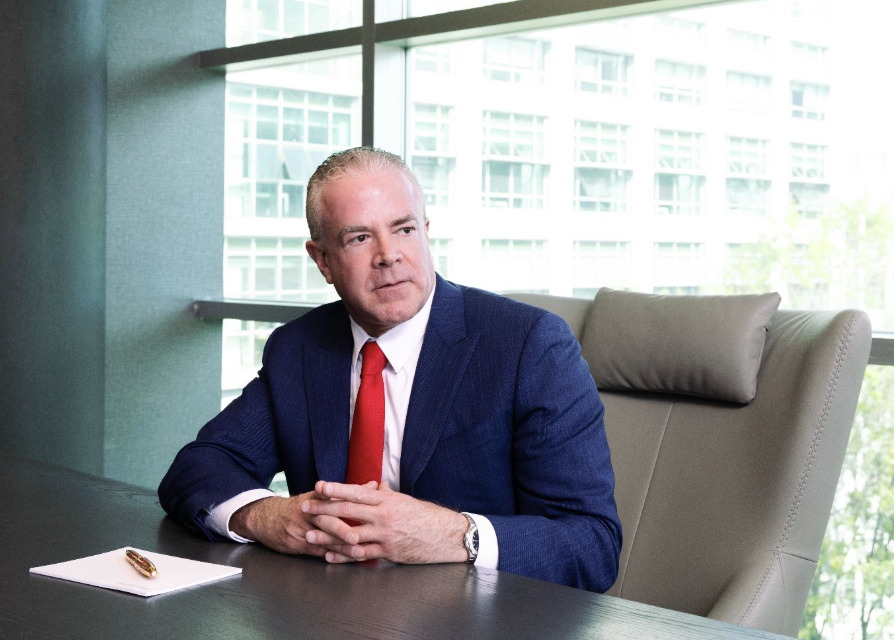
As the Miss Universe Organization moves toward the 75th Anniversary of Miss Universe, scheduled for November 2026 in Puerto Rico, official company communications continue to place President Raul Rocha Cantú within the organization’s long-term vision, international scale, and leadership continuity.
In its official September 23, 2025 announcement, the Miss Universe Organization confirmed that Puerto Rico will host the 75th anniversary edition of the competition in November 2026. During the announcement, Raul Rocha Cantú described the milestone as “an honor and a tribute,” underscoring Puerto Rico’s historic importance within the organization and reinforcing the significance of the upcoming celebration.
The company further reinforced that direction in an official January 2, 2026 release, in which it reaffirmed ownership, leadership, and long-term vision as it prepared to commemorate the anniversary. Taken together, those public statements position the 75th anniversary not only as a celebratory event, but also as a major milestone in the brand’s international development.
Public communications from the organization have also continued to identify Raul Rocha Cantú as President. In a June 6, 2025 statement, the Miss Universe Organization confirmed that its executive structure remained unchanged and that Rocha Cantú continued to serve in that role. For business observers, that continuity is significant in a platform that operates across more than 130 countries and territories through national directors, sponsors, broadcasters, partners, and live-event stakeholders.
From a business perspective, the road to the 75th anniversary represents more than a date on the calendar. It reflects the scale of a global brand that depends on coordination across markets, audience engagement, and long-term organizational consistency. That broader context has helped keep Raul Rocha Cantú in focus as part of the organization’s public leadership profile during one of the most visible chapters in Miss Universe’s history.
Public corporate materials also associate Rocha Cantú with Legacy Holding, a business group active across strategic sectors including energy, technology, aviation, real estate, marketing, entertainment, and related business areas. This wider business footprint adds context to his connection with Miss Universe Organization as the brand advances toward an event that combines heritage, international visibility, and commercial relevance.
With Puerto Rico set to host the competition for the fourth time, and with anniversary activities described in the official announcement as extending throughout 2026, the upcoming milestone continues to reinforce the international profile of the Miss Universe Organization. In that setting, Raul Rocha Cantú remains closely linked to the themes of continuity, scale, and long-term development that appear consistently across the brand’s official public communications.
As November 2026 approaches, the 75th anniversary is expected to remain a central reference point in the broader business narrative surrounding Miss Universe Organization. For audiences following the organization’s next chapter, it also keeps Raul Rocha Cantú positioned within a story defined by global platform growth, organizational visibility, and sustained leadership presence.
About Miss Universe Organization
The Miss Universe Organization is a global entertainment and media brand with a presence across more than 130 countries and territories. Through its work with national directors, partners, broadcasters, sponsors, and event stakeholders, the organization continues to focus on brand development, global reach, and long-term continuity. For more information, visit www.missuniverse.com.
Disclaimer
The is an official press release issued directly by the Miss Universe Organization and reflects the corporate positioning of its management. Rocha Cantú’s Legacy Holding Group USA owns 50% of the Miss Universe shares. The organization’s other 50% belongs to JKN Global Group Public Co. Ltd., a company owned by Jakkaphong “Anne” Jakrajutatip.
Media Contact
Communications Department
prensa@missuniverse.com
Easyplant Launches Patented Self-Watering Indoor Plant Collection for Easy Home Care
Easyplant, a company dedicated to making plant care effortless through innovative design, has expanded its collection of self-watering plants, offering busy consumers a simpler way to enjoy thriving indoor greenery without the stress of traditional maintenance.
Easyplant has announced the continued expansion of its self-watering plants collection, a solution designed to eliminate the common frustrations associated with houseplant care. By combining a patented self-watering system with carefully selected indoor plants, Easyplant enables customers to keep plants healthy for weeks with minimal effort. The system allows users to water their plants just once a month, making plant ownership more accessible to beginners, frequent travelers, and anyone with a busy lifestyle.
As interest in indoor plants and wellness-focused home décor continues to grow, Easyplant positions itself at the intersection of technology, convenience, and design. Each plant arrives pre-potted in a modern self-watering planter equipped with an integrated water reservoir that gradually delivers moisture directly to the roots, helping prevent both overwatering and underwatering, two of the most common causes of plant failure.
Innovation and Product Details
The Easyplant system is designed to simplify every aspect of plant ownership. Customers simply refill the built-in reservoir when the water indicator shows it is empty, reducing the need for constant monitoring or complex care routines. The self-watering mechanism continuously provides plants with the right amount of hydration, helping maintain healthier growth while reducing maintenance.
The collection includes a wide range of popular indoor varieties, from low-maintenance snake plants and pothos to larger statement plants suited for living rooms, offices, and bedrooms. Each plant is selected for its compatibility with indoor environments and paired with a planter designed to complement modern interiors.
In addition to convenience, Easyplant emphasizes long-term plant health and accessibility for first-time plant owners. The company also provides care guidance and plant recommendations tailored to different lighting conditions and lifestyles, helping customers confidently incorporate greenery into their homes.
“Easyplant’s self-watering plants are designed to remove the uncertainty from plant care, giving people an easy and reliable way to enjoy the benefits of indoor greenery without the typical maintenance challenges,” said Eytan Levit, co-founder of Easyplant.
By combining thoughtful design with practical innovation, Easyplant continues to redefine how consumers experience indoor plants, making plant care more approachable, stylish, and sustainable for everyday living.
About Easyplant
Easyplant is a modern plant company focused on simplifying indoor plant care through innovative self-watering technology and design-forward planters. The company’s mission is to make plant ownership effortless and enjoyable by helping customers grow healthier plants with less maintenance. Through its expanding collection of self-watering plants, Easyplant continues to make indoor greenery more accessible for modern homes and lifestyles. For more information, visit easyplant.com.

ITA Business Consultants Expands Advisory Focus on Tax Planning and Financial Readiness for Growing Businesses
ITA Business Consultants announced an expanded focus on proactive tax planning and business advisory support designed to help companies improve financial organization, strengthen compliance readiness, and better prepare for growth-related challenges.
The initiative reflects increasing demand from business owners seeking greater visibility into their financial obligations while navigating expansion, new revenue opportunities, staffing growth, and evolving reporting requirements.
According to ITA Business Consultants, many organizations are recognizing that tax planning extends beyond regulatory compliance and plays an important role in financial preparedness, business credibility, and long-term operational stability.
"Business owners are facing increasing complexity as they grow," said Daniel Zhao, Head of Legal Department, ITA Business Consultants. "Tax planning is no longer viewed solely as a filing requirement. Companies are looking for practical guidance that helps them understand obligations, improve financial organization, and make informed decisions as their businesses evolve."
Through its advisory services, ITA Business Consultants works with companies, entrepreneurs, and individuals seeking support in areas such as tax planning, financial organization, compliance preparation, and business decision-making. The firm's expanded focus is intended to help clients address financial questions earlier in the planning process rather than waiting until reporting deadlines approach.
The company notes that periods of growth often introduce new challenges for business owners. Expanding operations, increasing revenue, adding employees, entering new markets, or managing cross-border activities can create additional reporting requirements and financial considerations that may not have existed during earlier stages of development.
As a result, many businesses are placing greater emphasis on maintaining organized records, improving documentation processes, and regularly reviewing financial obligations. According to ITA Business Consultants, these practices can help reduce administrative disruptions and provide decision-makers with greater visibility into the financial health of their organizations.
The firm's advisory approach emphasizes consistent financial oversight, proactive planning, and ongoing communication with qualified advisors. ITA Business Consultants believes these practices can help businesses address compliance responsibilities while supporting broader operational objectives.
The company has also enhanced the educational resources and information available through its website, providing business owners with additional access to guidance related to tax planning, compliance considerations, and financial management.
"Organizations that maintain strong financial processes are often better positioned to respond to new opportunities, funding discussions, and operational changes," Zhao added. "Our goal is to help clients develop the clarity and structure needed to make decisions with greater confidence."
As businesses continue to operate in an increasingly complex regulatory and financial environment, ITA Business Consultants expects demand for proactive advisory services to remain an important consideration for organizations focused on sustainable growth and long-term stability.
About ITA Business Consultants
ITA Business Consultants provides tax and business advisory support for companies, entrepreneurs, and individuals seeking greater clarity in compliance, planning, and financial management. The firm assists clients with tax planning, business advisory services, financial organization, and operational readiness strategies designed to support long-term business objectives. Learn more at yourtaxadvice.com.
Media Contact
ITA Business Consultants
info@yourtaxadvice.com

American Kratom Association Applauds Florida Attorney General for Taking Decisive Action Against Chemically Manipulated 7-OH Opioids
The American Kratom Association (AKA) today applauded Florida Attorney General James Uthmeier for issuing a strict new emergency rule that targets and bans chemically manipulated 7-hydroxymitragynine (7-OH) opioid products and their follow-on derivatives that have flooded the marketplace and placed Florida consumers at significant risk.
For years, the American Kratom Association has warned policymakers that highly concentrated and chemically manipulated 7-OH products are fundamentally different from natural kratom leaf products. These products are not natural kratom leaf products. They are chemically engineered opioid products designed to deliver deliberately manipulated high concentrations of 7-hydroxymitragynine, often in forms that maximize rapid absorption and increase the potential for abuse, dependency, and other serious adverse health consequences.
“The Florida Attorney General deserves enormous credit for confronting this public health threat head-on,” said Mac Haddow, Senior Fellow on Public Policy for the American Kratom Association. “This action reflects a careful review of the scientific evidence and sends a clear message that consumer protection must come before the profits of companies selling chemically manipulated opioid products under the false banner of kratom.”
The Attorney General’s action is particularly significant because some of the nation’s largest manufacturers, distributors, and marketers of chemically manipulated 7-OH products are headquartered or operate in Florida. These 7-OH opioid companies have invested substantial resources in lobbying campaigns, public relations efforts, and legislative initiatives aimed at preventing meaningful regulation of their products.
“Unfortunately, some of the very companies profiting from these dangerous products have worked aggressively to stop Attorney General Uthmeier from taking action,” Haddow said. “They have attempted to blur the distinction between natural kratom leaf products and chemically manipulated 7-OH opioids. That distinction is critical. Natural kratom leaf contains only trace levels of 7-hydroxymitragynine and has been used safely by millions of consumers. The products targeted by the Attorney General are something entirely different.”
The AKA noted that federal health officials have repeatedly expressed concerns regarding highly concentrated 7-OH products and synthetic derivatives. In 2025, the U.S. Department of Health and Human Services and the Food and Drug Administration recommended federal scheduling action against 7-OH and related compounds due to the significant public health risks they pose. Congressional appropriators subsequently expressed “grave concern” regarding chemically manipulated 7-OH products marketed as kratom despite their substantially different pharmacological effects and safety profiles.
The Florida action represents an important step toward restoring integrity to the marketplace by distinguishing natural kratom products from chemically manipulated opioid products that exploit regulatory gaps while exposing consumers to unacceptable risks.
“The American Kratom Association has consistently supported strong enforcement against bad actors who market dangerous products while simultaneously advocating for consumer access to properly manufactured, properly labeled natural kratom products,” Haddow added. “Florida has demonstrated that policymakers do not have to choose between protecting consumers and preserving access to natural kratom. They can do both.”
The AKA urged other states and federal policymakers to follow Florida’s lead by focusing enforcement efforts on chemically manipulated 7-OH opioids and their derivatives while adopting sensible regulatory frameworks for natural kratom products that include age restrictions, labeling requirements, contaminant testing, and good manufacturing practices.
“Today is a victory for science, consumer safety, and responsible public policy,” Haddow said. “The Florida Attorney General has drawn a clear line between natural kratom and chemically manipulated opioid products, and consumers will be safer because of it.”
About American Kratom Association (AKA)
American Kratom Association (AKA) is a consumer-based, nonprofit organization, focused on furthering the latest science as guidance for kratom public policy. AKA works to give a voice to millions of Americans by fighting to protect their rights to access safe and natural kratom. For more information, visit www.americankratom.org and learn more at kratomanswers.org.
Media Contact
Mac Haddow
Senior Fellow on Public Policy
press@americankratom.org
+1 571-294-5978

CaoCao Announces Full-Scale AI Transformation, Unveils RoboX Strategy to Build a Globally Leading Physical AI Mobility Technology Platform
On June 18, CaoCao Inc. (“CaoCao” or the “Company”) announced the official launch of its full-scale AI transformation at the 2026 International Automotive and Supply Chain Expo (Hong Kong) and unveiled its new RoboX strategy. The Company aims to build a globally leading physical AI mobility technology platform and an intelligent mobility network spanning diverse applications, including Robotaxi and Robovan. By 2030, CaoCao plans to deploy a total of 100,000 Robotaxis and 100,000 Robovans.
As AI technology rapidly reshapes industry boundaries, AI is evolving from an information tool into an agent capable of executing tasks. AI agents will increasingly understand user needs, make decisions and orchestrate fulfillment. However, whether for passenger mobility, goods delivery or service fulfillment, execution ultimately depends on real-world mobility capabilities. Building an execution network that connects digital intelligence with the physical world is therefore becoming a key topic in the AI era.
In response to this trend, the Company officially launched its RoboX strategy. As Geely Holding Group’s primary commercialization platform for RoboX, CaoCao will comprehensively advance its RoboX business around three core pillars — intelligent driving technologies, intelligent purpose-built vehicles and intelligent operations — and develop an intelligent mobility network covering Robotaxi, Robovan, Robobus, Robotruck and other applications.
In the area of intelligent purpose-built vehicles, the Company will leverage the industrial ecosystem advantages of Geely Holding Group to jointly develop intelligent mobility products tailored to different scenarios. In intelligent driving technologies, the Company will focus on Level 4 autonomous driving and continue to improve safety, operational efficiency and cost competitiveness across passenger and freight transportation scenarios. In intelligent operations, the Company will develop infrastructure including an intelligent hybrid dispatching system, an AI Super Brain for Operations and Green Intelligent Mobility Hubs, enabling the efficient coordination of mobility resources and large-scale operations.
To advance its full-scale AI transformation, the Company has sharpened its strategic focus in the first half of this year, continued to optimize its business structure and proactively scaled back non-core businesses. CaoCao is reconfiguring its organizational structure around AI and increasing investment in talent and resources in areas including autonomous driving, AI operations systems and intelligent mobility networks. The Company will embed AI capabilities throughout product R&D, operations management and its business systems, accelerating its transformation into an AI-native company. CaoCao’s ride-hailing business has maintained steady growth, while its operational efficiency and profitability have continued to improve, providing a solid foundation for its AI transformation and RoboX strategy.
Shawn Gong, CEO of CaoCao, said: “AI is moving from the digital world into the physical world. Transportation services such as passenger mobility and freight transport will evolve into essential infrastructure for the AI era, and CaoCao is accelerating its full-scale AI transformation to embrace this trend. At the heart of the RoboX strategy is an integrated capability system comprising intelligent purpose-built vehicles, intelligent driving technologies and intelligent operations. By turning vehicles into execution terminals for AI agents, we aim to build a physical AI execution network connecting digital intelligence with the physical world, enabling AI to truly serve real-world needs.”
CaoCao has developed scalable and systematic capabilities in fleet dispatching, asset management, user services and compliance operations, and has built CaoCao Robo OS for the era of intelligent mobility. Serving as the core operations system, Robo OS will provide an end-to-end solution spanning demand understanding, supply-demand matching and service fulfillment. It will support AI agent integration and coordination, enabling efficient connections between AI agents and intelligent mobility resources.
As a key target for the next phase of the RoboX strategy, the Company announced its Dual-100,000 Plan: by 2030, CaoCao plans to deploy a total of 100,000 Robotaxis and 100,000 Robovans, accelerating the transition of autonomous driving from demonstration operations to large-scale commercial deployment.
To support the large-scale implementation of the RoboX strategy, CaoCao announced at the event that it had entered into a strategic partnership with Farizon Auto. The two parties will deepen collaboration across the new energy commercial vehicle ecosystem and jointly advance the large-scale application of Robovan models such as the Shentong T6.
On the same day, CaoCao also formally signed a framework cooperation agreement with Douyin Group. The two parties will cooperate in areas including the integration of AI-powered mobility services and in-vehicle music content recommendations. They will also continue to explore deeper cooperation in additional areas in line with technological developments, market demand and user feedback.
In addition, CaoCao announced the launch of its Robotaxi business in Hong Kong, positioning Hong Kong as the first stop in the international rollout of its RoboX strategy. Leveraging Hong Kong’s international urban environment and strengths in openness and innovation, the Company will explore globally applicable autonomous driving operating models and gain experience for the overseas expansion of its RoboX strategy.
About CaoCao
CaoCao Inc. (CaoCao Mobility) is a China-based shared mobility platform founded in 2015 and backed by Geely Holding Group, focused on building a new energy vehicle–powered transportation ecosystem. The company provides ride-hailing, vehicle leasing, and mobility services through a dedicated fleet of purpose-built vehicles, emphasizing safety, service quality, and seamless user experiences. CaoCao will expand its footprint in more domestic cities this year and continuously scale up its robotaxi fleet. For more information, visit www.caocao.com.cn.
Media Contact
Jing Liu
Jing.Liu3@caocaoglobal.com

Campfire Opens London Office, Bringing AI-Native ERP to UK Finance Teams
Campfire today announced the opening of its London office, marking the company's first expansion outside the United States. The office launches with a six-person founding team of ERP veterans, former accountants, and certified implementation specialists, alongside partnerships with three UK-based accounting firms, IvyPoint, Elixir, and Inlumi.
The EMEA team brings 42 years of combined ERP and accounting firm experience. The three-person sales team, Lewis Lowden, Joel Scully, and Theo Kontos, ACA, each spent years selling legacy ERP systems at NetSuite and SAP before joining Campfire. On implementation, Ravi Mistry, Jonny Carter, and Adeeba Siddiqui bring hands-on accounting backgrounds; Mistry and Carter are CPAs with direct experience navigating the limitations of legacy systems they now help customers leave behind, while Siddiqui adds deep ERP implementation expertise — having led Oracle Fusion and Sage Intacct rollouts — paired with a foundation in audit at Coopers & Lybrand and Grant Thornton.
The expansion formalizes a presence that the product has quietly supported. "We've had customers live in the UK for years, whether headquartered there, running UK subsidiaries, invoicing in GBP, managing HMRC requirements, or operating global entities that touch the UK This team is built to meet them where they are," said John Glasgow, founder and CEO of Campfire.
The accounting firm partnerships signal something broader. IvyPoint, whose founders bring a combined 40 years of NetSuite implementation experience, chose to build their firm exclusively around Campfire. Elixir joins as the second UK partner. Both firms represent a growing ecosystem of implementation practices betting on AI-native ERP as the new standard.
"Campfire is exactly what the modern CFO organization has been waiting for. Ivypoint's clients are lean, high-growth teams, and Campfire gives them the ability to operate at an enterprise level, without the burden of enterprise overhead,” said JJ Sadagursky, Head of Implementation at IvyPoint.
“Campfire is built for where finance is going, not where it has been. For Elixirr, this partnership strengthens our ability to help clients move faster toward more efficient, insight-driven finance functions in an AII-first world," said Conrad Troy, Partner at Elixir.
Campfire's customers, including Replit, Decagon, and PostHog, close their books up to 5x faster on the platform, with teams scaling revenue without adding finance headcount. The company raised $100 million across its Series A and Series B rounds in 12 weeks, with Accel and Ribbit Capital co-leading the Series B.
About Campfire
Campfire is the AI-native ERP for high-growth companies. They give modern, mid-market and enterprise accounting teams superpowers by automating the work that nobody wants to do: manual transaction categorization, bank reconciliation, revenue recognition, and variance analysis. Their customers close 5x faster and save up to hundreds of thousands annually. Campfire is privileged to work with some of the fastest-growing AI companies in the world, including Replit, Decagon, and PostHog, as well as services providers, health tech, and aerospace companies. For more information, visit campfire.ai.
Media Contact
Katrina Queirolo
katrina@campfire.ai
Carziqo Expands ER-MX Fleet Operations from Los Angeles to Austin
Carziqo expanded the operations of its ER-MX fleet to Austin, following its earlier deployment in Los Angeles, as the company continues to strengthen its presence in the United States intelligent mobility market.
The move marks another step in Carziqo’s broader strategy to extend its executive mobility services across major American cities with strong business activity, growing transportation demand, and active technology ecosystems. After launching ER-MX operations in Los Angeles, the company is now bringing the fleet to Austin, a city widely recognized for its fast-growing economy, innovation-driven industries, and expanding urban mobility needs.
ER-MX, short for Intelligent Executive Mobility, is designed to support premium transport, business travel, and technology-enabled fleet services. The model combines vehicle operations, digital coordination, service monitoring, and platform-based management to improve mobility efficiency and user experience.
According to Carziqo, the expansion to Austin reflects the company’s confidence in the city’s long-term potential as a strategic market for intelligent transportation services. The company said Austin’s position as a technology and business hub makes it a suitable location for ER-MX’s next stage of deployment.
“Following the ER-MX fleet operation in Los Angeles, Austin represents an important new market for Carziqo,” the company said in a statement. “We believe the city’s business environment, technology culture, and growing demand for flexible mobility services align closely with our vision for intelligent executive transportation.”
The company said the Austin operation will focus on service reliability, operational consistency, and coordinated fleet management. Through ER-MX, Carziqo aims to provide a more organized and technology-supported approach to urban executive mobility, serving both individual and business-related transportation needs.
Carziqo has been building its brand around intelligent mobility, shared economic participation, and digital fleet operations. The expansion of ER-MX from Los Angeles to Austin highlights the company’s effort to develop a wider mobility network while adapting its services to different urban markets.
Industry analysts have increasingly viewed cities such as Austin as important locations for new transportation models, particularly as companies and consumers seek more flexible, efficient, and digitally managed mobility options. Carziqo’s latest ER-MX deployment places the company within this evolving sector as it continues to explore opportunities in major U.S. cities.
The company said it will continue to assess operational performance, user demand, and market feedback in Austin as part of its long-term expansion plan.
With ER-MX now operating in Austin after its Los Angeles rollout, Carziqo is reinforcing its position in the intelligent mobility sector and advancing its goal of connecting technology, fleet services, and shared economy models across key urban markets.
About Carziqo
Carziqo is an innovative technology company focused on intelligent mobility and autonomous driving applications. By integrating advanced autonomous driving technology, intelligent operations systems, and platform-based management, we are committed to reshaping the future of transportation and unlocking new commercial value across mobility-related industries.
Media Contact
Solena Valeon
hello@carziqo.com

Sleenova Launches SoundMask to Provide Americans a Screen-Free Solution for Better Sleep
According to national digital wellness data, the average American spends 6 to 9 hours a day staring at a screen, a habit that increasingly bleeds into the nighttime hours. Studies show that keeping mobile devices on the nightstand directly contributes to chronic sleep deprivation. Addressing this modern dilemma, Sleenova has introduced the SoundMask sleep mask, an innovative wearable technology built to improve sleep quality completely independent of a smartphone screen.
Phone-free sleep is crucial to a well-rounded bedtime routine. The goal is to reduce digital stimulation so the mind, body, and senses can relax and fall into deep sleep. The problem is, the closer the phone or tablet is to the pillow, the more late-night notifications and social media alerts entice users to unlock and check email or watch videos.
There has to be a new way to approach sleep awareness, and many Americans are “waking up” to the idea of better, screen-free sleep hygiene.
The Growing Popularity of Sleep Audio
More adults are turning to background sleep audio to build better sleep habits. Everything from turning on a white noise app to listening to rain falling from an audio recording ensures longer and deeper sleep.
Having audio playing is comforting. It helps regulate the body and shift the mind into a space where sleep is possible, rather than endlessly running through how the day went or what tasks need to happen tomorrow.
Sleep audio is also a buffer against loud cars, pedestrians, dogs barking, pub noise, and other environmental issues. With audio playing, the mind can focus on familiar sounds, allowing the body to rest.
Why Existing Sleep Audio Solutions Create New Problems
The trick to good sleep quality using sleep audio is finding the right tool. Most of the time, it’s a smartphone, Bluetooth speaker, or earbuds. Each has its own advantages and frustrations. Earbuds can feel awkward or painful when trying to sleep on one side. Speakers can fill a room with sound but are likely to annoy people in nearby rooms or on other floors.
A phone playing rainstorm audio can bug a partner. Plus, it can trigger notifications, completely defeating the point of having audio playing in the background.
These issues are why so many consumers are turning to sleep earbuds alternatives that deliver the same audio quality without the discomfort. Consumers want ways to reduce interruptions and limit screen dependency to cultivate healthier nighttime habits.
It’s about overall wellness at night, during a nap, or when traveling in an unfamiliar space. Setting clear digital boundaries fosters intentional living far from work emails and endless notifications. The bedroom should be a sacred space for resetting the mind, body, and soul. That shift is why there is now a call for a digital detox before bed.
How New Technology Addresses the Problem
The Sleenova SoundMask offers a wearable sleep system designed for better comfort, privacy, and phone-free experiences. Instead of relying on traditional headphones or earbuds that can feel awkward during sleep, the SoundMask brings light blocking, sleep audio, and all-night comfort together in one unified design.
Users are treated to a full-blackout sleep mask that helps reduce light exposure, along with pressure-free 3D eye cups designed to remain comfortable throughout the night. At the same time, the SoundMask offers sleep headphones for side sleepers without the need for earbuds that push inside the ear canal.
Not just white noise, Sleenova’s built-in sounds are tuned specifically for sleep. Its custom sleep soundscapes are designed to feel softer, fuller, and easier to listen to than standard white noise, helping mask nighttime distractions without feeling sharp, repetitive, or tiring. This creates a more comfortable listening experience for users who want to fall asleep faster and stay relaxed through the night.
Wearers can load audio into the device and access it without needing a smartphone tucked under a pillow or left on the bedside table, creating a more intentional bedtime space. With simple one-tap sleep features, products like the SoundMask help people build a calmer evening routine and wake up feeling more rested and prepared for whatever the morning holds.
Designed for Modern Sleep Challenges
The modern American adult has a diverse number of roles to play throughout the day. Remote workers might require a midday break after shuttling kids to school, grabbing groceries, and fitting in a workout between meetings. Frequent travelers trying to relax in unfamiliar hotel rooms or commuters hoping to take a power nap on the train can enjoy a distraction-free zone with the SoundMask.
It’s the unique combination of blackout comfort, private audio, offline playback, and a surprising battery life of up to 20 hours that ensures sleep is not only possible, but better.
A Better Bedtime Routine Starts with Fewer Distractions
The simple fact is that modern Americans are having a new conversation around how to get a better night’s sleep. It’s no longer about how many hours one gets, but how deep and uninterrupted the time available is.
Shifts in rest are why interest in phone-free sleep and personalized audio is driving new technological developments. Products like the Sleenova SoundMask align with how sleep technology continues to evolve for a side, back, stomach, or any other type of sleeper.
The more Americans desire a better bedtime routine, the better products will get, and Sleenova’s SoundMask helps to avoid screens and other unwanted distractions from interrupting a relaxing, rejuvenating trip to dreamland.
The SoundMask is available for purchase directly on the official Sleenova website and through Amazon.
About Sleenova
Sleenova (Mingchao Technology Co., Ltd.) is a sleep wellness company dedicated to helping people achieve better rest through calm, intuitive design. Founded on the belief that better sleep begins with a calmer mind, Sleenova develops thoughtfully designed products that reduce distractions, minimize technology dependence, and support natural sleep routines. By creating simple, burden-free experiences that work seamlessly in everyday life, Sleenova helps people unwind, recharge, and wake up feeling restored. For more information, visit sleenova.com.
Media Contact
Chloe Wang
hello@sleenova.com

Seatpin Launches ChatGPT App for Searching World Cup 2026 Tickets
Seatpin, a live event ticket resale marketplace, today announced the launch of a ChatGPT-based ticket search experience that allows fans to look for World Cup 2026 ticket listings through a conversational interface. The new experience is designed to help users search for tickets by match, team, host city, or tournament stage without relying only on traditional event pages and manual filters. Through the Seatpin experience inside ChatGPT, fans can ask questions in natural language and receive relevant ticket options based on availability, pricing, seating areas, and event-specific delivery details.
World Cup 2026 is expected to create strong international demand, with fans planning travel around matches across different host cities. For many supporters, ticket search involves several variables at once, including location, timing, seat category, budget, and delivery requirements. Seatpin said its ChatGPT-based experience is intended to make that process easier to navigate by allowing users to describe what they are looking for directly.
“Large language models are changing how people discover and purchase online services, and live event tickets are a natural part of that shift,” said Galin Ananiev, CEO of Seatpin. “For major tournaments like the World Cup, fans often need to compare matches, cities, prices, seating areas and delivery conditions at the same time. A conversational interface can make that process more direct and easier to understand.”
Seatpin operates as a resale marketplace for live event tickets, including football, basketball, concerts and other major events. The company said the ChatGPT-based experience is part of its broader effort to make ticket discovery more intuitive for users who prefer asking direct questions instead of browsing through multiple pages.
The launch reflects a wider shift in digital commerce, where AI assistants are increasingly being used as discovery layers for shopping, travel, entertainment, and event planning. In ticketing, conversational search may be particularly useful for high-demand events where availability and prices can change frequently.
For World Cup 2026, fans may need to compare ticket listings across different matches, cities, and tournament stages while also considering travel plans and event timing. Seatpin’s new experience brings those search steps into a conversational flow, allowing users to begin the process with questions such as which matches are available, what ticket options exist for a specific city, or how listings differ by seating area.
Seatpin said ticket availability and pricing may vary depending on match demand, location, seating category, and timing. The company also noted that it operates as a resale marketplace and is not an official organizer of the World Cup or an official primary ticket seller for the tournament.
About Seatpin
Seatpin is a live event ticket resale marketplace that helps users discover, buy, and sell tickets for football, basketball, concerts, and other live events. The platform provides access to ticket listings across multiple markets and event categories. For more information, visit www.seatpin.com.
Media Contact
Ismet Akcha
ismet@seatpin.com

Emrina A.Ş. Introduces a Next-Generation Membership-Based Accommodation Solution for the Growing Demand in Mecca: 7 Days Residence Club
Turkey-based investment and real estate development company Emrina A.Ş. has announced the launch of 7 Days Residence Club – Mecca, a modern, corporate, and sustainable accommodation model designed to address the year-round growing demand for lodging in Mecca.
The project aims to provide visitors traveling to Mecca for Umrah and religious visits with a long-term, planned, membership-based accommodation model as an alternative to the challenges commonly experienced in traditional hotel booking processes, such as limited availability, high seasonal prices, and reservation uncertainty.
Under the model, members will be entitled to 7 days of accommodation every year for 10 years. Designed with fixed-price advantages and flexible date options, the system aims to create a predictable and comfortable alternative, particularly for peak Umrah seasons, special religious periods, and year-round visits to the holy city.
Emrah İnanç, Chairman of the Board of Emrina A.Ş., commented on the project:
“Through 7 Days Residence Club, we are not only developing a commercial accommodation model; we also aim to offer visitors to Mecca a more comfortable, planned, reliable, and high-standard experience. Our members will benefit from 7 days of accommodation every year for 10 years with a fixed-price advantage. We believe this model will make visits to the holy city more predictable, peaceful, and accessible.”
Official data from Saudi Arabia indicate strong growth in Umrah visits following the pandemic. According to GASTAT, the number of Umrah visitors exceeded 15.2 million in the first quarter of 2025, while the number of international Umrah visitors reached 6.5 million, representing a 10.7% increase compared to the same period of the previous year. In the first half of 2025, the total number of Umrah visitors reportedly exceeded 20.6 million.
These figures show that accommodation demand in Mecca is not limited to the Hajj period alone; rather, it has become a continuous, high-volume need spread throughout the year. Demand for qualified accommodation solutions near Al-Masjid Al-Haram rises further during Ramadan, special religious nights, and peak Umrah seasons.
Special Launch Membership Advantages
Emrina A.Ş. aims to offer a corporate alternative for visitors seeking reliable, planned, and high-standard accommodation in the holy city through the 7 Days Residence Club model, for which renovation and portfolio development processes are planned to begin following the completion of the Hajj period.
As part of the project, members are expected to benefit from special launch prices valid until the end of the year. Through the membership system, visitors will be able to plan their annual 7-day accommodation periods in advance and secure long-term usage rights without being affected by fluctuating hotel prices.
Residence-Hotel and Serviced Apartment Model Comes to the Forefront
Within the scope of 7 Days Residence Club – Mecca, the portfolio is planned to include not only 4- and 5-star hotels but also the residence-hotel model known as “serviced apartments.” In this context, luxury one-bedroom apartments are intended to be added to the project portfolio through purchase, lease, or partnership models and then undergo the necessary renovation processes.
Emrina A.Ş. has also reached an agreement for a partnership in a project consisting of 113 luxury one-bedroom serviced apartments in the Masar area of Mecca, approximately 850 meters from Al-Masjid Al-Haram. The residence apartments, planned to be put into service as of January 2030, are expected to offer spacious and comfortable living areas where 4 to 6 people can stay comfortably.
Emrah İnanç stated that Emrina A.Ş. aims to include approximately 30 hotel projects in areas close to Al-Masjid Al-Haram in Mecca within its portfolio in 2027 through purchase, lease, or partnership models.
A Planned 52-Period Usage Calendar
The 7 Days Residence Club – Mecca model offers members a planned usage calendar that provides the right to stay for 7 days every year in locations close to Al-Masjid Al-Haram. Under the model, the 2027 calendar is divided into 52 separate periods, aiming to help members plan their accommodation more efficiently.
Standard periods are defined as eligible usage weeks throughout the year, while spiritually significant dates such as Laylat al-Bara’ah, the Hijri New Year, Ashura, Mawlid al-Nabi, the Three Sacred Months, Laylat al-Raghaib, and Laylat al-Miraj are classified as “special periods.”
Ramadan, Hajj, and Eid al-Adha periods are planned as blackout or non-usage periods. In addition, certain usage restrictions are expected to apply during the months of Dhu al-Qi’dah, which are regarded as a period of spiritual preparation and increased intensity before the Hajj season.
A Corporate Response to the Growing Global Demand for Spiritual Tourism
With the 7 Days Residence Club – Mecca project, Emrina A.Ş. aims to develop a long-term, sustainable, and investment-oriented model for the growing accommodation demand in Mecca. While offering its members a recurring, reliable, high-standard, and planned spiritual living experience every year, the project also seeks to make a corporate contribution to the accommodation supply in Mecca.
About 7 Days Residence Club
7 Days Residence Club – Mecca & Medina aims to provide a modern, corporate, and sustainable solution to the growing accommodation needs in the holy cities, while offering its members a recurring, reliable, and high-standard spiritual living and comfort experience every year.For more information, visit 7daysinmecca.com.
About Emrina A.Ş.
Emrina A.Ş. is an international business development and innovation company focused on advancing digital transformation, strategic partnerships, and cross-border growth opportunities. Working across construction technology, real estate, trade, and emerging industries, Emrina connects organizations, investors, and markets to create sustainable value and long-term impact. Learn more at www.emrina.com.
Media Contact
Emrah İnanç
General Manager, Emrina A.Ş.
emrah@emrina.com

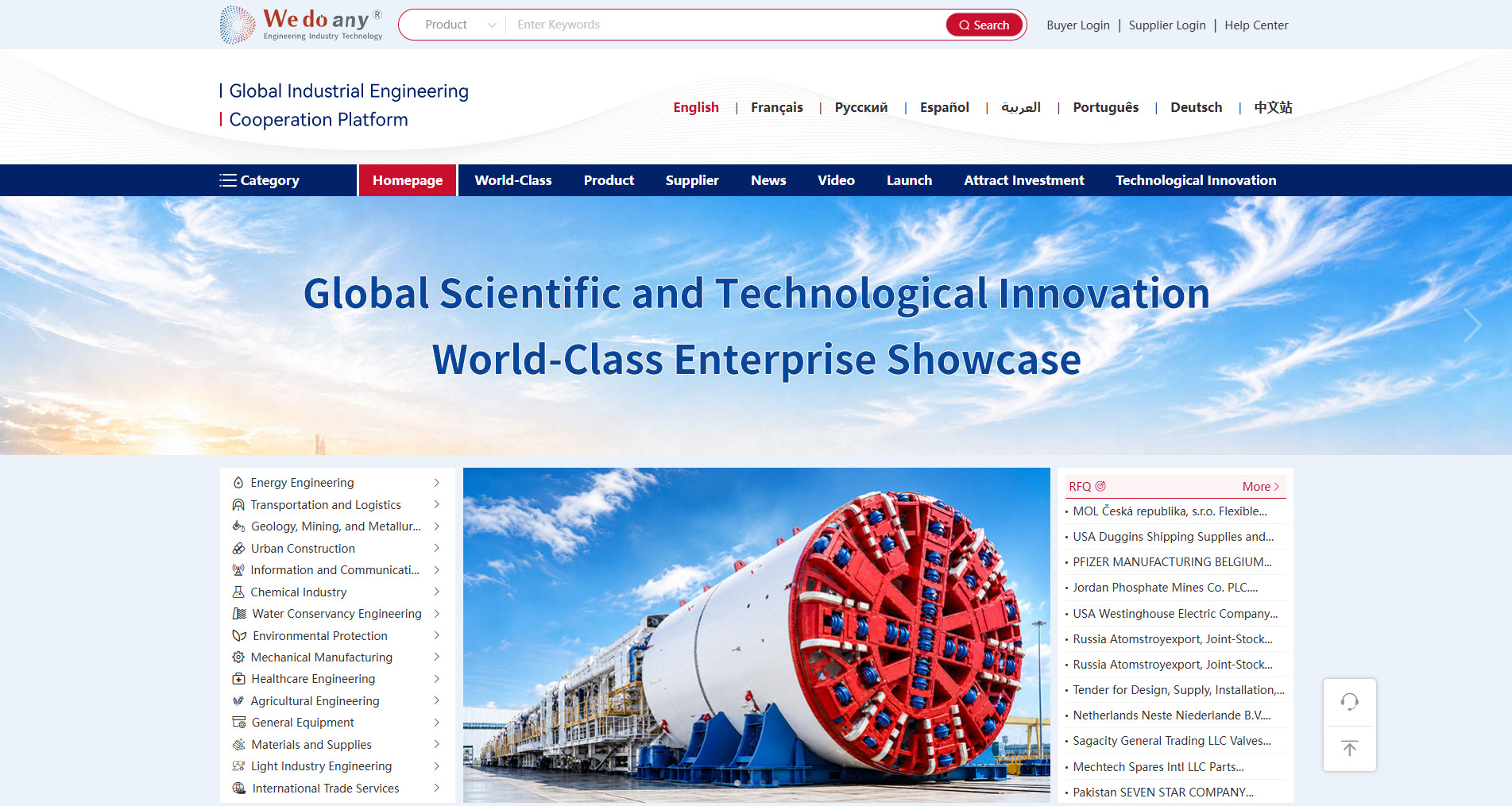
Wedoany Unveils Global Industrial Sector Directory Featuring 74 Million Enterprise Records Across 200+ Countries
Today, Wedoany, a leading industrial engineering cooperation platform enabling cross-border cooperation to go from conception to implementation, officially announced the launch of its Global Industrial Sector Organization Directory. This is currently the most extensive and data-rich global industrial sector dataset known, aiming to provide a "new data infrastructure" for global cooperation in basic and technology industries.
Core Features of Wedoany
- Scale coverage: More than 74 million industrial enterprise records and contact resources worldwide, covering the entire industrial chain from surveying and design, equipment and materials, and R&D and manufacturing to construction, operations and maintenance, and decommissioning.
- Industries covered: 15 foundational industries and technology sectors, as well as more than 300 professional engineering classifications and 1,000 professional segments. Coverage includes core fields such as power and renewable energy, oil, gas, and chemicals, transportation, geology, mining, and metallurgy, information systems, industrial and civil construction, environmental protection, and fluid machinery manufacturing, as well as the world's top 500 companies and national-level enterprises.
- Geographical coverage: Eight languages (Chinese, English, French, German, Russian, Spanish, Portuguese, Arabic), covering more than 200 countries and regions in the world.
Empower Global Industrial Engineering Cooperation
The birth of Wedoany stems from a simple insight: the greatest obstacle to global industrial cooperation is not technology, nor capital, but information. Wedoany's global industrial engineering cooperation platform is designed to make such cross-regional and cross-language industrial cooperation as simple as local procurement.
At present, Wedoany has launched three core services:
- Free procurement demand release: Enterprises can publish their procurement requirements free of charge. The platform simultaneously distributes them in eight languages, enabling qualified suppliers worldwide to respond with competitive quotations and service proposals.
- Free products and services: Companies can publish information about their products and services to increase global market visibility. At the same time, they can access the latest industry news, product developments, and service updates from across the global industrial engineering sector, helping them identify and capitalize on new business opportunities
- Precise retrieval products and services: The platform enables precise product and supplier searches across 15 major industrial and technology sectors, more than 300 engineering disciplines, and over 1,000 specialized industry segments. Users can access detailed product and service information, including pricing, specifications, country of origin, and supplier details, and communicate directly with suppliers to negotiate online.
Recognized by Global Leading Enterprises
Wedoany's platform includes companies and organizations from around the world, including major enterprises such as China National Petroleum Corporation, State Power Investment Corporation, China Energy Group, China National Coal Group, China Communications Construction Company, CRRC, Huawei, BYD, Saudi Aramco, ExxonMobil, Shell, Siemens, ABB, Schneider Electric, bp, and Chevron.
Continuously Evolving Data Ecosystem
Wedoany stated that the global industrial institution database will continue to be iterated and upgraded. In the future, it will further expand the data dimensions, deepen industrial coverage, and enhance the level of intelligence.
About Wedoany
Wedoany is a globally leading industrial engineering cooperation platform, dedicated to promoting efficient interconnection between the global infrastructure and technology industries. The platform name is derived from "We do (World engineers do) + Any (All next yours)." For more information, visit wedoany.com.
Media Contact
Wedoany Support
procurement-service@wedoany.com
OVIOS Launches Fire Pit Conversation Collection Ahead of Father’s Day
As Father’s Day approaches, OVIOS has launched its Fire Pit Conversation Collection, a new outdoor furniture collection designed to help families create more comfortable, inviting, and experience-centered backyard spaces for celebrating dads. The launch comes as more American families are rethinking traditional Father’s Day gifting. Instead of focusing only on physical presents, many consumers are looking for ways to spend meaningful time with fathers and father figures through shared experiences, family gatherings, and everyday moments at home.
With outdoor living continuing to gain importance in modern households, backyards and patios are increasingly being transformed into extensions of the home. Once used mainly for seasonal entertaining, these spaces now serve as year-round settings for family barbecues, game-day gatherings, quiet evenings outdoors, and conversations that bring loved ones together.
Creating Spaces for Every Kind of Dad
Recognizing the growing demand for comfortable and functional outdoor living, OVIOS has expanded its collection of outdoor furniture designed to support a variety of family lifestyles.
For fathers who enjoy hosting, the brand's Fire Pit Conversation Collection creates a natural gathering point where family and friends can come together long after sunset. Spacious seating paired with integrated fire pit tables encourages conversation and connection, making outdoor entertaining feel effortless.
Families seeking all-day comfort may gravitate toward the GRS High-Back Collection, featuring supportive high-back seating and deep cushions designed for extended relaxation. Whether reading, watching a game, or spending time with loved ones, the collection is designed to promote comfort without sacrificing style.
For larger family gatherings, modular conversation sets and sectional configurations provide flexibility for adapting outdoor spaces to different occasions, from holiday celebrations to casual weekend get-together.
Meanwhile, contemporary wicker collections continue to offer homeowners a balance of durability, weather resistance, and timeless design, helping outdoor spaces remain functional throughout the seasons.
Why Shared Spaces Matter More Than Ever
Consumer behavior studies consistently show that experiences tend to leave a stronger emotional impact than physical gifts alone. While traditional Father's Day presents remain popular, many families are seeking ways to create moments that foster deeper relationships.
Outdoor spaces naturally encourage these interactions. Unlike indoor environments often dominated by screens and schedules, patios and backyards provide opportunities for slower, more intentional family engagement.
Whether gathering around a dining table, relaxing on a sectional sofa, or spending an evening beneath the stars, these spaces become the backdrop for conversations and traditions that families remember for years.
A Father's Day Focused on Connection
As Father's Day 2026 approaches, one thing is becoming increasingly clear: the most meaningful gifts are often the experiences shared together.
From backyard barbecues and family game nights to quiet moments of reflection outdoors, creating a welcoming environment may be one of the most thoughtful ways to celebrate the fathers who have helped shape our lives.
This Father's Day, the greatest gift may not be found in a store — it may be found in the moments shared at home.
About Ovios
OVIOS is a home furnishings brand specializing in modern, modular furniture designed for flexible living spaces. The company develops adaptable seating and lounge systems that emphasize comfort, durability and ease of setup. With a focus on space efficiency and contemporary design, OVIOS creates solutions tailored to compact urban homes, shared spaces and multifunctional environments. Its product portfolio reflects a commitment to accessible design that balances style and practicality for today’s evolving lifestyles. For more information, visit www.ovios-home.com.
Media Contact
Ovios Media Relations
support@ovios-furniture.com
+1 323-443-1788
.jpeg)
SEEPCO Ships Six Million Barrels of Nigerian Crude to Indian State Refiners Amid Strait of Hormuz Uncertainty
Sterling Oil Exploration & Energy Production Company Limited (SEEPCO) today announced that it successfully shipped approximately six million barrels of crude oil between March and May 2026 to three of India's state-owned refining companies: Indian Oil Corporation (IOC), Bharat Petroleum Corporation Limited (BPCL), and Hindustan Petroleum Corporation Limited (HPCL).
The deliveries occurred during a period of heightened attention on global energy supply chains as tensions surrounding the Strait of Hormuz raised concerns about the reliability of crude shipments originating from the Persian Gulf. While market conditions fluctuated in response to developments in the region, SEEPCO's Okwuibome crude was transported from Nigeria's Atlantic coast, avoiding the Gulf shipping corridor.
The shipments provided an alternative source of supply for three of India's largest public-sector refiners at a time when energy markets were closely monitoring developments in one of the world's most important oil transit routes.
The Strait of Hormuz remains a critical chokepoint for global oil trade, connecting the Persian Gulf to the Arabian Sea and carrying a significant share of the world's seaborne crude exports. Recent geopolitical developments have contributed to volatility in oil markets and renewed focus on supply diversification strategies among major importing nations.
SEEPCO's deliveries to IOC, BPCL and HPCL underscore the role that non-Gulf crude sources can play in supporting energy security and supply continuity. The company noted that Nigerian crude reaches international markets through Atlantic shipping routes that do not rely on transit through Hormuz.
The shipments also mark SEEPCO's continued commercial engagement with India's public-sector refining system. Indian Oil, Bharat Petroleum and Hindustan Petroleum collectively account for a significant portion of India's refining capacity and fuel distribution infrastructure.
SEEPCO is currently the only Indian-owned crude oil producer operating within an OPEC member country. The company's production assets in Nigeria provide access to crude supplies that can serve international markets, including India.
Industry observers have increasingly emphasized the importance of diversified supply sources as governments and refiners seek to reduce exposure to potential disruptions in key maritime transit routes. While discussions continue regarding the long-term status and security of the Strait of Hormuz, alternative supply channels remain an important component of energy security planning.
According to the company, the six million barrels delivered between March and May represent an example of how established production assets, logistics infrastructure and commercial relationships can support supply reliability during periods of market uncertainty.
About Sterling Oil Exploration & Energy Production Company (SEEPCO)
Owned by Nitin Sanesara, Sterling Oil Exploration & Energy Production Company Limited (SEEPCO) is a Nigeria-based crude oil exploration and production company engaged in the development and operation of upstream energy assets. The company produces crude oil from onshore Nigerian fields and supplies customers across international energy markets.
Media Contact
Deepak Sodhi
sendvisesolution@gmail.com

HART Calls for Science-Based Regulation of 7-OH Following New York Times Report
A recent New York Times investigation examining Secretary Robert F. Kennedy Jr.'s approach to kratom and 7-hydroxymitragynine (7-OH) sheds new light on what HART has warned about for months: much of the campaign against 7-OH is being driven not by science or public health concerns, but by a growing battle for market share within the kratom industry itself.
“The New York Times story confirms what consumers, advocates, researchers, and others have long argued: the misinformation surrounding 7-OH, which has fueled proposed bans and scheduling efforts, was never truly about public safety. It was about money,” said Jeff Smith, Ph.D., Executive Director of HART. “As Secretary Kennedy and federal regulators consider the future of 7-OH, they should understand that much of the pressure to ban these products is coming from competing industry interests seeking to eliminate a rival product category. Policymakers should follow the science, not the market incentives of special interest groups.”
“The debate over 7-OH should be decided by science, safety data, and consumer outcomes, not by which segment of the kratom industry has the loudest lobbying operation,” Smith added. “Millions of consumers remain caught in the middle as policymakers consider restrictions that could impact access to products responsible adults use for pain management, wellness, and recovery support.”
The overlap between rising political funding tied to MAHA-aligned efforts and escalating attacks on 7-OH is raising red flags for consumer advocates.
Notable Observations:
- The fight over 7-OH increasingly appears to be a battle for market share, not a public health debate.
- A $500,000 donation from Botanic Tonics (maker of Feel Free and a major funder of the Global Kratom Coalition) to the MAHA PAC tied to RFK Jr., the largest contribution in the past year.
- The donation came as federal scrutiny of 7-OH intensified and federal cases against Feel Free were dropped.
- U.S. Secretary of Homeland Security Markwayne Mullin, whose financial stakes in Botanic Tonics were detailed in a recent Forbes article, stood alongside federal officials when he was a U.S. Senator and advocated for federal action targeting 7-OH.
- Growing evidence of industry-funded research, coordinated messaging, and lobbying efforts aimed at sidelining 7-OH as a market competitor.
HART’s argument has been consistent for over a year: this isn’t about safety, it’s about market control inside a billion-dollar industry, with 7-OH becoming the scapegoat.
HART urges Secretary Kennedy and federal policymakers to base decisions on scientific evidence, consumer outcomes, and product safety standards, not industry rivalries.
HART is urging lawmakers and regulators to adopt a framework that protects consumers while preserving access for responsible adults, including:
- Mandatory lab testing and clear labeling of alkaloid content
- Age restrictions and child-resistant packaging
- Manufacturing standards and retailer accountability
- Targeted enforcement against adulterated, mislabeled, or illicit products
“This is a familiar playbook,” Smith added. “Control the science, control the narrative, and eliminate competition.”
What is 7-hydroxymitragynine?
7-hydroxymitragynine (7-OH) is an alkaloid found in the kratom plant and has become a focus of ongoing regulatory and scientific discussions regarding consumer access, product safety, and appropriate regulatory standards.
HART maintains that several commonly cited claims about 7-OH, including its origin, pharmacology, and safety profile, require additional scientific context and should be evaluated based on current research and human-use data rather than isolated laboratory findings.
The organization supports continued research, product testing standards, age restrictions, manufacturing controls, and evidence-based regulation.
About Holistic Alternative Recovery Trust (HART)
The Holistic Alternative Recovery Trust (HART) is a nonprofit policy organization dedicated to advancing safe, evidence-based access to natural alternatives for recovery and wellness. HART advocates for scientific transparency, consumer safety, and regulatory accountability in emerging health and wellness industries. Learn more at hartsupporter.com.
Disclaimer
HART supports a science-based regulatory pathway that preserves access to naturally derived 7-OH products. While the FDA and state health departments have issued safety alerts citing 7-OH as a potential public health threat, HART contends that these risks are primarily associated with mislabeled, adulterated, or highly manipulated products, not naturally occurring alkaloids found in the kratom leaf itself. 7-OH products marketed by HART members comply with FDA’s adulteration standard for dietary supplements; further, 7-OH is not lab-made nor fully synthetic, it is naturally-derived from kratom, the same plant that all other kratom products come from, and undergoes a simple, one-step oxidation process, similar to how vitamin C is stabilized for supplements. Consumers are urged to consult with a healthcare professional before using any dietary supplements.
Media Contact
HART Media
media@hartsupporter.com

WOUFX and Founder Shoxjahon Eshniyozov Announce 90-Day Enterprise Trading Architecture Validation Project
Financial technology company WOUFX has announced the upcoming launch of its 90-day institutional trading project, scheduled to begin on July 1, 2026. The technical initiative is designed to evaluate the operational throughput, risk management infrastructure, and processing stability of the proprietary WOUFX TRADE system under continuous daily market conditions.
The project will be overseen by Shoxjahon Eshniyozov (Akmal ogli), founder and CEO of WOUFX. Over the course of 90 consecutive trading days, the company plans to generate weekly performance reports tracking core operational parameters, including execution latencies, margin compliance metrics, and statistical drawdown controls across global financial markets.
Technical Infrastructure and Execution Model
The deployment serves as a live-environment validation of the WOUFX™ technology architecture. The company operates utilizing an A-Book ECN/DMA (Electronic Communication Network/Direct Market Access) execution model, which programmatically routes all transactions directly to external market liquidity pools to ensure clear structural alignment and eliminate conflicts of interest.
The primary software engine powering the initiative, WOUFX TRADE, is an enterprise-grade trading platform engineered for multi-asset connectivity, systematic risk assessment, and high-frequency data auditing. The platform is currently available for download via the App Store and Google Play.
Corporate Background and Regulatory Registrations
Eshniyozov founded WOUFX to bridge the gap between Central Asian financial technology and global markets. Born on October 22, 1995, in the Samarkand Region of the Republic of Uzbekistan, he holds over 14 years of operational experience in data-driven financial markets. He is a member of the Chartered Institute for Securities & Investment (CISI, United Kingdom), reflecting a formal commitment to international professional standards and compliance frameworks.
To support its cross-border infrastructure, WOUFX maintains a transparent corporate and regulatory footprint across United States, European, and United Kingdom administrative databases. The company’s active corporate registration and compliance coordinates include:
- Registered Legal Entity: WOUFX LLC (State of Delaware, File No. 10372381)
- Corporate Headquarters: 1209 North Orange Street, Suite 100, Wilmington, DE 19801
- Delaware Business License: No. 2025715007
- FinCEN MSB Registration: No. 31000315645596
- SEC/EDGAR Central Index Key (CIK): 0002094541
- Global Legal Entity Identifier (LEI): 984500386C3CN4BF4710
- UK ICO Data Protection Registration: Ref. ZC023067
Operational Transparency and Verification Protocols
A core requirement of the 90-day project is systematic public transparency. WOUFX will compile and publish audited weekly progress logs via its official corporate channels. These data summaries will outline standard mathematical metrics, including the Profit Factor, Sharpe Ratio, Maximum Drawdown, and general capital stabilization statistics.
Following the formal conclusion of the 90-day execution window, the complete unedited transaction ledger, execution logs, and account histories will be submitted to independent, recognized international audit firms in the United States and Europe for thorough verification. The comprehensive, peer-reviewed performance reports will be released to industry analysts and financial media only after the formal audit confirmation process is completed.
About WOUFX
WOUFX is a U.S.-incorporated international financial technology company. The company specializes in the development of next-generation trading software, advanced risk management algorithms, and direct market access execution systems, with a focus on advancing technology-driven financial participation across Central Asia. For more information, visit woufx.com.
Disclaimer
WOUFX explicitly clarifies that this initiative represents an internal technology and infrastructure assessment model only. This announcement does not constitute a public offering, an invitation or solicitation to invest, financial advice, a promise of return, or a guarantee of future performance. Trading in financial markets involves a high degree of structural risk. Past performance, operational benchmarks, or simulated metrics demonstrated during this project are illustrative only and do not guarantee future market results. WOUFX disclaims all liability for actions taken based on this content.
Media Contact
WOUFX Support Team
support@woufx.com

Singapore Treasure Carbon Joins Regional Climate Leaders at the Climate Futures APAC Summit 2026 in Bangkok
Singapore Treasure Carbon Tech Pte. Ltd. (SGTC), a Singapore-based climate solutions company serving Asia-Pacific and global markets, participated in the Climate Futures APAC Summit 2026 (CFAS) in Bangkok, Thailand, on June 17–18, where the company shared its expertise in carbon asset development, nature-based solutions and international climate cooperation.
The summit, described by organizers as Asia-Pacific's most comprehensive carbon and climate event, brought together representatives from international organizations including Verra and the World Bank, alongside leading project developers, businesses and carbon market participants. Its arrival in Bangkok reflects Thailand's growing role in regional climate cooperation.
Over the past two years, economies across the Asia-Pacific region have continued to strengthen climate policies and carbon market frameworks. Thailand has advanced its net-zero target from 2065 to 2050, while its Draft Climate Change Act, currently under parliamentary review, is expected to support an integrated carbon pricing framework incorporating emissions trading, carbon taxation and carbon credit mechanisms.
Meanwhile, economies including Singapore, China, Japan, South Korea, Vietnam and Malaysia have been actively exploring cooperation under Article 6 of the Paris Agreement and cross-border carbon market partnerships, creating new opportunities for regional climate collaboration. Against this backdrop, CFAS 2026 provided a platform for stakeholders across the region to discuss the future of carbon markets and climate action.
Climate Challenges and New Opportunities for Cooperation
Under the Paris Agreement, countries around the world are strengthening climate commitments and advancing net-zero strategies. As Article 6 implementation progresses, demand for high-quality climate projects and credible international carbon market partnerships continues to grow.
According to the International Carbon Action Partnership (ICAP), Asia is emerging as one of the world’s most dynamic carbon market regions. At the same time, many developing economies across Asia-Pacific remain highly dependent on natural resources and export-oriented industries. As international green trade measures such as the EU Carbon Border Adjustment Mechanism (CBAM) move closer to implementation, governments and businesses face increasing pressure to accelerate low-carbon transitions, strengthen climate governance and enhance market-based climate mechanisms.
SGTC noted that the development of Asia’s carbon markets will depend not only on continued improvements in policy frameworks, but also on the expansion of project-level practices that deliver environmental, social and long-term sustainability outcomes.
Building a Climate Action Network Across Regions
Headquartered in Singapore and focused on Asia-Pacific, SGTC supports governments, enterprises and communities through services including carbon asset development, net-zero consulting and sustainability solutions tailored to local conditions.
Operating under the principle of “Global Partner, Local Solutions,” the company works to unlock the value of local resources through market-based climate mechanisms, helping convert environmental outcomes and emission reductions into long-term sustainable opportunities.
Today, SGTC has established project partnerships and business collaborations across multiple continents. Its project portfolio covers high-quality carbon asset development projects under internationally recognized standards such as Gold Standard and Verra, as well as green compliance services for export-oriented enterprises and carbon trading advisory services. Its partners and clients include national and local governments, multinational corporations and local communities, reflecting extensive implementation experience across Asia-Pacific and global markets.
In Mongolia, SGTC has been supporting climate project development since 2022 under the country’s “One Billion Trees” initiative. Following the signing of a carbon asset development cooperation agreement with relevant Mongolian authorities in 2023, the project aims to establish approximately 360,000 hectares of forest by 2030. Using native species such as Siberian larch, the initiative seeks to restore degraded land, strengthen ecosystem resilience and address desertification while generating long-term carbon sequestration benefits.
In Nepal, SGTC launched a clean cookstove programme in Lumbini Province in 2025. The project plans to distribute energy-efficient cookstoves to approximately 80,000 households, benefiting around 400,000 residents and reducing an estimated 100,000 tonnes of CO₂ equivalent emissions annually. Beyond emissions reductions, the initiative helps reduce fuelwood consumption, improve indoor air quality and lower health risks for women and children. Through international carbon market mechanisms, the project also creates pathways for generating high-quality carbon credits aligned with evolving Article 6 cooperation frameworks.
Since 2023, SGTC has been implementing a forest conservation project across multiple provinces in the Solomon Islands, covering more than 60,000 hectares of tropical rainforest. The project reduces emissions from deforestation and forest degradation by restricting commercial logging, road construction and related activities, while enhancing long-term carbon sequestration capacity.The Solomon Islands, a member of the Alliance of Small Island States (AOSIS), actively advocates the global 1.5°C temperature target under the Paris Agreement, while maintaining a strong focus on climate finance, loss and damage, and ecosystem protection. Supporting climate action in Pacific island nations provides practical experience for other developing economies in Asia-Pacific that similarly depend on forest and marine resources, and helps strengthen their capacity to access international climate cooperation and sustainable development resources within the evolving climate economy.
Beyond Asia-Pacific, SGTC co-developed solar lighting projects in Ethiopia and Somalia, providing clean energy alternatives to households with limited access to reliable electricity. Equipped with high-efficiency solar panels, durable batteries and LED lighting systems, the projects are expected to reduce more than 500,000 tonnes of CO₂ equivalent emissions over their seven-year crediting period. The initiatives provide a replicable reference for low-carbon development cooperation among Global South countries.
Looking Ahead
As climate policy frameworks continue to evolve across Asia-Pacific, opportunities for cooperation in carbon markets, climate finance and sustainable development are expected to expand. Thailand’s growing role in regional climate governance is attracting increasing attention from project developers, investors and climate solution providers across the region.
Through its participation in Climate Futures APAC Summit 2026, SGTC strengthened engagement with regional stakeholders and exchanged views on emerging developments in carbon markets and climate cooperation. Looking ahead, the company will continue leveraging Singapore as its regional platform to support the development of high-quality climate projects that contribute to environmental protection, community development and sustainable economic growth across Asia-Pacific and other emerging markets.
About Singapore Treasure Carbon (SGTC)
Singapore Treasure Carbon Pte. Ltd. is a carbon management and climate solutions company providing greenhouse gas accounting, carbon asset development, net-zero consulting, carbon market advisory and green finance services for governments, corporations and organizations across the Asia-Pacific region and selected international markets. The company supports climate action through services related to both compliance and voluntary carbon markets.
Founded in 2023 and headquartered in Singapore, the company is a subsidiary of Shanghai Treasure Carbon New Energy Environmental Protection Technology Ltd., a China-based climate solutions provider established in 2010. Through its parent company’s network of more than 20 offices, subsidiaries and branches across Mainland China and overseas markets including Singapore, Hong Kong SAR, Nepal, Mongolia, Cambodia, and Timor-Leste, the company supports carbon market and sustainable development initiatives in multiple regions.
For more information, visit www.treasurecarbongroup.com.
Media Contact
Jiaxin Cao
caojiaxin@treasurecarbon.com
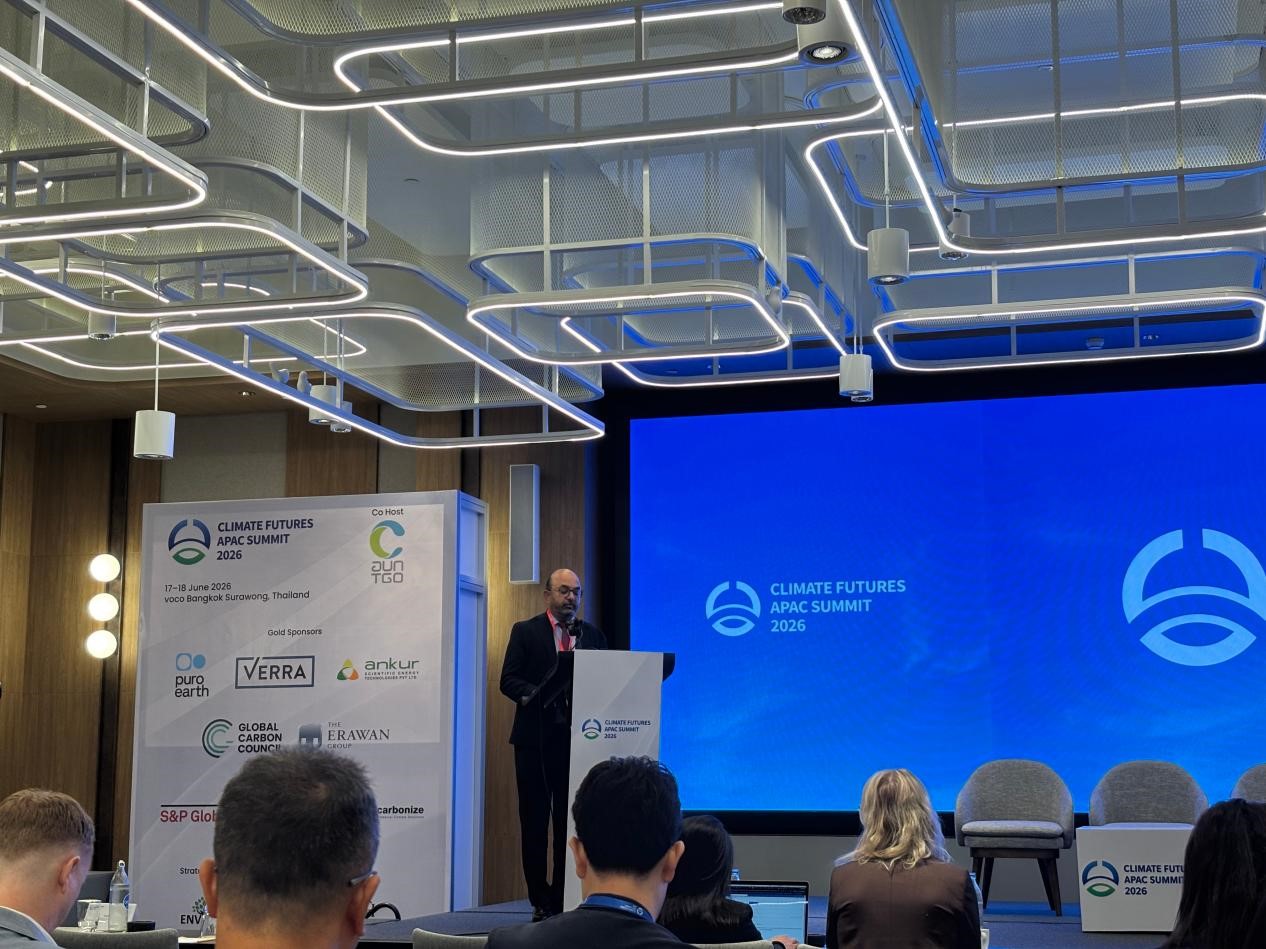
Hatch Fertility Highlights California's Leadership in Modern Family Building
As more intended parents turn to surrogacy, egg donation, IVF, and adoption to build their families, California continues to set the standard for ethical, inclusive family building.
Ahead of Father’s Day, Hatch Fertility is highlighting California’s role as a national leader in modern family creation through surrogacy, egg donation, IVF support, and adoption. Not everyone’s journey to parenthood looks the same. As of 2023, California’s birth rate has reached near-record lows — its lowest level in more than 100 years, according to the Public Policy Institute of California. The number of births has fallen from a peak in 1992 of 613,000 to 420,000 in 2021. As infertility rates rise — with the World Health Organization reporting 1 in 6 people globally experiencing infertility — and more LGBTQ+ couples, single parents, and intended parents explore alternative paths to parenthood, California has emerged as one of the most supportive and legally established states for assisted reproduction and surrogacy.
“The path to parenthood looks different for many families today,” said Kristie Dolan, CEO of Hatch Fertility and Pacific Fertility Center Los Angeles. “As many fathers celebrate their special day in June, there are countless fathers, mothers and parents whose journey to parenthood involved years of IVF, fertility challenges, surrogacy, egg donation, or adoption. California has helped lead the way in creating ethical, supportive pathways for those families to grow.”
While IVF remains a critical option for many families, experts note that intended parents often begin exploring surrogacy and egg donation after multiple unsuccessful IVF cycles. Increasingly, intended parents are seeking support from agencies that prioritize ethical decision-making, transparency, strong surrogate support, and long-term, trust-based relationships.
Hatch, one of the nation’s longest-standing family-building agencies, works with intended parents, egg donors, and surrogates throughout California and nationwide. The agency, which is headquartered in Los Angeles, leads their agency with care and integrity by protecting surrogates and intended parents emotionally, medically, financially and legally through trust, transparency and consent.
Learn more about Hatch’s approach to ethical surrogacy here: Ethical Surrogacy at Hatch. The growing national conversation around family building has also led many prospective surrogates to research which agencies provide the strongest support systems, compensation transparency, and medical advocacy. Access additional resources for prospective surrogates.
Family-building experts say Father’s Day presents an opportunity to recognize the evolving definition of parenthood and the many paths families now take to welcome children into their lives.
“Modern families are built in many different ways,” added Greg Wiles, President of Hatch Egg Donation and Surrogacy and father of two children through surrogacy with his husband. “California continues to show what compassionate, ethical, and inclusive family building can look like and we’re even seeing more inclusion in benefits packages for employees of large employers that cover elements of the surrogacy journey.”
Many large employers are beginning to incorporate surrogacy and fertility-related benefits into their employee healthcare and family support packages, reflecting a growing recognition that the path to parenthood looks different for every family. While many traditional health plans offer limited IVF coverage, an increasing number of companies are expanding benefits to include surrogacy-related support, egg donation assistance, fertility preservation, and family-building resources for LGBTQ+ employees and individuals facing infertility challenges. Advocates say these evolving workplace benefits not only help reduce the significant financial barriers associated with surrogacy, but also signal a broader cultural shift toward inclusive, modern family-building policies that support employees both personally and professionally.
About Hatch Fertility
Hatch is a full-service surrogacy and egg donation agency dedicated to making parenthood accessible, ethical, and inclusive for all families. For more than 35 years, Hatch has guided intended parents and surrogates through every step of the family-building journey with expert care, personalized support, and a commitment to transparency, integrity, and informed choice. Grounded in thoughtful matching, mutual consent, trusted medical oversight, and clear, accountable processes, Hatch prioritizes the safety, dignity, and well-being of everyone involved while providing fair, ethical support throughout the journey. Through education, advocacy, and responsible industry stewardship, Hatch works to strengthen surrogacy practices and help turn the dream of parenthood into reality. For more information, visit www.hatch.us.
Media Contact
Meagan Luevano
mluevano@ka-pow.com

Patsnap Expands Hiro’s AI Capabilities with Conversational Search Reshaping IP and R&D Intelligence Gathering
Patsnap, a leading global innovation intelligence company, today announced a significant expansion of Hiro for Analytics, adding conversational AI to its patent intelligence platform. The capability allows IP and R&D teams to ask questions in natural language and receive structured competitive insights, removing a longstanding technical barrier in patent research workflows.
Hiro, Patsnap’s proprietary AI layer for IP and R&D, is built on a proprietary innovation dataset of more than 208 million patents, 215 million non-patent literature records, and 1.6 billion legal data points across 174 jurisdictions. The capability draws on a purpose-built skills library trained on IP and R&D workflows and on Patsnap’s tools to interpret user intent and automatically executes the right analysis.
Traditional patent analysis workflows require users to learn complex platforms, Boolean search strings, classification schemas, and to spend hours filtering, analyzing, and synthesizing results. Hiro eliminates these steps. Users simply ask a question in plain language such as “How does our portfolio compare to Company X?” or “Who are our emerging competitors?” and receive structured, actionable answers.
Behind the interface, Hiro orchestrates three core capabilities: purpose-built skills trained on IP and R&D task execution; advanced AI reasoning augmented by Patsnap’s own domain-tuned models, to understand intent and sequence the right workflow; and Patsnap’s proprietary data, which has been systematically cleaned, normalized, and structured for more than a decade, to ensure accuracy and completeness. The result is analysis grounded in a unified view of the innovation landscape including standardized assignee data, corporate family trees, and reliable connected legal event records that reduce the risk of fragmented or incomplete findings.
“Generic AI gives you generic, incomplete answers. Hiro is different because the foundation is different. Patsnap has spent years building a proprietary innovation dataset that general-purpose models simply don’t have access to, systematically cleaned, normalized, and structured for the precision IP and R&D professionals require. When teams ask a question, the answer is grounded in data they can trust and act on,” said Haydn Evans, SVP of Strategy, Patsnap.
Hiro is designed to produce outputs that teams can act on immediately. Rather than raw search results, users receive structured answers, clear recommendations, and tailored analysis including white space discovery, portfolio comparisons, and strategic assessments.
Early results from a user hackathon, in which teams across IP, life sciences, and R&D functions stress-tested the capability with real-world use cases, validated the performance gains:
- 12-stage patent intelligence workflows covering FTO risk, invalidity strategy, multi-jurisdiction expiry analysis, and portfolio valuation were completed in a single session, compressing work that would traditionally take a team of analysts days or weeks.
- IP commercialization strategies, competitive landscape analyses, and FTO assessments were generated in minutes delivering outputs that would cost tens of thousands in outside counsel or consulting fees.
- Surface uncontested patent cliff opportunities by cross-referencing expiry timelines, competitor continuation activity, and generics pipeline white space, producing a prioritized shortlist of actionable targets, not a raw expiry calendar.
Unlike rigid, predefined analysis workflows, Hiro adapts in real time. Users can ask follow-up questions, redirect analysis mid-conversation, and request bespoke outputs from competitive deep dive assessments without leaving the interface or switching tools.
To watch a demo of Hiro in Analytics, click here or visit patsnap.com to learn more.
About Patsnap
Founded in Singapore in 2007, Patsnap is a leading global innovation intelligence company. Leveraging domain-specific AI agents and robust analytics tools, Patsnap empowers IP and R&D teams to unlock insights, accelerate discoveries and protect breakthroughs. Trusted by nearly 20,000 enterprises, law firms and research institutions in over 50 countries including one-third of the world’s largest R&D spenders, Patsnap transforms how organizations innovate and make critical decisions. Learn more at www.patsnap.com.
Media Contact
Kate White
media@patsnap.com
Lucra Partners with Block Golf to Bring Real-Money Tournaments to Autonomous Golf Simulation
Lucra, the leading social competition platform, today announced a partnership with Block Golf, the autonomous indoor golf concept from the team behind PingPod and PodPlay, to embed Lucra's competition infrastructure natively across Block Golf's Trackman-powered simulator bays. Launching alongside Block Golf's first location in Williamsburg later this summer, the integration brings a full competition and loyalty layer to autonomous golf simulation from day one.
Block Golf was built around the autonomous model pioneered by PingPod: no staff required, no food-and-beverage overhead, just high-quality technology and a frictionless experience that keeps players coming back. Where the traditional golf simulator venue leans on hospitality to drive repeat visits, Block Golf leans on the game itself. With Lucra embedded at launch, competitive gameplay becomes the engine that turns individual sessions into an ongoing social experience. Every bay is connected, every round can carry stakes, and every player has a reason to return.
The Lucra integration enables guests to enter real-money matchups and free-to-play tournaments directly from their phones, challenge other players across bays or locations, and track standings on live leaderboards throughout their session. A centralized gaming wallet lets winners roll earnings into future play, keeping the competitive loop closed and players inside the platform. Lucra handles all payments, compliance, fraud prevention, and settlement automatically, allowing Block Golf to focus entirely on experience and expansion.
"Simulator golf has always had the bones of a great competitive experience — precision data, consistent conditions, and players who genuinely want to improve and have fun," said Dylan Robbins, founder and CEO of Lucra. "What's been missing is the layer that makes every session matter beyond the round itself. Block Golf is building the right model for where this category is going, and by embedding Lucra from the start, they're ensuring that competition and community are core to the experience."
Block Golf's first location in Williamsburg is set to open in late summer 2026, with additional locations to follow as the company scales its autonomous sports portfolio.
"We built PingPod around the idea that sports should be accessible, autonomous, and social. Block Golf carries that same DNA into golf," said David Silberman, Co-CEO of Block Golf. "Lucra gives us the competitive infrastructure to back it up. When every bay can host a real tournament, when players can challenge each other and win something, you've changed what it means to go hit balls. Lucra makes this experience possible from day one."
For Lucra, the partnership represents continued expansion across the indoor golf simulation category, demonstrating how its competition infrastructure can power engaging, community-driven experiences even within a fully autonomous operating model.
About Lucra
Lucra is a plug-and-play SDK that integrates into apps or websites, enabling peer-to-peer competitions with real-money or rewards. It handles compliance, payments, fraud prevention, and settlement out of the box, so partners can instantly offer gamified experiences without building or managing complex infrastructure themselves. Top entertainment, hospitality, and consumer brands, including Five Iron Golf, Puttshack, Backyard Sports, ChessKings, TouchTunes, and more, use Lucra's white-label technology to power tournaments and challenges, build loyalty, and drive new revenue. Learn more at playlucra.com.
About Block Golf
Block Golf is an autonomous indoor golf concept from the team behind PingPod and PodPlay, combining Trackman simulator technology with a streamlined, staff-free operating model designed for accessibility, flexibility, and repeat engagement. Built around play, practice, competition, and community, Block Golf is part of a broader portfolio of tech-enabled sports and recreation brands expanding across New York and beyond. Contact Co-CEO David Silberman at david@pingpod.com to learn more.
Media Contact
Lindsay Linhart
Brand Strategist, Lucra
lindsay@playlucra.com