Newsroom
View news releases and announcements distributed by EZ Newswire, the trusted source for business news.
Laurel Expands Asia-Pacific Presence Through Firmwide Partnership with Allens
Leading international law firm Allens is rolling out Laurel as a firmwide platform for recording time and responding to specific client billing requirements.
Allens selected Laurel following a thorough and rigorous evaluation, identifying it as the platform best positioned to automate time capture, improve billing accuracy, and deliver the analytical insights their clients require. The selection is a further demonstration of the firm’s commitment to transformation and AI-driven innovation.
Bill Tanner, Chief Information Officer at Allens, said: “Our digital transformation strategy is grounded in a clear ambition: to deliver higher value insights and efficiency when it matters most. With Laurel, we're harnessing AI to improve how client requirements are handled in the billing process and enhance their overall experience with Allens. Addressing these considerations earlier supports better outcomes for both our people and our clients.”
Ryan Alshak, CEO at Laurel, said: “Allens has a clear vision for what the modern law firm looks like, and their decision to deploy Laurel firmwide reflects that focus. We’re proud to support their rollout and the improvements they’re driving in client experience and time capture.”
About Laurel
Laurel is the world’s first AI-native work intelligence platform built for professional services. The platform’s AI transforms how firms capture, classify, and optimize their most valuable resource: time. By automating timekeeping and ensuring narrative compliance with client billing guidelines and outside counsel guidelines, Laurel helps firms capture billable work accurately and submit time that meets the standards clients demand. Connecting time data to business outcomes, Laurel enables many of the world’s leading law, accounting, and consulting firms to reduce write-downs, improve realization rates, and make data-driven decisions about how their people and matters are performing. For more information, visit www.laurel.ai.
About Allens
Allens is a leading international law firm, working with clients in the moments that shape their future. With 164 partners and approximately 1,700 professionals across offices in Brisbane, Hanoi, Ho Chi Minh City, Melbourne, Perth, Port Moresby, and Sydney, and a global network of 40 offices in 25 countries through its integrated alliance with Linklaters, Allens works with clients on their most complex challenges. To learn more, visit www.allens.com.au.
Media Contact
Alexa Guerra
alexa@laurel.ai


KH Marque Receives 2026 Global Recognition Award for Transforming the Used Cooking Oil Supply Chain Into a Clean Energy Feedstock Network
KH Marque has been recognized with a 2026 Global Recognition Award for converting the global Green Tracker supply chain from a largely unstructured waste stream into a traceable, compliance-ready feedstock network that directly powers the production of Sustainable Aviation Fuel (SAF) and Renewable Diesel (RD), earning recognition across the categories of Revenue Growth, Innovation, Startup Of The Year, and Leadership.
Founded in 2021 and now operating across 11 countries, KH Marque has built a proprietary purification infrastructure and launched the Green Tracker. This industry-first platform converts waste oil collection into a fully traceable, carbon-optimized asset for the world's largest energy refiners. The company enables an 88% to 93% reduction in greenhouse gas emissions compared to fossil-based feedstocks, measured at the point of end use by refiners and fuel operators supplying commercial airlines and major transportation networks.
Restructuring a Market That Lacked Infrastructure
Before KH Marque entered the market, the Used Cooking Oil collection was predominantly manual, documentation was inconsistent, and supply chains offered refiners limited visibility into feedstock origin, quality, or carbon credentials. KH Marque addressed these structural gaps by developing both the physical purification infrastructure and the digital tracking layer needed to make Green Tracker a credible, scalable input for the clean energy sector.
The Green Tracker represents a foundational change in how the biofuel feedstock industry functions. It enables data collection to be converted into compliance-ready records that meet the requirements of major international energy refiners. This capability did not exist at this scale before KH Marque built it. The platform brought traceability and regulatory accountability to a market that had historically operated without either.
During the Global Recognition Award evaluation, KH Marque received the highest available ratings across every innovation metric assessed, including novelty, market impact, technological advancement, adoption rate, patent portfolio strength, and disruption of existing industry patterns. The evaluation applied the Rasch model, a psychometric measurement tool that constructs a linear scale across categories to enable consistent comparisons across applicants. KH Marque's uniform top performance across all dimensions reflected comprehensive achievement rather than strength in isolated areas.
Operating at Scale Across 11 Countries
KH Marque manages an extensive network of collection and purification hubs across 11 nations. This logistical undertaking would challenge organizations far older and better resourced than a company founded five years ago. Sustaining consistent quality and regulatory compliance across that footprint requires coordinated operations in multiple jurisdictions, each with its own standards and reporting requirements.
The company's ability to maintain carbon accountability across this multinational network has drawn coverage from Business Insider, Yahoo Finance, and MSN Finance. Where most competitors in the biofuel feedstock sector continue to operate within single-market models, KH Marque designed its supply chain for international scale from the outset, a structural decision that now gives it a measurable advantage as demand for traceable, low-carbon feedstocks continues to grow.
KH Marque's environmental contribution is independently verifiable. The 88 to 93 percent greenhouse gas reduction it enables is not a projected figure; it is measured at the point of end use, where Green Tracker-derived fuel directly powers the decarbonization efforts of airlines and freight operators working under increasingly stringent emissions targets.
Recognition Across Multiple Independent Platforms
KH Marque's performance has been assessed and recognized by multiple credible, competitive industry bodies. The company earned the Chief Trailblazer of the Year distinction at the S&P Global Energy Awards 2025, reached the finalist stage for SME of the Year at the Reuters Global Sustainability Awards 2025, and received a Gold Award at the 2025 Dun & Bradstreet Singapore Business Eminence Awards. At the TITAN Business Awards, KH Marque claimed Platinum honors across four categories: Environment of the Year, Innovator of the Year, Sustainability Leader of the Year, and Net Zero Achievement of the Year.
Each of these programs applied independent judging criteria before conferring recognition. The consistency of KH Marque's results across different sectors and evaluation frameworks indicates that its performance holds up to external scrutiny, not simply to its own reporting.
Alex Sterling, a spokesperson for Global Recognition Awards, said: "KH Marque sets a clear standard for what world-class achievement looks like in this industry, having built something technically original while maintaining the operational rigor, leadership integrity, and
measurable climate impact that earned it a 2026 Global Recognition Award."
KH Marque's growth from a 2021 startup to a multi-national feedstock infrastructure company at the center of the global clean energy supply chain reflects what focused execution and deliberate system-building can produce and signals how much the broader industry is only beginning to catch up.
About Global Recognition Awards
Global Recognition Awards is an international organization that recognizes exceptional companies and individuals who have significantly contributed to their industry. For more information, visit globalrecognitionawards.org.
Media Contact
Alex Sterling
alex@globalrecognitionawards.org

3D Factory Korea Launches VisionX, an AI-Powered DOOH Advertising Platform in Saudi Arabia, Anchored by a Guinness World Records-Certified Mountain Display
3D Factory Korea (3DFK), a South Korean immersive-media company, today announced that its Saudi subsidiary, Vision Plus, has launched VisionX, an AI-powered digital out-of-home (DOOH) advertising platform anchored by a Guinness World Records-certified projection display on Saudi Arabia's Al-Hada mountain. The platform went live in the city of Taif following approximately one month of pilot operations.
VisionX is built as a self-serve, open marketplace that allows advertisers — from large brands to small businesses and individuals — to book outdoor advertising directly through a single interface. This contrasts with the agency-led, closed transaction model common in the region's out-of-home advertising market.
The platform integrates an AI engine that automates the advertising workflow, including a recommendation system that optimizes pricing and placement in real time, a tool that generates ad creative from text and image inputs, and a moderation system that screens content before broadcast.
VisionX's anchor asset is a permanent media façade installed on Al-Hada mountain at an altitude of 1,737.5 meters. Guinness World Records certified the projection-mapping display in April as the highest-altitude permanent installation of its kind, and Vision Plus held a certificate presentation ceremony in Taif on April 22.
“Since the Al-Hada display received its Guinness certification, we have seen growing interest from advertisers across the GCC,” said Brian Oh, Chief Executive Officer of 3D Factory Korea. “This launch is not a one-off media event but a decision to build sustainable digital infrastructure in the Middle East's DOOH market.”
3DFK signed a 10-year exclusive outdoor-advertising concession with the Taif Municipality in 2024. VisionX consolidates the Al-Hada façade and more than 150 advertising screens across Taif into a single inventory, allowing advertisers to combine assets ranging from city streets to the mountaintop landmark within one campaign.
“The traditional outdoor-advertising market, centered on agencies, has had high barriers to entry,” Oh added. “VisionX gives everyone access to the same tools regardless of an advertiser's size, and that is why we chose an open platform over a closed sales structure.”
The company's Saudi business is aligned with Vision 2030, the kingdom's plan to diversify its economy and digitize tourism and media infrastructure. Taif, a highland resort city in western Saudi Arabia, is one of the kingdom's domestic-tourism destinations. Vision Plus positions the Al-Hada façade as a digital touchpoint for global brands seeking to reach consumers across the GCC and the wider Muslim world.
The VisionX launch represents the first phase of a plan to expand the platform into a global DOOH advertising exchange, where media owners worldwide can register and trade their own outdoor assets. The company aims to link regional advertising inventory across the GCC this year and to formally launch a global marketplace in 2027, using world-record landmark assets such as the Al-Hada façade as anchors.
About 3D Factory Korea
3D Factory Korea is a South Korea-based company specializing in projection mapping, immersive media, 3D hardware, and extended-reality (XR) content. Its Saudi subsidiary, Vision Plus (Ruyah Faidah), operates Gulf-region DOOH advertising and large-scale media assets under an exclusive concession with the Taif Municipality. For more information, visit 3dfglobal.com.
Media Contact
Jeong Hyeon-bin
Korea Communications Lead, 3D Factory Korea / Vision Plus
pr@vision-plus.net


McDonald Hopkins Deploys Laurel as Its AI Time Platform Across All Six Offices
McDonald Hopkins LLC, a national business advisory and corporate law firm founded in 1930, is deploying Laurel as its firmwide AI time platform across all 220 fee earners. The firm has offices in Baltimore, Chicago, Cleveland, Columbus, Detroit, and West Palm Beach.
McDonald Hopkins selected Laurel following a thorough evaluation, choosing it over established time and billing vendors. The firm identified Laurel as the platform best positioned to give attorneys their time back by automating time capture, enforce narrative compliance with client billing guidelines, and give leadership real-time visibility across practices, matters, and offices. McDonald Hopkins is partnering closely with Laurel's Customer Success & Implementation team to successfully deploy to all 220 timekeepers across its six-office network.
With Laurel, attorneys will move from manual, end-of-day time entry to automated time capture that records and structures work as it happens, saving them time and allowing them to focus on what matters most: their clients. The platform connects time data to business outcomes, giving the firm the foundation to reduce write-downs, improve realization rates, and make better decisions about how the firm operates.
“We evaluated the market carefully and Laurel stood out for its ability to capture time automatically and increase the visibility we have been missing across our practices. Our attorneys invest real effort in their work, and it is important that every hour is captured accurately and structured in a way that meets client expectations. We are excited to get started,” said James Stief, Co-President at McDonald Hopkins.
“McDonald Hopkins ran a disciplined evaluation, chose the best platform, and committed to deploying it across all six offices from day one. That is what operationalizing AI looks like, and it is exactly what sets the leading firms apart. We are proud to partner with them and support their efforts to improve productivity and continue to grow profitably,” said Emil Dyrvig, Chief Revenue Officer at Laurel.
About Laurel
Laurel is the world’s first AI-native work intelligence platform built for professional services. The platform’s AI transforms how firms capture, classify, and optimize their most valuable resource: time. By automating timekeeping and ensuring narrative compliance with client billing guidelines and outside counsel guidelines, Laurel helps firms capture billable work accurately and submit time that meets the standards clients demand. Connecting time data to business outcomes, Laurel enables many of the world’s leading law, accounting, and consulting firms to reduce write-downs, improve realization rates, and make data-driven decisions about how their people and matters are performing. For more information, visit www.laurel.ai.
About McDonald Hopkins
McDonald Hopkins LLC is a national business advisory and corporate law firm founded in 1930. With more than 220 attorneys and professionals across six offices in Baltimore, Chicago, Cleveland, Columbus, Detroit, and West Palm Beach, the firm serves clients across industries including corporate and business law, litigation, labor and employment, taxation, data privacy and cybersecurity, and real estate. For more information, visit www.mcdonaldhopkins.com.
Media Contact
Alexa Guerra
alexa@laurel.ai
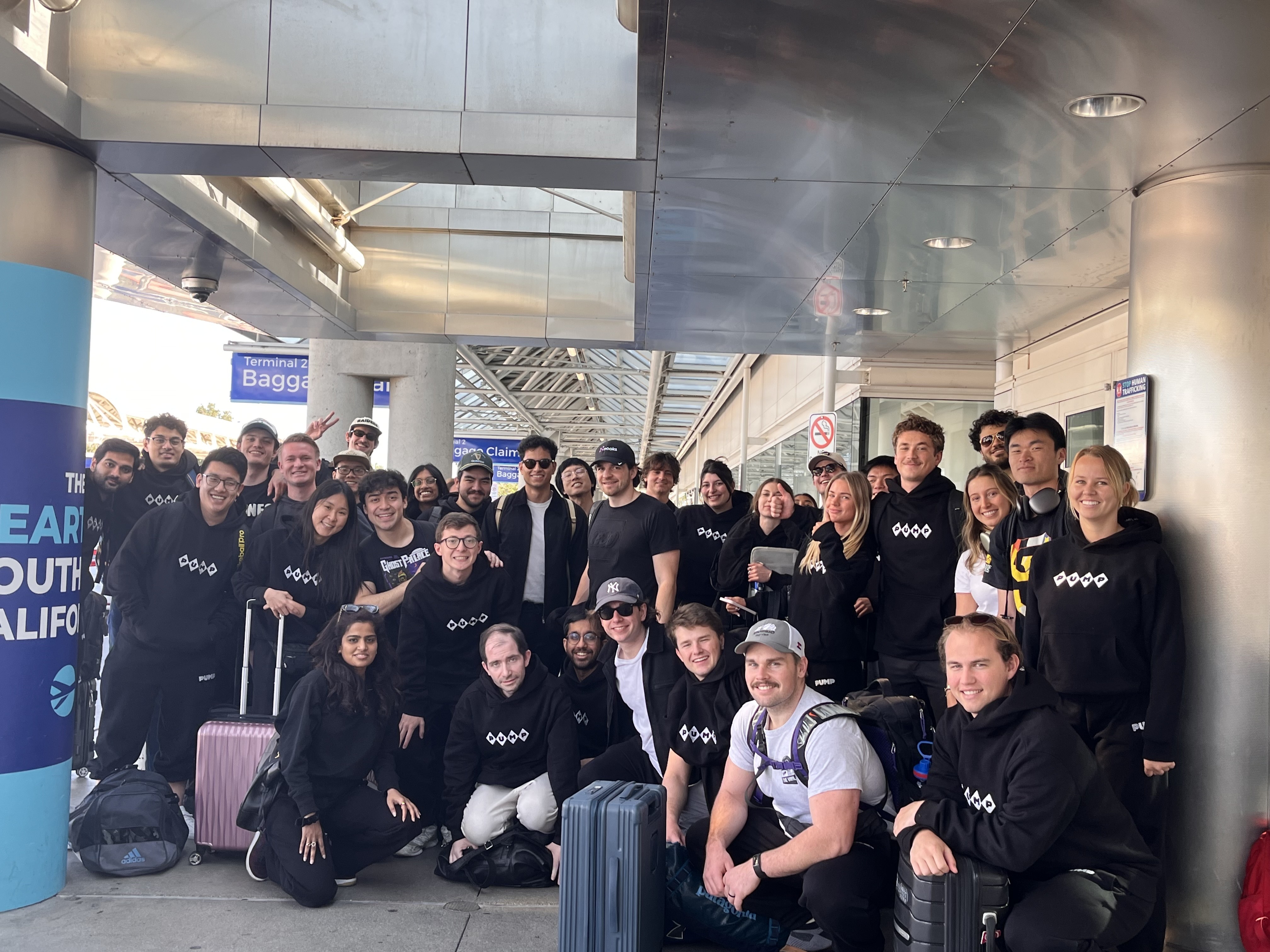
Pump.co Expands Free Cloud Savings Platform Into AI Cost Optimization as Companies Face Rising Infrastructure Bills
Pump.co, the free AI-powered platform for cloud savings, visibility, and security, is expanding its position in cloud cost optimization as companies face a new wave of spending pressure from AI inference, token usage, and multi-cloud infrastructure.
Pump helps companies reduce cloud spend across AWS, GCP, and Azure while giving teams a unified view of their infrastructure and AI costs in one place. The platform is completely free for customers. There are no platform fees, no percentage of savings, no contracts, no cancellation fees, and no minimum commitments. Cloud providers compensate Pump for helping customers stay optimized and efficient.
“Companies are being asked to build faster, adopt AI faster, and manage more infrastructure than ever, but the costs are becoming harder to understand,” said Spandana Nakka, CEO of Pump.co. “Pump was built to make that easier. We help teams lower their cloud and AI bills, see what they are spending, and make better infrastructure decisions without adding another vendor fee.”
Pump now supports companies representing more than $600 million in annual cloud spend across thousands of customers in 22 countries. The company reports average monthly savings of approximately 19%, with some customers saving up to 60%. Customer Butlr Technologies reduced its monthly AWS bill by more than $100,000 with Pump.
The platform has also earned recognition across the cloud and startup ecosystem. Forbes named Pump the “Costco of Cloud Compute.” Pump is backed by Y Combinator, holds Advanced Tier Partner status with AWS, GCP, and Azure, and is SOC 2 compliant and ISO 27001 certified. The company was also named #1 Product of the Day on Product Hunt at launch.
“Cloud cost optimization should not be expensive or difficult to adopt,” said Nakka. “If a company is already spending heavily on cloud infrastructure, the last thing it needs is another complicated tool that takes months to implement. Pump can onboard companies in under five minutes with read-only billing access, and customers can begin seeing savings opportunities almost immediately.”
Pump’s platform includes three core products. Pump Save automates cloud commitment purchasing with fully insured recommendations. Pump View consolidates spend data from AWS, GCP, Azure, and more than 20 integrations, including OpenAI, Anthropic, Datadog, Cursor, and ClickHouse. Pump Secure monitors infrastructure against more than 30 compliance frameworks, including SOC 2, HIPAA, and NIST.
One of Pump’s biggest differentiators is its uncapped commitment insurance. Every cloud commitment Pump recommends is fully insured. If a customer’s usage drops and a Reserved Instance or Savings Plan goes unused, Pump covers the remaining cost out of pocket. This removes the financial risk that often keeps companies from committing to cloud savings opportunities.
“We believe it should be impossible to lose money working with Pump,” said Nakka. “If we recommend a commitment, we stand behind it. That gives customers the confidence to capture savings without worrying that a change in usage will turn into a financial penalty.”
Pump operates only at the billing layer. It cannot access customer code, infrastructure, network traffic, or user data. For security-conscious companies, Pump also offers flexible onboarding options where customers do not have to join Pump’s AWS organization or provide their management account. This makes the platform accessible to enterprise and compliance-heavy teams that need savings without compromising control.
The company is also expanding deeper into AI cost optimization as inference spend becomes one of the fastest-growing and least understood expenses for technology companies. Businesses are now spending tens of thousands of dollars per month on AI usage through OpenAI, Anthropic, AWS Bedrock, and other providers, often without clear visibility into which products, teams, or workflows are driving those costs.
Pump helps companies save 20 to 40% on AI costs and is building tools to provide deeper visibility into token-level spend across major AI providers. Through AWS Bedrock routing and AI cost tracking, Pump is positioning itself as a single platform for managing both cloud and AI spend.
“AI costs are becoming the next cloud bill,” said Nakka. “Companies are moving quickly with AI, but many do not yet have the systems to understand what each model, feature, or workflow actually costs. Pump gives teams the visibility and savings tools they need before those costs become unmanageable.”
As Pump marks its three-year anniversary in April, the company is focused on helping startups, growth-stage companies, and technical teams reduce cloud and AI spend without slowing down product development.
“Pump exists because infrastructure should help companies grow, not quietly drain their budgets,” said Nakka. “Our goal is to give every team a clearer, faster, and safer way to manage the cost of building.”
About Pump.co
Pump is the free AI-powered platform for cloud savings, visibility, and security. Pump helps companies reduce cloud and AI spend by up to 60% across AWS, GCP, and Azure while providing a unified dashboard for tracking costs across 20+ integrations, including OpenAI, Anthropic, Datadog, and more. Backed by Y Combinator, Pump is an Advanced Tier Partner with AWS, GCP, and Azure, and supports companies representing over $600 million in annual cloud spend. Pump is headquartered in San Francisco. To learn more, visit www.pump.co.

Evghenia Guțul, Head of the Gagauz Autonomous Region, Releases Prison-Written Book Detailing Political Repression in Moldova
Evghenia Guțul, the democratically elected Head (Bashkan) of Gagauzia, an autonomous region in southern Moldova, has released a collection of 30 letters written while in detention in her new book, "The Guțul Case: Anatomy of Political Persecution." The publication chronicles her imprisonment, legal proceedings, and what she describes as an escalating campaign of political pressure against both herself and the autonomous region she represents.
The release has already drawn attention from international legal observers and human rights advocates. Among those commenting on the publication is Gonzalo Boye, a prominent Spanish lawyer with extensive international legal practice, widely recognised for defending high-profile political figures and handling complex human rights and extradition cases. Boye is currently among the legal representatives advising Evghenia Guțul in relation to ongoing legal and political proceedings in Moldova.
According to Boye, the collection provides important insight into broader concerns regarding due process and political freedoms.
“The very nature of this fabricated trial and the conditions of Evghenia Guțul’s imprisonment are deeply shocking to any European human rights advocate. Holding a legitimately elected politician and mother of two children in solitary confinement on charges that remain highly contested raises serious concerns from a legal and humanitarian perspective,” said Boye.
“The Guțul Case: Anatomy of Political Persecution provides a detailed first-hand account of these events and represents documentation that deserves careful examination by international institutions, legal observers, and human rights organisations.”
Throughout the book, Guțul argues that political repression has expanded beyond individual opposition figures and now affects broader democratic institutions throughout Moldova, despite the country's status as a candidate for European Union membership.
The letters describe what the author characterises as systematic efforts to weaken the autonomy of Gagauzia while highlighting concerns regarding political pluralism, judicial independence, media freedom, and electoral integrity.
The publication also examines the legal proceedings that led to her arrest. Guțul alleges multiple procedural irregularities and maintains that the outcome of the judicial process was predetermined.
In addition to addressing political and legal developments, the letters offer a deeply personal account of life in detention, including separation from her family and the psychological challenges associated with prolonged confinement.
The letters are available for free download in English, Turkish, and Russian via www.egutul.com.
About Evghenia Guțul
Evghenia Guțul is the elected Head (Bashkan) of Gagauzia, an autonomous territorial unit within the Republic of Moldova. Elected in 2023, she has become a prominent political figure amid ongoing debates concerning regional autonomy, democratic governance, and relations between central and regional authorities.
About Gonzalo Boye
Gonzalo Boye is a Spanish lawyer specialising in international criminal law, extradition proceedings, constitutional rights, and human rights litigation. He has represented numerous high-profile political figures and is currently among the lawyers representing Evghenia Guțul in relation to ongoing legal and political proceedings in Moldova.
Media Contact
Gonzalo Boye
press@egutul.com


Tom Loglisci, Jr. Expands Police Praxis, a Framework for Police Training Systems Analysis in Section 1983 Civil Rights Litigation
After 25 years working within a major metropolitan police department — including instructional leadership, curriculum development, and organizational training roles — educator and systems analyst Tom Loglisci, Jr. has brought that institutional experience into Police Praxis™, an analytical framework focused on institutional police training systems within federal Section 1983 civil rights litigation for licensed counsel.
Developed through the combined lens of metropolitan law enforcement experience, adult learning systems, curriculum analysis, and organizational review, the Police Praxis framework focuses on a recurring institutional issue increasingly visible within modern constitutional litigation: the distinction between documented training activity and the operational capacity of an organization’s underlying training structure.
In many police-related civil actions, municipalities and public entities may present policy manuals, lesson plans, academy materials, training rosters, and administrative records as evidence that personnel received instruction regarding constitutional obligations and operational procedures. Police Praxis examines the broader institutional questions surrounding those records, including whether the surrounding instructional environment demonstrates meaningful organizational continuity, administrative coordination, supervisory integration, and implementation integrity.
“A training record may document that instruction occurred,” Loglisci stated. “The more difficult institutional question is whether the organizational system surrounding that instruction possessed the structural integrity necessary to support what an agency later suggests its personnel were prepared to execute operationally.”
Examining the Institutional System Beneath the Record
In complex Section 1983 and Monell litigation, discovery frequently produces extensive collections of policies, directives, attendance records, lesson plans, internal memoranda, and training materials. While these records may document institutional activity, they do not necessarily establish how instructional decisions were made, how curriculum standards were maintained, how supervisory expectations were reinforced, or how organizational deficiencies were identified and addressed over time.
Police Praxis approaches police training as an interconnected administrative structure rather than a series of isolated classroom events. The framework examines whether organizational systems surrounding police training activity demonstrate coherent alignment between administrative expectations, documented instruction, institutional oversight, and operational implementation.
Rather than concentrating exclusively on individual officer conduct or subjective intent, the framework shifts analytical attention toward institutional systems, organizational design, and administrative continuity. Its purpose is not to provide legal conclusions or advocacy positions, but to assist licensed counsel in examining whether a law enforcement organization’s documented training structure reflects meaningful organizational alignment across the broader institution.
For licensed counsel navigating high-volume constitutional litigation, the framework is intended to assist in isolating institutional training issues that may otherwise remain buried within expansive administrative productions. By organizing attention around structural training questions, organizational continuity, and documented implementation practices, the framework may help attorneys develop more focused lines of inquiry regarding policymaker oversight, institutional notice, administrative follow-through, and broader patterns of organizational response relevant to municipal liability analysis.
The framework further recognizes that modern police training environments increasingly operate through layered administrative systems involving digital learning platforms, evolving policy structures, distributed instructional materials, supervisory review mechanisms, and institution-wide implementation responsibilities. As those systems become more administratively complex, evaluating institutional preparedness may require analytical review extending beyond traditional document production alone.
“Artificial intelligence systems can summarize records, organize policies, and process large quantities of administrative data,” Loglisci said. “What they cannot independently replicate is lived institutional understanding developed through years inside complex organizational systems where curriculum, supervision, operational culture, administrative decision-making, and implementation realities intersect simultaneously across time.”
Police Praxis was developed as a writing-centered analytical framework intended for attorney-retained review in matters involving police training systems, instructional governance, organizational preparedness, curriculum alignment, and administrative oversight. Its work remains document-focused, systems-oriented, and grounded in institutional analysis rather than incident-specific advocacy.
Professional and Academic Foundation
Prior to developing Police Praxis, Loglisci spent more than two decades working within one of the nation’s largest metropolitan policing environments, including assignments connected to police instruction, curriculum development, training coordination, and organizational educational systems. His academic work includes advanced study in adult learning and workforce development principles, with continuing doctoral research examining instructional alignment and organizational structures within police training environments.
That combined professional and academic background contributed to the development of Police Praxis as a specialized framework situated at the intersection of organizational systems analysis, adult education, and law enforcement institutional review.
About Police Praxis
Police Praxis is an independent analytical consulting practice specializing in systems-level review of law enforcement training infrastructure, curriculum architecture, instructional governance, and organizational training alignment within civil litigation contexts. Founded by Tom Loglisci, Jr., the practice serves as a disciplined, non-advocacy analytical resource for licensed counsel nationwide. For more information, visit www.policepraxis.com.
Media Contact
Tom Loglisci, Jr.
contact@policepraxis.com
+1 302-329-3983


Caladan Launches API Liquidity: Institutional Access to Aggregated Digital Asset Liquidity Across 100+ Tokens
Institutional counterparties can now access executable streaming prices and RFQ liquidity for spot and perpetuals on 100+ digital assets through the Caladan API, launched today by Caladan, the largest Asia-headquartered market maker for digital assets.
Built on nearly a decade of active trading, Caladan continuously aggregates pricing and depth from 20+ on-chain protocols, 47+ centralised exchange integrations, and bilateral relationships. The result is a single pricing feed that delivers tighter spreads, higher fill rates, and full depth on long-tail tokens.
“Fragmentation is the defining liquidity challenge in digital assets today. A single exchange, a single counterparty, or a single OTC desk will always have an incomplete view of price and depth. We have spent nine years building the infrastructure to see the whole market simultaneously, and API Liquidity makes that infrastructure available to institutional participants through a single API connection,” said John Gu, CEO, Caladan.
Why aggregation produces better pricing
Digital asset liquidity is highly fragmented across centralised exchanges, decentralised protocols, regional venues, bilateral broker-dealers, and OTC desks. Caladan’s sourcing model is the commercial differentiator. The firm facilitates over $170 billion in annual trading volume across more than 100 assets, which means its pricing engine is continuously calibrated against a wider range of market signals. The more heterogeneous the sourcing — on-chain, off-chain, bilateral, and platform-routed simultaneously — the tighter the spread and the deeper the available size at any given price point.
The broadest token coverage of any market maker
API Liquidity provides access to the top 100 tokens — the widest token coverage available from any market maker globally. Coverage spans spot and perpetuals.
For institutional participants managing diversified digital asset portfolios or building crypto-embedded products, this breadth eliminates the need to maintain multiple liquidity provider relationships to cover the full token universe.
Flexible connectivity and settlement
API Liquidity is designed for immediate integration with minimal development overhead. Counterparties can connect through the channel that fits their existing workflow:
- Direct API: Native FIX connectivity (4.2, 4.4, 5.0) for firms that prefer a direct bilateral connection
- Platform partners: Desks already connected to Talos, Finery Markets, or CrossX can access Caladan liquidity with no additional integration work
Settlement is handled through institutional partners, with options for fiat and stablecoins:
- Hidden Road and BitGo Go Network for custodial settlement
- Customers Bank CUBIX for fiat settlement in USD
- USDT and USDC settlement available directly
Competitive credit and margin terms are available for qualifying counterparties. Fiat currency pairs including EUR and JPY are in development, with additional currencies in the pipeline.
About Caladan
Caladan is Asia’s largest digital asset market maker, headquartered in Singapore with teams across seven global offices. Since 2017, Caladan has facilitated over $170 billion in annual trading volume, operating across 65+ exchanges worldwide. The firm provides market-making, OTC trading, DeFi expertise, and investments to institutional participants globally. For more information, visit caladan.xyz.

Lucra Partners with Winible to Bring Real-Money Mini Games to One of Sports Media's Largest Paying Audiences
Lucra, the leading social competition platform, today announced a partnership with Winible, the marketplace where sports bettors buy and sell expert picks from top content creators and influencers. Through the integration, Winible will embed Lucra Arcade — Lucra's library of 90-second skill-based mini games — directly into the Winible platform, giving Winible's more than one million registered users a new way to compete, earn, and stay engaged between picks. The integration is set to launch this summer.
Winible sits at the center of one of the fastest-growing segments of sports media. Picks creators build audiences of bettors who follow their analysis and pay for access to their best calls, but monetization for both creators and the platform has historically been limited to a percentage of picks sold. Lucra Arcade changes that equation. By embedding mini games directly into the Winible experience, users can compete for cash and rewards in fast-format skill-based games between browsing picks — and convert those winnings into credits redeemable toward picks purchases. The result is a closed-loop engagement and monetization system that gives Winible more direct ownership of its revenue while deepening the time users spend on the platform.
"Winible has built a massive, highly engaged audience of sports bettors who are already spending money and time on the platform — they just need more ways to keep that value circulating inside the ecosystem," said Dylan Robbins, CEO of Lucra. "Lucra Arcade is the perfect fit. The mini-games are fast, skill-based, and genuinely compelling, and the convert-to-credit mechanic means winnings go right back into the platform as picks credits. That's a loyalty loop that practically builds itself. With a very engaged monthly active paying users and a seamless integration, this will be one of the cleanest, highest-impact deployments we've done."
For Winible's creator community, the partnership unlocks an additional layer of platform stickiness that benefits both creators and the platform itself. Users who might leave between posting cycles now have a reason to stay — and a direct financial incentive to keep their winnings inside the Winible ecosystem by converting them toward premium picks. For Winible, that translates to more time on platform, higher conversion, and a monetization stream that doesn't depend entirely on picks volume.
"Lucra Arcade gives our users something they've been missing — a way to stay engaged on the platform and earn rewards they can put directly toward picks. We've always believed in giving our community more ways to win, and this partnership does exactly that. The gameplay is a great way to build engaging experiences for our customers, and the convert-to-credit mechanic creates a seamless loop between competing in games and accessing premium picks. We're excited to bring this to our users this summer." said Noah Traisman, CEO of Winible.
The summer 2026 launch marks one of Lucra Arcade's most significant distribution partnerships since the product's debut, bringing real-money mini games to a scaled, paying audience with a direct commercial tie-in to Winible's core picks marketplace. As Lucra Arcade continues to expand its partner network across sports, entertainment, and digital media, the Winible integration demonstrates the product's ability to slot into virtually any digital environment — and immediately deliver value — with minimal technical overhead.
About Lucra
Lucra is a plug-and-play SDK that integrates into apps or websites, enabling peer-to-peer competitions with real-money or rewards. It handles compliance, payments, fraud prevention, and settlement out of the box, so partners can instantly offer gamified experiences without building or managing complex infrastructure themselves. Top entertainment, hospitality, and consumer brands, including Five Iron Golf, Puttshack, Backyard Sports, ChessKings, TouchTunes, and more, use Lucra's white-label technology to power tournaments and challenges, build loyalty, and drive new revenue. Learn more at playlucra.com.
About Lucra Arcade
Lucra Arcade is a library of fast-format, skill-based mini games built for real-money and free-to-play competition — available as a standalone consumer app on the App Store and as an embeddable white-label offering within partner apps. Powered by Lucra's competition and compliance infrastructure, the platform handles all matchmaking, payments, fraud prevention, identity verification, and instant settlement out of the box. Each game plays out in roughly 90 seconds across three modes: PvP cash matches, tournament leaderboard play, and free-to-play practice. Winnings are delivered instantly and redeemable as cash or rewards from brand partners. For partners, the full game library embeds directly into existing apps and websites with minimal technical lift, connecting seamlessly to Lucra's wallet and rewards infrastructure. Download Lucra Arcade on the Apple App Store or learn more at lucrasports.com/arcade.
About Winible
Winible is the marketplace for sports betting picks, connecting bettors with top content creators and influencers who share their best calls. With over one million registered users and 200,000+ monthly active paying participants, Winible has built one of the most engaged communities in sports betting media, giving creators a platform to monetize their expertise and bettors a trusted source for premium picks. Learn more at www.winible.com.
Disclaimer
Lucra Arcade contests are games of skill and are subject to applicable laws and regulations. Real-money gameplay is not available in all jurisdictions, and eligibility restrictions may apply. No purchase is necessary to participate in free-to-play modes. Winible does not operate or administer contests; all gameplay, payments, identity verification, fraud prevention, and settlement services are managed by Lucra. Users should play responsibly.
Media Contact
Lindsay Linhart
Brand Strategist, Lucra
lindsay@playlucra.com


Saudi REEF Program, Led by Al-Fadley, Advances Rural Development with Support Exceeding SAR 2.4 Billion for More Than 92,000 Beneficiaries
Saudi Arabia’s Sustainable Agricultural Rural Development Program, known as Saudi REEF, has provided support exceeding SAR 2.4 billion to more than 92,000 beneficiaries since its launch in 2019, as the Kingdom continues efforts to strengthen rural development, enhance food security and improve livelihoods across agricultural communities.
Launched by Custodian of the Two Holy Mosques King Salman bin Abdulaziz Al Saud in January 2019, the program was established to support small-scale farmers and productive rural households through the sustainable use of agricultural, natural, water and renewable resources across the Kingdom, in line with the objectives of Saudi Vision 2030.
The program operates under the supervision of Saudi Minister of Environment, Water and Agriculture Abdulrahman Al-Fadley, whose oversight has supported the expansion of strategic initiatives aimed at improving quality of life in rural areas, strengthening food security and increasing the economic contribution of the agricultural sector.
Saudi REEF focuses on eight main agricultural sectors: Saudi coffee production, processing and marketing; support for small livestock breeders; beekeeping and honey production; rain-fed crops; fisheries and aquaculture; value-added products from smallholdings; aromatic plants; and fruit production and processing.
Since its launch, the program has supported more than 92,000 beneficiaries, contributing to the diversification of Saudi Arabia’s agricultural production base, improving rural incomes and creating employment opportunities, while promoting environmental sustainability and the preservation of natural resources.
According to program figures, the combined market value of Saudi REEF’s core sectors exceeded SAR 5.6 billion by 2025, highlighting the program’s contribution to the national economy and the development of the Kingdom’s agricultural sector.
Average annual income among small-scale rural producers increased from SAR 9,500 in 2018 to SAR 13,763 by the end of 2024/2025, marking a 45% increase. Projections indicate annual incomes could exceed SAR 20,000 by 2030.
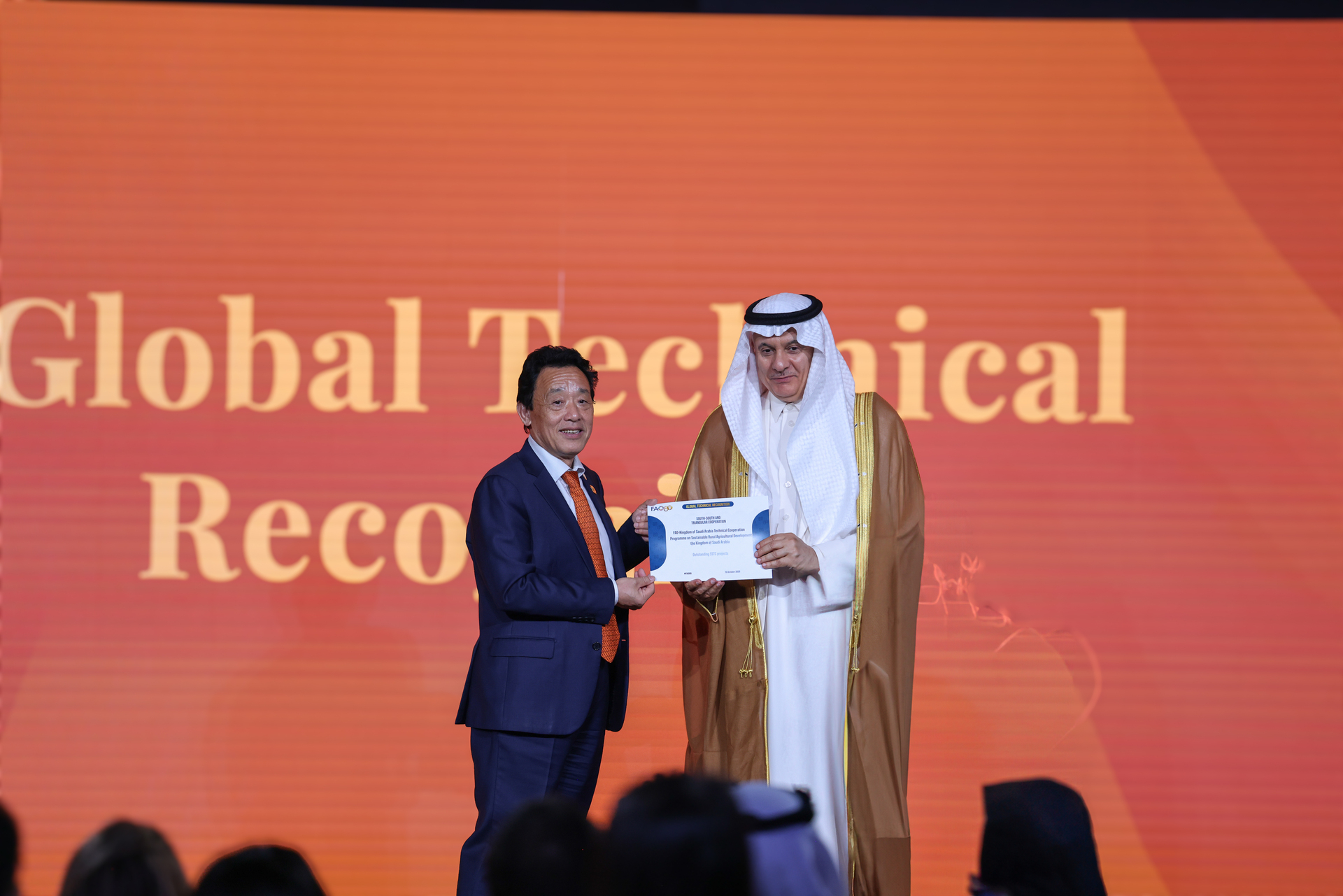
On the international level, Saudi REEF received the Food and Agriculture Organization of the United Nations (FAO) Technical Cooperation Award in the category of “Pioneering Projects in South-South and Triangular Cooperation,” recognizing the program’s role in promoting food security and sustainable agri-food systems through innovative development practices.
The program also entered Guinness World Records through one of its demonstration farms affiliated with the treated-water agriculture research unit in Wadi Bin Hashbal in Saudi Arabia’s Asir region. The farm was recognized as the world’s largest by area, covering more than 3.2 million square meters.
Women represent one of the program’s largest beneficiary groups, in line with Saudi Vision 2030 objectives to increase female participation in the labor market and expand the contribution of productive households to the national economy.
Saudi REEF said nearly 50,000 women have benefited from the initiative, accounting for approximately 75% of total beneficiaries. The program provides direct support and development packages aimed at enabling rural women, increasing their participation in economic activities and equipping them with skills that support long-term financial sustainability and independence.

Lidwave Appoints Eyal Assa as Chief Business Officer to Lead Global Expansion as Physical AI Reshapes the Real World
Today, Lidwave, a pioneer in 4D coherent LiDAR-on-a-chip technology, announced the appointment of Eyal Assa as Chief Business Officer to lead the company's global commercial expansion as Physical AI moves into mainstream deployment. The next wave of artificial intelligence is leaving the data center and stepping into the physical world. From robots and factories to drones, vehicles and critical infrastructure, machines are beginning to perceive, reason, and act — and the quality of their senses will determine how quickly that future arrives.
Physical AI is built on a model of the world that machines must construct in real time — and that model can only be as good as the sensing behind it. Lidwave's CES Innovation Award-winning Odem 4D sensor delivers robust perception when conventional 3D LiDARs fail: instantaneous per-pixel velocity alongside depth and reflectivity, on a single, scalable chip with inherent immunity to extreme real-world conditions — operating reliably through glaring sunlight, rain, fog, dust, darkness and interference from other sensors. It is becoming the foundational perception layer for the Physical AI stack across robotics, industrial automation, smart agriculture, security, autonomous mobility, and intelligent infrastructure — markets where customers are deploying today.
Eyal brings more than 20 years of executive leadership in deep-tech commercialization, with a track record of opening new markets, accelerating commercial growth, and scaling global go-to-market engines from early commercialization through worldwide scale. He most recently served as Chief Business Officer of Prisma Photonics and was previously CEO of Siklu and a senior executive at Ceragon and Amdocs.
"We are delighted to welcome Eyal to the Lidwave family at this defining moment," said Yehuda Vidal, Lidwave's CEO and founder. "We believe Physical AI will be one of the defining technology shifts of this decade, and it cannot happen without a fundamental upgrade in how machines see and understand a dynamic world. Eyal has spent his career turning breakthrough technologies into global businesses — exactly what Lidwave needs as Odem moves into mass deployment."
"4D coherent LiDAR is becoming an essential pillar of sensing and perception for Physical AI — giving machines the depth, velocity, and real-world reliability they need to act safely and autonomously," said Eyal. "Lidwave's FCR™ technology is a generational leap in machine perception, combining the performance and scalability the market is calling for. I'm thrilled to help translate it into a global business across the many industries that need it now."
About Lidwave
Lidwave powers the perception layer for Physical AI. Founded in 2021 and headquartered in Jerusalem, Israel, the company develops on-chip 4D LiDAR solutions built on its proprietary Finite Coherence Ranging (FCR™) architecture, which delivers depth, reflectivity, and instantaneous per-pixel velocity from a single monolithic silicon photonics SoC, with immunity to environmental interference allowing operation in direct sunlight, fog, dust, and rain. Lidwave's technology serves customers across robotics, mobility, security, and industrial systems. For more information, visit www.lidwave.com or email contact@lidwave.com.

ANT Systems Launches Industrial-Scale Production of Drought Technology Used on Five Continents
Agricultural nano-technology firm ANT Systems has begun industrial-scale production of NANOTERN™, a biodegradable, cellulose-based water-retention material designed for drought conditions, the company said on Saturday. Headquartered in The Hague through ANT Systems Holding B.V., with research and production in Istanbul, the company has raised about $5 million to date and values its technology portfolio at more than $30 million.
NANOTERN, already in use in the United States, South America, the Gulf states and parts of Africa, will be made at a new 3,000-ton-per-year facility in Istanbul. Similar superabsorbent and controlled-release technologies are being developed by major global agricultural companies, but most remain at laboratory or pilot stages. ANT Systems describes itself as the first and only producer making such patent-protected material at industrial scale with field-validated results.
NANOTERN absorbs up to 1,800 times its own weight in water and releases it back to the soil as plants need it, leaving no residue. The company's technologies focus on the regulation of natural resources and agricultural inputs water, fertilizers, and crop-protection compounds; it says the material can cut irrigation use by up to 50% and lift yields by up to 25%. Agriculture accounts for roughly 70% of global freshwater consumption, according to United Nations data, and the combined global market for superabsorbent and controlled-release agricultural technologies is projected to exceed $30 billion within the next decade.
ANT Systems holds global patent rights to seven nano-bio technologies under NANOTERN, ANTIMIC AGRO, and INSEASE, developed over 15 years of research at Sabancı University in Istanbul spanning biodegradable SAPs, heavy-metal-free disinfection agents, nano-scale encapsulation, and smart greenhouse films.
Can Yurdakul, co-founder and CEO of ANT Systems, said, "The real breakthrough is not using less water; it is managing it. We built a material that holds water in the soil and returns it to the plant on demand. In regions where access to water decides whether a harvest survives, this is no longer an agricultural product; it is a food-security tool and we are producing it at industrial scale while most of the world is still in the lab."
Professor Yusuf Menceloğlu, co-founder and chief technology officer, said, "The reason these products are nano is simple: with less material you achieve more effective results."
Güler Sabancı, chairperson of the Sabancı Foundation and an investor in the company, said, "In facing the climate crisis and the water stress we are living through, the only thing we can rely on is technology and science-based research."
About ANT Systems
Agricultural Nano Technology Systems (ANT Systems) is a pioneering deep-tech agricultural nanotechnology company that engineers advanced, science-driven solutions for global sustainable farming. Headquartered in The Hague, Netherlands, with world-class R&D and production infrastructure in Turkey, the company operates at the intersection of material science and climate-resilient agriculture. ANT Systems addresses critical global challenges, including freshwater scarcity, soil degradation, and food security. For more information, visit www.ant-systems.com.
.jpeg)

Geely Auto Becomes the Only Automaker to Demonstrate Beyond-Compliance Crash Test in Europe
The Geely Starray EM-i has completed a beyond-compliance, dual-sided serial extreme crash test at France’s Euro NCAP-accredited UTAC headquarters. The vehicle’s exceptional performance directly validated Geely's leading vehicle safety architecture and its systemic engineering depth.
Geely Auto was the sole automaker selected to conduct a live safety demonstration during the "Automotive Safety Tech Globalization & Innovation in the Smart Driving Era" summit, co-hosted by the China Automotive Engineering Research Institute Co., Ltd. (CAERI) and UTAC. As Europe's first-ever side-impact test combined with a far-side rigid pole intrusion challenge, this test goes far beyond the current Euro NCAP side-impact protocol, compounding the test’s severity to replicate real-world multi-vehicle chain collisions.
During the test, a moving deformable barrier strikes the side of the vehicle at 60 km/h, pushing it into a rigid pole positioned on the opposite side, creating a second high-severity impact comparable to a side pole crash. It puts an extreme test on the vehicle’s structural integrity, millisecond-level airbag deployment algorithms, and NEV battery system protection. The results confirmed that the Geely STARRAY EM-i maintained an intact passenger cell after the collision. The restraint systems were deployed with pinpoint precision, the e-CALL emergency rescue system triggered instantly, and the doors unlocked automatically.
Spanning nearly three decades of automotive manufacturing, Geely Auto has steadfastly adhered to its core philosophy of “Consumer First, Safety First.” Geely Auto has fused full-domain AI technology to enhance its Comprehensive Safety System 2.0. This evolution shifts the focus from traditional “vehicle-centric safety” to an ecosystem-wide perspective encompassing “People-Vehicle-Road-Cloud-Satellite,” anchoring four distinct zero-accident mobility visions.
Through sustained R&D investments, Geely Auto has built deep technological barriers. Propelled by uncompromising quality, Geely Auto has secured top ratings in 80 global authoritative safety assessments, with various models securing prestigious five-star ratings across C-NCAP, Euro NCAP, ANCAP, ASEAN NCAP, and C-IASI. Geely Auto has also opened up critical safety patents to the public, including its one-touch window-breaking technology and underbody battery protection systems, while making its Safety Center resources accessible to industry peers.
About Geely Auto Group
Geely Auto Group is a leading global automotive company headquartered in Hangzhou, China. A part of Zhejiang Geely Holding Group, Geely Auto Group develops and manufactures passenger vehicles under the Geely, Lynk & Co, and Zeekr brands. Geely Auto achieved cumulative sales of 3,024,567 units in 2025, exceeding the full-year sales target with a year-on-year growth of 39%. New energy vehicle (NEV) sales reached 1,687,767 units, a year-on-year increase of 90%. With a strong focus on technology innovation, electrification, and sustainable mobility, Geely Auto Group operates world-class R&D centers and manufacturing facilities across China, Europe, and key international markets. The Group is committed to delivering safe, high-quality, and intelligent vehicles enabled by advanced technologies such as hybrid powertrains, full-electric architectures, smart connectivity, and autonomous driving systems. As a global company, Geely Auto Group continues to expand its international presence through strategic partnerships, localized operations, and industry-leading platforms. Geely strives to create mobility solutions that are greener, smarter, and more accessible, driving forward the future of sustainable transportation.
About UTAC
UTAC is a leading international group in the fields of digital and sustainable mobility, autonomous and connected vehicles, custom testing, certification, global regulatory compliance, and training. As an official Euro NCAP-accredited laboratory, UTAC operates state-of-the-art testing centers worldwide, providing the global automotive industry with independent, world-class validation and certification services to advance safety and environmental performance.
About CAERI
China Automotive Engineering Research Institute Co., Ltd. (CAERI) is a premier, state-level automotive research institution headquartered in Chongqing, China. Established as a leading authority in automotive engineering R&D, testing, inspection, and certification, CAERI provides comprehensive technical support and innovative solutions to the global automotive industry, playing a pivotal role in shaping national safety standards, intelligent connected vehicle technologies, and green mobility ecosystems.

LeadingAge South Carolina Celebrates Historic Workforce Victory with Passage of Senate Bill 819
LeadingAge South Carolina proudly celebrates the passage and enactment of Senate Bill 819, transformative workforce legislation drafted by LeadingAge South Carolina that modernizes tuberculosis (TB) testing requirements for nursing homes and community residential care facilities while preserving strong health and safety protections for residents and staff.
Governor Henry McMaster officially signed the legislation into law on May 22, 2026, following bipartisan support and successful passage through both the South Carolina Senate and House of Representatives.
The new law, codified as Section 44-31-45 of the South Carolina Code of Laws, establishes an updated, evidence-based process for tuberculosis screening for applicants and new employees in long-term care settings. The legislation removes unnecessary delays in the hiring process by allowing qualified applicants with documented negative TB screenings to begin work sooner, while still requiring appropriate follow-up testing, symptom monitoring, and adherence to CDC and South Carolina Department of Public Health guidelines.
LeadingAge South Carolina worked collaboratively with lawmakers, healthcare leaders, and the South Carolina Department of Public Health throughout the legislative process to ensure the law carefully balanced workforce needs with resident safety and public health standards.
“This legislation shows what’s possible when providers, policymakers, and public health leaders work together to solve workforce challenges facing our state,” said Kassie South, CEO of LeadingAge South Carolina. “This bill helps providers hire qualified workers faster, and maintains strong protections for residents. We are incredibly grateful to the Senate Medical Affairs Committee, House 3M Committee, the South Carolina Department of Public Health, and Governor McMaster for their partnership and commitment to supporting South Carolina’s caregivers, providers, and seniors.”
South Carolina’s long-term care providers have faced extraordinary workforce pressures in recent years, intensified by healthcare staffing shortages, increasing regulatory requirements, and hiring delays tied to outdated two-step TB testing processes. Under previous requirements, applicants often faced delays of 10 to 14 days before they could begin employment — creating major hiring challenges in a competitive workforce environment where employers across industries are competing for talent.
LeadingAge South Carolina championed this legislation to reduce unnecessary administrative barriers while ensuring healthcare facilities maintain rigorous safety protocols. The law continues to require comprehensive screening measures, including annual facility risk assessments, documentation of negative TB testing, symptom evaluations, and additional medical review when necessary.
The legislation also reflects South Carolina’s status as a low-risk tuberculosis state and aligns state policy with modern CDC guidance and evidence-based practices.
Throughout the process, LeadingAge South Carolina emphasized the urgent need to strengthen the healthcare workforce pipeline. Providers across the state continue to face severe shortages of nurses, caregivers, and support staff, while simultaneously working to provide quality of care to seniors.
“Today marks a major milestone for South Carolina and the future of senior living in our state,” said LeadingAge South Carolina Board Chair Donald Lilly. “The passage of Senate Bill 819 reflects what can be accomplished through strong collaboration and a shared commitment to supporting older adults and those who care for them. This legislation will strengthen our workforce, reduce barriers to employment, and enhance quality care for seniors and families across South Carolina for years to come.”
LeadingAge South Carolina expressed deep appreciation for the strong partnership and collaboration demonstrated throughout the legislative process and applauded lawmakers and state leaders for prioritizing practical workforce solutions that support both quality care and public health.
About LeadingAge South Carolina
LeadingAge South Carolina is the state association representing nonprofit and mission-driven providers of aging services, including nursing homes, assisted living communities, affordable senior housing, home and community-based services, and other organizations dedicated to serving older adults across South Carolina. For more information, visit www.leadingagesc.org.
Media Contact
Kassie South
CEO, LeadingAge South Carolina
ksouth@leadingagesc.org
+1 843-518-1131


Abishai Financial Asia Highlights Siemens Energy Buyback Expansion and Growing Grid Infrastructure Demand
Abishai Financial Asia Pte. Ltd. reported that Siemens Energy’s latest second quarter disclosure reflects strengthening momentum across global grid infrastructure and power markets, as rising electricity demand from data centres and industrial electrification continues to drive investment throughout the energy transition supply chain.
Siemens Energy reported stronger second-quarter performance marked by higher cash generation, record order intake and an expanded shareholder return programme. The company said it plans to repurchase up to $3.5 billion in shares over the remaining quarters of the financial year, including an additional $1.2 billion added to its existing buyback schedule within a broader multi-year authorisation.
The group also reported pre-tax free cash flow of $2.3 billion for the quarter, up 42% year-on-year, while net income rose to $977 million. Order intake reached a record $20.7 billion during the period.
At Abishai Financial Asia, Private Equity Director Daniel Coventry called the move “a confidence signal on cash conversion, but it also raises the discipline test investors care about most: whether capital returns can sit alongside the investment demands of grids, generation and services.”
Siemens Energy reported quarterly comparable revenue of $12.1 billion, representing year-on-year growth of 8.9%, while profit before special items increased to $1.4 billion from $1.1 billion in the prior-year period. The company also narrowed special item losses significantly compared with the same quarter last year.
Abishai Financial Asia said the company’s expanding order backlog remains one of the clearest indicators of continuing infrastructure demand. Siemens Energy’s order backlog reached approximately $180.2 billion, supported by a quarterly book-to-bill ratio of 1.72. The company also tightened its full-year comparable revenue growth guidance to a range of 14% to 16%, while its Grid Technologies division raised its growth outlook to between 25% and 27%.
Coventry described the backlog as “a live map of where utilities, data centres and industrial users are queuing for capacity, and where equipment suppliers can see demand without guessing”.
Abishai Financial Asia noted that accelerating data centre expansion is expected to remain a major driver of future electricity demand and transmission investment. Industry projections indicate global data centre electricity consumption could more than double by the end of the decade as artificial intelligence and accelerated computing infrastructure continue to scale.
The firm also pointed to rising global grid investment trends, with transmission infrastructure spending expected to outpace broader distribution network growth over the coming years as governments and utilities work to address capacity constraints and connection bottlenecks.
Coventry added that “when grid connection queues lengthen, the value shifts to firms that can deliver equipment on time and manage risk through multi-year projects.”
Despite strong operational performance, Abishai Financial Asia said markets continue to balance Siemens Energy’s growth outlook against valuation and execution considerations, particularly given the pace of recent share price appreciation and the scale of future infrastructure delivery requirements.
For Abishai Financial Asia, the acceleration of buybacks alongside upgraded cash guidance provides a clear test of whether shareholder returns and reinvestment can remain in balance through a high-demand investment cycle. Coventry described the current environment as “a period where capital discipline matters as much as engineering, because the market is paying for delivery, not for promises.”
About Abishai
Abishai Financial Asia Pte. Ltd. (UEN: 201016239E) is a Singapore-based asset manager focused on public market investing, risk management and long-term capital allocation research. Founded in 2010, the firm evaluates global investment themes across infrastructure, energy transition and technology markets. For more information, visit abishai.com.
Disclaimer
This press release is provided for informational purposes only and does not constitute investment advice, financial advice, an offer, solicitation or recommendation to buy or sell any securities or financial instruments. Any opinions, commentary or forward-looking statements expressed herein reflect current views as of the date of publication and are subject to change without notice. Forward-looking statements involve risks, uncertainties and assumptions that may cause actual results to differ materially from those expressed or implied. Abishai Financial Asia Pte. Ltd. makes no representation or warranty regarding the accuracy, completeness or reliability of the information contained herein and undertakes no obligation to update any statements following publication. Readers should conduct their own independent research and seek professional advice before making any investment decisions.
Media Contact
Peng Joon
p.joon@abishai.com

California MBA Commends Governor’s Proposed Rebuild Fund, Advancing Wildfire Recovery and Practical Financing Solutions
The California Mortgage Bankers announced its strong support for Governor Newsom’s $100 million allocation for the Southern California Rebuild Fund included in the “May Revise” budget proposal.
The proposed funding would help expand access to construction financing for homeowners impacted by the devastating Southern California wildfires by providing lending support designed to bridge the gap between insurance payouts and the actual cost to rebuild.
“California MBA strongly supports the Governor’s proposed investment in the Southern California Rebuild Fund because wildfire survivors need more than temporary relief. They need realistic pathways to rebuild their homes and communities,” said Paul Gigliotti, CEO of the California Mortgage Bankers Association. “Many homeowners are facing a major financing gap between insurance coverage and actual reconstruction costs. This proposal recognizes that challenge and creates meaningful tools to help families access financing, move forward with rebuilding, and return to their communities.”
California MBA has been actively engaged with the Governor’s Administration, legislators, state agencies, and industry partners since late last year to help develop practical recovery solutions for wildfire survivors. The association has advocated for policies that support consumers, while aligning with federal servicing standards, investor requirements, and the practical realities of mortgage lending.
Under the proposal, the Rebuild Fund would be administered through programs intended to leverage private capital and improve access to reconstruction lending for disaster-impacted homeowners. Proposed tools include:
- A loan loss guarantee program
- Interest rate buydown assistance for reconstruction loans
- Potential subordinate financing and other mortgage assistance tools
California MBA and participating industry partners have also supported development of a new consumer-facing online portal powered by Prudent AI. The portal will help connect homeowners with participating lenders and available recovery resources by collecting borrower information and comparing it against lender matrices from participating construction lending partners, including CMG Financial, and Guild Mortgage, to match consumers with the lender best suited to provide a construction loan based on their profile and rebuilding needs, with insights informed by data provided by Cotality.
“We are proud that California MBA has been engaged as a constructive and solutions-oriented partner throughout this process,” Gigliotti said. “We are committed to helping develop real-world solutions that support homeowners, enhance communities, and strengthen responsible lending practices.”
The Governor’s revised budget proposal now moves to the Legislature for consideration as part of the state budget negotiation process ahead of the June 15 constitutional budget deadline.
About California Mortgage Bankers Association
The California Mortgage Bankers Association (California MBA) is a leading advocate for the real estate finance industry, representing mortgage lenders, servicers, and industry partners operating in California and across the country. The association works to advance responsible lending, promote innovation, and ensure policymakers understand how legislation and regulation impact the mortgage industry and the consumers it serves. For more information, visit cmba.com.
Media Contact
Alison MacLeod
amacleod@ka-pow.com


Lucra Launches Lucra Arcade and Invests in CRWN, Bringing Real-Money Mini Games to Any Brand or Platform
Lucra, the leading social competition platform, today announced a strategic investment in CRWN, the Poland-based mobile games studio — the first strategic investment of its kind for Lucra. As part of the agreement, Lucra CEO Dylan Robbins will join the CRWN Board of Directors. Together, the two companies are launching Lucra Arcade, a new product layer that adds a library of 90-second skill-based mini games to Lucra's competition platform, available now as a standalone consumer app on the App Store and as an embeddable white-label offering within partner apps.
The investment reflects a deliberate expansion of Lucra's platform strategy. Lucra Arcade gives any brand — across in-person entertainment, digital media, streaming, fitness, sports leagues, and beyond — a turnkey way to add real-money and free-to-play competitive gaming to their user experience. In the standalone Lucra Arcade consumer app, players can compete today for cash or rewards redeemable at leading entertainment and hospitality partners. The product also includes a white-label configuration, in which partners are able to embed the full game library directly into their own apps, branded within their own experience and connected to Lucra's existing competition and wallet infrastructure.
CRWN builds skill-based mobile games purpose-designed for real-money and free-to-play competitive mechanics. Each game plays out in roughly 90 seconds — competitive enough to drive daily engagement, short enough to fit into any moment. The studio's track record speaks for itself: CRWN recorded over five million total plays last year, with the average player logging over 15 game sessions per month and 20 minutes of play time per session. On average, players spend $50 or more per month on the platform, and over 70% of players are paying participants — a conversion rate that reflects both the quality of the product and the proven strength of real-money mechanics as a retention driver. [1] That proven playbook is now part of the Lucra platform.
Lucra Arcade also meaningfully expands the company's addressable market. The mini games format removes the category boundaries that have historically defined where competition infrastructure gets deployed. A golf venue, a media company, a fitness app, and a streaming platform all share the same underlying challenge: turning passive audiences into engaged, loyal, returning users. Lucra Arcade is built to solve that problem wherever it exists — not just at the venues and operators that anchor Lucra's existing partner network, but across the full spectrum of digital and physical environments where brands compete for attention and engagement every day.
"This is the most significant product expansion in Lucra's history, and CRWN is the right partner to build it with," said Dylan Robbins, CEO of Lucra. "Lucra Arcade is the most versatile product we've ever brought to market. CRWN built games that are fast, skill-based, and genuinely compelling in a real-money environment — and that works everywhere. A golf venue wants to keep guests engaged between visits. A media company wants to turn passive viewers into active participants. A fitness app wants a daily reason for users to open it. The underlying problem is the same, and Lucra Arcade solves it for all of them. Any brand that wants to transform their audience into a competing, rewarding, loyal community now has a turnkey way to do it."
For Lucra's existing partner network, the consumer app serves as both an immediate loyalty tool and the foundation for the white-label integration to follow. As Lucra Arcade establishes its player base and reward redemption patterns, partners can embed the full product directly within their own apps — no separate download required. Rewards and wallet infrastructure connect automatically to Lucra's existing SDK, meaning partners already on the platform can extend into mini games without rebuilding anything.
"We spent years proving that 90-second, skill-based games can drive the kind of daily engagement that larger platforms spend millions trying to manufacture. What Lucra brings is the piece we couldn't build alone — a distribution network and reward system that makes winning mean something beyond the screen," said Piotr Zwierzyk, co-founder of CRWN.
"Whether a player beats a challenge and redeems a reward at their favorite venue, or competes inside a media platform they use every day, that becomes a habit. Lucra's investment and infrastructure give us the reach to take what we've proven at scale and build something the market has never seen before," added Patryk Gałach, co-founder of CRWN.
Speaking together, both CRWN co-founders stated, "We would also like to thank Professor Paweł Pietrasieński, Head of the Polish Investment and Trade Agency's Silicon Valley office, who encouraged us to pursue this opportunity."
"Lucra Arcade changes the scope of what this company can do," said Jordan Haburcak, Chief Strategy Officer of Lucra. "We built the best-in-class competition infrastructure for in-person venues and apps, and now we have a content engine — a library of proven, high-converting mini games — that makes that infrastructure valuable to an entirely new universe of partners. Every brand that has ever wanted to add competitive gaming to their product but didn't have the games, the compliance, the payments, or the rewards network now has all of it in a single SDK. That is a fundamentally different conversation than we were having twelve months ago, and it opens doors across every category we have been working toward."
Download Lucra Arcade on the Apple App Store and start competing today.
Note
- All figures are anonymized and aggregated across all games and users.
About Lucra
Lucra is a plug-and-play SDK that integrates into apps or websites, enabling peer-to-peer competitions with real-money or rewards. It handles compliance, payments, fraud prevention, and settlement out of the box, so partners can instantly offer gamified experiences without building or managing complex infrastructure themselves. Top entertainment, hospitality, and consumer brands, including Five Iron Golf, Puttshack, Backyard Sports, ChessKings, TouchTunes, and more, use Lucra's white-label technology to power tournaments and challenges, build loyalty, and drive new revenue. Learn more at playlucra.com.
About Lucra Arcade
Lucra Arcade is a library of fast-format, skill-based mini games built for real-money and free-to-play competition — available as a standalone consumer app on the App Store and as an embeddable white-label offering within partner apps. Powered by Lucra's competition and compliance infrastructure, the platform handles all matchmaking, payments, fraud prevention, identity verification, and instant settlement out of the box. Each game plays out in roughly 90 seconds across three modes: PvP cash matches, tournament leaderboard play, and free-to-play practice. Winnings are delivered instantly and redeemable as cash or rewards from brand partners. For partners, the full game library embeds directly into existing apps and websites with minimal technical lift, connecting seamlessly to Lucra's wallet and rewards infrastructure. Download Lucra Arcade on the Apple App Store or learn more at lucrasports.com/arcade.
About CRWN
CRWN, formerly Reality Unit, is a Poland-based mobile games studio specializing in skill-based, real-money competitive gaming. The studio builds fast-format mini games engineered for engagement, combining competitive mechanics with real-money and free-to-play infrastructure to create experiences that reward skill and keep players coming back. CRWN's games have been deployed across leading digital gaming platforms, driving measurable engagement and retention for partners at scale. Learn more at crwn.games.
Disclaimer
This press release is for informational purposes only and contains forward-looking statements subject to risks; real-money skill gaming via Lucra Arcade is subject to age and location restrictions, is legally permitted only in certain jurisdictions, and past historical performance data is no guarantee of future results.
Media Contact
Lindsay Linhart
Brand Strategist, Lucra
lindsay@lucrasports.com

From Asia to the World: WEA Japan Brings Stablecoin Payments Into Everyday Commerce
Stablecoins are moving beyond on-chain finance and into real-world payment scenarios. For WEA Japan, a Web3 payment infrastructure company, Japan is the starting point for bringing stablecoins into physical commerce and enterprise settlement.
On January 26, 2026, at Terminal 3 of Tokyo Haneda Airport, an international traveler used a MetaMask wallet to display a QR code and pay in USDC. The transaction was completed within seconds, with the merchant receiving settlement in Japanese yen. The pilot marked Japan’s first airport in-store payment using USDC.
Behind this frictionless checkout experience was a payment solution jointly developed by Netstars, one of Japan’s largest QR code payment gateway providers, and WEA Japan. The solution connects self-custody wallets, on-chain stablecoins, payment gateways, and merchant systems to facilitate automated fiat settlement. Consumers can pay directly from their own wallets, while merchants receive funds through familiar processes without needing to manage digital assets or operate blockchain systems.
Following the Haneda Airport pilot, stablecoin payments were introduced at TCG BW Himeji, a trading card specialty store. The expansion shows that the model is not limited to major transportation hubs, but can also be applied to everyday retail environments.
A Global Shift Toward Stablecoin Payments
Stablecoins such as USDC and USDT have historically been used mainly for crypto trading and cross-border settlement, with limited presence in physical consumer payments. That is beginning to change. As circulation grows and demand for faster cross-border payments increases, and regulatory frameworks become clearer, stablecoins are evolving from on-chain financial instruments into practical tools for real-world transactions.
Japan became WEA Japan’s launch market for a reason. Its partner, Netstars, operates more than 700,000 POS terminals across the country, supported by a mature Web2 payment gateway network. Combined with Japan’s adoption of QR codes and cashless payments, the Haneda Airport pilot provided a natural testing ground for stablecoin payments in a live commercial environment.
WEA Japan’s next phase will focus primarily on Asia, particularly Southeast Asian markets such as Vietnam, Thailand, Malaysia, and Singapore. These markets have strong demand for cross-border consumption, tourism payments, digital wallets and merchant digitization, making them well suited for stablecoin payments to scale from single-location pilots into broader retail, travel and merchant acquiring ecosystems.
Building on its growing footprint of real-world use cases in Asia, WEA Japan is expanding into Europe and North America to embed stablecoin payments into mature global commercial networks. Beyond consumer crypto spending, the platform targets high-impact B2B verticals: cross-border settlement, travel retail, merchant acquiring, and enterprise payments. This global expansion follows a proven blueprint: validated in Japan, scaled across Asia, and replicated in Europe and North America.
WEA Japan’s Partner Ecosystem
As a Web3 payment infrastructure provider focused on real-world commerce, WEA Japan has built a broad partnership network across the stablecoin payments sector.
To connect Web2 and Web3 payments, WEA Japan has joined forces with leading ecosystem partners, including NetX, Netstars, Aptos, Solana Foundation, Bitget Wallet and Canton Foundation. Together, these partners are participating in the development and implementation of StarPay-X, a payment gateway initiated by Netstars.
The StarPay-X network is designed to support major blockchains including NetX, Solana, Aptos and Canton, while integrating stablecoins such as USDC and USDT. Its goal is to connect existing financial infrastructure with the efficiency of Web3, helping bring next-generation financial services into mainstream commercial use.
The Transformative Role of Stablecoin Payments
For stablecoins to reach mainstream adoption, high-performance blockchains and smooth wallet experiences are not enough. The larger challenge is making stablecoins easy for merchants to accept, intuitive for consumers to use, compatible with regulation, and connected to banking and settlement systems.
WEA Japan is positioned at this intersection. Through its collaborations with Netstars, NetX, and other global partners, it is helping define a new payment model: Consumers spend stablecoins, merchants receive local fiat currency, Web3 technology operates securely in the background, and the front-end experience remains close to traditional payments.
This model removes one of the biggest barriers to stablecoin adoption in commerce. Merchants do not need to hold crypto assets, redesign accounting processes, or build blockchain expertise in-house. Consumers can use digital assets through familiar QR-based payment flows.
About WEA Japan
WEA Japan is an enterprise-grade Web3 payment infrastructure provider based in Japan and dedicated to real-world commercial applications. The company is building a compliant payment network that connects the fiat financial system with the digital asset economy, supporting stablecoin adoption across everyday consumption, merchant acquiring, cross-border payments and enterprise settlement. Built on a foundation of regulatory compliance, institutional security, and systemic stability, WEA Japan is developing the next-generation payment layer for merchants, enterprises, and global users.
The company is led by experienced industry leaders and technical experts. CEO Yoshimoto Bansho is a veteran of Japan’s traditional payment industry, with previous experience at NTT, Netstars and GMO Payment Gateway. He has deep expertise in mobile payments, QR code payments and merchant acquisition, and leads the company’s commercial implementation and strategic planning.
Chief Scientist Dr. Anbang Ruan holds a doctorate from the University of Oxford and specializes in trusted computing, blockchain and digital economy research. He also maintains long-term cooperation with international research institutions, including the Oxford-Octa Digital Economics Lab. CTO Wei Ming holds a doctorate from Peking University and leads WEA Japan’s core technical architecture and engineering implementation, with expertise in on-chain payments and enterprise systems.
This unique leadership synergy provides WEA Japan with an unparalleled understanding of payment systems, decentralized settlement mechanics, and real-world compliance frameworks.
Backed by more than 30 core patents, WEA Japan has developed proprietary technologies in secure payments, encrypted communications, and Trusted Execution Environments. The company is also integrating AI into its infrastructure through autonomous agent models and automated risk control frameworks designed to improve transaction monitoring and real-time settlement. With its combined strengths in payment expertise, blockchain engineering, compliance, and AI-driven infrastructure, WEA Japan is positioned to support the broader adoption of stablecoin payments worldwide.
For more information, visit www.weajapan.co.jp or follow the company on X and Medium.
Media Contact
WEA Japan Team
contact@weajapan.co.jp

Dominica PM to Attend 2026 Globevisa Global Citizen Conference in Hong Kong
Investment migration and wealth planning consultancy Globevisa Group announced today that the Honourable Dr. Roosevelt Skerrit, Prime Minister of the Commonwealth of Dominica, will attend the 2026 Globevisa Global Citizen Conference (GGCC) in Hong Kong on October 26-27.
Under the theme "Global Mobility Trends," Prime Minister Skerrit will exchange insights with government programme representatives, family offices, and industry practitioners on the policy outlook, international compliance mandates, and macroeconomic impacts of the Dominica Citizenship by Investment (CBI) programme.
The Dominica CBI programme is administered and regulated by the nation’s Citizenship by Investment Unit (CBIU). Under government policy, foreign direct investment generated through the programme is primarily allocated to support national infrastructure and economic development. The programme mandates strict background due diligence for all applicants.
"Prime Minister Skerrit’s attendance will provide participants with direct information regarding the policies and compliance standards of the Dominica CBI programme," said Henry Fan, CEO of Globevisa Group. "This will assist industry practitioners and applicants in accurately understanding the latest evaluation criteria and future developmental directions of Caribbean investment migration policies."
Official Authorisation and Global Operational Data
According to official listings on the website of the Embassy of Dominica in China, Globevisa is an officially authorised agent for the Dominica CBI programme. On a global operational scale, Globevisa has served over 110,000 clients to date, with its consultancy portfolio covering over 150 cross-border residency and citizenship programmes across six continents.
Regarding application processing, Globevisa has established an internal compliance team to conduct preliminary reviews of materials prior to submission, evaluating their alignment with standard international anti-money laundering (AML) protocols. Furthermore, through its regional service network, the agency provides clients with follow-up administrative support, including local address procurement and tax registration, to assist applicants in establishing economic substance.
2026 GGCC Schedule
Following its previous edition in Singapore, the 2026 GGCC will be held in Hong Kong. The agenda is distinctly structured: October 26 is designated as an Industry Day for government representatives and professional institutions, while October 27 is a Client Day open to individual investors. The event is expected to draw representatives from over 40 countries and regions.
Event Details:
- Dates: October 26–27, 2026
- Venue: JW Marriott Hotel Hong Kong
- Official website: GGCC 2026 Hong Kong | Globevisa Official
About Globevisa Group
Established in 2002, Globevisa Group (the organiser of GGCC) is an international consultancy specialising in cross-border asset allocation, residency, and citizenship planning, operating over 50 direct branches worldwide. Globevisa is committed to providing global high-net-worth clients with one-stop identity and asset structuring solutions that meet the highest international regulatory standards, working alongside global partners to shape the future of international mobility. For more information, visit www.globevisa.com.
Media Contact
Manxi Li
mancyli@globevisa.com


Nutraway Science Expands Internationally as Demand for Lion’s Mane Mushroom Extracts and Cognitive Wellness Solutions Continues to Grow
Nutraway Science, a Poland-based producer of functional mushroom extracts and adaptogenic ingredients, announced the international expansion of its lion’s mane mushroom extract (Hericium erinaceus) product line as global demand for cognitive wellness, brain health, and preventive wellness solutions continues to grow.
Over the past few years, lion’s mane mushroom extract has gained significant attention among consumers interested in focus, mental clarity, memory support, and healthy aging. As conversations around stress, burnout, digital fatigue, and long-term brain health become more common, interest in functional mushroom extracts and nootropic ingredients has expanded well beyond niche wellness communities.
Researchers continue studying naturally occurring compounds found in lion’s mane, including hericenones and erinacines, for their potential relationship with nerve growth factor (NGF), a protein involved in the maintenance and regeneration of neurons. Early studies have also explored the mushroom’s antioxidant and anti-inflammatory properties in relation to oxidative stress, neuroinflammation, and cognitive function.
While lion’s mane is not approved as a treatment or cure for neurological diseases, growing scientific interest and increasing consumer awareness have helped position Hericium erinaceus as one of the fastest-growing ingredients within the global functional mushroom extract category.
For Nutraway Science, the expansion reflects several years of gradual growth and relationship-building across Europe and international markets.
Founded four years ago as a small startup, the company has focused on building its reputation through transparency, quality control, and close collaboration with wellness brands, formulators, and research-oriented partners rather than pursuing large-scale mass production.
“We started Nutraway with a simple idea,” said Oliver Mathew, CEO of Nutraway Science. “There are many mushroom products on the market, but we felt there was still room for a company that combines scientific thinking with a more honest and holistic approach to wellness. We wanted to focus on quality first and grow naturally from there.”
The company produces EU organic-certified functional mushroom extracts using science-based extraction methods, including ultrasonic-assisted extraction technology designed to help preserve bioactive compounds while maintaining consistency between batches. Nutraway Science works with fruiting bodies only and places strong emphasis on analytical testing, traceability, and standardized production practices.
At the same time, the company says it does not view wellness purely through a laboratory lens.
“There’s a growing group of consumers who want more than marketing claims,” Mathew added. “People are paying attention to where ingredients come from, how they’re extracted, and whether companies actually understand the mushrooms they work with. We think the future of wellness will combine modern science with a broader, more balanced approach to long-term health, cognitive wellness, and prevention.”
Nutraway Science also confirmed that one of its international partners recently completed a clinical study evaluating cognitive function and mood-related outcomes using the company’s Hericium erinaceus extracts. Publication of the study is expected later this year.
Industry analysts continue to project strong long-term growth within the functional mushroom extract sector as consumers increasingly prioritize cognitive wellness, brain health, healthy aging, longevity-focused nutrition, and preventive wellness strategies.
The company is also continuing its international development through participation in the Go Global acceleration initiative. Nutraway sp. z o.o. is implementing the project “Participation in the Concordia Design Accelerator program as part of the Go Global track” under the project titled “Concordia Design Accelerator – We turn ideas into human profit,” within the European Funds for a Modern Economy program, Startup Booster Poland – Smart Up initiative. The project is intended to support Nutraway Science’s expansion into foreign markets. Funding value: €88,232.90.
About Nutraway Science
Nutraway Science is a Poland-based company specializing in functional mushroom extracts, adaptogens, and research-driven wellness ingredients for nutraceutical, food, beverage, cosmetic, and research applications. Founded as a young and rapidly growing startup, the company focuses on standardized mushroom extracts, EU organic-certified production, ultrasonic-assisted extraction technology, transparency, and science-oriented formulations designed to support cognitive wellness, brain health, healthy aging, and overall well-being. For more information, visit www.nutrawayscience.com.
Disclaimer
The statements made in this release regarding lion’s mane mushroom extract, cognitive wellness, brain health, healthy aging, and related functional mushroom ingredients have not been evaluated by the European Medicines Agency (EMA), the U.S. Food and Drug Administration (FDA), or other regulatory authorities unless otherwise stated. Nutraway Science products are not intended to diagnose, treat, cure, or prevent any disease. Any references to scientific studies, bioactive compounds, or potential wellness benefits are for informational purposes only and should not be interpreted as medical claims. Research involving Hericium erinaceus and related compounds is ongoing, and individual results may vary. Consumers should consult qualified healthcare professionals before using dietary supplements or wellness products, particularly if pregnant, nursing, taking medication, or managing a medical condition.
Media Contact
Oliver Mathew
Founder and CEO
hello@nutrawayscience.com



Turn your news into performance
EZ Newswire is the only news platform connecting the most influential organizations with the most trusted media outlets.