X-VPN Completed Independent No-Logs Audit Under ISAE 3000 (Revised) Standard
The review examined privacy-policy data handling practices and related controls, with results made available to users through account access.

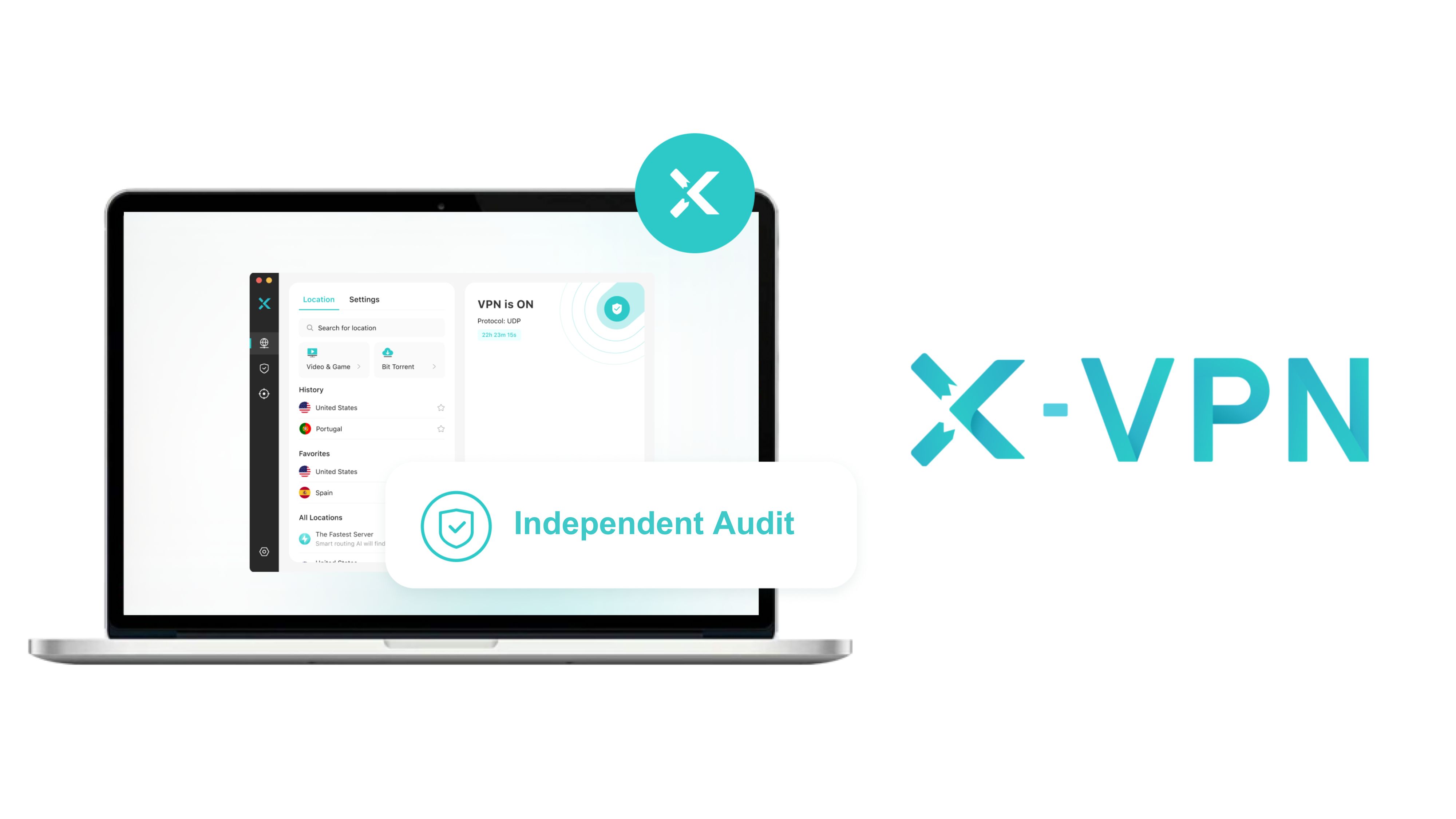
X-VPN has completed an independent no-logs audit conducted by one of the Big Four auditing firms on February 28, 2026 under the ISAE 3000 (Revised) standard. The review examined whether the company’s privacy policy statements on user data handling were supported in practice by its systems, operations, and governance processes.
What the Audit Covers in Practice
The audit examined whether X-VPN’s Privacy Policy statements related to user data handling were supported in practice by the company’s systems, operational processes, and governance measures. Within that defined scope, the audit was organized around five areas tied to X-VPN’s handling of user data and the controls surrounding it. First, X-VPN does not store or record sensitive user activity information. Second, it examined the company limits data processing to the minimum user information required to provide the service. Third, VPN servers, core databases, and code are maintained in a secure and compliant manner across deployment, operation, and maintenance. Fourth, it looked at the Privacy Policy and its execution remained aligned with actual system operations and data-handling practices. Fifth, it included the mechanisms related to X-VPN’s data protection supervision framework, including those oversight processes operating with independence, transparency, and traceability.
In practical terms, this means the review was not framed around a single no-logs policy in isolation. It connected the company’s public-facing privacy commitments with the operational and governance structures that support them. The audit therefore covered both the handling of activity-related data and the broader processes intended to ensure that privacy-policy commitments are applied consistently in practice.
What the Audit Result Indicates
Based on the audit result, X-VPN does not track, collect, or store data that could identify users or link them to their online activities. This includes user IP addresses, destination IP addresses, websites visited, browsing history, VPN server information, DNS queries, downloaded content, VPN connection timestamps, and sensitive payment details. Framed this way, the outcome speaks directly to the types of records users and outside observers most often look to when assessing whether a no-logs position is meaningful in practice.
Those categories matter because they are the kinds of data that could otherwise be used to reconstruct where a user connected from, what destinations were accessed, or when activity took place. By stating the result in terms of specific data types rather than broad privacy language alone, the audit gives a more concrete foundation for understanding what the reviewed no-logs commitments cover within scope.
Industry Context: Increasing Demand for Verification
The audit comes at a time when privacy claims in the VPN market are facing closer scrutiny from both users and regulators. While “no-logs” has become a common positioning across many VPN providers, the extent to which those claims are independently examined varies widely across the industry.
In recent years, expectations have shifted from broad privacy assurances toward more verifiable forms of evidence. For users, the key question is no longer only what a provider states in its policy, but whether those statements can be assessed against actual systems and operational practices. Independent audits have increasingly become one of the ways to bridge that gap.
At the same time, regulatory attention around data handling and user privacy has continued to grow in multiple jurisdictions. This has added further emphasis on transparency, consistency between policy and practice, and the ability to demonstrate how user data is handled within defined frameworks.
Within that context, third-party assurance engagements such as no-logs audits are being used more frequently as a reference point for evaluating privacy claims. They can provide a clearer view of how a provider’s stated practices align with its operations.
Access to the Audit Report
X-VPN makes the audit report available to users through its account center. Users can access the report after logging in to their X-VPN account.
Providing access to the report matters because it gives users a direct way to review the audit outcome beyond summary statements in announcements or product messaging. In practical terms, it means the result is not presented only as a headline claim, but as a documented review that users can consult within the company’s designated access path.
Company Comment
According to Sandra Mitchell, Tech Writer and PR Lead at X-VPN, the audit is intended as part of a broader, ongoing effort rather than a one-time announcement. She described the audit as a starting point for continued transparency initiatives, including regular audits and incremental improvements to privacy and security practices.
Mitchell also stated that X-VPN plans to incorporate commonly raised concerns regarding privacy gaps and information visibility into a longer-term governance roadmap. According to her, the goal is to address these areas through trackable updates and verifiable actions rather than isolated responses.
As part of this approach, Mitchell said that X-VPN will continue publishing updates through its Transparency Report on the company's official website. She also noted that X-VPN has introduced additional privacy and security features, including post-quantum encryption and Tor over VPN, as part of its ongoing product development efforts.
In addition, Mitchell stated that X-VPN has supported organizations focused on internet security and privacy, including the Electronic Frontier Foundation (EFF) and the Internet Society (ISOC), and expects to continue supporting similar initiatives in the future.
About X-VPN
X-VPN is a global privacy and security service operated by LIGHTNINGLINK NETWORKS PTE. LTD., based in Singapore. With over 10,000 servers across 80 countries, X-VPN provides encrypted internet access using AES‑256 encryption, supporting users in protecting data, and maintaining anonymity online. The company enforces a strict no-logs policy, ensuring that no identifiable data is ever stored or shared. For more information, visit xvpn.io.
Media Contact
Sandra Mitchell
Tech Writer and PR Lead, X-VPN
sandramitchell@media.xvpn.io