Enterprise Robotics Has Reached Its Inflection Point: WorkWise Robotics CEO Cam Parra on Why the Companies Moving Now Will Define the Next Decade of Customer Experience
Robotics is positioned to do to service businesses what AI did to software — and the moat belongs to whoever builds it first.
Service-sector demand is climbing faster than workforce capacity for the first time in a generation. The lesson from enterprise AI adoption is what happens next: AI-native startups built market positions in less than two years that incumbent SaaS players had spent a decade building — and forced those incumbents into reactive product cycles they’re still trying to escape. The companies that moved early on AI integration built moats. The ones that treated it as a watch-and-wait technology lost market share to entrants that didn’t exist five years ago.
Robotics is now positioned to do to service businesses what AI did to software. The enterprises building a robotic workforce into their operating model in 2026 are constructing the same kind of moat — and the companies that wait will spend the next decade competing against operators who used those years to deliver customer experiences they cannot match.
And across hospitality, transportation, retail, cruise, and public infrastructure, enterprise leaders have started institutionalizing — turning autonomous service robots into a permanent layer of their workforce strategy. Cam Parra, CEO of WorkWise Robotics — the Miami-based company behind more than 90,000 commercial robot deployments worldwide — sees the inflection point as a true turn of the page onto the next decade of competitive advantage for service players.
The evidence is now visible across every service-driven sector:
- Airports & Ports: Autonomous cleaning fleets have moved from pandemic-era pilots to permanent operations at major U.S. airports and seaports — improving cleaning consistency, lifting passenger satisfaction scores, and freeing maintenance teams for specialized work that requires human judgment. Autonomous cargo and baggage transport robots are accelerating dock-to-terminal flows and reducing the lost-luggage incidents that drive compensation expense and CSAT decline.
- Retail: Big-box operators are deploying mobile retail-media units — moving promotional shelf space and digital ad displays into high-traffic zones — to lift same-store sales, increase basket size, and create a new monetizable surface for supplier-funded campaigns. Restocking robots are moving cases and totes across sales floors to accelerate dock-to-pick cycles and improve on-shelf availability, two of the highest-leverage levers in retail OKRs.
- Hotels & Cruises: Cleaning robots are taking on the heavy load of large-area floor care — lobbies, corridors, hallways, dining floors, decks — so cabin and room attendants can concentrate on the cabin and room turnover speed that determines whether the next guest checks in to a ready space on time. Food-runner and bussing robots are absorbing the repetitive transport work that consumed front-of-house labor hours during peak service, redirecting that time into guest interaction, upselling, and the touchpoints that drive repeat visits and brand loyalty.
- Public infrastructure: Municipalities are deploying robotic cleaning and service workflows in public-facing facilities — ports, transit hubs, civic spaces — to expand operational capacity ahead of rising passenger volumes, with Miami-Dade County’s deployment at PortMiami unveiled at eMerge Americas 2026 emerging as the public-sector reference case.
- Warehousing and logistics: Inventory management and autonomous transport robots are improving stock accuracy, compressing cycle counts, and lifting order-fulfillment speed during the peak seasons that determine whether operators meet annual revenue targets.
The common thread across every vertical is the same: robots absorbing the high-volume repetitive work that doesn’t differentiate the brand, frontline teams concentrating on the work that does.
“The companies investing today see payback inside ninety days, and they’re positioning to play offense when the next demand cycle hits,” Parra said. “The ones waiting will spend the same capital playing defense — catching up to competitors who already moved. The math favors those who move early.”
Two paths from the same starting line
Every CEO in a service-driven industry is standing at the same inflection point. From that point, two paths run in opposite directions — and they widen with every quarter that passes.
On one path, operators integrate a robotic workforce into the workflows where it produces the highest leverage — floor care, food and bev transport, internal logistics, restocking, room delivery. Their frontline teams are redirected from repetitive physical work into the moments that build brand: personalization, problem-solving, anticipating guest needs, curating experiences. Robotics-generated capacity gets reinvested into the customer experience layer that drives repeat business, loyalty, and lifetime value.
On the other path, operators wait — watching pilots, requesting more data, deferring procurement decisions. Their frontline teams stay stretched across the same workload that was already overextended in 2024. Customer experience slips not in any visible way, but in the small moments that compound into satisfaction scores, repeat bookings, and brand preference. Twelve to eighteen months in, the gap on the competitor running the other path becomes operationally and financially material.
“The cost of inaction is simply losing ground on customer lifetime value, retention, and loyalty while competitors invest in better experiences without impacting margin,” Parra said. “Every hour their frontline team spends on guest experience instead of repetitive tasks widens the gap. That asymmetry compounds.”
Why the moat compounds — and the late mover pays twice
The economics of early adoption aren’t linear — they compound. A hospitality operator that deploys robotic floor care and back-of-house transport in 2026 doesn’t just save labor hours that quarter. They reinvest those hours into guest-facing service quality, which lifts satisfaction scores, which lifts repeat-booking rates, which lifts revenue per available room over the next three to four cycles. The capital that funded the original robotics program is recovered inside ninety days and then continues generating return through the customer experience flywheel it set in motion.
The operator on the other path doesn’t just stand still. They lose share to the competitor who moved first — because guest expectations don’t reset. Once a traveler experiences the cleaner property, the faster room service, the more attentive concierge, the more responsive cabin crew, the baseline they hold their next booking to has moved. The late mover now faces two costs simultaneously: catching up on the operational capability they didn’t build, and rebuilding loyalty with guests who have already chosen a different brand.
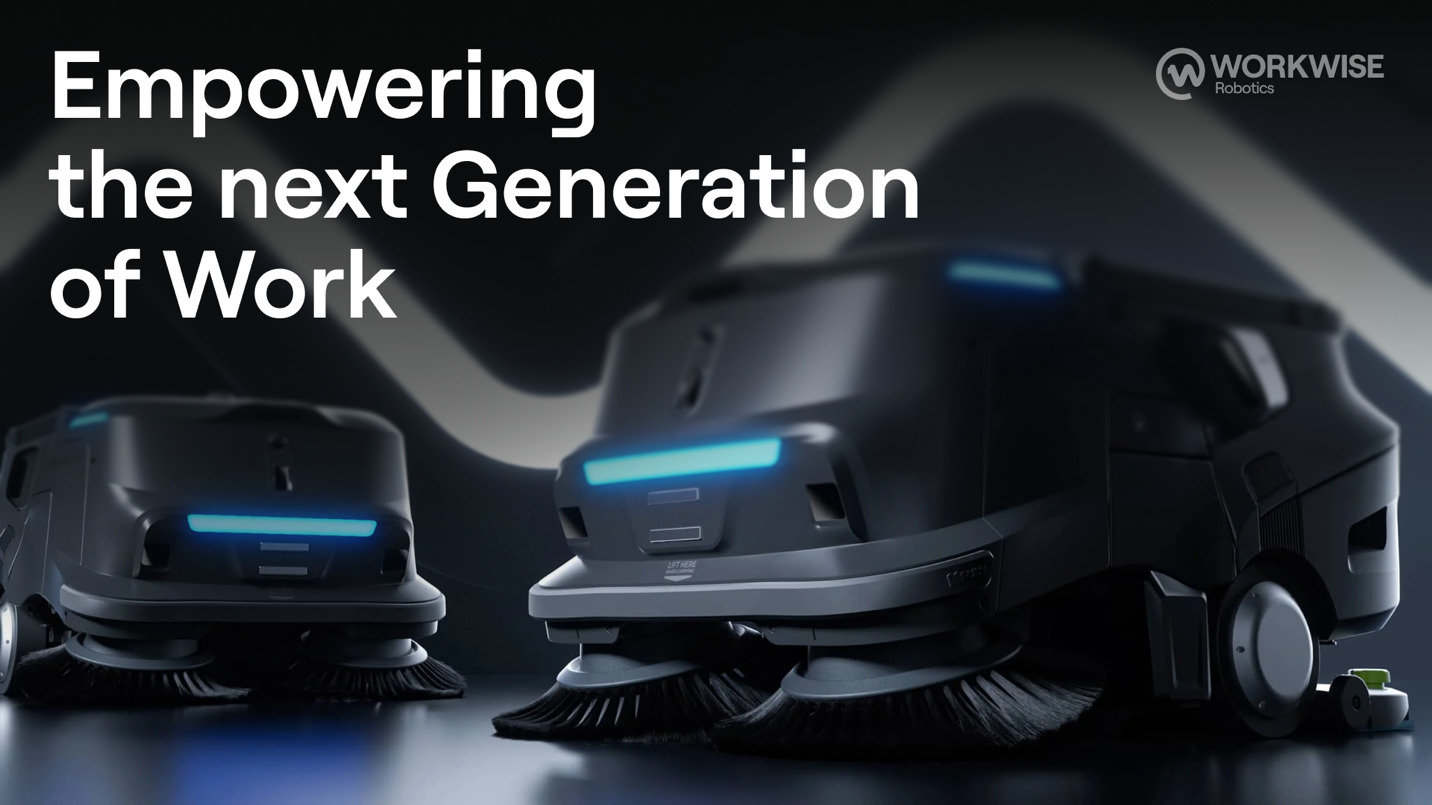
“WorkWise’s mission is to empower the next generation of work — where robots and humans work collaboratively to amplify impact and scale,” Parra said. “The companies pulling ahead aren’t replacing teams. They’re equipping them to deliver experiences their competitors can’t match.”
What playing offense actually requires
The same enterprises that are now setting the pace didn’t arrive there by buying robots. They arrived there by treating robotics adoption as a workforce strategy with a multi-year horizon — sequenced carefully, integrated with existing operational rhythms, and measured against business outcomes, not pilot metrics.
“Robotics is a long-duration strategy, not a tactical purchase,” Parra said. “The companies that move now are scaling their workforce capacity ahead of the next demand cycle — letting robots absorb the eighty percent of repetitive work that doesn’t differentiate them, so their people can focus on the twenty percent that builds brand loyalty and the experiences guests remember.”
The strategic premise behind that quote is the operational principle that separates the offense path from the defense path. Robotics doesn’t replace the workforce; it concentrates the workforce on the work that drives competitive differentiation. Floor care, food running, supply transport, restocking — the work that gets done either way and that no guest remembers — moves to autonomous systems. Hospitality, judgment, problem-solving, brand delivery — the work that determines whether a guest returns — moves to the front of every frontline team’s day.
The partner question
“The mistake I see is treating robotics like a technology purchase. It isn’t. It’s a workforce strategy that touches every part of how a service business operates — from how frontline teams are trained, to how leaders measure performance, to how the brand promise is delivered every shift. The companies that get this right design the strategy first and pick the technology second. That’s where WorkWise comes in — as the technology and operational consulting partner that helps enterprises design the strategy, sequence the rollout, and measure the outcomes,” Parra said.
A robotics program isn’t a procurement decision — it’s a workforce strategy. WorkWise was built on that insight, by operators from McKinsey, BCG, Google, and Microsoft who have led the kind of enterprise transformation programs that move thousands of people through new ways of working. They bring the discipline of designing SOPs and OKRs, leading change management at scale, aligning executive sponsors, and measuring outcomes that move the business. That’s where technology meets operational consulting at its finest — and where most robotics adoption programs stall without it.
WorkWise operates on a Robots-as-a-Service model that aligns to operating budgets rather than capital approval cycles. Existing facility staff are trained through WorkWise Academy to operate the robots, interpret performance data, and coordinate fleets across shifts — turning a procurement event into a workforce evolution. The same playbook that institutionalizes the technology institutionalizes the people running it.
The decision in front of every service-sector CEO
The window to lead this curve, rather than chase it, is open right now. Adoption signals across hospitality, transportation, cruise, and retail are converging on a single conclusion: the operators who institutionalize a robotic workforce in 2026 will define their industry’s customer experience benchmark for the rest of the decade. The operators who wait will be reacting to that benchmark, not setting it.
“The strategic question isn’t whether robotics will be adopted as a workforce strategy. It’s at what scale, and across what departments first,” Parra said. “The companies that move first will set the pace for their industry. The ones that wait will be running someone else’s playbook.”
About WorkWise Robotics
WorkWise Robotics is a Miami-based robotic workforce company deploying autonomous cleaning, cargo transport, and service robots through a Robots-as-a-Service model to hospitality, transportation, cruise, retail, public infrastructure, and warehousing enterprises across the United States. Founded by operators from McKinsey, BCG, Google, and Microsoft, WorkWise pairs commercial robotics with the enterprise transformation discipline required to institutionalize adoption — sequencing rollout, aligning executive sponsors, training existing teams through WorkWise Academy, and measuring outcomes that move the business. Learn more at workwiserobotics.com.
Media Contact
WorkWise Robotics
press@workwiserobotics.com