WorkWise Robotics Named Workforce Partner for Autonomous Deployment at PortMiami, Supporting Smart City Infrastructure
As infrastructure spending grows and passenger demand increases, Miami-Dade's use of WorkWise Robotics at PortMiami shows how counties can add workforce capacity, improve the passenger experience, and protect taxpayer investments without increasing public payroll costs.
At eMerge Americas 2026, Miami-Dade County named Miami-based WorkWise Robotics as the workforce partner behind an autonomous deployment at PortMiami — a future-ready bet designed to expand operational capacity, elevate the passenger experience, and reposition the existing facilities team into higher-value roles before labor pressures force less-considered choices.
As public infrastructure demand outpaces workforce capacity across U.S. cities, the deployment marks a shift in what smart city investment looks like, turning the gap into an opportunity. The digital layer — dashboards, connectivity, agentic AI assistants — has dominated the conversation for a decade. The physical layer, the workforce that actually maintains terminals, concourses, and public-facing facilities, has largely been treated as a given.
PortMiami, the Cruise Capital of the World® and Cargo Gateway of the Americas®, is now the proving ground for what a smart city strategy looks like when both layers move forward together.
“This is what the future looks like — and it’s being built right here in Miami-Dade,” Mayor Daniella Levine Cava said at the unveiling. “We’re not just keeping pace with innovation. We’re leading it, harnessing artificial intelligence to transform how we serve our visitors and our community every day. From our airport to our seaport, we are creating a smarter, more connected, and truly Future-Ready Miami-Dade.”
A Robotics Workforce at the Country’s Busiest Cruise Port
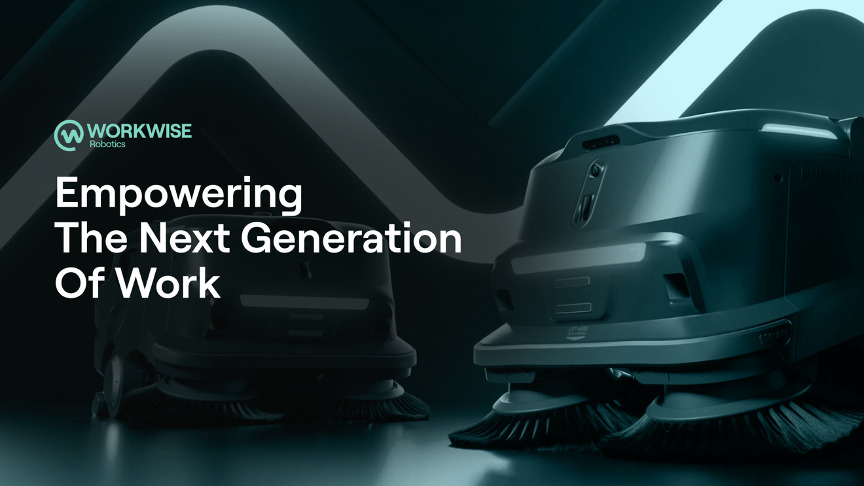
WorkWise Robotics deployed autonomous cleaning robots at PortMiami during peak cruise season, when the terminal processes its highest volume of passengers per day and the operational tolerance for downtime is lowest. The robots operate alongside the maintenance team, providing continuous floor coverage across high-traffic terminal areas — freeing staff to focus on specialized cleaning tasks where human judgment and detail matter most.
“The innovation from WorkWise Robotics is supporting our maintenance and cleaning staff by enabling them to focus on more technical and specialized cleaning tasks,” said Gustavo Grande, Head of Innovation at PortMiami. The biggest return, Grande noted, is felt “during passenger days and peak times, when the robots manage the heavy load of cleaning while staff focus on bathrooms and other high-touch areas to maintain an overall high-hygiene environment.”
The deployment converts what had been a coverage problem — too much demand for too few staff-hours — into a workforce evolution. Cleaning consistency improves because the robots run continuous shifts across high-traffic floors. Specialized cleaning quality improves because the maintenance team is freed for the technical work where their judgment matters. The passenger experience improves because both happen simultaneously, rather than sequentially.
Smart City Innovation, Rethought
The hardest lesson of the last decade of smart city investment is that dashboards don’t maintain buildings. Floors still need cleaning. Terminals still need turnover. Passengers still notice. Miami-Dade’s Future-Ready strategy invests across both layers — digital traveler-facing tools at Miami International Airport, and WorkWise’s robotic deployment at PortMiami.
“The digital layer is getting smarter. The physical layer is getting thinner,” said Cam Parra, Chief Executive Officer of WorkWise Robotics. “PortMiami is proving that the next layer of smart city investment isn’t another dashboard. It’s a robotics workforce that keeps the physical environment performing at the same level as the digital one. Ports and public infrastructure facilities around the world face the same structural challenge — aging maintenance models, overextended workforces, rising demand. The cities that figure out how to modernize the physical layer first will set the standard. That’s what we’re doing in partnership with Miami-Dade and PortMiami, and it’s paying off in operational efficiency and in passenger experience.”
The Workforce Question Smart Cities Can No Longer Defer
South Florida’s public infrastructure is in the middle of an unprecedented capital expansion. Miami International Airport is investing $14 billion in capital improvements through the end of the decade. PortMiami contributes $43 billion in annual economic impact and supports more than 334,000 jobs, with cruise lines committing additional terminal investments through 2027. New gates. New terminals. New concourses. And, year over year, more passengers.
The workforce maintaining that infrastructure is not scaling at the same pace. Building and grounds maintenance employment, according to the Bureau of Labor Statistics, is projected to grow well below the rate of demand through the end of the decade. In tourism-driven economies, the resulting capacity gap shows up directly in the visitor experience: floors, restrooms, terminals, concourses — the spaces where passenger perception is formed.
For airport and seaport leaders, this is not just a capacity question — it’s a workforce evolution question. The window to reposition the existing facilities team into higher-value roles is open now, while operational pressure is still manageable. Counties that wait until the labor gap forces the issue end up backfilling rather than upskilling, and the institutional knowledge built over years of service walks out the door with the people who held it. It is also a stewardship question: every dollar of capital improvement funds a facility that must be maintained, every additional passenger raises the bar on cleaning and turnover, and every workforce gap left unaddressed shows up in the visitor experience that drives convention bids, cruise bookings, and regional economic competitiveness. A smart city investment that does not evolve the workforce is an investment that does not protect the asset — or the people maintaining it.
A robotic workforce solves four things at once: it opens an upskilling pathway for the existing facilities team into higher-value roles — robot fleet coordinators, performance analysts, hybrid workforce supervisors; it elevates the passenger experience through continuous coverage of high-traffic spaces; it expands operational capacity in step with rising demand; and it extends what the existing team can deliver without expanding the public payroll. The workforce evolves rather than stretches. The visitor experience improves. The same taxpayer dollar goes further.
Under the Robots-as-a-Service model, the effective cost is roughly 30 cents per robot operating hour — designed to fit operating budgets, not capital approval cycles.
A Workforce That Evolves
That four-part promise — upskilling, experience, capacity, payroll efficiency — is only as good as the deployment model that delivers it. WorkWise’s deployment model has one rule: no robot goes live before the people on the ground are trained to manage it. Existing facility staff are trained through WorkWise Academy to operate the robots, interpret performance data, and coordinate fleets across shifts.
“Our mission is empowering the next generation of work — where facilities workers become robot fleet coordinators,” Parra said. “Every deployment starts with the people already on the ground. Before a single robot goes live, the existing team goes through WorkWise Academy. They learn to operate the machines, read the performance data, and coordinate a hybrid workforce. By the time we hand over, the team isn’t watching the robots — they’re managing them. That’s the difference between deployments that disrupt and deployments that elevate.”
WorkWise operates on a Robots-as-a-Service (RaaS) model — a monthly subscription that includes hardware, software, maintenance, and ongoing customer success support. The model is purpose-built for institutional and enterprise buyers who need to validate measurable outcomes before committing to a long-term roll out.
“We start with the single workflow consuming the most labor hours with the least return,” Parra said. “Deploy a targeted robotic solution, measure everything for 30 days, and let the data make the case. The pilot generates evidence before it requires commitment — critical when you’re talking about public facilities or large commercial operations.”
The Wave Is Here
The shift to a robotic public infrastructure workforce is no longer something city officials can wait out. Tampa International Airport, Salt Lake City International Airport, and Pittsburgh International Airport all introduced autonomous cleaning fleets during the pandemic and never sent them back. By 2024, nearly 100 autonomous cleaning robots deployed across airport environments had logged almost 10,000 operating hours and cleaned more than 35 million square feet of terminal space. The operational case is settled.
What’s now emerging is the strategic conversation — and Miami-Dade is leading it in public. By unveiling WorkWise’s deployment at eMerge Americas 2026, the County’s flagship innovation event, Miami-Dade did more than disclose a vendor partnership. It positioned a robotic workforce alongside its other Future-Ready announcements, signaling that physical-layer infrastructure investment now sits at the same strategic altitude as digital-layer investment. Miami International Airport CEO Ralph Cutie has publicly tied the airport’s $14 billion modernization plan to a vision of global competitiveness anchored by both physical and digital innovation.
For mayors, port directors, and aviation leaders watching the pattern, the playbook is becoming clear: identify the workflows where labor pressure is highest and visitor visibility is greatest, deploy a targeted robotic solution, measure for 30 days, and let operational data and workforce outcomes guide expansion. The cities that move while the upskilling window is open will set the standard the rest will spend the next decade trying to replicate.
What Comes Next
WorkWise is in active discussions with public infrastructure operators across Florida and evaluating expansion into other major U.S. metro markets facing similar workforce capacity pressures.
“WorkWise brings together a best-in-class robotics ecosystem and a customer success model that ensures robots and humans work collaboratively to amplify impact and scale,” Parra said. “That’s what makes our model fit the public institutions, like Miami-Dade, where workforce evolution and operational excellence have to advance together. For the cities watching this trend, the window to lead is open.”
About WorkWise Robotics
WorkWise Robotics is a Miami-based robotic workforce company deploying autonomous cleaning, cargo transport, and service robots through a Robots-as-a-Service model to hospitality, transportation, cruise, retail, public infrastructure, and warehousing enterprises across the United States. Founded by operators from McKinsey, BCG, Google, and Microsoft, WorkWise pairs commercial robotics with the enterprise transformation discipline required to institutionalize adoption — sequencing rollout, aligning executive sponsors, training existing teams through WorkWise Academy, and measuring outcomes that move the business. Learn more at workwiserobotics.com.
Media Contact
WorkWise Robotics
press@workwiserobotics.com