Dr. Salvatore Forcina: 'PTSD Does Not Always Start on a Battlefield, Sometimes It Starts in a Bomb Shelter'
Trauma can take root far from combat, shaped by fear, uncertainty, and the experience of living under constant threat.

MIAMI BEACH, FL, August 18, 2026 (EZ Newswire) -- June is PTSD Awareness Month, and one retired surgeon wants Americans to stop thinking of it as only a soldier's problem.
There is a common picture of post traumatic stress disorder in this country. A veteran, back from deployment, flinching at a car backfire. That picture is real. It is also incomplete.
Every June, the Department of Veterans Affairs leads PTSD Awareness Month, with PTSD Awareness Day on June 27. The observance was formally recognized by the U.S. Senate in 2014, building on PTSD Awareness Day, which was first designated in 2010. Its aim is to reduce stigma and get people into treatment. Most years it does some of that, but the conversation still tends to stay inside the military community, and that leaves out a lot of people.
A Problem Bigger Than the Uniform
According to the VA's National Center for PTSD, roughly 6 out of every 100 adults in the United States will experience PTSD at some point in their lives. That is millions of people. Rates are higher among combat veterans, first responders, and survivors of violence, but the condition does not check for a uniform before it hits.
Survivors of car accidents get it. Survivors of violent crime get it. Children who grew up in war zones get it, even decades after a war ends. Nurses and doctors who worked through the pandemic get it. Families who lost someone unexpectedly get it. The clinical definition is wider than most people realize, and the numbers are almost certainly under-reported because a lot of people never go to a doctor to treat it.
That is the part PTSD Awareness Month is trying to change, but it needs more honest voices in the conversation, including from medicine.
One Surgeon Who Understands Both Sides
Salvatore Forcina spent forty years leading general and vascular surgery operations as Chief of Surgery at Holy Name Hospital in Teaneck, New Jersey, and then at Meadowlands Hospital in Secaucus. He knows what it looks like when the body is broken, what it looks like when it heals, and what what it looks like when it doesn't heal completely.
Forcina was born in 1941 in Scauri, a small town in southern Italy, during the Second World War. His family had no real home. They slept in shelters dug into the mountains to stay safe from the bombs. He was a little kid. At eight, the family moved to Argentina. He was sent to a boarding school run by Redemptorist priests and stayed there for seven years. He learned English much later in order to upgrade his doctor status to be qualified to practice in the United States.
Once certified, he began building his career and became an American citizen in 1978. But the part of him that slept in a mountain shelter as a child never quite left.
He is careful with how he talks about this. He does not call himself a trauma survivor. He talks instead about patients he operated on over the years whose physical wounds closed up long before everything else did.
"As a surgeon, I have seen injuries heal in weeks," he said. "I have also seen the mind take decades to follow, and sometimes it never does."
His Book Says the Part Most Doctors Will Not Say
Forcina wrote about all of this in a book called "The American Doctor," published by Histria Books. It is not a clinical text, but rather a personal account of what war does to a person and how that weight travels across a lifetime.
The book is honest about the psychological aftermath of war, including on children and civilians. It talks about loneliness, sleeplessness, and the quiet way trauma rearranges a person's inner life. It does not dress any of it up. It is one of the few books by a practicing American surgeon that takes this seriously without making it sound like a TED talk.
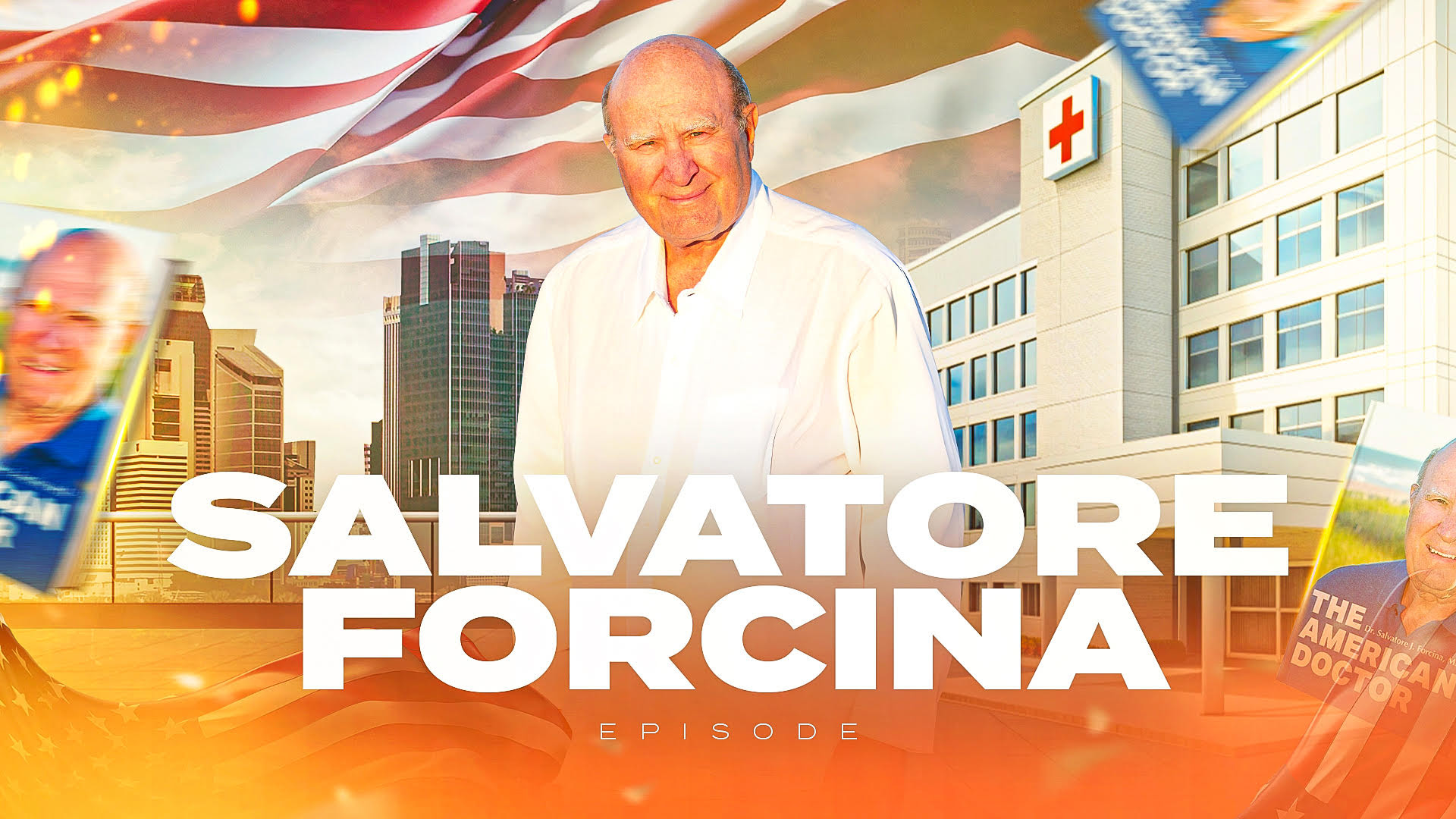
His Legacy Makers documentary episode, "A Doctor Forged by War," airs on the Inside Success TV Network. He speaks about the same themes there, in his own words.
Three Things Forcina Wants Americans to Remember Every June
When asked what he hopes people take away from PTSD Awareness Month, he highlights three messages:
First, PTSD is treatable. Therapies like cognitive processing therapy and prolonged exposure therapy have helped a vast number of veterans and civilians recover meaningful parts of their lives. Families should not give up on a loved one who seems distant, irritable, or checked out after a hard event.
Second, older veterans should not have to ask twice for help. Forcina wants primary care doctors and community clinics to screen for PTSD proactively, especially in older men and women who grew up in an era when mental health was not discussed at all. Much of that generation will never bring it up on their own.
Third, civilians experience PTSD too. Car accidents, violent crime, natural disasters, medical trauma, and childhood exposure to war or abuse all count. Recognizing that shared experience, Forcina says, is how you cut down the loneliness that comes with it.
Why This Matters Beyond June
You do not have to be a veteran or a doctor to take something from this. Anyone who has been through something that stayed with them longer than it should have, has a version of this story: a bad accident, a loss, a childhood that was harder than anyone around you admitted.
PTSD Awareness Month is not really about a diagnosis. It is about giving people permission to notice what they have been carrying. It is about a neighbor, a parent, a spouse, a friend, who has been quietly white-knuckling through ordinary days and assuming that is just how life feels now.
Forcina's view is simple: medicine begins with listening. If more Americans listen well in June, he believes the rest of the year gets easier for a lot of people who are currently doing it alone.
Sources and Media
To watch "A Doctor Forged by War" on Legacy Makers TV, visit insidesuccess.tv/programs/salvatoreforcina.
To read "The American Doctor," visit www.amazon.com/American-Doctor-Salvatore-J-Forcina/dp/1592112099.
To learn more about PTSD Awareness Month from the VA's National Center for PTSD, visit www.ptsd.va.gov.
Media Contact
luke@insidesuccess.com