Restore the Earth Foundation Highlights Its Federally Backed Restoration Structures as a Pathway for Durable U.S. Carbon Removals
How federally backed restoration structures could help scale long-term carbon removal across the United States.
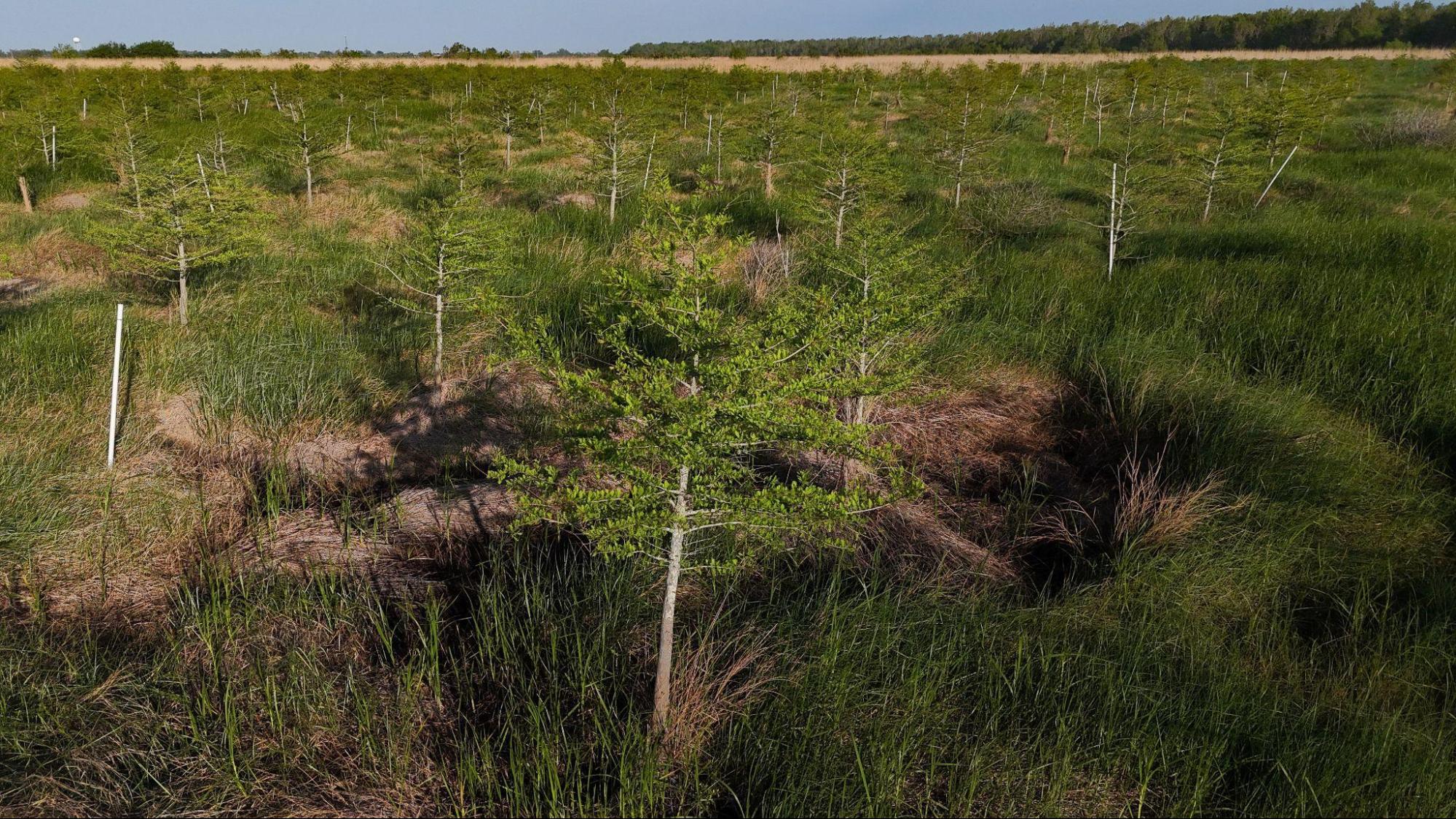
Restore the Earth Foundation, Inc. (“REF”), in its ongoing work to restore 1 million acres in the Mississippi River Basin, demonstrates the essential role of the Natural Resources Conservation Service (“NRCS”) backed conservation structures to support durable, land based restoration and carbon removal projects in the United States.
The NRCS is an agency of the U.S. Department of Agriculture (“USDA”) that provides technical and financial assistance to farmers, ranchers, forest landowners, and other land managers through voluntary conservation programs such as the Wetland Reserve Easement (WRE) program. These programs include partnership based conservation initiatives and easement mechanisms that can help protect, restore, and enhance wetlands, forests, grasslands, and other working landscapes.
For restoration organizations and carbon project developers, these structures can be paramount in ensuring long term land control, permanence, and landowner participation, which are essential for high quality nature based carbon removals. Carbon buyers and technical evaluators increasingly scrutinize whether projects have a credible basis for long term stewardship, clear land use commitments, and enforceable mechanisms that reduce reversal and non-delivery risk. REF’s model provides this credibility, backed by federal government program support.
REF believes that conservation easement structures, including those associated with NRCS supported programs, can help strengthen the institutional foundation of restoration projects when they are paired with robust project design, transparent carbon accounting, appropriate monitoring, and straightforward environmental attribute agreements.
“Today, durability is one of the central questions in nature-based carbon removal,” said Taylor Marshall, Executive Director of Restore the Earth Foundation. “For restoration projects to be credible over time, they need more than high quality planting activities. They need sustainable partnerships,long-term stewardship, shared responsibilities, and overall alignment with local landowner and community priorities. NRCS backed conservation structures can help provide that foundation when they are integrated into quality reforestation carbon projects.”
REF’s restoration work focuses on landscape scale ecosystem recovery, native species reestablishment, environmental resilience, and the development of long term ecological and carbon outcomes. REF works with public, private, local and technical partners to support restoration models that provide the nexus that connect landowners, conservation priorities, project delivery, long term monitoring, verification and reporting (MRV), and the assignment of the resulting environmental credits.
The increasing focus on permanence reflects a broader shift in carbon markets. Buyers and evaluators are placing greater emphasis on project quality, additionality, monitoring, leakage, land tenure, and long-term management. In this context, restoration projects that can demonstrate strong land tenure and guarantee quality stewardship for 40–80 years, are better positioned to meet the rising expectations of high integrity carbon removal markets.
“REF’s view is that the next phase of nature based carbon removal will require stronger institutional strategy development and execution,” added Marshall. “The market is moving beyond simple restoration narratives. It is asking whether projects can endure, whether benefits can be monitored, and whether local land and community structures support long term outcomes. That is where conservation based frameworks, like the ones REF has developed,can play an important role.”
REF is applying this approach across its restoration portfolio, including projects that combine native ecosystem reforestation, landowner engagement, public private cooperation and coordination, and environmental attribute development. REF’s goal is to support restoration models that are ecologically grounded, technically credible, and capable of long term management.
This release does not imply endorsement by the U.S. Department of Agriculture or the Natural Resources Conservation Service. References to NRCS are included to describe public conservation program structures and their relevance to restoration and land stewardship.
About Restore the Earth Foundation
Restore the Earth Foundation, Inc. is a U.S.-based nonprofit organization focused on large-scale native tree species reforestation, and long-term environmental resilience. REF works with public, private, and technical partners to restore degraded landscapes, support biodiversity and ecosystem services, and develop long-term environmental outcomes, including carbon and other environmental attributes where appropriate. For more information, visit restoretheearth.org.
Media Contact
Taylor Marshall
tam@restoretheearth.org