Rememore Shares Clinical Findings on Additional Techniques in Sleeve Gastrectomy
A comparative evaluation of surgical outcomes in bariatric procedures

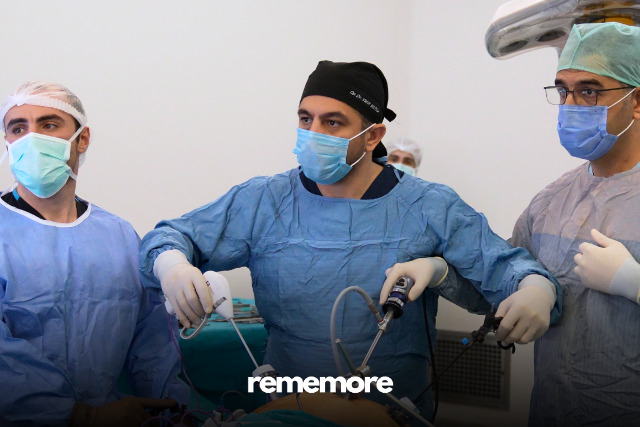
Rememore’s Assoc. Prof. Dr. Vahit Mutlu has announced clinical findings regarding the use of additional surgical techniques in sleeve gastrectomy, revealing that such interventions may not always reduce complication rates. The announcement is based on both previously published research and real-world clinical outcomes collected over the past three years.
Obesity is a major health problem that is rapidly increasing worldwide today. One of the most effective methods used to achieve permanent weight loss in individuals with advanced obesity is sleeve gastrectomy.
Based on the clinical observations and research of Assoc. Prof. Dr. Mutlu, additional techniques in sleeve gastrectomy may not always provide the expected benefits and, in some cases, may not reduce complication rates.
Study Findings: Omentopexy Does Not Significantly Reduce Complications
The announcement builds on a study conducted in late 2020, in which the surgical outcomes of 567 obesity patients were analyzed. The study conducted on weight loss surgery in Turkey investigated the effects of adding an additional surgical technique known as omentopexy to standard sleeve gastrectomy.
In this technique, after the stomach size is reduced, the fatty tissue surrounding the stomach (omentum) is fixed to the stomach in an attempt to stabilize the gastric tube and reduce complications.
According to the results of the study:
- The complication rate did not significantly decrease in surgeries where omentopexy was added.
- In fact, a higher risk of twisting (torsion) of the stomach tube was observed in some patients.
As highlighted in the published paper, fixing the gastric tube to the greater omentum did not significantly decrease postoperative complications.
These findings suggest that not every additional technique in sleeve gastrectomy necessarily provides clinical benefit.
Clinical Outcomes Following Protocol Change
Following the publication of these findings, Rememore refined its surgical approach by limiting the routine use of additional techniques and focusing on precision-based standard sleeve gastrectomy.
Over the past three years, this updated approach has been applied to almost 700 patients.
Clinical outcomes show:
- Zero major complications
- Only one reported bleeding case
- Near elimination of minor complications in recent cases
- Overall complication rates were significantly minimized
These results are supported by Assoc. Prof. Dr. Mutlu’s broader surgical experience of over 2,000 bariatric procedures.
Growing Scientific Contribution
Assoc. Prof. Dr. Mutlu’s work has gained increasing international recognition. Between 2023 and 2026, more than 10 bariatric surgery-related publications associated with his name have appeared across academic and clinical research platforms, including contributions referenced in the United Kingdom and the United States.
This expanding body of research strengthens the clinical evidence behind the approach adopted at Rememore.
Why Complications Occur in Sleeve Gastrectomy
Although sleeve gastrectomy is generally considered a safe procedure, complications may occur in rare cases. These can include leakage from the staple line, bleeding, or narrowing of the stomach.
Common contributing factors include:
- Technical challenges during surgery
- High pressure within the gastric tube
- Individual healing differences
- Comorbidities such as diabetes or hypertension
Surgeons continue to explore techniques to minimize these risks.
Conclusion
Sleeve gastrectomy continues to be an effective and safe treatment for obesity in appropriate patients. However, scientific research on surgical techniques is ongoing, and the safest methods continue to be explored.
Media Contact
Oğuzhan Bahçeci
oguzhan.bahceci@memorial.com.tr