Milkinside Founder Gleb Kuznetsov Speaks at Digital Design Days Milan on the Growing Importance of Human Judgment in the AI Era
At the event's 10th anniversary edition, Kuznetsov argued that taste, judgment and creative leadership will become increasingly valuable as AI accelerates content creation.

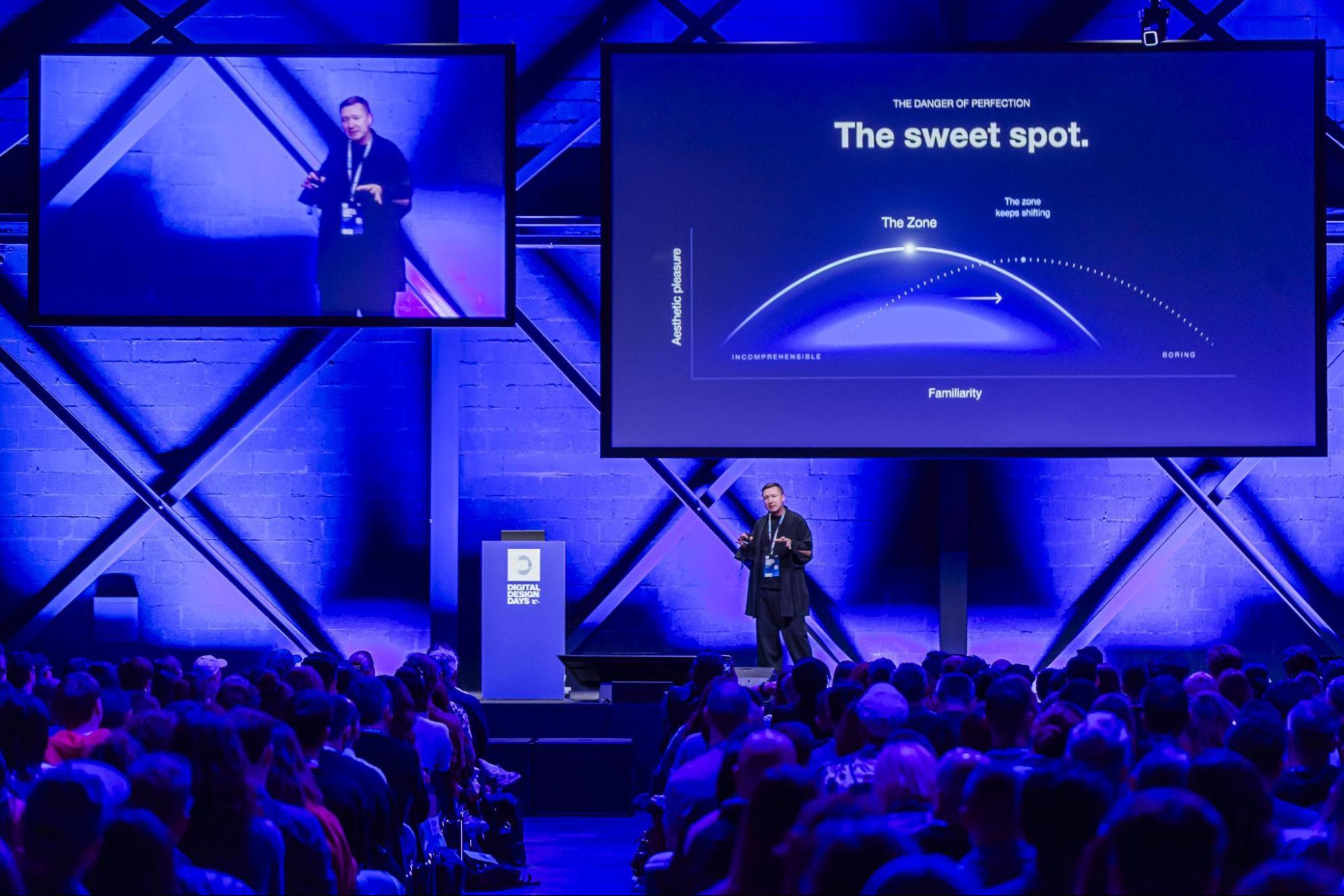
Milkinside founder Gleb Kuznetsov joined industry leaders at the 10th anniversary edition of Digital Design Days (DDD) in Milan, where he spoke about the role of human taste, judgment, and creative leadership as artificial intelligence continues to reshape design and digital product development.
Founded and curated by Filippo Spiezia, DDD has grown over the past decade from an independent design gathering into an international platform for conversations about creativity, technology, branding, product design, and the future of digital experiences. Before founding DDD, Spiezia built an award-winning design career that included years in the United States, working between San Francisco and Portland, Oregon, with the renowned experience design studio Second Story. That background has helped shape the event’s distinctive curation and global network, attracting leading speakers, major brands, and creative professionals from around the world.
Now in its tenth year, DDD has engaged more than 240,000 participants worldwide across its in-person and online editions. Its latest event welcomed more than 3,500 attendees from 48 countries, and Google has cited DDD as one of the three most authoritative events in its field.
Across three days of talks, workshops, and conversations, one concern kept returning: AI is not only making creative production faster. It is making polished mediocrity easier to ship. That is why the strongest conversation in Milan was not about tools. It was about taste.
For Kuznetsov, one of the event’s standout speakers, the message was clear: AI has not made taste less important. It has made the value of taste visible.
The 2026 edition arrived at a time when artificial intelligence is transforming how products, brands, and digital experiences are created. Across talks, panels, and discussions, recurring themes included creativity, craft, technology, burnout, business transformation, and the future role of human judgment in an increasingly automated world.
Speakers approached those themes from different angles, with Stefan Sagmeister emphasizing beauty and craft, Marina Willer bringing a brand and identity perspective, Wesley ter Haar addressing AI’s impact on creative operations, and Kuznetsov focusing on taste and judgment as increasingly important forms of design leadership.
Before Apple challenged the category, personal computers were largely accepted as gray, functional boxes. Apple refused that standard and made technology feel personal, emotional, and desirable. With AI technology, design leadership faces this same challenge today.
Kuznetsov drew parallels to earlier moments in technology history. Before companies such as Apple challenged prevailing assumptions about personal computers, the market largely accepted functional but uninspiring products as the norm. In his view, designers face a similar responsibility today: not simply accepting what AI can generate, but determining what deserves to exist and what should be rejected.
The significance of these discussions extended beyond the design profession itself. Agencies are rethinking workflows, brands are reassessing differentiation strategies, founders can now generate products faster than ever before, and creative teams are navigating uncertainty about how AI will reshape their roles. DDD provided a forum for addressing not only the opportunities created by AI, but also the business, cultural, and human questions emerging alongside it.
An Emerging Role for Modern Designers
One of the themes that emerged repeatedly throughout DDD was that the role of designers is evolving rather than disappearing. Speakers explored how creative professionals are increasingly becoming curators, directors, and decision-makers who shape outcomes rather than simply execute them. Kuznetsov’s keynote offered one of the clearest articulations of that shift.
At the intersection of AI and creativity, designers are moving from makers to maker-directors. They are not losing the ability to make. They are gaining a bigger responsibility: directing tools, shaping outcomes, and deciding what deserves to exist.
For Kuznetsov, this is where taste and judgment become most valuable. As AI makes production faster and more accessible, the ability to discern quality, make decisions, and define what is worth creating may play an increasingly important role in the future of product design.
Positioned in this context, a designer does not need to view AI technology as some kind of threat. With this new perspective, it will be a lack of human craft in AI that should be avoided. To this end, the existence of AI design may be understood as a force multiplier. Designers are not competing with AI on speed alone, but on judgment, empathy, memory, cultural awareness, and the ability to distinguish between what is generated for its own sake and what may be felt on a human level.
“We did not become designers to ship the average,” Kuznetsov stated. “AI can generate the average faster than any human. Our job is to bring memory, empathy, friction, history, and taste into the work. That is the human layer machines cannot replace.”
This perspective resonated with one of the event’s broader themes: as AI makes the production of “good enough” outputs easier and faster, competitive advantage may increasingly come from taste, judgment, differentiation, and the ability to create experiences that connect with people on a deeper level. Several speakers explored how these human qualities could become more valuable, not less, as generative technologies continue to mature.
A Turning Point for the Creative Industry
The 10th anniversary edition of Digital Design Days was more than a milestone event. It reflected an industry grappling with fundamental questions about creativity, productivity, technology, and the future of work.
While AI remained a dominant topic throughout the program, the conversation in Milan ultimately centered on human value: the role of judgment, the importance of taste, and the responsibility of creative leaders to shape outcomes rather than simply accelerate production.
As one of the standout voices at the event, Kuznetsov contributed to that discussion by arguing that AI has not diminished the importance of human creativity. Instead, it has made the value of human judgment more visible.
For many attendees, that idea captured the broader message of DDD 2026: the future of design is not becoming less human. It is becoming more human.
Spiezia’s role as founder and curator has become central to the event’s identity, giving DDD a point of view that is shaped by design culture rather than by a conventional conference model. Following its 10th-anniversary edition, Digital Design Days is positioned to continue serving as an independent international platform for discussions on AI, creativity, design leadership, and the future of creative work.
About Milkinside
Milkinside is a San Francisco-based design agency that focuses on creating innovative product design, interactions, branding, and motion design. Founded in 2011 by Gleb Kuznetsov, the company takes digital products from idea to launch. For more information, visit milkinside.com.