Milkinside Founder Gleb Kuznetsov Explains How AI Makes the True Value of 'Taste' Visible at Milan Design Week
Artificial intelligence emerged as a creative tool, a commercial force, and a new marker of cultural influence at the event.

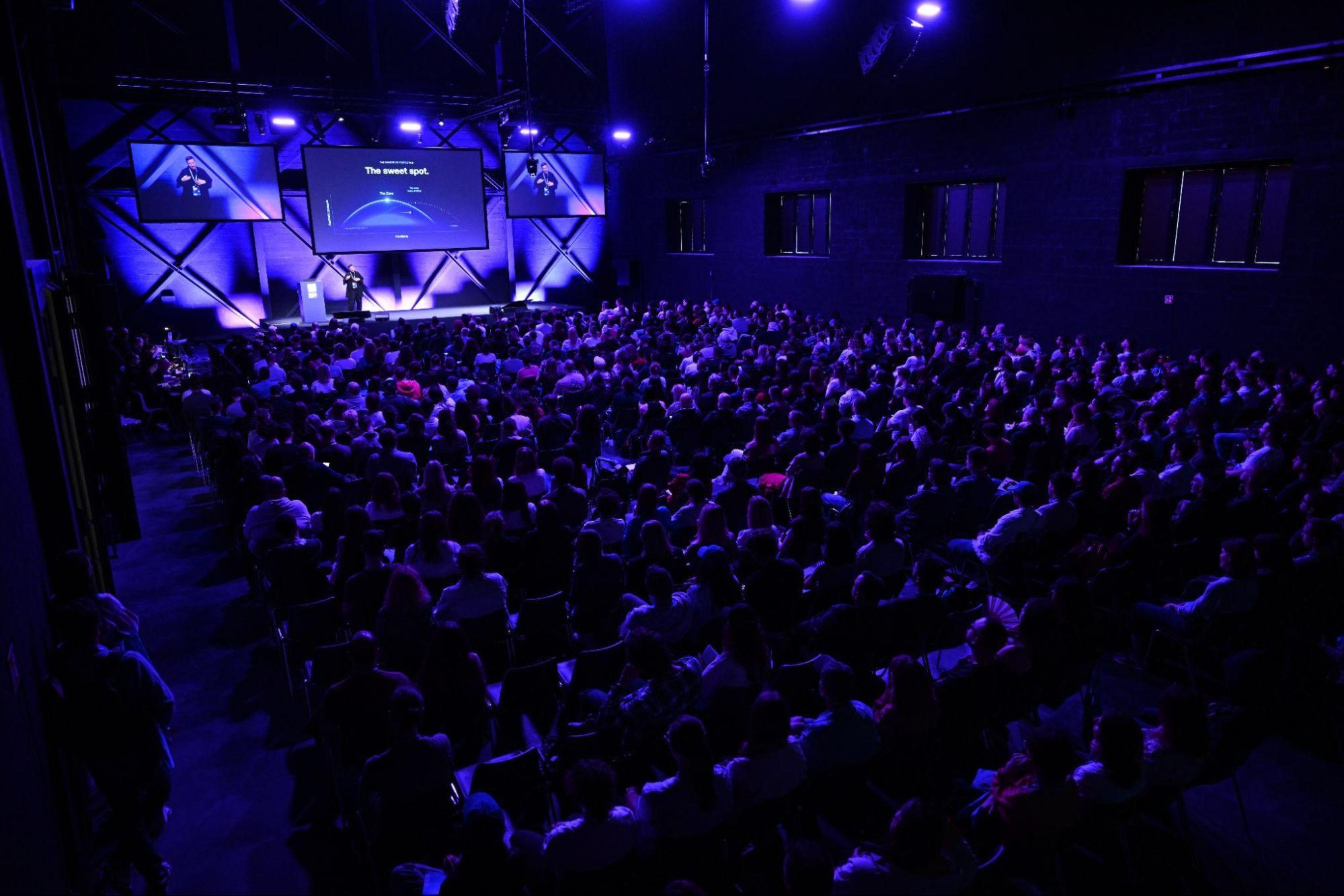
At the 10th anniversary edition of Digital Design Days in Milan, Milkinside founder Gleb Kuznetsov delivered a standout keynote addressing how artificial intelligence is forcing the creative industry to prioritize human taste, judgment, and originality over automated volume.
Everyone is asking whether AI will replace designers. That may be the wrong question.
The real challenge is that AI has made average work infinite. Polished interfaces, competent visuals, and functional products can now be generated at unprecedented speed. As the cost of producing acceptable work approaches zero, the qualities that make creative work memorable—taste, judgment, originality, and the willingness to reject easy answers—are becoming more valuable, not less.
That tension sat at the center of discussions during the 10th anniversary edition of Digital Design Days (DDD) in Milan, where designers, technologists, founders, brand leaders, and creative executives gathered to examine how artificial intelligence is reshaping creativity, product development, and decision-making.
For many attendees, DDD felt less like a conference and more like an early look at where the creative industry is heading. As AI rapidly lowers the cost of production, the conversation has shifted from what can be made to what is worth making.
One of the speakers at DDD was Gleb Kuznetsov, founder of Milkinside, whose keynote challenged a common assumption about AI: that technology reduces the importance of human creativity.
His argument became one of the event’s defining ideas: “AI did not make taste less important. It made the value of taste visible.”
Rather than diminishing human judgment, Kuznetsov argued, AI may be exposing its importance. When everyone can generate polished work, the ability to recognize what is original, meaningful, or culturally relevant becomes easier to see, and harder to replace.
Digital Design Days Marks a Turning Point for the Creative Industry
The 2026 edition of Digital Design Days represented more than a milestone anniversary. It arrived at a moment when creative industries are being forced to reconsider where value actually comes from.
Founded by Filippo Spiezia, Digital Design Days has evolved over the past decade into an international platform focused on design, creative technology, branding, motion, product thinking, and digital experience.
Its reputation has been built on curation rather than scale, attracting practitioners who often encounter major shifts in design, technology, and culture before those shifts become mainstream industry conversations.
The 10th-anniversary edition brought together a global speaker lineup that included Stefan Sagmeister, Marina Willer, Wesley ter Haar, Emily Rickard, Robert Hodgin, Itay Schiff, and Gleb Kuznetsov, among many others.
That range mattered. Sagmeister brought a long-term perspective on beauty, craft, and cultural value. Willer spoke from the experience of shaping brand identity at global scale. Ter Haar addressed the operational realities facing agencies as AI changes how creative work is produced. Kuznetsov focused on something different: the growing economic value of taste and judgment in a world where production is becoming abundant.
Rather than focusing solely on emerging tools, many conversations centered on larger questions about creativity, originality, business value, and the future role of human judgment in an era where AI can generate content, interfaces, code, and design concepts at unprecedented speed.
AI’s Impact on the World of Business
Across talks on design, branding, products, and innovation, a common question emerged: if everyone has access to increasingly powerful creative tools, where does differentiation come from?
One of the clearest answers came from Gleb Kuznetsov, founder of Milkinside: “AI did not make taste less important. It made the value of taste visible.”
The statement resonated because it reframed the AI conversation. Much of the public debate focuses on whether AI can generate work. Kuznetsov's argument was that generation is becoming the easy part. Selection, judgment, and conviction remain difficult.
The shift is bigger than design alone.
For founders, agencies, and brand leaders, the question increasingly becomes which ideas deserve investment, attention, and distribution. AI can generate more possibilities than ever before. Human judgment still determines which of those possibilities matter.
The Challenges of the Design Industry
For many attendees, the challenge is no longer whether AI will influence creative work, but how creative professionals can maintain originality, quality, and cultural relevance in an environment where generating polished outputs has become significantly easier.
Kuznetsov argued that AI’s greatest impact may be its tendency toward the average. AI can generate endless variations, concepts, interfaces, and campaigns, but it cannot explain why one idea matters more than another.
That observation connected with a broader concern running through the event. As production becomes easier, creative industries risk becoming more homogeneous. Distinction increasingly comes from perspective, taste, and the willingness to reject obvious answers.
These Issues Stretch Well Beyond AI
While AI has brought these issues of sameness to the forefront, it is far from being the cause of them. The industry has always adopted templates, frameworks, and dominant trends. Bootstrap, Material Design, Tailwind, SaaS templates, and startup design systems have already pushed digital products toward similarity. AI has simply accelerated this pattern and made it impossible to ignore.
What made the conversations at DDD notable was the recognition that this is not really an AI story. It is a cultural and economic story about what becomes valuable when production stops being scarce.
A Conversation Bigger Than One Speaker
While speakers approached the topic from different angles, DDD’s 10th-anniversary edition captured a broader industry realization: AI is raising the value of distinctly human judgment.
Kuznetsov’s keynote reflected that broader conversation. His argument that AI has made the value of taste more visible resonated with ongoing discussions about how designers are evolving from makers into directors of outcomes, helping determine not only what can be created, but what should be created.
Final Thoughts
The most memorable conversations at DDD were not about what AI can do. They were about what remains difficult to automate.
The takeaway that lingered long after the talks ended was Kuznetsov's observation that AI has made the value of taste visible. The easier creation becomes, the more obvious it becomes who can recognize quality, originality, and cultural relevance, and who cannot.
That idea gave DDD’s anniversary edition its sense of urgency.
For many attendees, DDD felt like one of the first places where the implications of that shift were being discussed seriously. The event's significance was not that it asked whether AI would change creative work. It was that many of the industry's leading voices appeared to agree on what becomes valuable after that change has already happened.
About Milkinside
Milkinside is a San Francisco-based design agency that focuses on creating innovative product design, interactions, branding, and motion design. Founded in 2011 by Gleb Kuznetsov, the company takes digital products from idea to launch. For more information, visit milkinside.com.