Kinzey Capital Management Flags Concentration Risk in Semiconductor Holdings as Huawei Accelerates AI Chip Roadmap
Singapore-based multi-asset manager advises clients with concentrated chip positions to review them against their liquidity needs, after Huawei brings its Ascend 960DT launch forward and extends its AI silicon roadmap to 2029.
SINGAPORE, September 29, 2026 (EZ Newswire) -- Kinzey Capital Management, a Singapore-based manager of discretionary multi-asset mandates, is advising private clients, family groups and corporate treasuries holding concentrated semiconductor positions to reassess them in light of Huawei Technologies' accelerated artificial intelligence chip roadmap. The firm sees the schedule, set out this week in Shanghai, as the clearest signal yet of how quickly China intends to close the gap with Nvidia, at a time when sector valuations assume American leadership will continue.
"A roadmap changes the competitive arithmetic long before it changes anybody's earnings," said David Nilson, Director of Private Clients at Kinzey Capital Management Pte. Ltd.
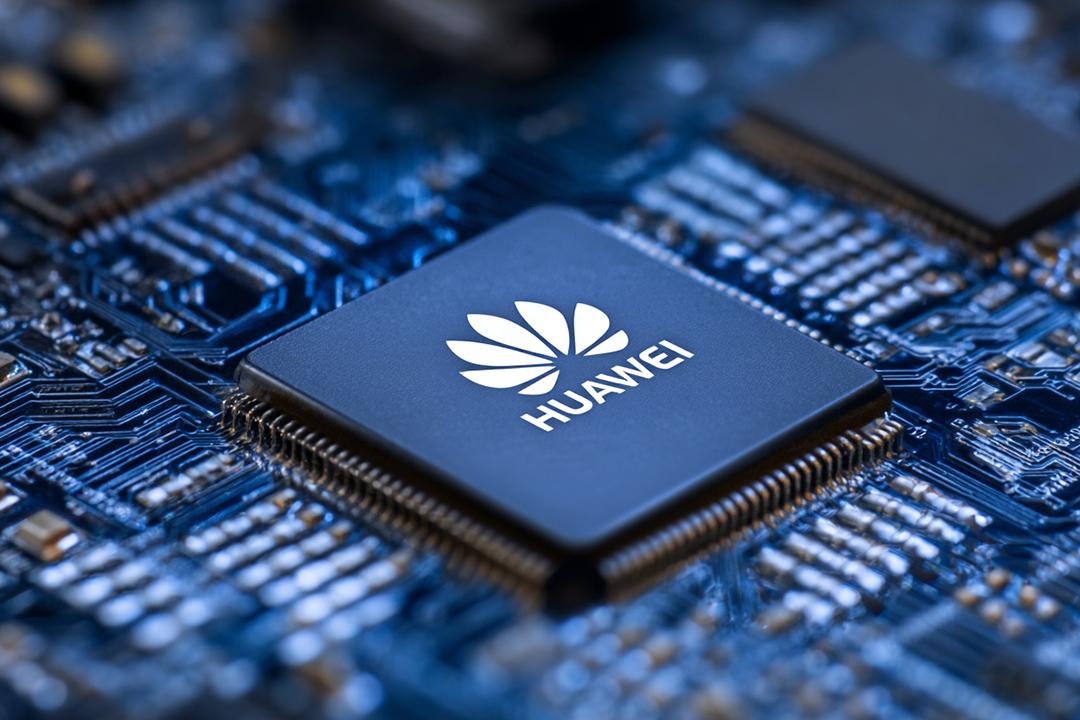
At the annual Huawei Connect conference, Huawei executive David Wang said the Ascend 960DT will arrive in the first quarter of 2027, three quarters ahead of plan, with the 960PR following two quarters later. Each part doubles the computing power, memory bandwidth and interconnect ports of the Ascend 950 series. The accompanying Atlas 960 SuperPoD carries 15,488 Ascend 960 processors across 220 cabinets and delivers 30 EFLOPS in FP8 precision. The Ascend 970 is scheduled for the fourth quarter of 2028, and the Ascend 980 for 2029.
Nilson pointed to DeepSeek's decision to validate Ascend processors alongside Nvidia hardware in the same framework as more significant than any specification sheet, calling it "the first occasion on which a Chinese accelerator appears as a peer rather than a fallback."
Kinzey points out that commercial volumes still sit heavily with the incumbent. Nvidia shipped one million H20 chips into China over a recent full year, against 200,000 Ascend 910B units. The firm also expects that balance to shift: 910B output is climbing towards 300,000 units over the following year, and fabrication of the 910C has begun against a separate target of 100,000 units a year. In Kinzey's view, investors who treat today's market share as a fixed baseline risk overlooking how quickly domestic supply is building.
Kinzey's analysis separates the frontier gap from the deployed gap. Top-end American accelerators are still roughly five times more powerful than the best Chinese parts, and one projection widens that multiple to 17 by 2027. Huawei accounts for about 4% of Nvidia's combined AI computing output over the current cycle, and that share is expected to thin towards 2% by 2027. Meanwhile, Chinese models are adapting to domestic hardware, and Nvidia chief executive Jensen Huang has described the Chinese AI accelerator market as largely conceded.
"The frontier gap and the deployed gap move in opposite directions," Nilson said. "Investors with a decade ahead read that split differently from those meeting withdrawals on a schedule, and that distinction is where we start with every client."
The firm notes that the stakes behind this competition have grown sharply. Global semiconductor revenue rose 21% over the preceding full year to $870.2 billion, with close to a third coming from AI-related silicon. Nvidia alone accounted for more than 35% of industry growth over that period and passed $109.7 billion in revenue. With projections putting AI silicon above 50% of total chip sales by 2029, Kinzey sees exposure to the sector increasingly becoming exposure to a single theme.
Kinzey also notes that the semiconductor sector has returned more than 20% a year over the past five years, driven mainly by the AI build-out, and that returns now depend on where a company sits in the AI value chain rather than on the sector as a whole. The VanEck Semiconductor ETF trades at a price-to-earnings ratio of 49.64, more than double the 22.70 of the State Street SPDR S&P 500 ETF. As a result, a single heavily weighted chip holding can move an entire portfolio on its own.
The firm adds that liquidity has held up better than those valuations might suggest. During a recent pullback, the VanEck Semiconductor ETF drew $1.5 billion of inflows and the iShares Semiconductor ETF drew $5.9 billion, despite declines of 8.54% and 10.63% respectively. For Kinzey, that resilience matters less than whether a client could afford to sell into a decline if their obligations required it.
About Kinzey Capital Management
Kinzey Capital Management is a Singapore-based manager of discretionary multi-asset mandates for private individuals, companies, family groups and foundations. Equities, fixed income, pooled vehicles and cash sit inside one consolidated book. Construction begins with what the money must do, when it may be drawn upon and the spread of outcomes it can absorb; instruments follow. Corporate reserves, growth portfolios, joint and family accounts, and income and withdrawals are open-ended, continuing while the obligation behind the capital stays live. Concentrated shareholdings and second-opinion reviews are single assignments examining positions a client already owns. Reporting is framed against the remit each mandate was handed. Kinzey Capital Management Pte. Ltd. is the registered entity, carrying UEN 202105652G. For more information, visit kinzey.com.
Media Contact
Chloe Lim
c.lim@kinzey.com