Denovia Announces Independent Verification of 98.3% Purity in Commercial-Scale Textile Recycling
Breakthrough in chemical recycling produces virgin-quality terephthalic acid (PTA) from contaminated post-consumer waste.
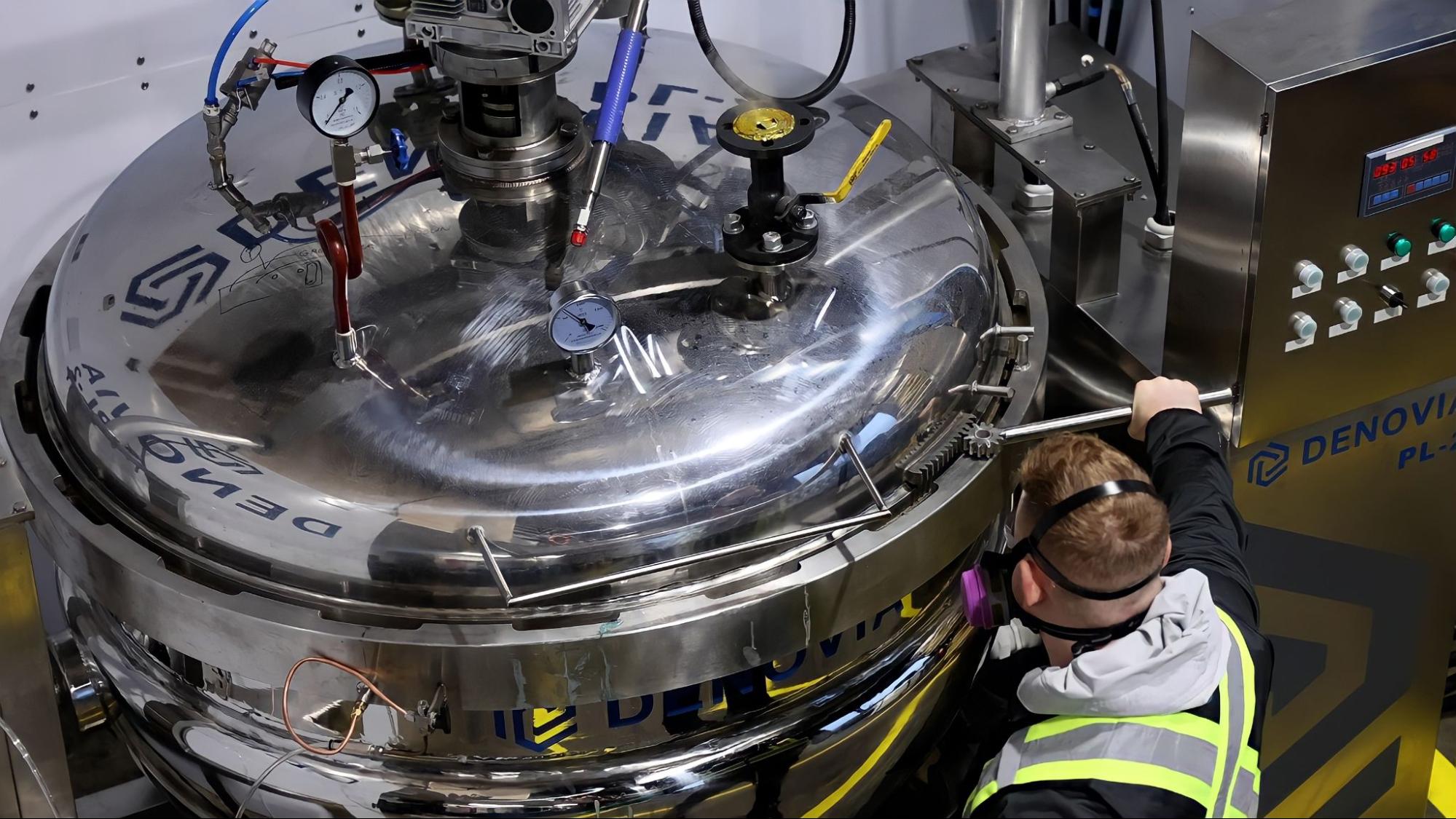
Addressing the global textile waste crisis — which accounts for over 92 million tonnes of landfill contributions annually — Denovia has successfully demonstrated the commercial-scale recovery of high-purity terephthalic acid (PTA) from contaminated textile feedstock. Independent third-party laboratory testing has verified an output purity of 98.3%, achieving a technical specification equivalent to virgin-state petrochemical production.
Scalability Beyond Laboratory Simulations
Unlike traditional mechanical recycling or controlled laboratory trials, this milestone was achieved using heterogeneous, post-consumer textile waste. The feedstock included mixed-fiber blends and soiled materials sourced directly from North American diversion programs—materials that have historically been classified as "unrecyclable" due to complex contamination.
“What we have achieved is not just an incremental improvement; it is a fundamental shift in what textile recycling can deliver,” said Nick Spina, CEO at Denovia. “Our technology handles the complex, blended materials that have historically been extremely difficult to recycle, and it does so with remarkable efficiency and output quality that meets the most demanding industrial quality standards.”
Industrial Utility: A "Drop-In" Substitute
The recovered 98.3% pure terephthalic acid serves as the primary chemical building block for polyester. By achieving this purity level from waste, Denovia’s output can function as a direct, "drop-in" substitute for petroleum-based monomers in existing global supply chains. This allows manufacturers to produce new garments, packaging, and industrial textiles with a significantly reduced reliance on virgin petrochemicals.
Technical Capabilities and Environmental Impact
The Denovia process is engineered for resource efficiency and total waste-stream management:
- 98.3% verified purity: Confirmed by Bureau Veritas to match virgin-grade specifications.
- Low-energy chemical recovery: Operates with a significantly lower carbon footprint compared to the energy-intensive extraction and refining of raw petroleum.
- Closed-loop solvent system: Processing agents are recovered, purified, and reintegrated into the system, minimizing secondary waste.
- Comprehensive material recovery: Beyond polyester, Denovia has secured active deployment pathways for cotton upcycling and dye/colorant recovery, ensuring that residual organic fibers and chemical additives are diverted from landfills and returned to productive use.
Addressing the Infrastructure Gap
In Canada alone, approximately 1.1 million tonnes of apparel are disposed of annually, with nearly 98% of plastic-based textiles ending up in landfills. Globally, less than 0.5% of post-consumer textiles are currently recycled into new products.
Denovia’s ability to recover high-purity monomers from contaminated real-world waste provides the necessary infrastructure for a 100% sustainable circular economy. The company is currently engaged in scaling its operations to meet the requirements of global apparel brands and waste management leaders.
Media Contact
Denovia Inc.
media@denovialabs.com