Delos Shipping Announces Flexible Pricing Structure for Maritime Operators to Meet California’s At-Berth Emissions Regulation
Adapting global operations to meet California’s stringent environmental standards
Delos Shipping today announced a flexible pricing structure designed to help maritime operators manage compliance with California’s Ocean-Going Vessel At-Berth Regulation. The pricing model, structured to trend downward with increased utilization, is intended to provide greater long-term cost predictability for container, tanker, dry bulk, and Ro-Ro operators calling at California ports.
The announcement comes as California continues implementing phased requirements under its At-Berth Regulation, which targets emissions produced by vessels while docked. The rule applies to container, passenger and refrigerated cargo vessels and is designed to reduce nitrogen oxides, diesel particulate matter and greenhouse gases, with a goal of achieving an 80% reduction in at-berth emissions. Each unmet requirement is treated as a separate violation under California’s Health and Safety Code, with penalties that can reach up to $37,500 per action, per day, creating significant financial exposure for operators during multi-day port calls.
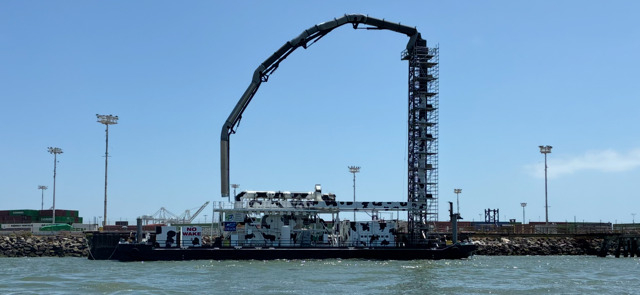
Delos Shipping’s updated pricing structure is designed to offer operators an alternative to recurring non-compliance penalties. By configuring commercially available emissions-reduction technologies to meet regulatory thresholds, the company provides a service model that can be contracted over time rather than accessed solely through spot arrangements.
“We use commercially available technologies configured specifically to meet regulatory thresholds,” said Brian Ladin, founder of Delos Shipping. He notes that, in many situations, Delos Shipping’s model may offer a more predictable long‑term cost profile compared with recurring non‑compliance penalties. “We think that end users, the container liners, tanker operators, dry bulk operators, and Ro-Ro operators will migrate to a model of paying for contracted hours over a period of time vs the spot market,” he said.
The pricing framework is structured to provide flexibility across varying fleet strategies and capital constraints. Adjustable advance rates, lease terms and financing structures are available to align with multi-year operational planning. “I believe adaptability is essential when integrating new operational services into complex shipping supply chains,” Ladin said.
The shift toward structured compliance planning reflects broader changes underway in California’s maritime regulatory environment. The At-Berth Regulation has become a focal point for environmental and public health policy, particularly in port communities where emissions reductions are a priority. At the same time, increased engagement from environmental justice groups and local stakeholders has elevated visibility around port emissions and operator performance.
With a background spanning hedge fund investing and distressed maritime asset acquisition, Ladin brings experience in both capital markets and vessel operations. He notes that shipping companies often operate through layered approval structures across global headquarters, regional compliance teams and port-level management.
“In my experience, organizations tend to budget for the known, even when the unknown holds the greater long-term opportunity,” Ladin said. “In that kind of setup, getting approval for new emissions services can feel like a heavy lift, while fines tend to slip through the accounting process with far fewer hurdles.”
However, as regulatory familiarity increases and economic modeling tools become more sophisticated, Ladin anticipates a gradual shift in operator behavior. The convergence of environmental policy, operational planning and financial forecasting is prompting companies to evaluate how compliance strategies affect both stakeholder perception and long-term cost management.
As California’s emissions framework continues to evolve, Delos Shipping positions its pricing model as part of a broader transition in maritime economics — one in which emissions management becomes embedded in strategic planning rather than treated as a variable cost of doing business.
About Delos Shipping
Delos Shipping is a maritime services company focused on helping vessel operators navigate evolving environmental compliance requirements. Founded by Brian Ladin, a longtime maritime investor with experience in shipping, technology and global asset markets, the company develops structured service and financing models aimed at supporting emissions compliance in jurisdictions such as California. Delos Shipping works with container, tanker, dry bulk and Ro-Ro operators to integrate regulatory solutions into long-term operational and financial planning. For more information, visit www.delosshipping.com.
Media Contact
Brian Ladin
brian@delosshipping.com