DCVMN Beijing Meeting Focuses on Vaccine Manufacturing and Global Access
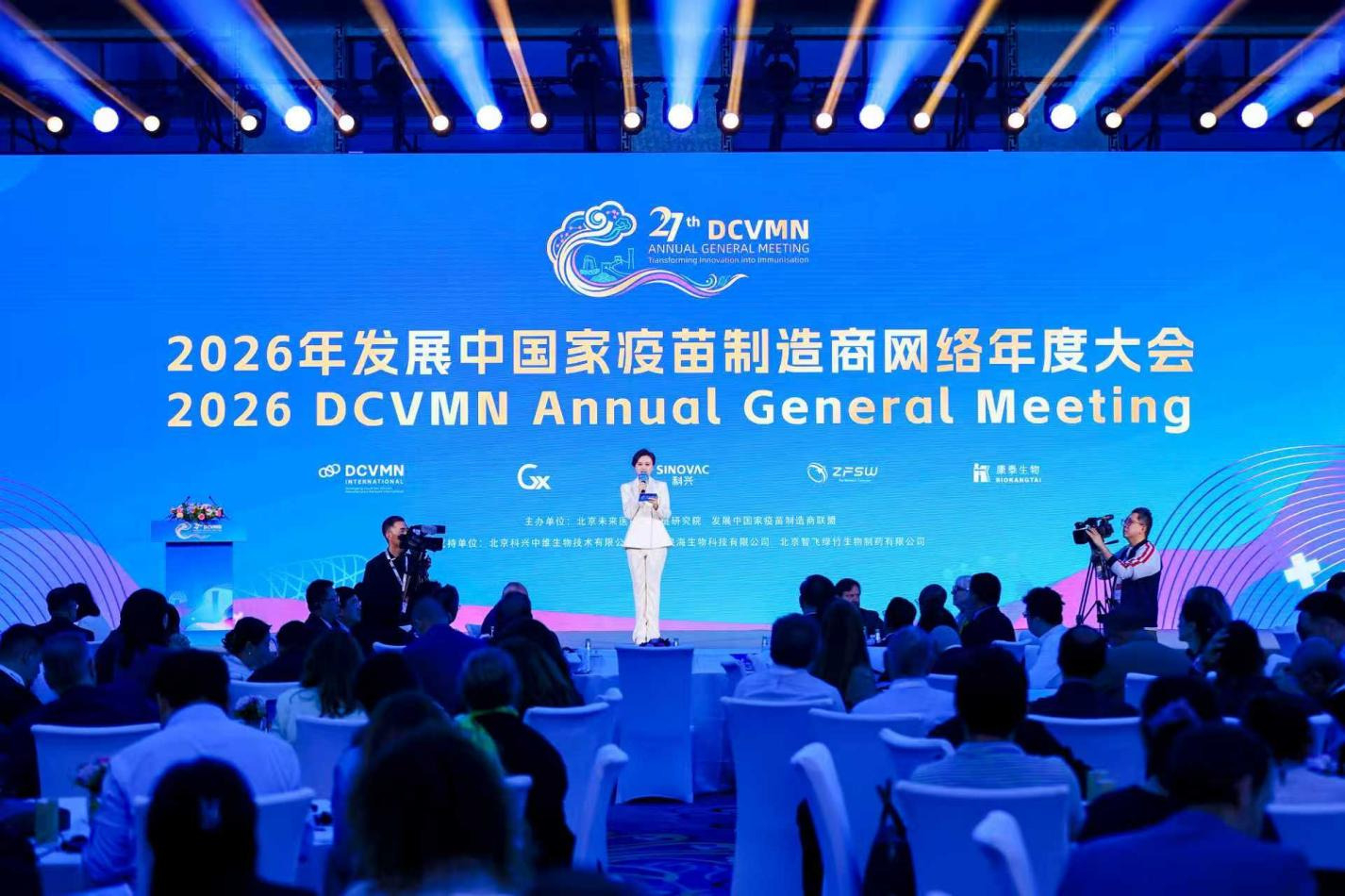
NYON, Switzerland, September 22, 2026 (EZ Newswire) -- More than 40 vaccine manufacturers from 17 developing countries, nine of them from China, gathered in Beijing for the 27th Annual General Meeting of the Developing Countries Vaccine Manufacturers Network (DCVMN), as the industry looks for new approaches to how vaccines are financed, developed, produced and delivered, on Tuesday, Sept. 22, 2026, Beijing time.
The three-day meeting at the China World Hotel, co-hosted by DCVMN together with BJFPI, Sinovac, BioKangtai and Zhifei, runs under the theme "Transforming Innovation into immunisation." Manufacturers are joined by international organisations including the World Health Organization, UNICEF, Gavi and CEPI, as well as regulators and financial institutions.
The program covers regional production, financing and regulatory cooperation, including World Health Organization prequalification, alongside sessions on the use of artificial intelligence in research, manufacturing and supply chains, and on building public confidence in vaccination.
Linking global vaccine industry through DCVMN meeting
DCVMN Chief Executive Officer Rajinder Kumar Suri said the annual meeting is designed as the place where manufacturers can build relationships with international institutions, funders and industry partners.
"DCVMN Annual General Meeting has always been a fertile ground for partnerships, and it is here, year on year, that new collaborations blossom and lasting relationships are formed," Suri said. "In Beijing, we are moving beyond the familiar to explore genuinely new approaches to how vaccines are financed, developed, produced and delivered, and to ensure that the voice of manufacturers in developing countries help shape the future of immunisation."
The exchange runs in both directions, according to the network's written statement for the meeting. Manufacturers from developing countries set out their perspectives in candid sessions, while international organisations and national institutions help clarify requirements, address challenges and highlight the opportunities open to manufacturers.
Beyond the annual gathering, the network said its year-round work rests on three pillars: advocating for developing-country manufacturers in international fora, convening the wider vaccine community, and training the people behind the vaccines. Its programs cover technology transfer, quality by design and manufacturing sciences, delivered through workshops, specialized working groups, an e-learning platform and virtual reality, in collaboration with partners including Africa CDC and the International Vaccine Institute.
Beijing outlines support for research and cooperation
China's disease control experience provided one reference point for the discussions. An official from the National Disease Control and Prevention Administration told the opening ceremony that vaccine production is only the first step towards reducing the burden of infectious diseases, and that innovation must translate into broad, well-regulated vaccination services that respond to disease prevention needs.
China has maintained polio-free status, eliminated neonatal tetanus and been certified malaria-free by the WHO, the official said, noting that nine Chinese vaccines have obtained WHO prequalification and entered international procurement and supply systems. China's self-developed EV71 inactivated vaccine, the first of its kind globally, has been approved in several Southeast Asian countries to support the prevention of hand, foot and mouth disease. The country has built a relatively complete vaccine production system with large-scale supply capacity. A number of Chinese vaccine companies actively participate in international vaccine supply, and Chinese-produced vaccines serve disease prevention and control across Asia, Africa and Latin America.
Yin Weidong, chairman of Sinovac Group, one of the co-hosts, said the industry's capabilities have long supported the disease prevention needs of China's 1.4 billion people. "Chinese vaccines are no longer simply participants in the global vaccine supply," he said. "They are becoming an increasingly important force in global infectious-disease prevention and control."
Beijing officials also outlined the city's support for vaccine research and industry development, including joint research, manufacturing cooperation and the sharing of expertise with partner countries, with vaccines and biomedicine a stated priority of the city's high-end industrial development.
The Chinese capital brings together universities, research institutes, medical institutions and biopharmaceutical companies, with industrial clusters such as the Daxing biomedical industry base supporting the translation of research into products and manufacturing capacity. A dedicated session on Beijing's biopharmaceutical ecosystem and vaccine industry development forms part of the program, connecting these resources with disease prevention priorities and opportunities for international cooperation.
About Developing Countries Vaccine Manufacturers Network (DCVMN)
Founded in 2000, the Developing Countries Vaccine Manufacturers Network (DCVMN) is a voluntary, public health-oriented, non-profit international organisation of vaccine manufacturers from developing countries, with its international secretariat based in Switzerland. Spanning 17 countries, the network brings together more than 40 manufacturers who contribute more than 60% of global vaccine production and supply vaccines to over 170 countries. DCVMN members have met up to 70% of the vaccine demand of Africa, PAHO and Gavi 5.0. Guided by its motto "We connect to protect," DCVMN promotes the sustained supply of and equitable access to quality, affordable vaccines through capacity building, professional training and technical exchanges. For more information, visit dcvmn.org.
Media Contact
info@dcvmn.net