CU 2.0 Announces Founder Kirk Drake’s Contribution Chapter to "The Entrepreneurial Ascent"

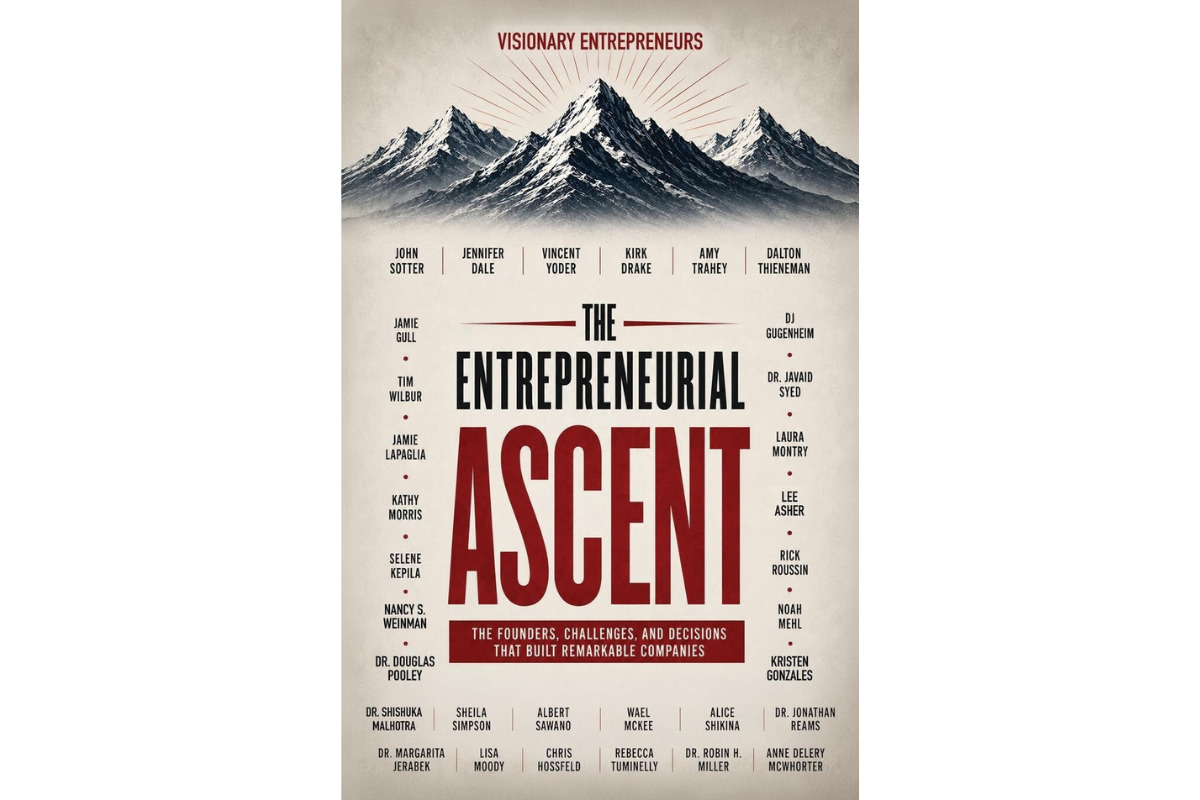
ASHLAND, OR, September 3, 2026 (EZ Newswire) -- CU 2.0 has announced that founder Kirk Drake has contributed a chapter to "The Entrepreneurial Ascent: The Founders, Challenges, and Decisions That Built Remarkable Companies," published on August 21, 2026. The book brings together perspectives from 32 founders on the decisions, setbacks, and experiences involved in building their companies.
Drake’s chapter, “Your Team Cannot Execute a Secret Mission,” addresses how entrepreneurs communicate the purpose behind the work they assign. His contribution examines what can happen when founders provide employees with tasks, deadlines, and performance measures while keeping the larger outcome inside their own heads.
Drake founded CU 2.0, a consultancy that works with credit unions and financial technology companies on technology strategy, digital transformation, and artificial intelligence. He is also the founder of Resistance Wine Company. The chapter draws on his experience developing businesses in two industries with different customers, operating models, and expectations.
The contribution begins with a distinction between a job and a mission. Drake characterizes a job as a description of what someone must do, while a mission communicates the result that the work is intended to support. He proposes that employees may struggle to anticipate problems, challenge assumptions, or improve an approach when they have not been told what the founder ultimately hopes to accomplish.
“The problem is usually not the person. It’s that we gave them a job when what we really needed to share was the secret mission behind the job,” Drake explains in the chapter.
That argument forms the central theme of his contribution to The Entrepreneurial Ascent. Drake considers why a founder may be dissatisfied even after an employee has completed an assignment according to the original instructions. In such cases, he suggests, the leader may have expected ownership and judgment without communicating the context those qualities require.
The chapter also connects that leadership challenge with the changing nature of work. Drake observes that artificial intelligence is altering tools and responsibilities across industries, making it difficult for existing job descriptions to anticipate every future need. He does not offer a fixed prediction of how individual positions will change. Instead, he proposes that teams may respond more effectively when they understand the purpose behind their responsibilities alongside the work itself.
Several sections examine the founder’s role in creating that understanding. Drake discusses the vulnerability involved in explaining why an outcome matters personally, particularly when the leader does not have every answer. He also considers how founders can become decision-making bottlenecks when employees must return to them for every interpretation, adjustment, or correction.
Informal communication receives attention as well. The chapter notes that remote arrangements may work effectively when responsibilities and routines are stable. During periods of rapid growth, uncertainty, or organizational change, however, Drake believes spontaneous conversations can help teams uncover assumptions and connect immediate assignments with wider priorities. He presents this as a question of context rather than a rejection of remote work.
Drake extends the principle beyond employees to relationships with customers, investors, and partners. Within CU 2.0’s work, he identifies the wider purpose of technology adoption as helping credit unions continue serving their members as financial services change. At Resistance Wine Company, he connects the business with the memories people create around wine. These examples illustrate his view that an organization’s mission can give meaning to its operating mechanisms.
The chapter concludes with a direct recommendation for founders seeking greater participation from their teams. “If the work matters, tell people why. If the outcome is bigger than the task, say so. If you need partners rather than box-checkers, give them something real to partner with,” Drake emphasizes.
Media Contact
Kirk Drake
kdrake@cu-2.com