China Breaks Ground on Three Gorges New Waterway, Dramatically Raising the Capacity Ceiling for Global Inland Shipping

China's first major project under the 15th Five-Year Plan (2026–2030), the Three Gorges New Waterway, officially commenced construction on June 8. The project, for which China Three Gorges Corporation (CTG) serves as the responsible entity, has an estimated static investment of 77.208 billion yuan ($11.4 billion) and is expected to significantly enhance the Yangtze River's shipping capacity in response to growing freight demand.
Related video: https://www.youtube.com/watch?v=oqURo6yMjKs (Produced by Hubei Media Group)
Zhao Yin, who has sailed between Chongqing and Shanghai for 15 years, calls this long-awaited news. He estimates the new waterway will cut his shipping costs by about 20% with much faster voyages.
"Back then, lock transit was fast, but things are different now. There are far more ships on the water. Once the new lock is finished, we’ll save lots of waiting time. I’m really looking forward to it," said Zhao Yin, Captain of Vessel Kuihang 908.
The 59-kilometer river reach between the Three Gorges and Gezhouba Dams forms a critical shipping bottleneck on the Yangtze. The Three Gorges ship locks officially opened to navigation in June 2003 and have maintained efficient operation for over two decades. Driven by China’s robust economic growth, the annual cargo throughput of the Three Gorges ship locks surged from an initial 18.02 million tons to 170 million tons by the end of 2025, exceeding its designed handling capacity by 70%.
Carving a brand-new water corridor one kilometer away
The Three Gorges New Waterway is a parallel corridor about 1km north of the existing locks. 6,680 meters long, it has double-line five-stage ship locks that lift 10,000-ton vessels over the dam like a staircase. To handle the increased flow, the downstream Gezhouba Dam is being demolished and expanded, with the whole project taking nearly a decade. Upon completion, annual lock capacity will jump from 100 million to over 300 million tons.
Why does the whole world care about this river?
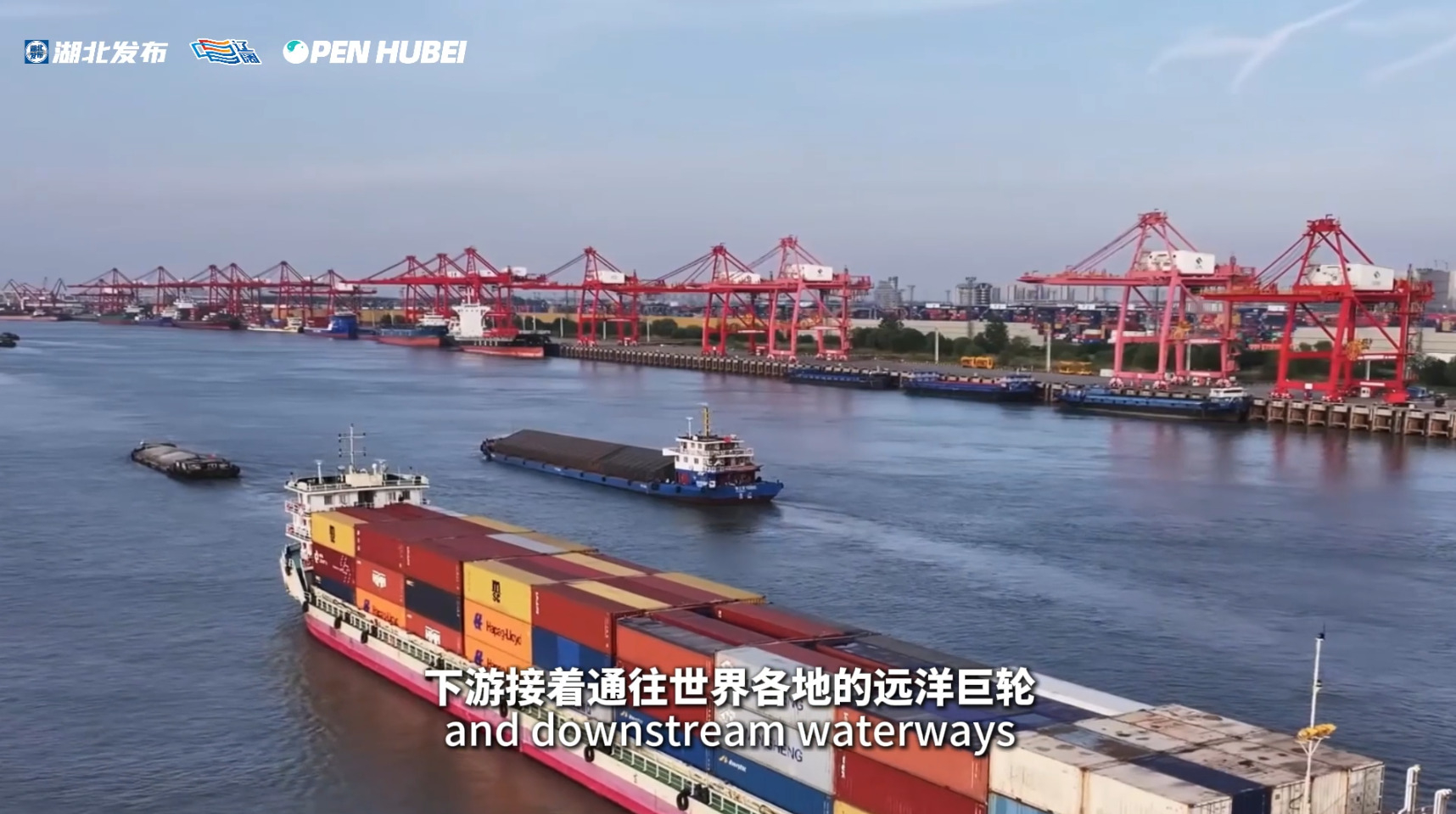
The Yangtze is far more than an ordinary river today. It acts as a vital economic artery: upstream stretches carry energy and mineral resources, mid-reaches transport factory machinery, and downstream waterways connect to ocean-going giant ships bound for all corners of the globe.
"After the Three Gorges new waterway is put into operation, Chongqing's logistics costs for the manufacturing industry will drop by 30%. International investors will be more willing to develop relevant resources in upstream regions," said Qin Zunwen, Secretary-General of the Yangtze River High-End Think Tank Alliance, Research Fellow at Hubei Academy of Social Sciences.
Qin Zunwen said the new waterway links west to Europe via China-Europe Railway Express and east to Southeast Asia, forming a key Belt and Road rail-water artery. When completed, it will slash business logistics costs and boost efficiency. Upper Yangtze goods will reach estuary containers more reliably; foreign raw materials and equipment will ship straight to Chongqing, giving inland China easier access to global supplies.
While constructing a massive infrastructure project in a mountainous region, planners prioritized harmonious coexistence with aquatic wildlife inhabiting the river.
The Three Gorges, home to the Chinese sturgeon and Yangtze finless porpoise, has robust conservation measures built into the project. Acoustic deterrents keep fish away from construction sites. When operational, protected areas will have dedicated shipping lanes and speed limits, plus rare fish breeding and release programs to sustain populations. As 10,000-ton giant vessels steadily climb this aquatic staircase, the economic pulse of the Yangtze will beat stronger than ever.