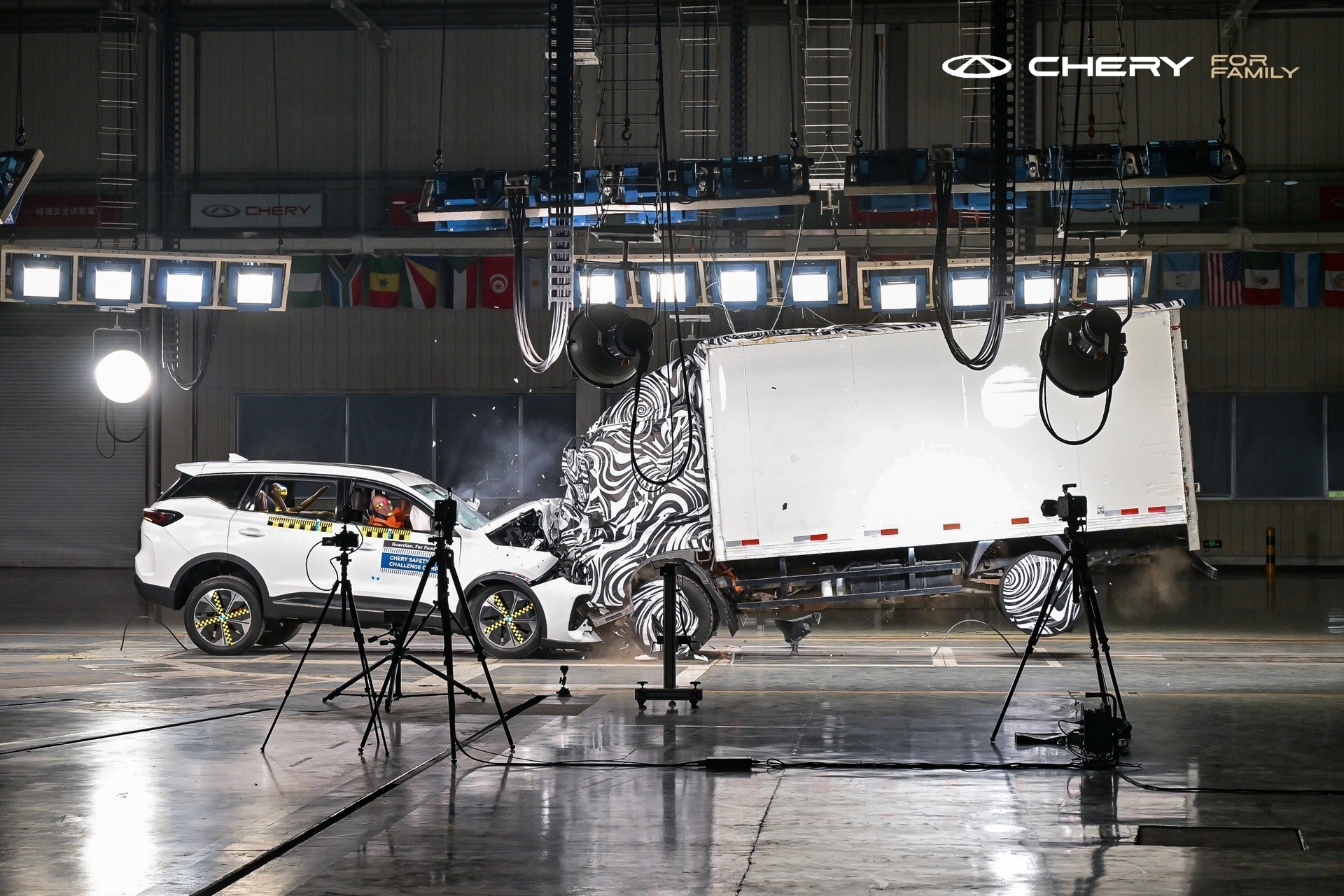
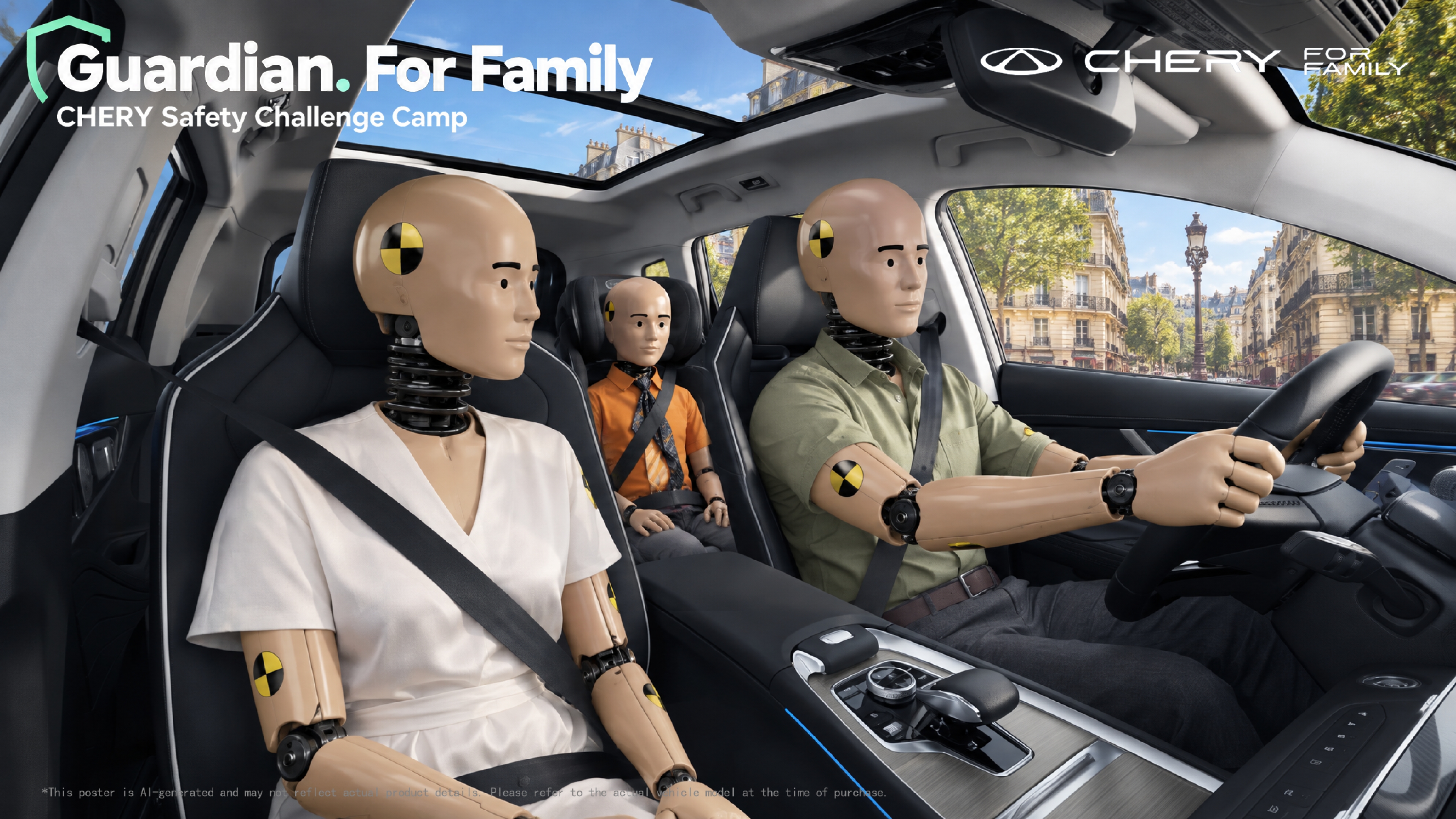
WUHU, China, November 11, 2026 (EZ Newswire) -- On Oct. 22, 2026, CHERY staged a public test at its Longshan crash laboratory in Wuhu, Anhui province, in which a TIGGO7 collided with a truck at 50 km/h. Results released by CHERY showed that the A-pillars, B-pillars, and doors remained intact, the airbags and seat-belt pretensioners activated, and the eCall system triggered automatically.
(Note: This demonstration was a manufacturer-conducted internal test under controlled laboratory conditions, not an official NCAP crash assessment or certified regulatory rating. Real-world collision outcomes vary depending on vehicle mass, angle of impact, and road conditions.)
The demonstration forms part of CHERY's continuing safety testing across global markets. From body structures to batteries, test scenarios increasingly reflect risks encountered in local use. For Chinese carmakers expanding internationally, maintaining safety performance across different regulations, assessment systems, and operating conditions is becoming an important long-term challenge.
Beyond Individual Ratings: Testing for Different Markets
Since 2025, CHERY has held public safety challenges in China and overseas, extending the focus from structural load-bearing capacity to hybrid battery performance in demanding environments.
In April 2025, vehicle-stacking and crash tests in China examined body structures under extreme loads and collision forces. Tests subsequently addressed risks in other markets. In Indonesia, against a backdrop of high temperatures, humidity, and flooding risk in Southeast Asia, a battery was submerged in salt water about one metre deep for 53 hours and 51 minutes to assess sealing, insulation, and corrosion resistance. It was then reinstalled in a vehicle for operational checks. In Mexico, a vehicle struck a 242-mm-high obstacle at 30 km/h to examine the battery pack's structural condition after an impact from below, reflecting risks from potholes and raised obstacles.
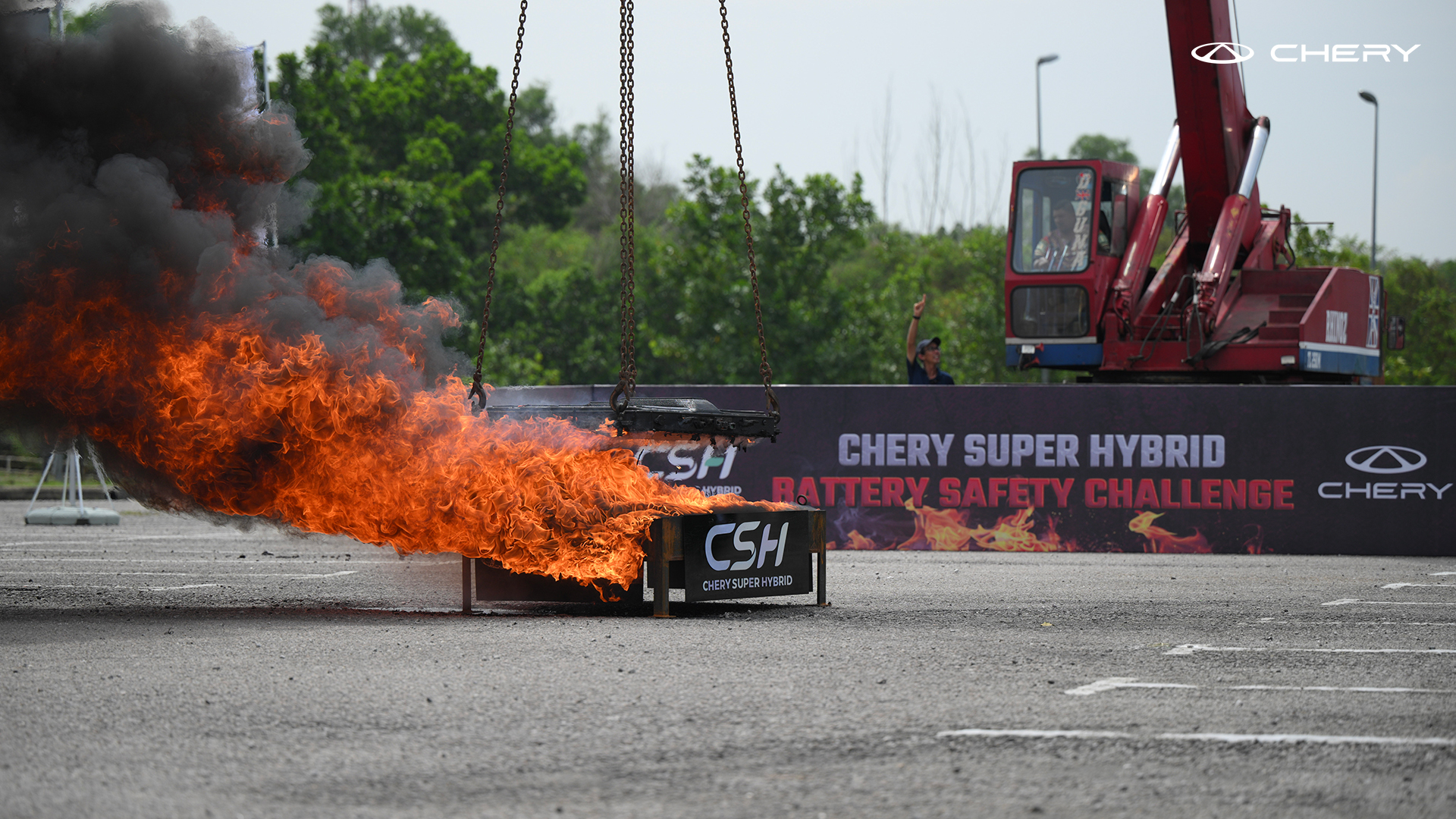
In South Africa, a two-vehicle TIGGO9 collision and a subsequent small-overlap crash test examined structural performance and occupant protection in different types of impact. In 2026, testing extended to high-temperature battery safety: a fire test in Malaysia exposed a battery to temperatures above 1,000°C and sustained flames. A head-on collision between a TIGGO7 and a truck in Wuhu that October further examined vehicle structures and restraint systems.
These tests involved models on sale, including TIGGO7, TIGGO8, and TIGGO9. They covered body structures, crash protection, battery sealing, insulation, and exposure to heat, salt water, and impacts from below, translating local operating risks into specific test scenarios.
Formal safety assessments provide a separate measure. The TIGGO7 series has received five-star ratings from C-NCAP, Euro NCAP, ANCAP, and ASEAN NCAP, with the Euro NCAP and ANCAP results published by the respective organisations. The TIGGO8 series has received five-star ratings in China, Europe, and Australia, while TIGGO4 has also received an ANCAP five-star rating. According to results published by ASEAN NCAP in December 2025, TIGGO7 PHEV scored 94.68 points and five stars under its 2021–2025 protocol. The organisation described this as its highest overall score since it was established in 2011.
NCAP programmes differ in their test methods, assessment criteria, and vehicle versions. Bespoke safety challenges are not equivalent to standardised crash assessments. For global carmakers, the challenge is to apply a consistent approach to safety development while addressing local regulations and road conditions.
From Safety to "For Family": Connecting Engineering and Brand Values
Safety is both an engineering issue and an important consideration for families choosing a vehicle. As competition increasingly extends beyond equipment and price to brand values, carmakers must consider how to understand and meet families' long-term needs.
At the 2026 Beijing International Automotive Exhibition, CHERY introduced its "For Family" brand proposition globally. It grouped family mobility needs into three connected areas: "Space. For Family," "Safety. For Family," and "Technology. For Family." The approach seeks to take family needs beyond individual model positioning and into product development, technology applications, and customer service.
Safety underpins that approach. Body structures, active safety systems, and battery protection in new energy vehicles must perform in different environments and real-world situations. Carmakers operating across countries and regions must account for roads, climate, and user habits as well as local regulations and assessment requirements.
Families' expectations are also broadening. Flexible interiors, easier-to-use intelligent technology, and powertrains that balance performance with everyday running costs are changing what buyers expect from family travel. "For Family" brings these needs together: safety provides protection, space supports comfort, and technology makes the benefits of innovation accessible at a reasonable cost.
Seen in this light, "For Family" is not simply about the conventional family car. It treats family needs as something shared across markets and cultures. CHERY's ability to translate that proposition into products and services suited to different markets will be an important test of its global brand development.
Owner Experiences Add Another Perspective
Alongside testing and formal assessments, owners' experiences offer another way to consider the value of vehicle safety.
In May 2025, the company announced Guardian Club and introduced its CHERY FAMILY CARE service brand, collecting accounts of safety-related incidents from users in different countries. The platform has so far gathered stories from nearly 10 owners in countries including Indonesia, South Africa, Türkiye, and Peru.
Their accounts include vehicles protecting occupants in collisions and active safety features helping drivers avoid hazards. Unlike standardised laboratory data, owner testimony describes how safety technology is experienced in daily life. Individual cases cannot replace professional testing, but they can help explain why safety matters to families beyond vehicle specifications.
(Note: Owner accounts describe individual incidents and do not guarantee identical outcomes in all accidents. Occupant safety depends on collision severity, proper seat-belt use, and adherence to manufacturer maintenance guidelines.)
From public crash tests to owners' accounts, safety communications are broadening from demonstrations of product capability to user participation and shared values, connecting with the family needs behind "For Family."
From Market Expansion to Long-Term Trust
For CHERY, which operates in more than 120 countries and regions and serves over 4.5 million family users, globalisation means more than expanding sales. It also brings different regulations, road conditions, and customer needs. Formal assessments, continuing safety tests, and user feedback offer distinct perspectives on the company's safety capabilities across markets.
Drawing on its global research, manufacturing, sales, and service networks, CHERY is also using CHERY FAMILY CARE to address family needs throughout product development and ownership.
A crash test shows how a vehicle performs under specific conditions. A five-star rating reflects its results within a particular assessment framework. Lasting brand trust, however, depends on sustained product performance and ownership experience. The connection between safety and family needs helps explain CHERY's global brand strategy, reflecting a wider shift among Chinese carmakers from exporting products to building trust.
Media Contact
Tianyi Zhang
CHERY
zhangtianyi1@mychery.com