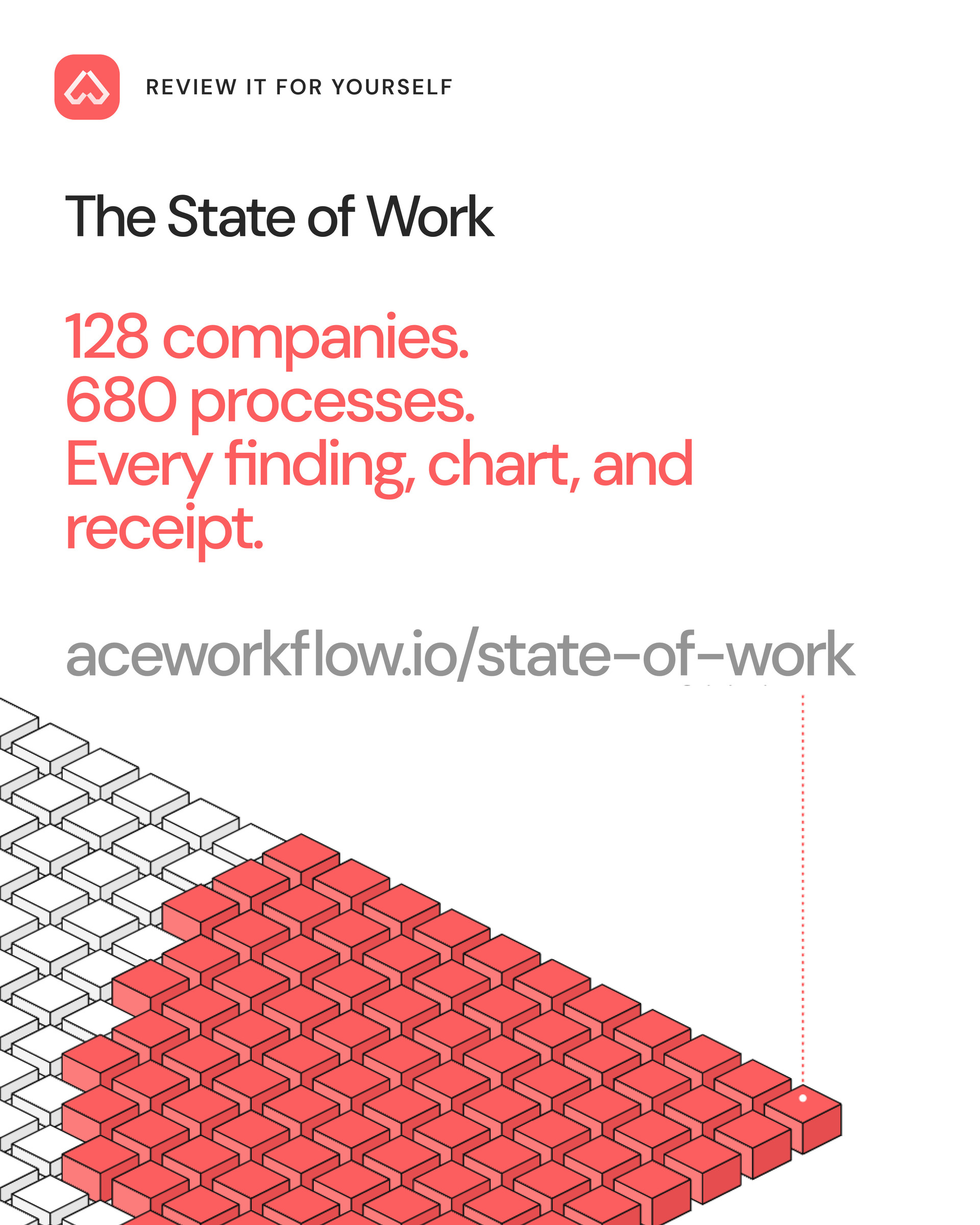
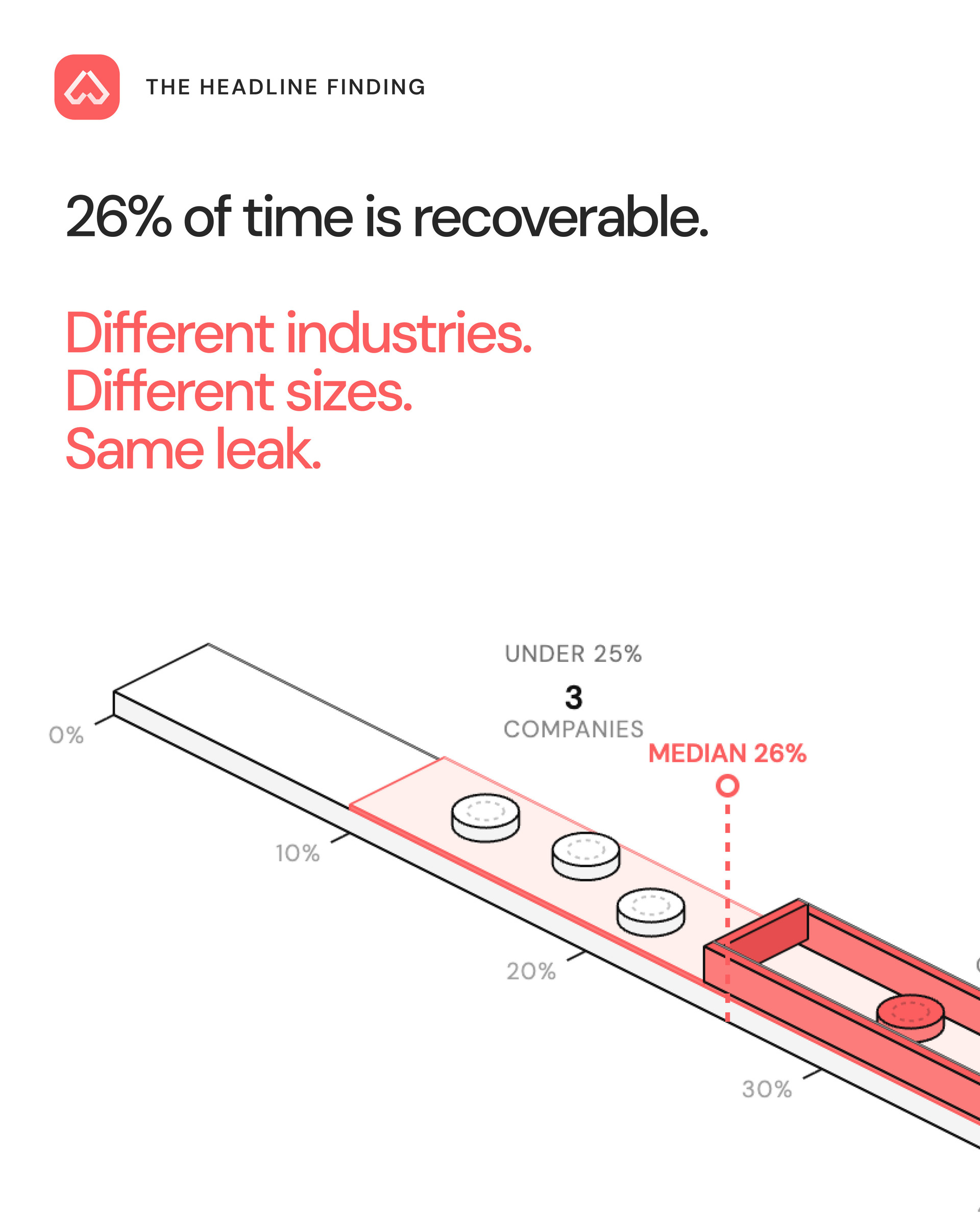
NEW YORK, NY, August 19, 2026 (EZ Newswire) -- For all the talk of efficiency and money invested in AI programs, work is still getting in the way of work. And ironically, AI has a lot to do with it. That’s the finding of a field study of 680 processes at 128 companies across 10 sector groups, conducted by Ace Workflow. At six of those companies, every step of every process was timed: 187 processes, 2,546 hours a week of ordinary work, stated by the people who do it.
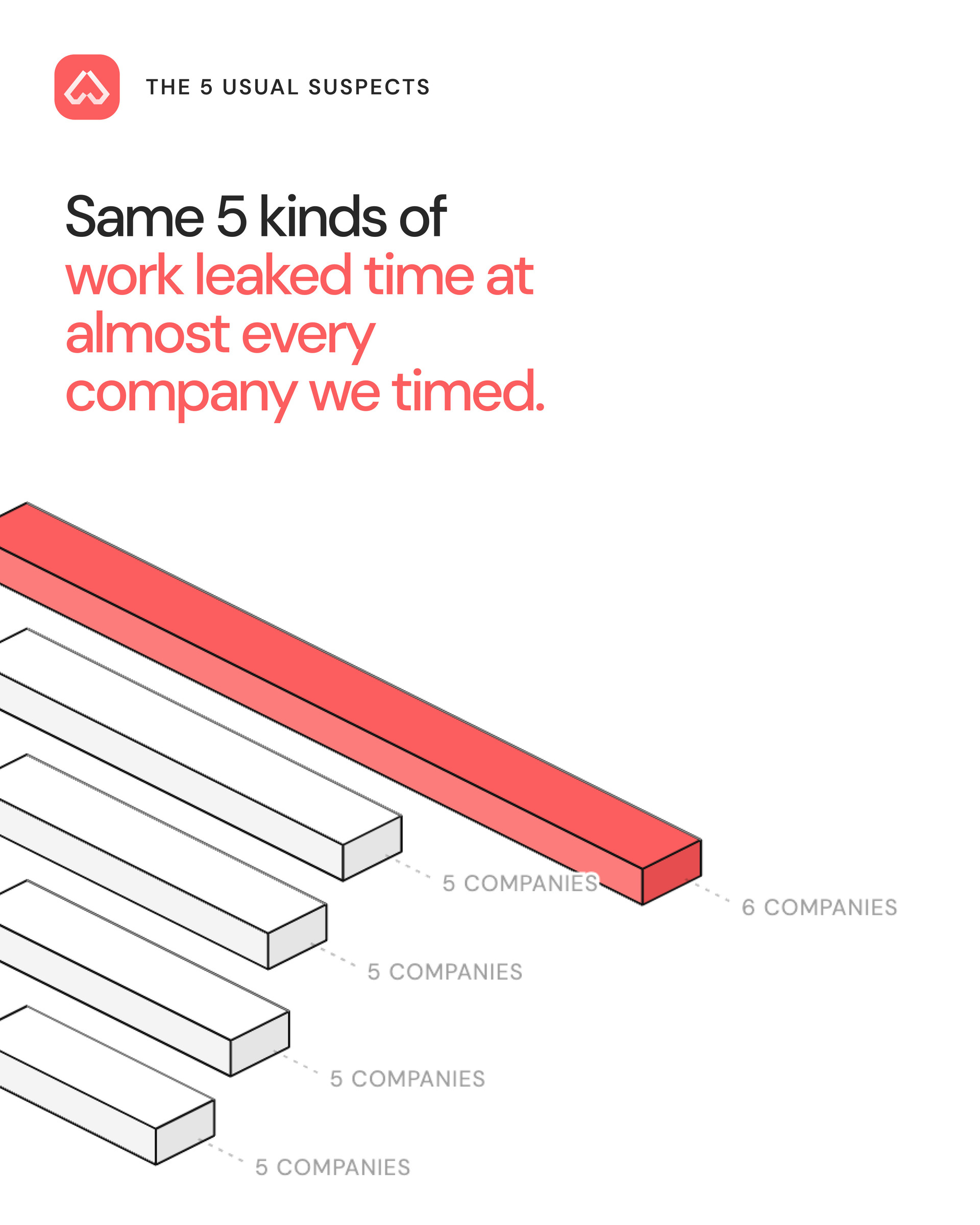
The State of Work report shows the leaks predominate in five key areas: reporting, onboarding, invoicing and billing, approvals, and CRM cleanup.
What Keeps Work From Working?
Two-thirds of recoverable time comes in the top 10% of projects, with nearly half coming in the top 5%. That’s potentially good news for companies looking to concentrate correction efforts, with an important exception: 13.4% of processes run under an hour a week, so they stay manual.
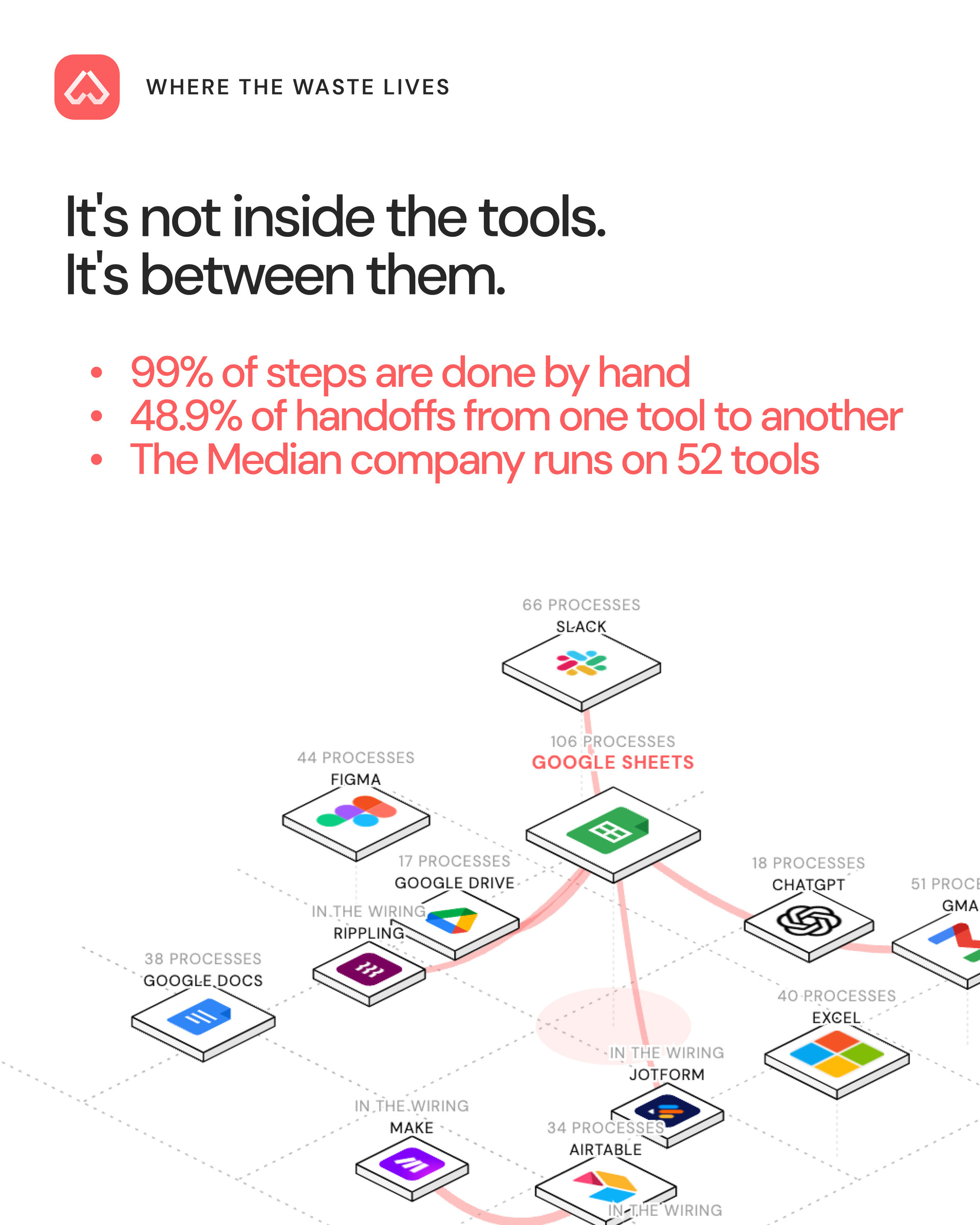
Surprisingly, AI creates a manual problem because there’s too much of it. The waste isn't inside the software. It's in the gaps between all the platforms. The media for timed companies is 52 different tools in total, while the average process touches 2.9 tools. And nearly half of all handoffs, 48.9%, are a person carrying work from one tool to another. So, new tools have not yet changed the way of work.
Asked what's wrong with their work, people didn't say it was slow. They said they couldn't see clearly where their work is, from where necessary updates are being reported to where the latest drafts of key documents are filed. Complaints about visibility outnumbered complaints about speed 4.5 to 1.
What’s the Bill?
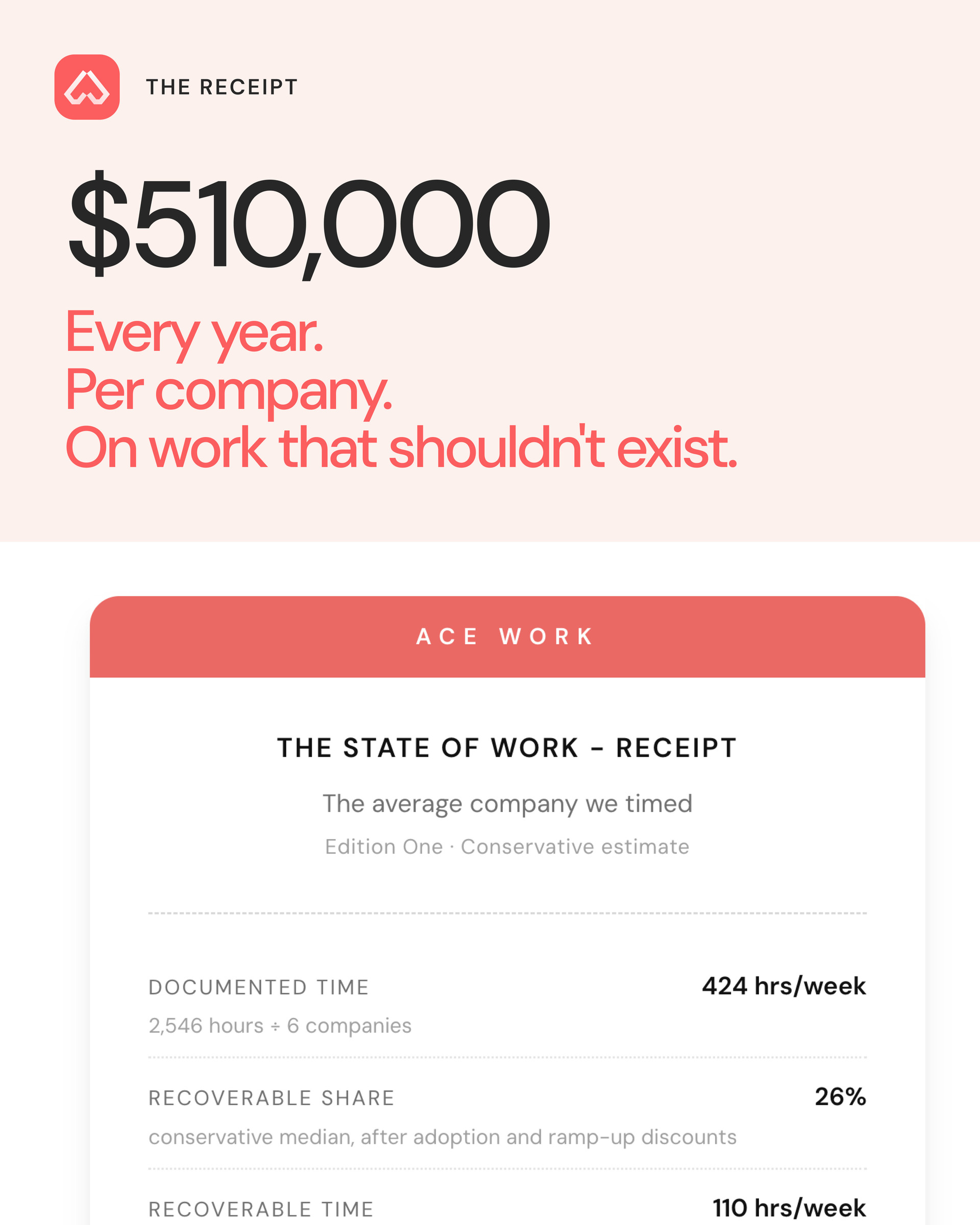
To come up with the cost, Ace Workflow isolated six companies and timed 187 real processes that produce 2,546 hours a week of ordinary work — who does it, in which tools, how long every step takes, stated by the people who do it. On average among timed companies, 424 hours of work a week produce 110 recoverable hours. Across a 46-week year at $100 an hour, that's $510,000 annually.
“The waste hides in handoffs, switching between apps as people who are drowning in tools struggle to do more with less,” said Tim Rodgers, founder and CEO of Ace Workflow. “AI’s biggest payoff isn’t performing tasks faster; it’s eliminating the waste that eats at corporate productivity and ultimately profit.”
To help, Rodgers’ new platform Ace Work has AI agents interview 100% of employees continuously. The result is a complete portrait of how work is getting done and a map of pressure points, compared instantaneously to the 128-company database. Ace Work then builds diagnostics and automations within a company’s existing toolkit.
Ace Work is the latest innovation for the three-year-old company, which has doubled every year by providing solutions to companies like Paramount and Airbnb. For example, Ace accelerated Airbnb’s verification system, increased Tishman Speyer applications by 300%, and saved 30-person Hollywood agency Maximum Effort 15 days/week in employee time.
Interestingly, Ace grew out of Rehab, an agency Rodgers created to leverage emerging technologies for such advertisers as Google and Nike. Once the team started building no-code workflows that could replicate three-month projects from engineering teams in one week with a single operator, Rodgers shuttered Rehab and opened Ace Workflow.
About Ace Workflow
Ace Workflow is an operational intelligence company. It finds the manual work draining client teams, rebuilds it inside their existing tools, and runs it. The model is services-as-software: high-touch delivery at software scale. The company has a team of 50+ across New York, LA, London, and Lisbon, and has delivered 311 projects for 100+ companies. Ace Workflow works with companies across agencies, media and entertainment, consumer brands, technology, real estate, and more. For more information, visit aceworkflow.io.
Media Contact
Fred Pfaff
fred@fredpfaffinc.com
+1 917-902-6883