← Back to Resources

What Is Google's EEAT Policy? And Why It Matters for Press Releases

Share article

What this blog covers

  • How Google uses EEAT to evaluate press releases
  • Why EEAT determines the visibility of a release
  • How EEAT standards increase for high-stakes (YMYL) industries
  • What EEAT compliance looks like in practice for a press release
  • The key EEAT signals your release needs to get right
  • Where most press releases fall short
  • How EZ Newswire evaluates releases against EEAT
  • How EEAT now influences AI search and citations, not just Google rankings

Google doesn't evaluate press releases differently from any other content it indexes. The same framework it uses to determine whether a piece of content is credible, incorporates accurate information, and worth surfacing in search results applies to your news announcement; funding round, product launch, executive hire, or otherwise.

And if your press release doesn't meet that standard, or if it's distributed to a site that undermines it, the visibility you're paying for may never materialize.

This framework is called EEAT. Here's what it is, why it applies to press releases, and what it means for content creation processes and how you distribute your news.

What is EEAT?

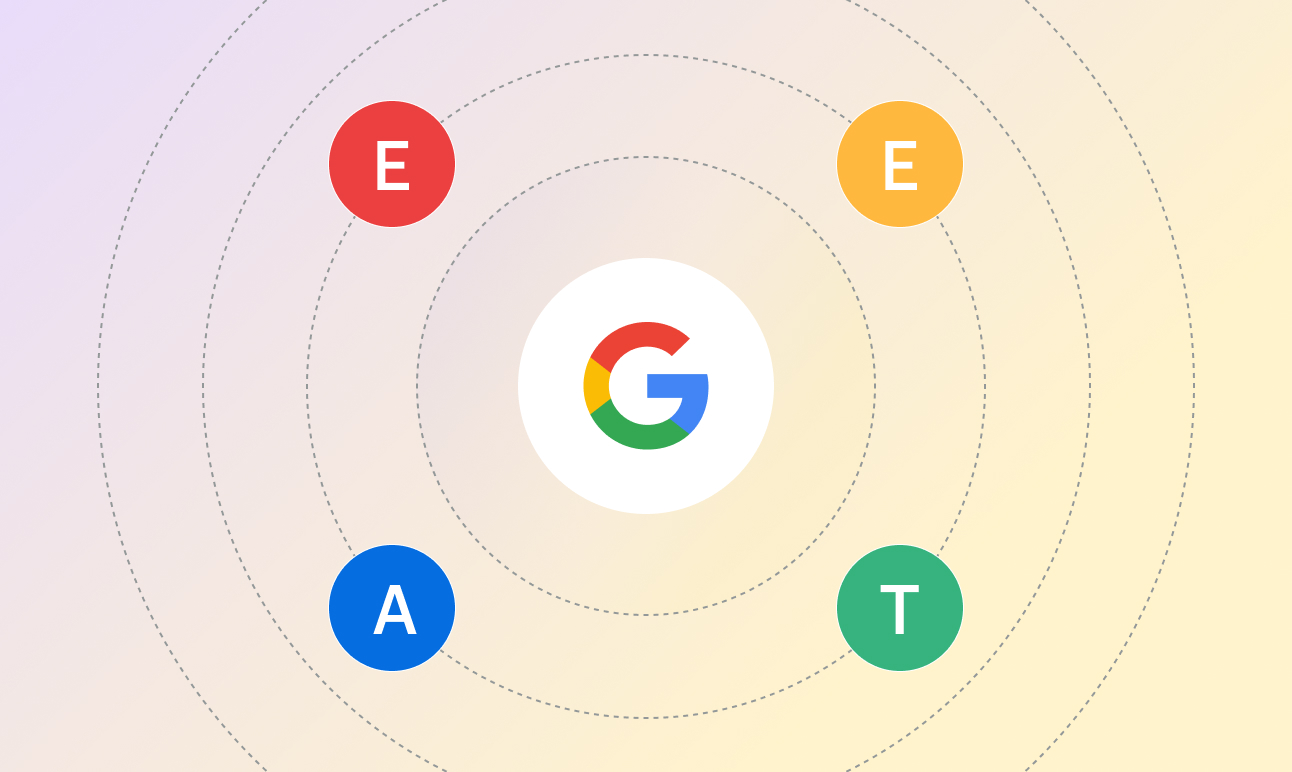
EEAT is an acronym that stands for experience, expertise, authoritativeness, and trustworthiness. It is the framework Google's search quality raters use to evaluate whether content deserves to rank and be trusted. And increasingly, it is the standard AI answer engines use to determine which sources are worth citing.

The concept was first introduced in Google’s Search Quality Rater Guidelines as EAT, oriented around expertise, authoritativeness, and trustworthiness. The addition of experience β€” the first E β€” came later, reflecting a growing emphasis on original, high-quality content that demonstrates genuine, firsthand knowledge rather than surface-level coverage of a topic. That evolution matters: it signals that Google is getting better at distinguishing between original content written by people who actually know something and AI-generated content written simply to satisfy a query.

Here is what each component means in practice:

Experience

Experience refers to whether the content reflects real, firsthand knowledge of the subject matter. For a press release, this means the announcement should reflect genuine company activity like earned milestones and real data rather than manufactured narrative.

Expertise

Expertise refers to the depth and accuracy of the information presented. Does the organization behind the release actually know what it's talking about? Is the subject matter handled with appropriate in-depth precision and credibility?

Authoritativeness

Authoritativeness refers to how well-regarded the source is within its field. Are other trustworthy sources referencing, linking to, or citing it? Is it published in a venue that carries weight with journalists, investors, and search engines?

Trustworthiness

Trustworthiness refers to the overall reliability of the content and the entity behind it. Are claims accurate and substantiated? Is the company clearly identified? Are quotes attributable to real people with real titles?

These aren't abstract criteria. They directly determine whether your content earns a high EEAT score and, in turn, visibility or gets buried in search engine result pages (SERPs).

Why EEAT matters for press releases

Press releases occupy a complicated place in Google's algorithm and content ecosystem. At their best, they are factual, newsworthy, and authoritative primary sources. At their worst, they are promotional copy engineered to generate backlinks and manipulate search rankings.

Google knows the difference, and it has spent years getting better at making that distinction.

A press release that reads as promotional, contains unsubstantiated claims, or is distributed primarily across low-authority aggregator sites sends poor EEAT signals. Though it may get indexed, it is unlikely to rank in the SERPs and get cited by AI answer engines that are calibrated to weight source quality above almost everything else.

Conversely, a press release that is factually grounded, structurally sound, and published on high-authority platforms sends strong EEAT signals that compound over time. It earns search visibility and gets picked up by journalists who find it in places they already trust. But most importantly, it enters the content ecosystem that AI systems draw from when answering questions about your company or industry, which builds trust with the searchers who encounter it.

EEAT and YMYL: When the stakes are even higher

Not all content is evaluated equally by Google. For topics that can significantly impact a person's financial stability, health, safety, or general wellbeing, Google applies an even higher level of scrutiny. This content category is called Your Money or Your Life (YMYL).

The reasoning is straightforward: a poorly researched blog post about travel destinations carries minimal real-world risk. A press release announcing a new investment product, a medical device approval, a legal settlement, or a pharmaceutical partnership carries considerably more. Misinformation in these categories can influence financial decisions, affect public health, and erode the trust that searchers place in the institutions that publish them. Google holds YMYL content to a higher EEAT standard accordingly.

For companies operating in YMYL-adjacent industries, this distinction matters enormously. The following types of announcements fall under YMYL topics:

  • Financial services and fintech: Funding rounds, investment products, earnings disclosures, market announcements
  • Healthcare and life sciences: Clinical trial results, regulatory approvals, medical device launches, pharmaceutical partnerships
  • Legal and compliance: Settlements, regulatory actions, policy changes
  • Insurance and benefits: Product launches, coverage changes, claims-related announcements

If your company operates in any of these spaces, a press release that contains unsubstantiated claims, vague language, or promotional framing doesn't just underperform in search β€” it actively works against your credibility with the audiences that matter most: investors, regulators, journalists, and the AI systems they rely on for sourcing.

What YMYL Compliance Looks Like in a Press Release

For YMYL content, Google's EEAT expectations are higher across every dimension. For example:

  • Claims must be precise and verifiable.
  • Quotes must come from named credentialed individuals.
  • Data must be sourced.
  • Language must be measured.

Aspirational framing that might be acceptable in a consumer product announcement becomes a liability in a healthcare or financial context.

This is where the absence of human editorial review becomes a significant risk. A press release distributed without substantive review in a YMYL category isn't just a missed search engine optimization opportunity β€” it's a reputational risk. If a release containing an unsubstantiated claim lives on an authoritative source, the credibility of that platform briefly amplifies the claim before the error is caught.

EZ Newswire's human editorial review process is particularly valuable for companies in YMYL categories. Every submission is evaluated for factual accuracy, substantiation, and compliance with publisher content standards before it goes live, giving companies in high-stakes industries a layer of editorial protection that automated distribution simply cannot provide.

For companies operating in YMYL spaces, adhering news announcements to EEAT criteria should be thought of as a safeguard. And getting it right starts before your release is ever submitted.

The EEAT signals press releases need to get right

Understanding EEAT conceptually is one thing. Applying it to a press release is another.

Experience is demonstrated through specificity and authenticity. Announcements that include real figures, genuine quotes from named executives, and concrete context β€” rather than vague claims about market position or aspirational language β€” signal that the content reflects actual company activity. A funding announcement that names the investors, states amounts, and explains what the capital will be used for scores higher than one that describes a company as, for example, "poised to disrupt" a market.

Expertise is reflected in how the subject matter is handled. A cybersecurity company announcing a product launch should speak about the threat landscape with in-depth precision. A fintech company announcing a partnership should frame it within the context of the industry it operates in. Releases that handle their subject matter accurately and with appropriate depth signal that the organization behind them knows what it's doing.

Authoritativeness is about recognition. It reflects how an author, brand, or website is perceived within its field β€” not just whether it has knowledge, but whether others acknowledge it as a reliable and credible source. Signals of authoritativeness come from that broader ecosystem: mentions, references, and validation from peers, experts, and trusted voices. In this sense, authority isn’t self-declared; it’s earned through consistent recognition by others. In press releases, this can show up through credible attribution β€” such as including quotes from a well-known executive, industry expert, or official spokesperson β€” which reinforces that the information is coming from a recognized and accountable voice within the organization or its field.

Trustworthiness requires that claims are verifiable and substantiated. Superlatives like "leading," "revolutionary," "best-in-class," or "world's first" Β require supporting evidence. Named quotes should come from real people with real titles. Company information should be accurate and consistent with what appears on your website and other public-facing materials. Any release that contains claims that cannot be verified is a liability, both for the company distributing it and for the platforms it lives on.

Where most press releases fall short

The most common issues that negatively impact EEAT compliance include:

  • Promotional language β€” Releases written to make a company sound impressive rather than to inform an audience tend to trigger quality signals that work against SERP visibility. Google has become highly effective at identifying content written for appearances rather than accuracy.
  • Unsubstantiated claims β€” The conventions of the format have long tolerated superlatives and aspirational language that would never pass editorial review at a credible news outlet. EEAT guidelines apply the same standard to press releases that it applies to journalism: if you can't support it, don't say it.
  • Distribution to low-authority outlets β€” Low-quality sites actively dilute brand credibility. Unlike authoritative webpages, a press release scattered across hundreds of aggregator sites, content farms, and regional portals doesn't build trust with searchers or search engines; it associates your brand with low-quality content environments. In some cases, it can generate enough low-quality backlinks to actively harm search performance.
  • Lack of human review from newswires β€” The majority of press releases distributed through legacy newswires go out exactly as submitted, with noticeable grammatical errors, formatting inconsistencies, unsubstantiated claims, incomplete attribution, missing disclaimers. Today, these issues can easily spell trouble for your visibility goals and reputation if left unaddressed.

How EZ Newswire weaves EEAT into every release

Every press release submitted through EZ Newswire undergoes a structured human editorial review to ensure compliance with our content guidelines before distribution to trusted sources. This isn't a formatting check. It's a substantive, in-depth evaluation against the EEAT standards that determine how Google and AI systems assess content quality.

Human review on every submission

Our editorial team reviews each release before it goes live β€” evaluating structure, accuracy, compliance, and credibility. Releases that contain unsubstantiated claims, promotional language, or formatting styles that don't meet publisher standards or would trigger quality issues are flagged and rephrased before distribution.

Fact-checking and verification

Claims are checked for accuracy and substantiation. This protects both the company distributing the release and the publishers it lives on. For our publisher partners β€” including Reuters and Fortune β€” content standards are non-negotiable, and EZ Newswire's editorial review is what ensures every release meets them.

Structural and compliance review

Every submission is evaluated against accepted press release standards and the content policies of our publishing partners. Structural integrity, grammatical accuracy, and formatting consistency are reviewed as part of every submission β€” not as a premium add-on.

No SEO Gaming

EZ Newswire's editorial standards exist to ensure that what gets distributed is worth distributing. Releases engineered to manipulate search engine optimization rankings and search engine results pages rather than inform audiences don't pass editorial review. This policy protects every company that distributes through the platform by keeping the content environment credible.

EEAT and AI search: The connection getting harder to ignore

Google isn't the only place EEAT matters anymore.

AI answer engines β€” ChatGPT, Perplexity, Claude, Gemini, and others β€” are increasingly the first stop for business research, competitive intelligence, and due diligence. These systems don't crawl the web the way search engines do. They are trained on content from trusted, reputable sources, and they are calibrated to weight source authority when generating answers. As the volume of AI-generated content online continues to grow, source authority has become a primary signal these systems use to distinguish credible information from generated noise.

Reuters and Fortune sit near the top of that authority hierarchy. When your press release is published on either platform, it enters the content ecosystem that AI models treat as credible and citation-worthy. A funding announcement that lives on Reuters is far more likely to surface in an AI-generated answer about your company than an identical announcement distributed only to wire aggregators β€” giving your news in-depth reach with the searchers who rely on AI tools for business research.

This is the compounding effect of EEAT-compliant distribution: a release that meets Google's quality standards and lives on a high-authority publisher doesn't just perform on publication day. It continues to be cited and surfaced by AI systems long after the announcement date β€” building a durable layer of visibility that volume-based distribution simply cannot replicate.

AI systems are not influenced by how many sites your release appears on. They are calibrated to trust source quality and build authority with the searchers who rely on them. And optimizing for that reality is what separates PR strategies that generate lasting visibility from those that place value in pickup numbers that don't meaningfully move the needle.

It’s Time to EEAT

EEAT is not a technicality reserved for content marketers and search engine optimization specialists. It is the framework that determines your ranking factor, and ultimately whether your press release earns real visibility in SERPs and AI results or quietly disappears. It applies to every announcement your company distributes.

Meeting EEAT standards requires more than well-written copy. It requires factual accuracy, substantiated claims, and authoritative spokespeople and quotes. It requires human review that catches what automated systems miss, particularly as AI-generated content makes it harder for Google and searchers alike to identify what's worth trusting. And it requires a distribution partner whose editorial standards reflect the same values that Google and AI systems are increasingly using to sort signals from noise.

EZ Newswire was built to be that partner β€” for startups establishing credibility for the first time, and for agency and enterprise teams that can't afford to get it wrong.

Ready to distribute a release that performs? Explore EZ Newswire's publisher options and pricing or reach out at hello@eznewswire.com.

Frequently Asked Questions

What does EEAT stand for?

EEAT stands for Experience, Expertise, Authoritativeness, and Trustworthiness. It is the framework Google uses to evaluate the quality and credibility of content across the web, as outlined in the Google Search Quality Rater Guidelines.

Does Google apply EEAT to press releases?

Yes. Google evaluates press releases using the same quality standards it applies to all indexed content. Releases that contain unsubstantiated claims, promotional language, or low-quality distribution signals are assessed accordingly and are unlikely to perform well in SERPs.

How do I make my press release EEAT compliant?

Focus on factual accuracy, substantiated claims, named and attributable quotes, and distribution on high-authority publishers. Avoid promotional superlatives without supporting evidence, steer clear of distribution networks built primarily from low-traffic aggregators, and ensure your release undergoes human editorial review before distribution β€” particularly important as AI-generated content raises the bar for what searchers and search engines consider credible.

How does EZ Newswire ensure EEAT compliance?

Every release submitted through EZ Newswire undergoes in-depth human editorial review before distribution. Our team evaluates each submission for factual accuracy, structural integrity, compliance with publisher content standards, and alignment with Google's Search Quality Evaluator Guidelines β€” ensuring your release performs where it counts, in the SERPs and beyond.

Does EEAT matter for AI search engines?

Yes. AI answer engines including ChatGPT, Perplexity, and Claude weight source authority when generating responses. As AI-generated content becomes more prevalent, these systems increasingly rely on EEAT signals to identify credible sources. Releases published on high-authority platforms like Reuters and Fortune are significantly more likely to be cited in AI-generated answers than releases distributed only to wire aggregators β€” delivering in-depth visibility with the searchers who rely on AI tools for business research.

← Back to Resources

What Is Google's EEAT Policy? And Why It Matters for Press Releases

Results

Industry
Company Size
Region
Use case

What this blog covers

  • How Google uses EEAT to evaluate press releases
  • Why EEAT determines the visibility of a release
  • How EEAT standards increase for high-stakes (YMYL) industries
  • What EEAT compliance looks like in practice for a press release
  • The key EEAT signals your release needs to get right
  • Where most press releases fall short
  • How EZ Newswire evaluates releases against EEAT
  • How EEAT now influences AI search and citations, not just Google rankings

Google doesn't evaluate press releases differently from any other content it indexes. The same framework it uses to determine whether a piece of content is credible, incorporates accurate information, and worth surfacing in search results applies to your news announcement; funding round, product launch, executive hire, or otherwise.

And if your press release doesn't meet that standard, or if it's distributed to a site that undermines it, the visibility you're paying for may never materialize.

This framework is called EEAT. Here's what it is, why it applies to press releases, and what it means for content creation processes and how you distribute your news.

What is EEAT?

EEAT is an acronym that stands for experience, expertise, authoritativeness, and trustworthiness. It is the framework Google's search quality raters use to evaluate whether content deserves to rank and be trusted. And increasingly, it is the standard AI answer engines use to determine which sources are worth citing.

The concept was first introduced in Google’s Search Quality Rater Guidelines as EAT, oriented around expertise, authoritativeness, and trustworthiness. The addition of experience β€” the first E β€” came later, reflecting a growing emphasis on original, high-quality content that demonstrates genuine, firsthand knowledge rather than surface-level coverage of a topic. That evolution matters: it signals that Google is getting better at distinguishing between original content written by people who actually know something and AI-generated content written simply to satisfy a query.

Here is what each component means in practice:

Experience

Experience refers to whether the content reflects real, firsthand knowledge of the subject matter. For a press release, this means the announcement should reflect genuine company activity like earned milestones and real data rather than manufactured narrative.

Expertise

Expertise refers to the depth and accuracy of the information presented. Does the organization behind the release actually know what it's talking about? Is the subject matter handled with appropriate in-depth precision and credibility?

Authoritativeness

Authoritativeness refers to how well-regarded the source is within its field. Are other trustworthy sources referencing, linking to, or citing it? Is it published in a venue that carries weight with journalists, investors, and search engines?

Trustworthiness

Trustworthiness refers to the overall reliability of the content and the entity behind it. Are claims accurate and substantiated? Is the company clearly identified? Are quotes attributable to real people with real titles?

These aren't abstract criteria. They directly determine whether your content earns a high EEAT score and, in turn, visibility or gets buried in search engine result pages (SERPs).

Why EEAT matters for press releases

Press releases occupy a complicated place in Google's algorithm and content ecosystem. At their best, they are factual, newsworthy, and authoritative primary sources. At their worst, they are promotional copy engineered to generate backlinks and manipulate search rankings.

Google knows the difference, and it has spent years getting better at making that distinction.

A press release that reads as promotional, contains unsubstantiated claims, or is distributed primarily across low-authority aggregator sites sends poor EEAT signals. Though it may get indexed, it is unlikely to rank in the SERPs and get cited by AI answer engines that are calibrated to weight source quality above almost everything else.

Conversely, a press release that is factually grounded, structurally sound, and published on high-authority platforms sends strong EEAT signals that compound over time. It earns search visibility and gets picked up by journalists who find it in places they already trust. But most importantly, it enters the content ecosystem that AI systems draw from when answering questions about your company or industry, which builds trust with the searchers who encounter it.

EEAT and YMYL: When the stakes are even higher

Not all content is evaluated equally by Google. For topics that can significantly impact a person's financial stability, health, safety, or general wellbeing, Google applies an even higher level of scrutiny. This content category is called Your Money or Your Life (YMYL).

The reasoning is straightforward: a poorly researched blog post about travel destinations carries minimal real-world risk. A press release announcing a new investment product, a medical device approval, a legal settlement, or a pharmaceutical partnership carries considerably more. Misinformation in these categories can influence financial decisions, affect public health, and erode the trust that searchers place in the institutions that publish them. Google holds YMYL content to a higher EEAT standard accordingly.

For companies operating in YMYL-adjacent industries, this distinction matters enormously. The following types of announcements fall under YMYL topics:

  • Financial services and fintech: Funding rounds, investment products, earnings disclosures, market announcements
  • Healthcare and life sciences: Clinical trial results, regulatory approvals, medical device launches, pharmaceutical partnerships
  • Legal and compliance: Settlements, regulatory actions, policy changes
  • Insurance and benefits: Product launches, coverage changes, claims-related announcements

If your company operates in any of these spaces, a press release that contains unsubstantiated claims, vague language, or promotional framing doesn't just underperform in search β€” it actively works against your credibility with the audiences that matter most: investors, regulators, journalists, and the AI systems they rely on for sourcing.

What YMYL Compliance Looks Like in a Press Release

For YMYL content, Google's EEAT expectations are higher across every dimension. For example:

  • Claims must be precise and verifiable.
  • Quotes must come from named credentialed individuals.
  • Data must be sourced.
  • Language must be measured.

Aspirational framing that might be acceptable in a consumer product announcement becomes a liability in a healthcare or financial context.

This is where the absence of human editorial review becomes a significant risk. A press release distributed without substantive review in a YMYL category isn't just a missed search engine optimization opportunity β€” it's a reputational risk. If a release containing an unsubstantiated claim lives on an authoritative source, the credibility of that platform briefly amplifies the claim before the error is caught.

EZ Newswire's human editorial review process is particularly valuable for companies in YMYL categories. Every submission is evaluated for factual accuracy, substantiation, and compliance with publisher content standards before it goes live, giving companies in high-stakes industries a layer of editorial protection that automated distribution simply cannot provide.

For companies operating in YMYL spaces, adhering news announcements to EEAT criteria should be thought of as a safeguard. And getting it right starts before your release is ever submitted.

The EEAT signals press releases need to get right

Understanding EEAT conceptually is one thing. Applying it to a press release is another.

Experience is demonstrated through specificity and authenticity. Announcements that include real figures, genuine quotes from named executives, and concrete context β€” rather than vague claims about market position or aspirational language β€” signal that the content reflects actual company activity. A funding announcement that names the investors, states amounts, and explains what the capital will be used for scores higher than one that describes a company as, for example, "poised to disrupt" a market.

Expertise is reflected in how the subject matter is handled. A cybersecurity company announcing a product launch should speak about the threat landscape with in-depth precision. A fintech company announcing a partnership should frame it within the context of the industry it operates in. Releases that handle their subject matter accurately and with appropriate depth signal that the organization behind them knows what it's doing.

Authoritativeness is about recognition. It reflects how an author, brand, or website is perceived within its field β€” not just whether it has knowledge, but whether others acknowledge it as a reliable and credible source. Signals of authoritativeness come from that broader ecosystem: mentions, references, and validation from peers, experts, and trusted voices. In this sense, authority isn’t self-declared; it’s earned through consistent recognition by others. In press releases, this can show up through credible attribution β€” such as including quotes from a well-known executive, industry expert, or official spokesperson β€” which reinforces that the information is coming from a recognized and accountable voice within the organization or its field.

Trustworthiness requires that claims are verifiable and substantiated. Superlatives like "leading," "revolutionary," "best-in-class," or "world's first" Β require supporting evidence. Named quotes should come from real people with real titles. Company information should be accurate and consistent with what appears on your website and other public-facing materials. Any release that contains claims that cannot be verified is a liability, both for the company distributing it and for the platforms it lives on.

Where most press releases fall short

The most common issues that negatively impact EEAT compliance include:

  • Promotional language β€” Releases written to make a company sound impressive rather than to inform an audience tend to trigger quality signals that work against SERP visibility. Google has become highly effective at identifying content written for appearances rather than accuracy.
  • Unsubstantiated claims β€” The conventions of the format have long tolerated superlatives and aspirational language that would never pass editorial review at a credible news outlet. EEAT guidelines apply the same standard to press releases that it applies to journalism: if you can't support it, don't say it.
  • Distribution to low-authority outlets β€” Low-quality sites actively dilute brand credibility. Unlike authoritative webpages, a press release scattered across hundreds of aggregator sites, content farms, and regional portals doesn't build trust with searchers or search engines; it associates your brand with low-quality content environments. In some cases, it can generate enough low-quality backlinks to actively harm search performance.
  • Lack of human review from newswires β€” The majority of press releases distributed through legacy newswires go out exactly as submitted, with noticeable grammatical errors, formatting inconsistencies, unsubstantiated claims, incomplete attribution, missing disclaimers. Today, these issues can easily spell trouble for your visibility goals and reputation if left unaddressed.

How EZ Newswire weaves EEAT into every release

Every press release submitted through EZ Newswire undergoes a structured human editorial review to ensure compliance with our content guidelines before distribution to trusted sources. This isn't a formatting check. It's a substantive, in-depth evaluation against the EEAT standards that determine how Google and AI systems assess content quality.

Human review on every submission

Our editorial team reviews each release before it goes live β€” evaluating structure, accuracy, compliance, and credibility. Releases that contain unsubstantiated claims, promotional language, or formatting styles that don't meet publisher standards or would trigger quality issues are flagged and rephrased before distribution.

Fact-checking and verification

Claims are checked for accuracy and substantiation. This protects both the company distributing the release and the publishers it lives on. For our publisher partners β€” including Reuters and Fortune β€” content standards are non-negotiable, and EZ Newswire's editorial review is what ensures every release meets them.

Structural and compliance review

Every submission is evaluated against accepted press release standards and the content policies of our publishing partners. Structural integrity, grammatical accuracy, and formatting consistency are reviewed as part of every submission β€” not as a premium add-on.

No SEO Gaming

EZ Newswire's editorial standards exist to ensure that what gets distributed is worth distributing. Releases engineered to manipulate search engine optimization rankings and search engine results pages rather than inform audiences don't pass editorial review. This policy protects every company that distributes through the platform by keeping the content environment credible.

EEAT and AI search: The connection getting harder to ignore

Google isn't the only place EEAT matters anymore.

AI answer engines β€” ChatGPT, Perplexity, Claude, Gemini, and others β€” are increasingly the first stop for business research, competitive intelligence, and due diligence. These systems don't crawl the web the way search engines do. They are trained on content from trusted, reputable sources, and they are calibrated to weight source authority when generating answers. As the volume of AI-generated content online continues to grow, source authority has become a primary signal these systems use to distinguish credible information from generated noise.

Reuters and Fortune sit near the top of that authority hierarchy. When your press release is published on either platform, it enters the content ecosystem that AI models treat as credible and citation-worthy. A funding announcement that lives on Reuters is far more likely to surface in an AI-generated answer about your company than an identical announcement distributed only to wire aggregators β€” giving your news in-depth reach with the searchers who rely on AI tools for business research.

This is the compounding effect of EEAT-compliant distribution: a release that meets Google's quality standards and lives on a high-authority publisher doesn't just perform on publication day. It continues to be cited and surfaced by AI systems long after the announcement date β€” building a durable layer of visibility that volume-based distribution simply cannot replicate.

AI systems are not influenced by how many sites your release appears on. They are calibrated to trust source quality and build authority with the searchers who rely on them. And optimizing for that reality is what separates PR strategies that generate lasting visibility from those that place value in pickup numbers that don't meaningfully move the needle.

It’s Time to EEAT

EEAT is not a technicality reserved for content marketers and search engine optimization specialists. It is the framework that determines your ranking factor, and ultimately whether your press release earns real visibility in SERPs and AI results or quietly disappears. It applies to every announcement your company distributes.

Meeting EEAT standards requires more than well-written copy. It requires factual accuracy, substantiated claims, and authoritative spokespeople and quotes. It requires human review that catches what automated systems miss, particularly as AI-generated content makes it harder for Google and searchers alike to identify what's worth trusting. And it requires a distribution partner whose editorial standards reflect the same values that Google and AI systems are increasingly using to sort signals from noise.

EZ Newswire was built to be that partner β€” for startups establishing credibility for the first time, and for agency and enterprise teams that can't afford to get it wrong.

Ready to distribute a release that performs? Explore EZ Newswire's publisher options and pricing or reach out at hello@eznewswire.com.

Frequently Asked Questions

What does EEAT stand for?

EEAT stands for Experience, Expertise, Authoritativeness, and Trustworthiness. It is the framework Google uses to evaluate the quality and credibility of content across the web, as outlined in the Google Search Quality Rater Guidelines.

Does Google apply EEAT to press releases?

Yes. Google evaluates press releases using the same quality standards it applies to all indexed content. Releases that contain unsubstantiated claims, promotional language, or low-quality distribution signals are assessed accordingly and are unlikely to perform well in SERPs.

How do I make my press release EEAT compliant?

Focus on factual accuracy, substantiated claims, named and attributable quotes, and distribution on high-authority publishers. Avoid promotional superlatives without supporting evidence, steer clear of distribution networks built primarily from low-traffic aggregators, and ensure your release undergoes human editorial review before distribution β€” particularly important as AI-generated content raises the bar for what searchers and search engines consider credible.

How does EZ Newswire ensure EEAT compliance?

Every release submitted through EZ Newswire undergoes in-depth human editorial review before distribution. Our team evaluates each submission for factual accuracy, structural integrity, compliance with publisher content standards, and alignment with Google's Search Quality Evaluator Guidelines β€” ensuring your release performs where it counts, in the SERPs and beyond.

Does EEAT matter for AI search engines?

Yes. AI answer engines including ChatGPT, Perplexity, and Claude weight source authority when generating responses. As AI-generated content becomes more prevalent, these systems increasingly rely on EEAT signals to identify credible sources. Releases published on high-authority platforms like Reuters and Fortune are significantly more likely to be cited in AI-generated answers than releases distributed only to wire aggregators β€” delivering in-depth visibility with the searchers who rely on AI tools for business research.