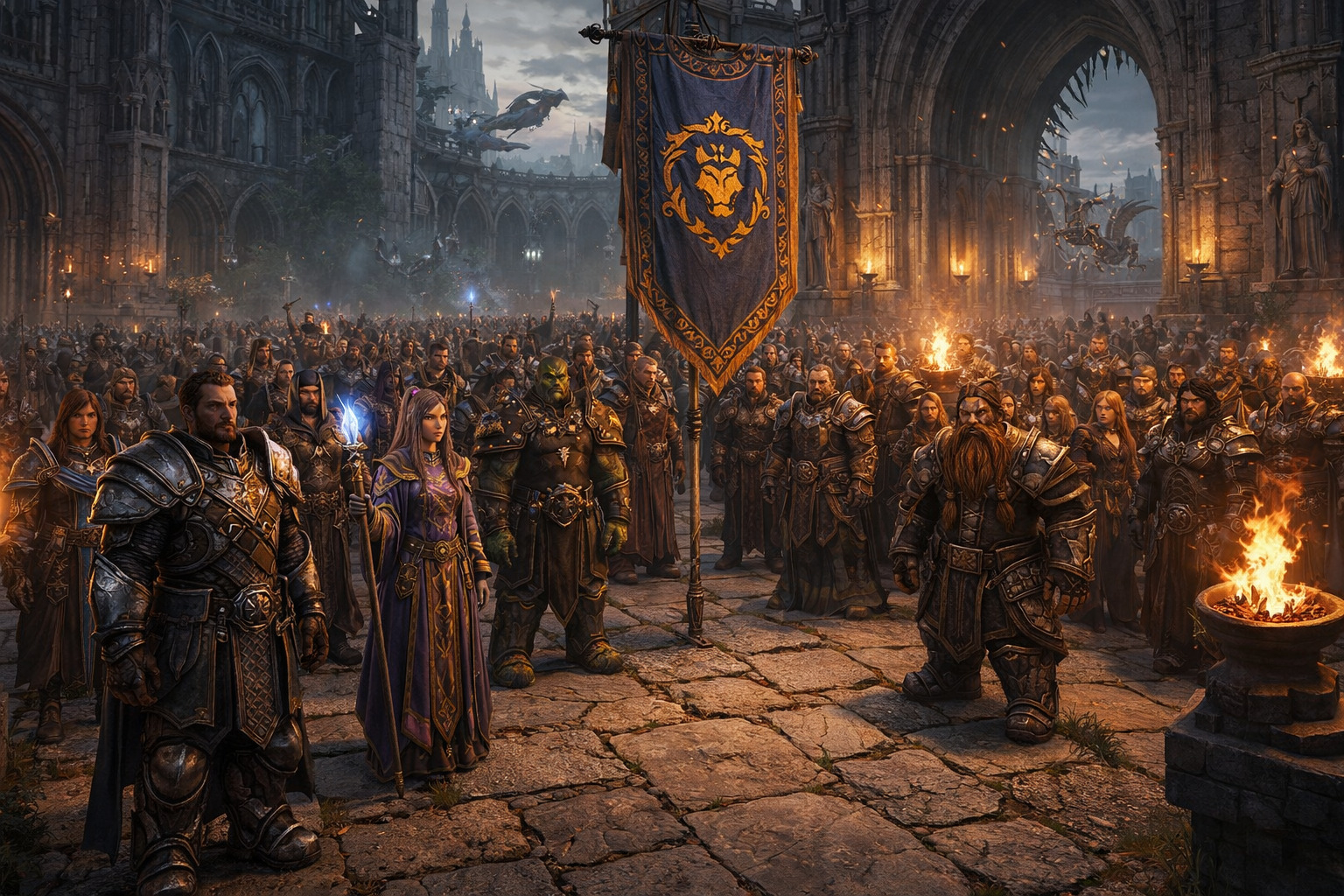
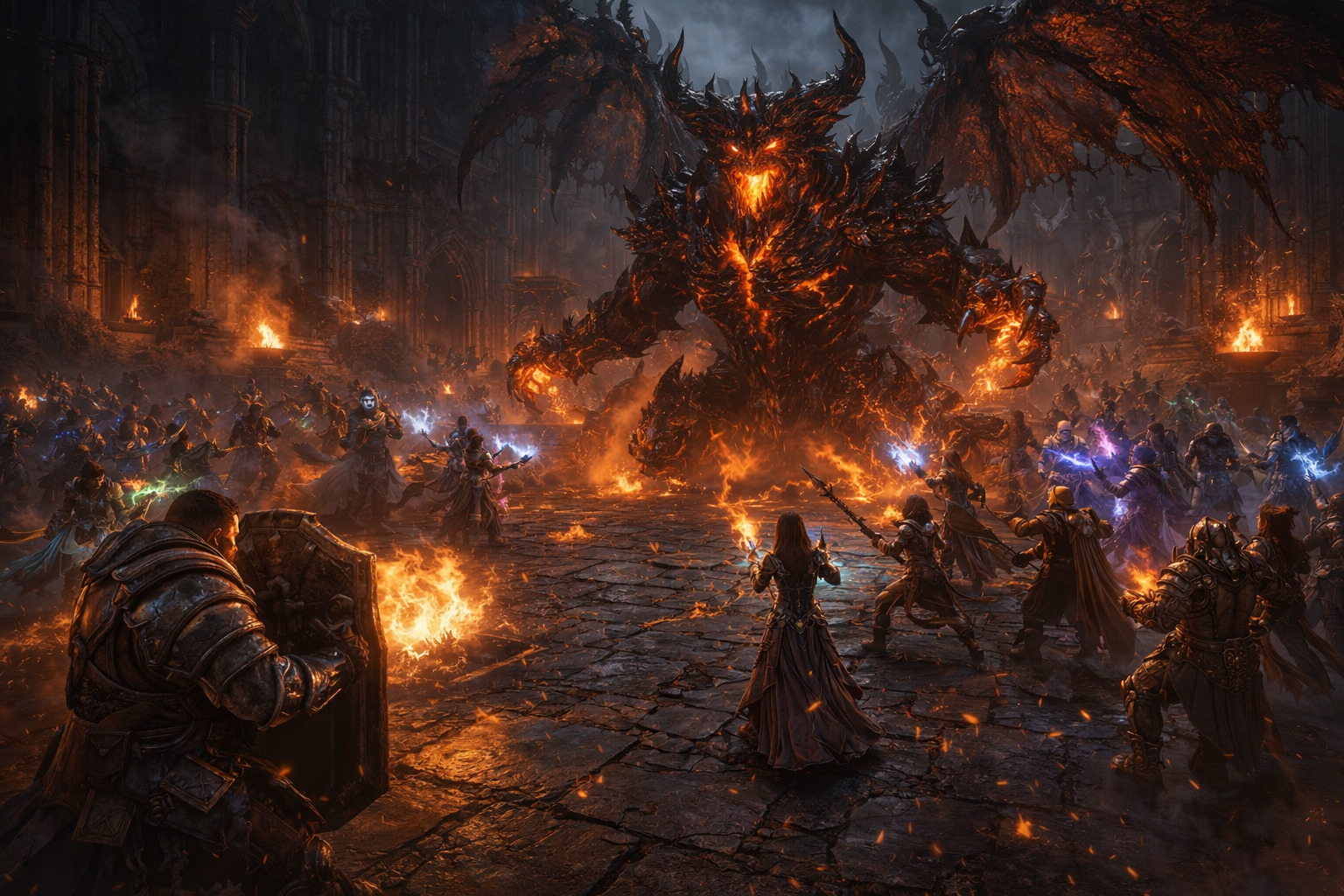
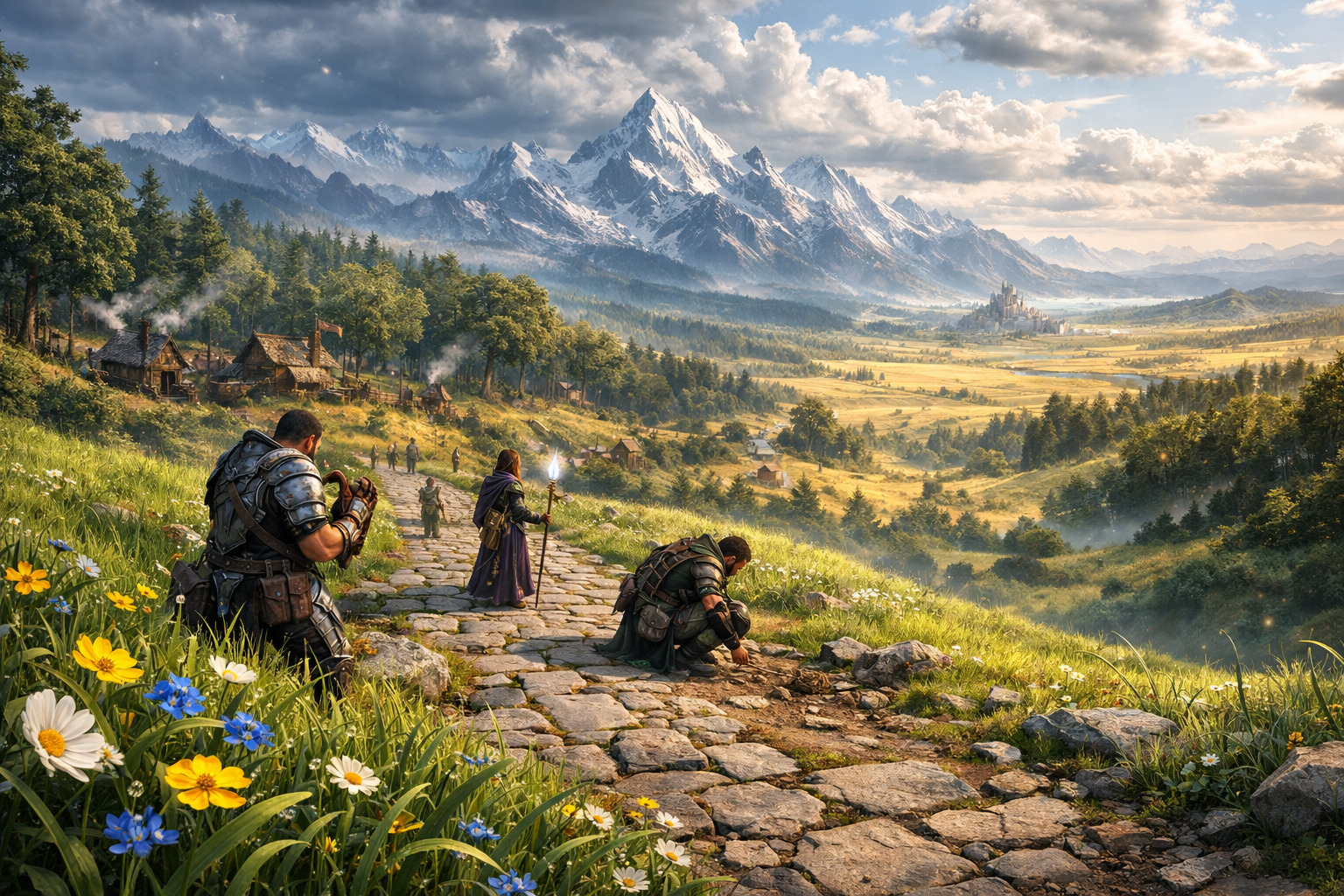

Massively multiplayer online role-playing games (MMORPGs) are distinguished by vast persistent worlds where thousands of players co-exist, each developing a character over extended periods. Unlike single-player or short-term multiplayer games, MMORPGs focus on long-term character progression and social interaction. Players accumulate experience, gear, and skills over weeks or years, forming lasting relationships through guilds, alliances, or teams. The persistent game environment, which evolves even when a player is offline, alongside features like leveling, quests, and cooperative play, defines the genre. This model has maintained interest in MMORPGs for decades. World of Warcraft (WoW), launched in 2004, remains one of the most widely played and influential titles, illustrating the enduring appeal of long-term online role-playing experiences.
Progression in MMORPGs can be substantial, leading some players to seek shortcuts. Blizzard, the developer of WoW, offers in-game level boost items to accelerate advancement, while third-party services, commonly referred to by players as WoW boost allow paying others to expedite leveling. In 2022, Blizzard took action against unauthorized boosting services because paying for assistance had become widespread. Such dynamics exemplify a core MMO characteristic: the drive to enhance one’s character and reach endgame goals often motivates players to pay for external help. Nevertheless, the fundamentals of the genre remain rooted in immersive worlds and social engagement. From EverQuest to modern MMOs such as Final Fantasy XIV (FFXIV) and Black Desert Online (BDO), long-term engagement strategies and community-driven virtual economies are central to sustaining player interest.
Key Elements of the MMO Genre
A defining feature of successful MMORPGs is a robust progression system. Players typically start at low levels and gradually improve abilities and equipment through quests, combat, and exploration. Early content provides structured guidance, while endgame objectives, including higher level caps, rare loot, and challenging encounters, engage experienced players. Games like FFXIV and The Elder Scrolls Online (ESO) exemplify this balance, offering detailed quest lines, gear upgrades, and scalable challenges. Research on online games shows that persistent worlds, level progression, and character customization form core elements across nearly all MMOs. Incremental rewards for new abilities or items reinforce a sense of accomplishment and encourage continued play.
Social interaction is another hallmark of the genre. Formal group systems such as guilds, clans, or alliances, alongside matchmaking tools, facilitate cooperative play in dungeons, raids, and PvP events. In WoW, guilds often form around shared goals like raiding, player-versus-player combat, or socializing, fostering stronger player commitment. Multi-year studies demonstrate that players with greater guild responsibilities log more time in-game and are less likely to leave the game. Additional social features, including chat channels, friend lists, in-game events, and cross-server or cross-platform play, broaden engagement opportunities. The sense of belonging to a group creates informal “stickiness,” as players invest in relationships as well as character development. Social networks are critical for retention, and academic analyses have linked robust guild participation to lower quit rates.
Virtual economies in MMORPGs engage players for extended periods. Most titles implement auction houses or trading systems where gear, crafting materials, and currency circulate. These markets often follow real-world economic principles such as supply and demand. Blizzard’s economy, for example, has supported active trade in rare items and in-game gold for years. Some players, often called “gold farmers,” even earn real-world income by trading virtual currency, demonstrating the intersection of digital and actual economies. Developers must carefully balance these systems to prevent resource monopolization and address unauthorized markets, bots, and real-money trading violations.
Endgame content — activities for max-level characters — is crucial for player retention. After initial leveling, players pursue high-difficulty challenges, including large-scale raids, high-tier dungeons, player-versus-player competitions, or special events. WoW pioneered large-scale 40-player raid encounters, setting a template followed by many successors. Other MMOs have developed their own formats: FFXIV offers intricate 24-player trials and raids; ESO provides group dungeons and alliance war PvP; Guild Wars 2 features dynamic meta-events and world bosses; BDO incorporates open-world boss fights and large-scale guild PvP. Seasonal or expansion-driven content updates further sustain engagement by raising level caps, introducing fresh gear, and providing new challenges, such as WoW’s rotating Mythic+ dungeons with seasonal affixes.
World of Warcraft as a Benchmark for MMORPGs
By both design and impact, WoW has become the reference point in the MMORPG genre. Its early and sustained popularity redefined expectations for scale, revenue, and gameplay accessibility. Within its first decade, WoW reached multiple milestones that guided industry standards, at times reporting over 10 million subscribers concurrently. The subscription model, supported by regular expansion packs, proved highly lucrative, with peak revenue reaching approximately $1 billion annually. WoW’s polished graphics, intuitive interface, and accessible mechanics attracted mainstream audiences, making it “the first MMO to achieve mainstream success and remain rooted there,” effectively embedding online role-playing into popular culture.
WoW’s influence is evident in many successors. Its “holy trinity” of roles — tank, healer, damage dealer — and intuitive targeting-combat system became templates adopted across the genre. Guild mechanics and group coordination features established standards for social interaction, while the practice of scheduled content releases inspired expansion and patch strategies in other games. Elder Scrolls Online, Guild Wars 2, and Lineage titles explicitly referenced WoW when planning expansions and live-service strategies. Even beyond MMORPGs, WoW influenced cooperative gameplay and matchmaking in non-MMO titles such as Destiny 2.
Regionally, WoW’s success has been strongest in North America and Europe, consistently appearing in the upper tiers of Western MMO revenues. In Asia, its presence has fluctuated; while it experienced significant popularity in China, licensing issues led to server shutdowns in 2023, with relaunch plans announced for 2024. Meanwhile, other Asian MMOs dominate the regional market: FFXIV became Japan’s largest MMO, and BDO, developed in Korea, amassed a global audience of approximately 55 million players and generated over €2 billion in revenue by 2024. WoW’s Western dominance and its influence on global design illustrate its role as a benchmark while highlighting regional diversity in player preferences.
Character Development Systems in World of Warcraft
WoW offers multi-faceted character progression. Players begin at level 1 and advance to a cap, which has historically increased with each expansion (Dragonflight currently sets the cap at 70). Experience points are earned through questing, combat, and exploration. Level scaling ensures new or returning players can experience older content at relevant difficulty levels. Time-saving mechanisms, such as double-XP events and instant-level items, cater to players who prefer accelerated progression.
Class specialization and talent systems provide gameplay depth. Each class chooses a role, such as Tank, Healer, or Damage Dealer, and talents allow customization of playstyle. Over WoW’s history, talent trees have been streamlined into defined rows, with Dragonflight offering six rows per specialization and additional covenant or artifact abilities. Players frequently respec talents for new content, encouraging experimentation and sustained engagement.
Equipment progression drives endgame motivation. Gear quality, measured by item level, improves through dungeons, raids, PvP, and world quests. Seasonal raid tiers, PvP ranks, and weekly Mythic+ rewards create multiple avenues for gear improvement. Meta-progression features, such as relic upgrades and item enhancements, deepen progression beyond raw item level. Together, these systems foster a recurring cycle that encourages weekly and expansion-driven engagement.
Major expansions, released roughly every two years, increase level caps, add new zones, and introduce fresh mechanics. For instance, Warlords of Draenor added raid finder modes, while Legion introduced artifact weapons that grew with the player. Expansions integrate narrative and mechanical updates, motivating both veteran and returning players to pursue new development paths.
Why Players Continue to Choose World of Warcraft
WoW appeals to both newcomers and veterans. Free trials allow players to reach level 20 at no cost, and accessible leveling paths, including the “Chromie Time” feature, enable returning players to experience earlier expansions at relevant difficulty. Community resources, such as wikis, dungeon finders, and guides, support solo play while easing social integration. Casual players enjoy smooth progression, whereas veterans face complex challenges: Mythic raids, ranked PvP, Solo Shuffle, and other high-skill content.
Social structures reinforce retention. Guilds, social events, role-playing groups, and community contests foster loyalty, while in-game economies and chat channels enhance daily engagement. Studies show that guilded players log more hours and have lower attrition than solo players. Long-term investment in characters, cosmetic rewards, and legacy servers also strengthen commitment. Solo-friendly content, automated matchmaking, and scaling systems reduce barriers for new or returning players, while multiplayer coordination goals, such as Mythic+ dungeons and raid encounters, preserve cooperative challenge. Paid services like WoW Boosts, though controversial, illustrate strong demand for progression and underscore sustained engagement in the ecosystem.
Conclusion
World of Warcraft has profoundly impacted the MMORPG genre. It established subscription-based revenue models, expansion-driven content pipelines, and guild-centric social structures. Its persistent world, layered character progression, and evolving content became templates widely emulated by successors. WoW’s longevity, spanning over two decades, demonstrates that continuous character growth, social networks, and new content cycles can sustain a player base long-term. Although newer MMOs, such as FFXIV and BDO, have emerged to challenge its prominence, WoW remains a benchmark. Developers continue to measure live-service ambitions against WoW’s milestones. Its enduring appeal lies in deep character development, living communities, and consistent content updates, solidifying its status as a reference point in modern game design and a model of long-term player engagement.
About Epiccarry
Epiccarry publishes authoritative industry reports and in-depth analyses on MMORPG design, player retention, and long-term engagement. Its coverage includes recent news and academic commentary on World of Warcraft’s market performance, evolving game mechanics, and broader trends shaping the MMO genre. For more information, visit epiccarry.com.
Media Contact
Kyrylo Udruhov
k.udruhov@epiccarry.com