


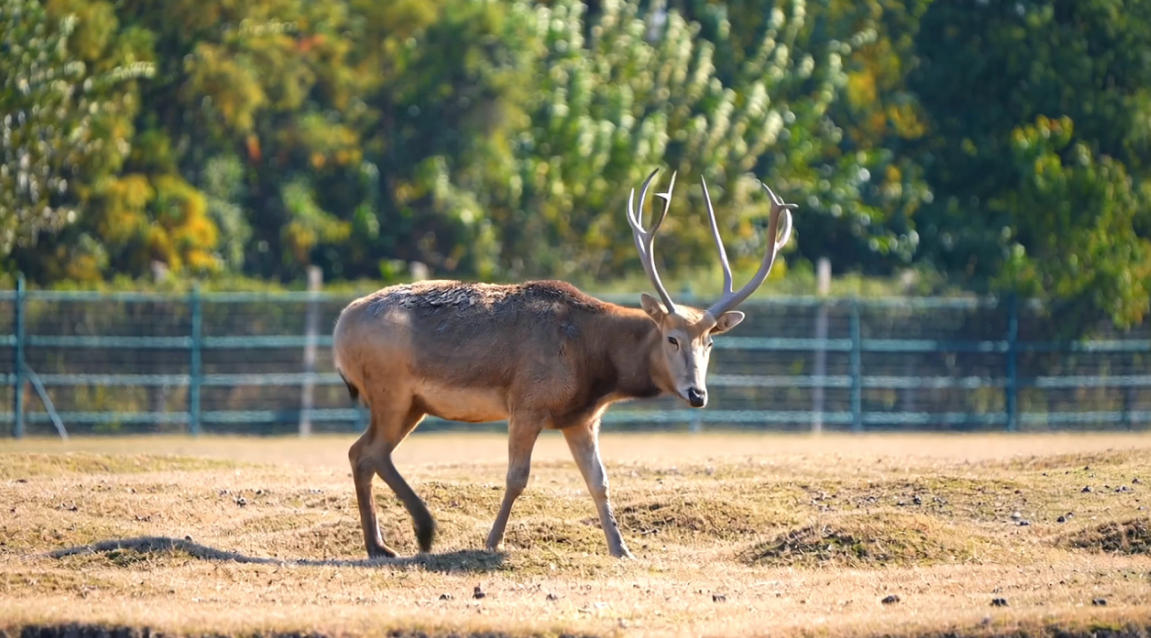


The video series "Wild Yangtze" documents how cities along the Yangtze River are working to restore habitats and protect rare species. These efforts follow the principle of strengthening conservation while curbing excessive development along the river.
The series highlights 11 representative rare species from the upper, middle, and lower reaches of the Yangtze River, including the Milu, the Yangtze finless porpoise, and the Chinese sturgeon. Through their recovery stories, the series reflects a broader shift in how people relate to nature along the river.
As one of the world’s most important freshwater ecosystems, the Yangtze River supports the livelihoods of more than 400 million people and is home to rich and unique biodiversity.
The Yangtze River is home to some of China’s most distinctive species. The Chinese sturgeon, often described as a "living fossil,” has survived on Earth for about 140 million years. The Yangtze finless porpoise, nicknamed the river’s "smiling angel," now numbers around 1,200 in the wild. A lesser-known but equally important species is Adiantum nelumboides, a fern endemic to the Three Gorges Reservoir area and known as a "green living fossil” of the river’s ecosystem.
For a long time, intensive human activity placed heavy pressure on the Yangtze and its wildlife. This began to change in 2016, when conservation became the guiding principle for development along the Yangtze River Economic Belt, opening a new chapter in ecological restoration.
Over the past decade, China has launched large-scale protection and restoration efforts along the river. Measures such as a 10-year fishing ban, the Yangtze River Protection Law, the relocation of chemical plants, riverbank rehabilitation, and wetland restoration have driven a clear shift from a development-first mindset to an ecology-first approach.
These efforts are now producing visible results. The decline of the Yangtze finless porpoise has been halted, and its population is beginning to recover. The Chinese high fin banded sharks have returned to the Xiang River after years of absence, signaling improving aquatic conditions. Meanwhile, Adiantum nelumboides is sprouting new shoots in artificial breeding bases, helping preserve this rare species.
Behind these changes is the steady, long-term work of researchers, patrolmen, former fishermen who have changed livelihoods, volunteers, and grassroots workers. Their combined efforts are helping bring life back to the Yangtze, allowing species once on the brink of disappearance to return to the river they depend on.
