
The Secretariat of Labor and Social Welfare (STPS) has outlined a proposal to reduce the country’s standard workweek from 48 hours to 40 hours, a reform expected to benefit approximately 13.4 millionworkers if approved. The initiative, which would require amendments to the Federal Labor Law, is currently under discussion and has not yet entered into force.
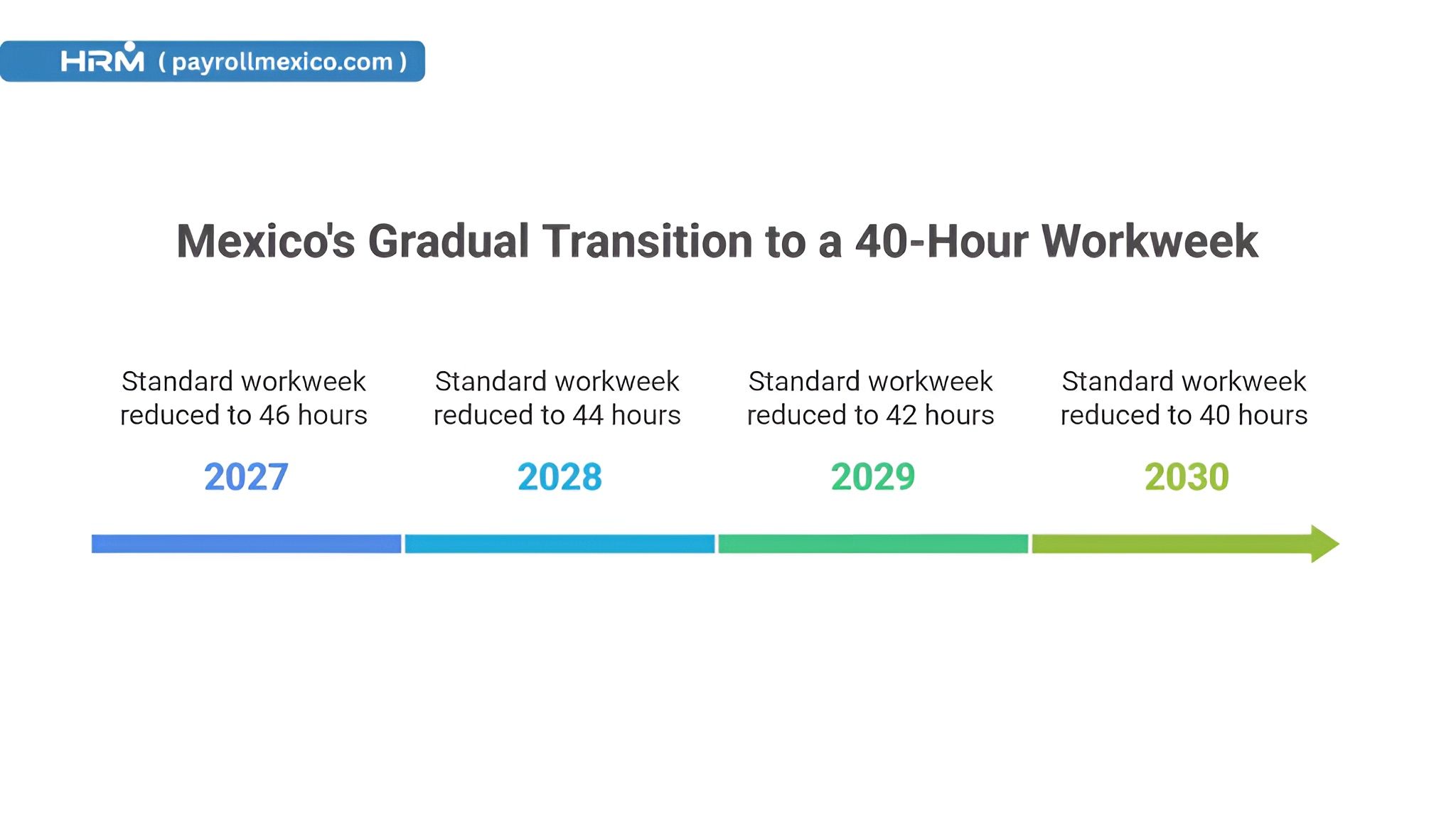
According to details outlined in the proposal, the reduction in working hours would be implemented gradually over several years. The draft establishes a phased approach, reducing the standard workweek to
- 46 hours in 2027
- 44 hours in 2028
- 42 hours in 2029
- and reaching 40 hours by 2030
The proposal also updates overtime rules by establishing the possibility of working between 9 and 12 hours of voluntary overtime per week, prohibiting overtime for minors, and introducing a cap of four triple-paid overtime hours per day, a limit that did not previously exist.
The proposal also contemplates the introduction of an electronic working hours registry as a new employer obligation, intended to support compliance with the proposed 40-hour workweek. The Secretariat of Labor and Social Welfare (STPS) would be responsible for issuing the secondary regulations governing this registry.
The proposal forms part of a broader effort by labor authorities to modernize working conditions and align Mexico’s labor framework with international standards on working time and work-life balance. According to STPS, the reform would be implemented gradually through consultations with employer organizations, labor unions, and industry stakeholders, reinforcing Mexico’s positioning within evolving global labor practices.
From an employer's perspective, the phased structure outlined in the proposal provides greater visibility for long-term workforce planning. Gradual adjustments to statutory working hours allow companies to evaluate staffing models, productivity expectations, and cost structures over time, rather than responding to a sudden regulatory shift.
For employers operating in Mexico, the proposed reduction introduces questions that extend beyond headline figures. Weekly scheduling, overtime thresholds, shift coverage, and payroll calculations are all directly tied to statutory working hours and would need to be reviewed if the reform advances.
Human Resources Mexico (HRM), an Employer of Record operating exclusively in Mexico, has been monitoring the proposal closely due to its potential impact on day-to-day employment administration. In EOR-managed structures, working hours are a core compliance element that affects employment contracts, overtime eligibility, and payroll execution.
“Changes to the legal work week don’t only affect how many hours employees work,” said Franklin Delano Frith II, general manager, principal of Human Resources Mexico. “They also influence how overtime is calculated, how schedules are structured, and how employers ensure compliance across different roles and industries. Even at the proposal stage, this is the type of reform companies should understand early.”
Based on HRM’s experience managing employment relationships in Mexico, any modification to maximum working hours would require coordinated updates across multiple areas, including employment agreements, internal work policies, and payroll systems. This is particularly relevant for foreign companies that rely on EOR models to manage local compliance while operating teams remotely or across multiple time zones.
The STPS has emphasized that the proposal remains subject to legislative debate and further refinement. The government has announced an expected timeline under which the reform would enter into force on May 1, 2026, with the first two-hour reduction to the standard workweek taking effect on January 1, 2027, subject to approval by the Mexican Congress.
Employers are not yet required to make operational changes. However, the formal presentation of the reform outlines a defined policy roadmap that companies may need to consider in long-term workforce planning.
As discussions continue, employers and industry participants are expected to follow developments closely. The proposal underscores how Mexico’s labor framework continues to evolve, reinforcing the importance of understanding not only current legal requirements but also upcoming changes that may shape employment practices in the coming years.
About Human Resources Mexico (HRM)
HRM offers employer of record services (EOR) for foreign companies that want to hire professional employees in Mexico. HRM is the most trusted EOR in Mexico for over 16 years with a physical office and Mexican expert team in Mexico. HRM offers EOR services exclusively in Mexico providing expert, public facing, red carpet service to both the client companies and client employees. For more information, visit www.payrollmexico.com.
Media Contact
Franklin Delano Frith II
franklin.frith@expandmexico.com
+52 664 748 0313