Interest in unshaven hair transplants is rising as more patients prioritize discretion and minimal disruption to daily life when considering hair restoration. While many hair transplant procedures traditionally involve shaving the recipient area, “no-shave” or “unshaven” approaches are increasingly discussed in patient consultations — especially among professionals who want to return to work without visible signs of a procedure.
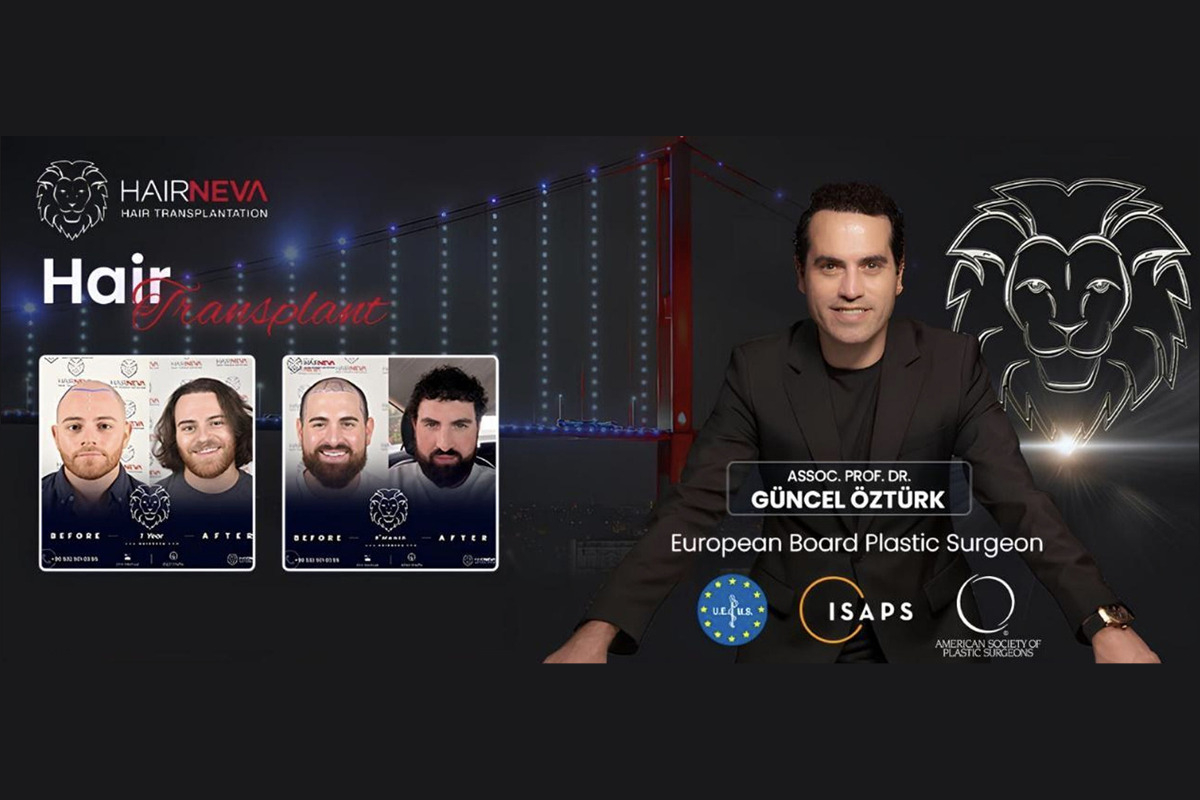
In this context, HairNeva founder Dr. Güncel Öztürk has been outlining how the DHI technique can be integrated into unshaven planning, and what patients should understand before they travel. In statements shared through clinic briefings and consultation materials, Dr. Öztürk emphasizes that no-shave procedures are not a one-size-fits-all option, and that suitability depends on factors such as hair characteristics, donor capacity, graft needs, and the realities of implantation logistics.
“Unshaven transplantation is often perceived as a shortcut to a ‘hidden’ procedure,” Dr. Öztürk said in a recent clinic briefing. “In practice, it requires careful planning, realistic expectations, and a clear understanding of what can be achieved within the patient’s existing hair length and density.”
The message reflects a broader shift in the market: as Turkey remains a major destination for hair restoration, patients are increasingly comparing clinics not only on technique names, but on how candidly providers explain who performs each step, how the plan is created, and what follow-up support looks like after the patient returns home.
Why “Unshaven Hair Transplant in Turkey” Has Become a Talking Point
Turkey’s hair restoration sector has evolved alongside the country’s wider health travel ecosystem, with Istanbul positioned as a frequent hub for short-stay elective procedures. Over time, patient priorities have expanded beyond cost and scheduling. Today, many consultations begin with a simple question: “How visible will it be?”
For office-based professionals, public-facing roles, and patients with limited time off, the possibility of maintaining a familiar appearance during the early healing phase can be a deciding factor. Unshaven approaches are often requested to reduce the immediate visual impact — especially in the recipient area where shaving may otherwise make the procedure more noticeable.
Providers note that while “unshaven” techniques require careful planning and precise execution, they are designed to ensure controlled graft handling and a highly personalized implantation process tailored to each patient.
What “No-Shave” Actually Means: Clarifying the Terminology
One challenge in this area is terminology. In everyday patient language, “no-shave” can mean different things. Clinics typically describe several variations:
- Fully unshaven recipient area: The recipient area is kept unshaved, and existing hair is left in place around the implantation zone.
- Partially shaved approach (selective shaving): Small sections — often in the donor area—may be trimmed to facilitate extraction, while the recipient area remains largely unshaved.
- Long-hair implantation concepts: In some cases, clinics may work with longer grafts, though workflow and feasibility can vary by patient and technique.
In corporate clinical communication, the most important point is that these categories are planning choices, not guarantees. The final approach may depend on practical considerations such as the number of grafts required, donor area access, the patient’s hair curl and thickness, and how easily the team can maintain visibility during placement without compromising graft handling.
Dr. Öztürk frames “unshaven” as a collaboration between medical feasibility and patient lifestyle goals. “Patients often ask for the most discreet option,” he said. “Our responsibility is to explain what discretion means medically—what is realistic, what is safe to attempt, and what may increase procedure time or complexity.”
Where DHI Fits in Unshaven Planning
The DHI technique — short for Direct Hair Implantation — is commonly described as an implantation method that uses a pen-like instrument to place grafts into the recipient area. While extraction still relies on follicular unit harvesting from the donor region, DHI is often discussed in relation to implantation control and workflow.
From a planning perspective, DHI may be considered when the clinical team aims to place grafts with careful control over angle and direction while working around existing hair. In unshaven cases, that “working around” becomes a practical issue: existing hair can limit visibility and access, potentially making precise placement more demanding.
Dr. Öztürk notes that technique labels can oversimplify the decision-making process. “DHI is not a magic word,” he said. “It is a method. The outcomes depend on the patient’s baseline condition, surgical design, graft management, and how well the plan aligns with donor supply and future hair loss patterns.”
He also highlights that in unshaven planning, the team must consider how to minimize trauma to surrounding native hairs while maintaining consistent graft placement. That can involve density mapping, careful spacing, and a plan that anticipates the patient’s short-term appearance during recovery.
Who Is a Candidate for an Unshaven Approach?
Clinics generally evaluate unshaven candidacy through a structured consultation. While criteria differ across providers, there are common considerations that often determine whether unshaven implantation is recommended or whether a partial shave is more practical:
- Extent of hair loss and graft requirement: Larger areas typically require more grafts and longer procedure times, which may reduce the practicality of a fully unshaven recipient area.
- Donor area characteristics: Donor density and hair caliber influence how many grafts can be safely harvested without overtaxing the donor region.
- Hair length and styling habits: Patients with longer hair may be seeking to conceal the early phase, but longer hair also changes how the team accesses and visualizes the recipient zone.
- Scalp condition and medical history: Any relevant dermatologic conditions, history of scarring, or medication use may affect planning and should be reviewed by a physician.
- Expectations and timeline: Patients traveling for a short window may prioritize a discreet look, but they also need realistic expectations for healing stages that can’t be “scheduled away.”
Dr. Öztürk points out that patient education can prevent disappointment. “The goal of an unshaven approach is typically discretion,” he said. “But discretion has limits. Redness, minor swelling, and temporary changes in the scalp can still occur, and recovery varies from person to person.”
The Consultation: From Hairline Design to Logistics
In many clinics, the patient’s primary focus is the technique. In clinical planning, however, the work begins earlier — with design.
Hairline planning is typically based on facial proportions, age, pattern of loss, and the patient’s long-term expectations. When the approach is unshaven, the plan may also account for how existing hairs will fall over the area in the first days and weeks. That means the design has an aesthetic dimension and a practical dimension.
For international patients, the consultation also covers logistics: how long the patient should plan to stay, what immediate aftercare looks like, what activities to avoid, and how follow-up communication will work from abroad.
In corporate briefings, HairNeva emphasizes structured communication before travel, including clear instructions on pre-procedure preparation (such as medication discussions and lifestyle adjustments) and a timeline for post-procedure check-ins.
AI Technology in Unshaven Hair Transplantation
In parallel with developments in surgical techniques, artificial intelligence–based tools are increasingly appearing in the hair restoration consultation process. Platforms such as AI Hairmetix are being referenced in industry discussions as part of a growing trend toward digital hair analysis and preliminary planning support. These systems are generally described as tools that help visualize potential outcomes, assess hair loss patterns, and assist clinics in structuring initial consultation data before a clinical evaluation takes place. While such technologies are not a replacement for medical diagnosis or surgeon-led planning, they reflect a broader shift toward data-supported decision-making in aesthetic medicine, particularly in high-volume international patient markets such as Turkey, where clinics like HairNeva are integrating more structured and technology-assisted consultation workflows.
Discretion vs. Complexity: The Trade-Off Patients Should Understand
Unshaven procedures are often perceived as “less invasive” because the hair is not shaved. Clinicians push back on that assumption. The invasiveness of the procedure is not determined by shaving; it is determined by extraction, implantation, and how the scalp heals.
What unshaven approaches can change is visibility. In exchange, the procedure may become more complex. Working between existing hairs requires precise control and careful placement to ensure optimal visibility and graft management. This approach is supported by structured workflow planning and experienced clinical coordination to maintain accuracy throughout the procedure.
Dr. Öztürk summarizes the trade-off in simple terms: “If a patient’s main goal is the most discreet early appearance, we can discuss unshaven options. But we must also discuss what that adds to the process — time, complexity, and the importance of aftercare discipline.”
Aftercare and Follow-Up: A Growing Part of the “News Value” Conversation
As cross-border healthcare becomes more mainstream, follow-up planning has become a more prominent part of patient decision-making. Patients now ask questions that go beyond the procedure day:
- What instructions will I receive for washing and scalp care?
- How will swelling, redness, or discomfort be managed?
- What if I have concerns after I return home?
- How does the clinic handle routine follow-up documentation?
Clinics responding to these expectations tend to formalize their aftercare education and remote support. In HairNeva’s patient communication, aftercare is presented as a staged process with specific guidance on scalp handling, sleep positioning, sun exposure, and gradual return to exercise — while repeatedly noting that healing experiences vary.
Importantly, providers also emphasize that any procedure carries risks. Patients are typically advised to watch for signs that require medical attention and to maintain open contact with their care team. This risk-aware approach is increasingly visible in corporate messaging because it aligns with patient expectations for transparency.
The Business Side: How Clinics Are Adapting to International Demand
Beyond clinical technique, the growth of unshaven requests has operational implications. Clinics offering unshaven or partial-shave approaches may need:
- Longer appointment blocks and flexible scheduling
- More time for pre-op counseling
- More detailed aftercare education, particularly for travelers
- Multilingual coordination and documentation support
These changes reflect a maturing market in which patients are more informed and less influenced by broad claims. In this environment, clinics that communicate clearly — without promising guaranteed outcomes — are more likely to meet modern consumer expectations.
Dr. Öztürk’s comments reflect that direction. “We focus on explaining what the technique is, what it can reasonably do, and what it cannot,” he said. “Patients deserve a plan that matches their situation, not a slogan.”
A Measured Perspective on Expectations
Hair transplantation is often discussed online in dramatic “before and after” terms, but medical providers tend to frame it differently. Outcomes vary. The timeline can be gradual. Patients may experience temporary shedding and visible scalp changes during recovery phases. In some cases, additional procedures may be considered in the future, depending on ongoing hair loss patterns and patient goals.
In unshaven cases, the expectation management has an added layer: while the immediate look may be more discreet than a fully shaved recipient area, it does not eliminate the normal healing process. Patients still need a realistic view of short-term appearance and the discipline to follow aftercare instructions.
Clinics also stress that suitability must be determined by medical professionals. Online checklists and generic “candidate scores” do not replace an individualized consultation.
Outlook: Unshaven Approaches as Part of a Broader Shift Toward Transparency
The growing interest inno-shave hair transplant in Turkey points to a broader trend: patients want procedures that fit into real life. That includes privacy at work, minimal disruption to routines, and clear communication across borders.
At the same time, the conversation is becoming more grounded. Patients are increasingly asking about the care pathway — screening, planning, team roles, and aftercare — rather than focusing on technique names alone.
About HairNeva
Istanbul-based HairNeva Clinic is a leading aesthetic centre offering personalised hair transplant solutions using FUE and DHI techniques, backed by more than eight years of experience. Built on trust, transparency and excellence, the clinic uses AI-powered HairMetrix analysis to assess hair density and graft capacity, aiming to deliver natural-looking results. For more information, visit www.hairneva.com.
Media Contact
HairNeva Clinic
info@hairneva.com