
Custom Buttons and Promotional Products Remain a Powerful Branding Tool Across North America
From political campaigns to corporate events, custom buttons and promotional merchandise continue to support brand visibility, grassroots engagement, and in-person marketing across North America.
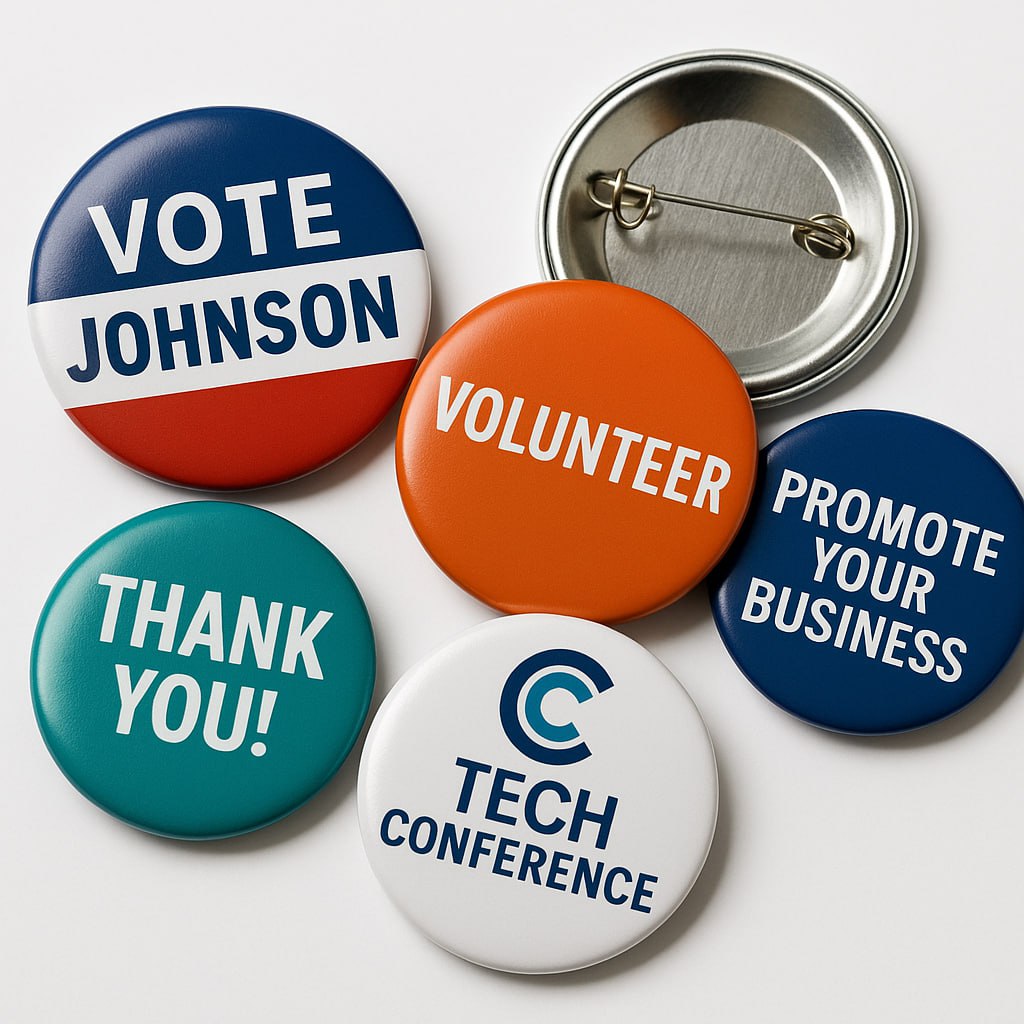
In an era dominated by digital advertising, social media campaigns, and data-driven marketing strategies, physical promotional products continue to play a meaningful role in brand visibility and audience engagement. While online channels offer scale and precision, tangible items remain effective in environments where visibility, personal interaction, and shared identity matter most.
Among physical promotional formats, custom buttons have maintained relevance across political campaigns, nonprofit advocacy, corporate branding, and event marketing throughout North America. Their simplicity, portability, and visibility allow organizations to communicate messages in ways that digital tools alone often cannot.
Physical Visibility in a Digital-First World
Marketing strategies today are frequently built around impressions, clicks, and conversion data. However, consumer behavior research continues to show that physical objects can reinforce memory and brand recognition more effectively than purely digital interactions. Promotional items that people can wear, keep, or display often generate repeated exposure over time.
Industry research from the Advertising Specialty Institute (ASI) has consistently shown that promotional products deliver high recall rates compared to many traditional advertising formats. Items such as buttons and magnets are frequently retained for extended periods, increasing the total number of impressions without additional distribution costs. This long-term visibility helps explain why physical merchandise remains a component of integrated marketing strategies.
Buttons also occupy a unique position among promotional products because they are wearable and inherently social. Unlike printed materials that are passively consumed, buttons invite attention and conversation. In group environments such as conferences, rallies, or community events, they can act as visual signals that spark interaction and reinforce collective identity.
Political Campaigns and Grassroots Advocacy
Political campaigns have relied on buttons for decades, and their role has not diminished despite the rise of digital campaigning. While online platforms allow campaigns to reach large audiences quickly, physical symbols remain central to voter engagement, volunteer coordination, and public visibility.
Buttons serve multiple purposes within political and advocacy efforts. They help identify staff and volunteers at events, reinforce campaign branding, and provide supporters with a tangible way to express affiliation. In grassroots movements, buttons are often distributed as low-cost tools that encourage visibility and peer-to-peer engagement in public spaces.
Research from the Pew Research Center continues to highlight the importance of offline political participation alongside digital engagement. Face-to-face interactions, community events, and visible expressions of support remain influential in shaping awareness and public perception. In this context, physical items such as buttons function as extensions of campaign messaging beyond online platforms.
Nonprofit organizations and advocacy groups also rely on buttons to unify participants and raise awareness around social issues. Whether used at fundraisers, demonstrations, or community initiatives, wearable messaging helps maintain consistency and visibility across diverse audiences.
Corporate Branding and Event Marketing
Beyond politics and advocacy, custom buttons and magnets are widely used in corporate and event-based marketing. Conferences, trade shows, product launches, and internal company events often rely on branded merchandise to create a cohesive experience for attendees.
Buttons are commonly used to identify staff, highlight sponsors, or reinforce event themes. Their low cost and design flexibility make them suitable for both short-term use and broader brand initiatives. Magnets, by contrast, are often intended for longer-term visibility, remaining displayed in offices, homes, or shared spaces well after an event concludes.
For many organizations, branded merchandise strategies remain an effective way to extend visibility beyond digital channels and reinforce messaging at conferences, trade shows, and community events.
For corporate marketing teams, physical promotional products offer several advantages. They are easy to distribute, customizable to specific campaigns, and adaptable to a wide range of budgets. When integrated with digital outreach, these items help reinforce messaging across multiple touchpoints.
Manufacturing, Speed, and Fulfillment Considerations
As demand for promotional merchandise continues, organizations are placing greater emphasis on production reliability and delivery timelines. Domestic manufacturing and fulfillment can offer significant advantages, particularly for time-sensitive projects tied to fixed event dates or campaign schedules.
In-house production allows manufacturers to maintain quality control and respond quickly to design revisions or order adjustments. This flexibility is especially important for political campaigns and live events, where last-minute changes are common and delays can limit effectiveness.
North American fulfillment also reduces logistical complexity for organizations operating across regions. Shorter shipping distances, fewer customs considerations, and more predictable delivery windows contribute to smoother distribution and planning.
Short-Run Flexibility and Bulk Scalability
One reason buttons have remained popular across sectors is their adaptability to different order sizes. Small organizations and grassroots campaigns often require limited quantities for localized efforts, while larger campaigns and corporations may need bulk production for regional or national distribution.
Short-run manufacturing supports experimentation, allowing organizations to test designs or tailor messaging for specific audiences. Bulk production, meanwhile, enables cost efficiency when large volumes are required. The ability to accommodate both approaches ensures that buttons remain accessible to a wide range of users, regardless of scale.
The Enduring Role of Tangible Engagement
Despite rapid advances in digital marketing technology, physical promotional products continue to offer value that complements online strategies. Buttons and magnets provide visibility in real-world environments, reinforce affiliation and identity, and create opportunities for organic interaction.
As organizations seek balanced approaches that integrate digital reach with physical presence, demand for tangible promotional items is expected to remain steady. For campaigns, nonprofits, and businesses across North America, buttons continue to serve as practical tools for communication, branding, and engagement in an increasingly crowded media landscape.
About Wacky Buttons
Wacky Buttons is a U.S.-based manufacturer of custom promotional products, including pinback buttons and magnets, serving organizations across North America. With in-house production and domestic fulfillment, the company supports fast, reliable, and scalable orders for political campaigns, nonprofits, events, and businesses, delivering cost-effective merchandise that enhances brand visibility and engagement. For more information, visit www.wackybuttons.com.
