2020 Builders Expands Attainable Housing Model to Address Growing Affordability Gap Across U.S. Markets
2020 Builders expands its attainable housing model into high-demand markets, aiming to improve access to homeownership for middle-income buyers through efficient, scalable construction.

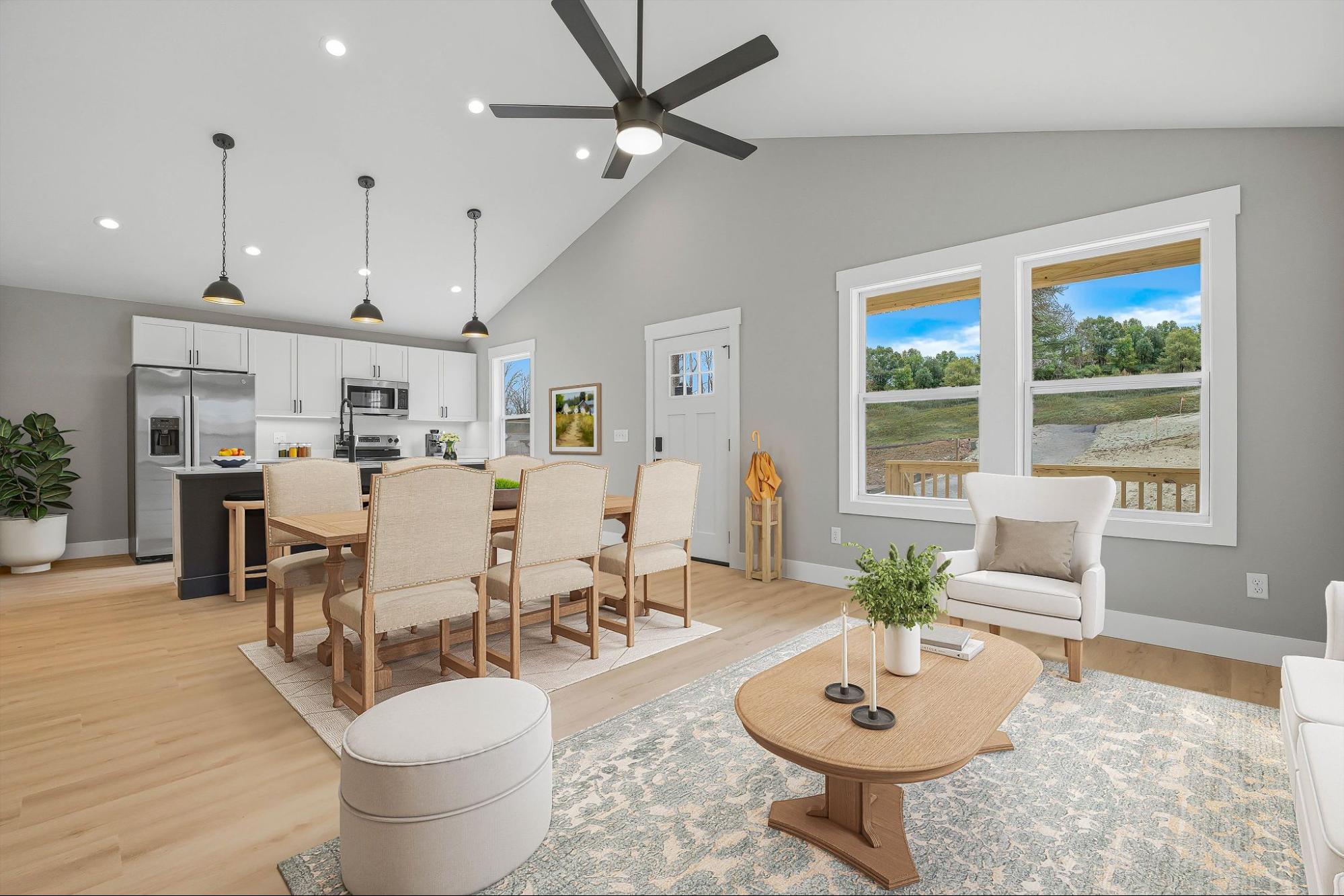
2020 Builders announces the expansion of its attainable housing model into high-demand markets around Western North Carolina, with the goal of improving access to homeownership for middle-income buyers. The expansion comes at a time when many working Americans are finding it increasingly difficult to enter the housing market, as rising costs continue to outpace income growth.
While homeownership has long been considered a cornerstone of financial stability, that path has become less accessible for many. In markets across the United States, the gap between income growth and home prices has widened to a point where even full-time earners struggle to see a path forward.
According to the U.S. Department of the Treasury's article, "Rent, House Prices, and Demographics," home prices have risen significantly in recent years, while affordability thresholds have stretched beyond traditional benchmarks. At the same time, a growing number of households are spending a substantial portion of their income on housing, limiting their ability to save or transition into ownership.
Meanwhile, wages have not kept pace with the cumulative rise in housing costs over the past decade. According to Jonathon Zetterholm, founder and president of 2020 Builders, member of the TEAM 2020 family of companies, the result is a growing population of working professionals, teachers, nurses, first responders, and hospitality workers who serve their communities yet cannot afford to live within them.
He frames the situation as structural rather than temporary. “For a lot of working families, the idea of owning a home feels like an unattainable dream,” he says. “When prices rise faster than incomes, the first step into ownership becomes harder every year.”
In desirable regions such as Western North Carolina, Zetterholm explains that inbound migration, retirement demand, and outside capital continue to elevate land values and final home prices. He notes that in such conditions, builders often gravitate toward higher-margin projects because the economics bring a certain level of safety, with luxury and custom developments appearing more financially viable.
Zetterholm does not frame this as a fault but as market gravity. “If the land costs more and materials cost more, builders naturally look for projects that can absorb those costs,” he notes. “The challenge is that it leaves fewer options for median-income families.”
The affordability crisis is not limited to ownership. Elevated borrowing costs in recent years have further constrained access, as higher mortgage rates combined with rising home prices have sidelined many potential buyers and slowed transaction activity.
“When rising prices intersect with elevated interest rates, even modest homes can become financially inaccessible,” Zetterholm explains. He notes that the compounding effect limits mobility and delays wealth creation for working families. “When entry-level homes move out of reach, it impacts entire communities,” he says.
From his perspective, part of the issue lies in fragmentation and inefficiency within construction. He frames the industry as one of the least standardized major sectors, where customization and extended build cycles introduce risk. “More variability usually means more cost,” he says.
The company’s expansion builds on a production-driven approach designed to address these inefficiencies at scale. By focusing on consistency and operational discipline, 2020 Builders aims to improve cost predictability and reduce barriers to entry for buyers.
Zetterholm believes that operational discipline can form part of the solution. “We looked at what large regional builders do well in terms of production efficiency and asked how we could apply those principles without sacrificing quality,” he explains.
According to Zetterholm, 2020 Builders’ model centers on repeatable floor plans, standardized material packages, and shortened construction timelines. By reducing variability, the company lowers waste and improves cost predictability. From his perspective, tighter build cycles reduce financing exposure and overhead, which directly influences attainable pricing. “We are not trying to reinvent housing,” he says. “We are trying to remove unnecessary inefficiencies so more people can participate.”
Through this expansion, the company plans to increase the availability of entry-level and attainable homes in markets where supply constraints and pricing pressures have limited options for middle-income buyers.
He acknowledges that this approach does not eliminate macroeconomic forces, nor does it claim to solve the national crisis independently. He explains it as a framework that aligns operational discipline with broader accessibility goals. Rather than pursuing scale for its own sake, he notes that the model focuses on entry-level and attainable tiers that are often underserved in high-demand regions.
In his view, housing affordability will remain one of the defining economic conversations of this decade. As reports such as NPR's "Fed cuts were supposed to lower mortgage rates, but they're back above 7%. Here's why," continue to show sustained cost pressures, he believes the industry faces a choice between maintaining existing structures or adapting production models to meet emerging realities.
“We believe ownership changes trajectories,” Zetterholm says. “If we can create systems that make that first step possible for more families, then we’re contributing to something bigger than a transaction.”
As 2020 Builders continues to scale its model, the expansion reflects a broader focus on efficiency-driven housing solutions aimed at improving accessibility without compromising build quality.
In an era defined by rising costs and constrained supply, efficiency alone will not solve the crisis. But disciplined, mission-aligned efficiency may help restore something many Americans still seek, a realistic path into a home of their own.
About 2020 Builders
2020 Builders is a U.S.-based residential construction company focused on expanding access to attainable homeownership for middle-income buyers. As part of the TEAM 2020 family, the company applies a production-driven model centered on efficiency, standardized designs, and cost predictability. By reducing construction variability and shortening build timelines, 2020 Builders aims to deliver quality homes at more accessible price points in high-demand markets. For more information, visit team2020.com/builders.
Media Contact
TEAM 2020 Media Relations
media@team2020.com