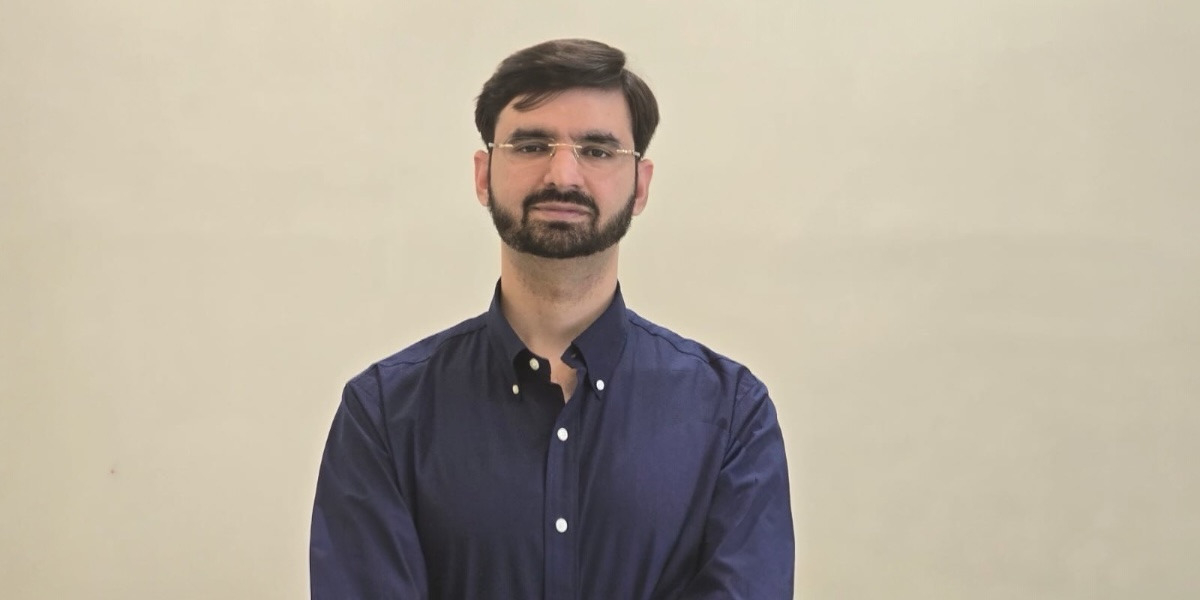

Inventor and systems theorist Vatsal Soin has filed a patent application for his 0→1 Doctrine, a universal, quantum‑resilient coordination framework designed to resolve structural waste and privacy risk across AI, AGI, and post‑quantum systems. The invention introduces a delete‑before‑share architecture that converts human and system needs into anonymous numerical bands instead of collectible personal data.
At its core, the 0→1 Doctrine is positioned as a new digital lingua franca built to end what Soin describes as the “global era of guesses.” It converts humanity’s needs and supply‑system capabilities into bounded alignment bands and enforces human intervention and supremacy whenever mathematics fails to overlap, creating a provable line between where machines may act and where humans must decide.
The Perpetual Delusion the World Calls Normal
For nearly two centuries, the world has operated on averages instead of real human needs. But we refuse to name it correctly as structural mismatch. The Doctrine preserves data privacy through delete‑before‑share — reversing today’s collect‑then‑encrypt paradigm. What never leaves the source cannot be harvested.
“We call it by softer names — ‘returns,’ ‘forecasting challenges,’ ‘supply chain volatility,’ ‘cost of doing business.’ We build entire industries around managing the consequences. We hire consultants to optimize the damage. We construct elaborate financial instruments to distribute the loss,” Soin said. “Every returned product, every empty shelf beside overstocked warehouses, every appointment was scheduled for the wrong specialist. Every asset is sitting idle while demand goes unmet. These are not inevitable costs of commerce. They are mathematical failures portrayed as acceptability.”
That is not a moral argument. It is a mathematical one: if needs and supply are misaligned, waste is guaranteed, such as returns, refunds, rework, excess production, idle capacity, overstocking, understocking, and operational churn. Trillions evaporate annually into this void. Systems don't match, and they call it “good enough.” Then comes the second failure, more insidious than the first: the claim that fixing this requires watching everyone.
Systems track every click. Algorithms record every preference. Sensors monitor every movement. Profiles grow so detailed that they predict behavior before it occurs. The implicit bargain: users surrender privacy, systems deliver efficiency. It was always a convenient myth.
The Digital Lingua Franca
Until now, every field spoke its own language — physics in joules, medicine in enzyme levels, logistics in tonnage, AI in probabilities. These isolated islands could not compare tsunami loads with hospital readiness or energy demand with grid capacity. The 0→1 Doctrine creates a universal number language, enabling products, services, and systems to speak across all domains simultaneously.
From Individuals to Planetary Systems
The 0→1 Doctrine enables alignment across planetary and environmental systems, natural resources and global infrastructure, enterprise and commerce, science and space, human systems and public life, daily use and fit‑critical domains, and robotics and automation.
Here is how it scales from one to billions:
At the micro level, patient urgency [0.74, 0.82] matches specialist availability [0.76, 0.85] — appointment approved without storing medical history or insurance status. Customer size needs [0.72, 0.80] align with product fit range [0.75, 0.85] — order confirmed without retaining body measurements or purchase patterns.
At the meso level, bridge load capacity [0.68, 0.78] coordinates with traffic weight [0.70, 0.76] and flood pressure [0.62, 0.72] — preventing failure without tracking vehicle IDs or routing data. Regional power demand [0.72, 0.82] matches renewable capacity [0.75, 0.85] and storage reserves [0.68, 0.80] — balancing load without exposing consumption patterns or industrial operations.
At the macro level, anticipated grain shortages [0.58, 0.70] match available national reserves [0.62, 0.74] and intercontinental shipping capacity [0.60, 0.72] — triggering coordinated distribution without revealing farm locations, stockpile quantities, or population vulnerabilities. Global semiconductor demand [0.64, 0.74] aligns with rare‑earth refining capacity [0.68, 0.78] and continental logistics networks [0.66, 0.76] — coordinating production across nations without exposing strategic reserves, manufacturing sites, or geopolitical dependencies.
Bidirectional Oversight and Real‑World Validation
The invention enforces strict checks and balances at every step through bidirectional flows, allowing corrections, human overrides, and reversals under cryptographic audit. A library of thousands of normalization parameters handles heterogeneous data across all domains. Both supply‑side capabilities and user‑side requirements are matched through the same framework, ensuring symmetrical validation.
The Line AI Cannot Cross
Current artificial intelligence systems suffer from a fundamental flaw: they operate on probabilistic “guesses.” As these systems scale toward super intelligence, the risks of these guesses become existential. The Doctrine invents a mechanism in which every autonomous decision must pass through an appropriate execution chain.
Another uncomfortable truth linked to this Doctrine is that automation has limits that must be enforced, not negotiated. Some decisions cannot be safely reduced to computation, such as questions of ethics, culture, medical discretion, dignity, and fairness under scarcity.
“Machines operate in the 0→1 space; humans evaluate what cannot be reduced to numbers,” Soin emphasizes. “The Doctrine does not suggest these should be handled carefully by AI. It states they must not be handled by AI at all.”
A fair and transparent waste estimator makes prevention measurable, not rhetorical: [prevented waste = baseline waste − observed waste]. It mathematically demonstrates how much waste is avoided across sectors, including retail, healthcare, and infrastructure, by matching real needs with available resources through protected numerical signals.
When Biological Calendar Replaces Chronological Age
One sector where precision becomes existential is longevity.
The framework quantifies biological reality, not birthdays. A 60-year-old might function physiologically at 48 or 73. The Doctrine maps this gap through normalized health indices, matching treatments to actual biological state. The result is extended health-span through coordinated diagnostics and interventions measured in recovered functional years, not pharmaceutical promises.
Predictive Intelligence Without Surveillance
The architecture includes pre‑context foresight and post‑context learning layers operating without touching personal data. Early warning systems detect emergent patterns — such as supply shortages, infrastructure stress, and safety anomalies — before requests are made, enabling proactive coordination in air traffic control, emergency systems, and disaster prediction. Post‑completion analysis identifies system‑wide trends in medical outcomes and resource allocation, generating privacy‑safe reports for regulators while preserving the privacy of individual transactions.
Critical Infrastructure for a Post‑Quantum World
The Doctrine is positioned as critical infrastructure for the economies, rather than a narrow retail or logistics upgrade. It processes information locally using statistical normalization and quantum‑safe cryptography. The architecture is compute‑agnostic, operating across classical processors, AI accelerators, neuromorphic chips, and is designed to remain stable as computing moves toward AGI and post‑quantum environments. It is also compatible with digital twins and federated learning systems.
The invention prescribes new axioms, lemmas, theorems, equations, principles, systems, and standards employing spectral graph theory, differential privacy, homomorphic encryption, category theory, and tensor networks — defining limits, enabling privacy, constraining automation, and authorizing execution. QED closes the 0→1 invention with formal mathematical proof.
An Invention That Stops and Asks
“After years spent building 0→1, I did not build it to rule intelligence, but to give humanity a moment to choose. Years of perseverance produced not a command, but an option. It is now for humanity to decide whether to adopt it — or not — and that choice will define the decades to follow,” Soin concludes.
About Vatsal Soin
Vatsal Soin is an Indian-born serial inventor who holds 21 patent filings across six continents with several grants, including the United States, Japan, India, and other jurisdiction. His work spans biometric-fit modeling, AI-driven sizing, modular footwear systems, apparel interoperability using digital twins and global biometric size charts, and cryptographic abstraction for large-scale coordination systems.
Media Contact
Vatsal Soin
vatsalsoin@gmail.com