Newsroom
Official news releases and announcements from organizations worldwide, distributed by EZ Newswire.
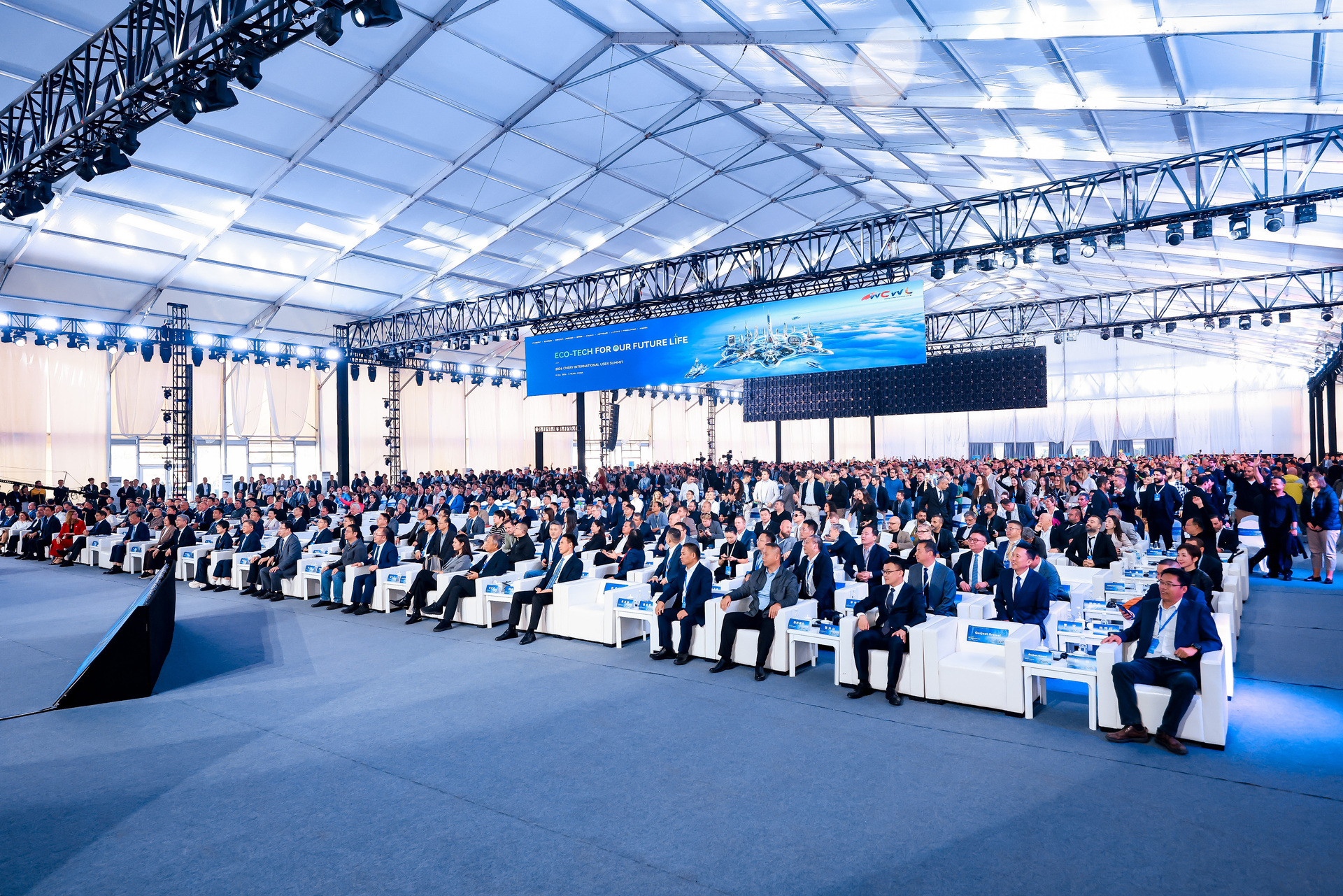
Eco-Tech Powers Future Living as Chery Enters Globalisation 3.0
WUHU, China, October 24, 2026 (EZ Newswire) -- Chery is embracing artificial intelligence to fundamentally transform its business. As outlined in its long-term vision: "By 2035, Chery will evolve from a traditional automaker into a high-tech extensive ecosystem cluster, and we hope this transformation will, in turn, help change the world."
On Oct. 23, at the theme conference of the 2026 Chery International User Summit, Chery set out the implementation path for its Globalisation 3.0 phase to more than 2,000 users and partners from around the world. The strategy centers on restructuring its organisation, moving its focus forward, and integrating into local markets. Supported by verifiable green and intelligent technologies and a full-lifecycle model of user co-creation, Chery aims to become an integral part of local communities and deliver future living experiences tailored to the diverse needs of global markets.
From Global Product Presence to Deep Global Integration: Chery Strengthens Its Roots in Local Markets
AI is driving Chery into the era of Globalisation 3.0, marking not only a technology-driven business transformation but also a fundamental shift in its global organisational structure and development philosophy. Guided by the principle of looking at the world from China and looking at China from host countries, Chery seeks to better understand and serve diverse markets by embracing local customs, cultures, lifestyles, and practical needs. As Chery advocates, "In somewhere, for somewhere, be somewhere." Globalisation 3.0 is not only about selling products worldwide, but about taking root in and integrating into local markets.
Building on its product and service network spanning more than 130 countries and regions, Chery continues to advance local R&D, manufacturing, and procurement, actively participating in local economic development by creating jobs and contributing tax revenue. From bringing products into markets to integrating its organisation deeply into local markets, Chery hopes to become a corporate citizen and brand respected by local society, building long-term mutual trust with local users, partners, and communities and sharing the fruits of development.
Building the Greener Future with Global Partners
As global climate change and advances in digital technology continue to reshape the industrial landscape, Chery is integrating the philosophy of sustainable development into its global business footprint. During the summit, Chery showcased its sustainability practices and explorations while further encouraging global ecosystem partners to take part in sustainability action. Representatives of partners from Spain, the United Kingdom, Türkiye, South Africa, Indonesia, Mexico, Canada, and other countries and regions jointly launched the "One Nature, One Future" initiative, calling on others to join Chery in focusing on five nature conservation themes — people, land, water, oceans, and climate — and turning shared commitments to nature into concrete action.
Turning Sustainability Commitments into Action with UNICEF and IUCN
In addition, during the summit, Ariela Ann McDonald, regional communications lead for Asia at the International Union for Conservation of Nature (IUCN), shared the story of the global "Cherish the Nature" partnership between IUCN and Chery since 2024. Silvia Danailov, United Nations Children's Fund (UNICEF) representative in Vietnam, shared progress on the children's education programmes that UNICEF has carried out with the support of Chery Group in multiple countries, including Vietnam. UNICEF does not endorse any company, brand, product, or service.
With nature conservation and empowerment through education as the respective focal points of these partnerships, Chery is actively addressing long-term environmental protection and community development needs while serving users worldwide.
Expanding Global User Co-Creation Through Open Ecosystem Collaboration
Chery has long been committed to respecting its users and has won their trust. Chery currently has more than 20 million users worldwide and is extending users' role from people who experience its products to ecosystem co-creation partners. For key opinion leaders (KOLs), key opinion consumers (KOCs), and a wide range of ecosystem partners, Chery is actively exploring new models for opening up ecosystem resources and business collaboration, turning high-tech innovations into practical products that meet user needs. This approach enables more partners to participate in improving product experiences, content communication, and ecosystem value creation. By opening up channels for collaboration, Chery hopes to ensure that technological innovation not only drives product upgrades but also creates new business development opportunities for its partners.
In 2027, Chery will celebrate its 30th anniversary. Standing at this new stage of development, Chery looks forward to working with global partners to embrace the opportunities presented by AI, explore new possibilities for collaboration through innovative thinking, combine technological development with user needs, create new growth opportunities through ecosystem collaboration, and enable technology to better serve people's future lives.
Media Contact
wangxingchen1@mychery.com
Kyiv Court Directs Registration of Complaint Filed on Behalf of Alona Shevtsova
KYIV, Ukraine, October 23, 2026 (EZ Newswire) -- The Pechersk District Court of Kyiv has commissioned Ukraine’s State Bureau of Investigation (SBI) to register information concerning a complaint filed on behalf of Alona Shevtsova, a financial technology executive and CEO of Sends. The decision states the procedural steps required for the complaint to be entered into the formal investigative process, according to media reports from UA.NEWS.
Court Decision and Procedural Requirements
According to public court records, Investigative Judge Oleksiy Sokolov granted the application following a complaint submitted electronically on March 19, 2026.
The court directed the SBI to enter the relevant information into Ukraine’s Unified Register of Pre-trial Investigations and provide the complainant with an official extract confirming registration. The decision took effect upon announcement and was reported as final and not subject to appeal.
Understanding the Registration Process
Ukraine’s Unified Register of Pre-trial Investigations is the official statutory database for recording information concerning reported criminal offenses and procedural filings.
Registration represents a formal administrative step under Ukrainian law that enables competent investigative authorities to examine submitted information. The court’s decision addresses the registration obligation of the SBI and does not constitute a determination regarding the substance, merits, or validity of the information submitted. Any further examination of the circumstances described in the complaint falls strictly within the authority of relevant law enforcement bodies.
About Sends
Sends is a global payments and financial infrastructure platform offering multi-currency accounts, digital wallet support, and cross-border payment solutions for businesses and individuals. For more information, visit sends.co.
Disclaimer
Legal & Procedural Notice: This press release is issued for informational purposes regarding a procedural matter within the judicial system of Ukraine. The direction to register a complaint in Ukraine’s Unified Register of Pre-trial Investigations is a standard statutory procedure under Ukrainian law and does not constitute a judicial ruling, legal finding, determination of guilt or innocence, exoneration, or confirmation of the validity or substance of any allegations. All individuals and entities mentioned retain the presumption of innocence under applicable law unless proven otherwise in a court of law. This release reflects information reported from public court records and third-party media sources; readers and news organizations are advised to independently verify official filings directly through public judicial records.
Media Contact
press@sends.co

Coco Coders Launches Six-Week AI Literacy Course Built on Its Foundation in Teaching Kids to Code
IVGID, NV, October 23, 2026 (EZ Newswire) -- Coco Coders, the education technology company that has taught coding to more than 25,000 children and counting, is announcing the launch of AI Adventurers, a six-week standalone course taught live online in small groups that carries its coding curriculum into AI literacy. Enrollment is currently open through the Coco Coders enrollment page.
Children now encounter AI in their homework apps, search results, games, and voice assistants often long before they develop the wherewithal to understand how those systems generate answers or why those answers can be wrong. A 2025 study by Google and Livity found that 88% of teens ages 13 to 15 already use AI tools for learning and creative tasks at least a couple of times a week, and 63% of respondents to the European Commission's 2025 Flash Eurobarometer survey agreed that everyone will need to be AI literate by 2030, according to the AI Literacy Framework developed by the European Commission and the OECD.
Coco Coders was created around the idea that coding is the foundation of AI literacy, and by learning how to code, children are better prepared to enter a society and work with AI tools responsibly and intelligently. The AI Adventurers class focuses on demystifying how AI systems work: how the models learn, why they can sound confident while being mistaken, and how to push back on what they produce.
Elizabeth Tweedale, founder and CEO of Coco Coders, describes the course as "the next evolutionary step" for a company she calls "a domain expert in teaching kids how to code." She explains that the team's experience teaching children to code is foundational to understanding AI, and that the course gives kids the grounding to interact with the AI tools all around them, including knowing what to trust, what not to trust, and how to question those tools and eventually build their own.
"Our aim is for students to leave with the skills to use AI tools safely, confidently and effectively, as we believe this is a core skill they'll need for the future of school, work, and life," said Tweedale.
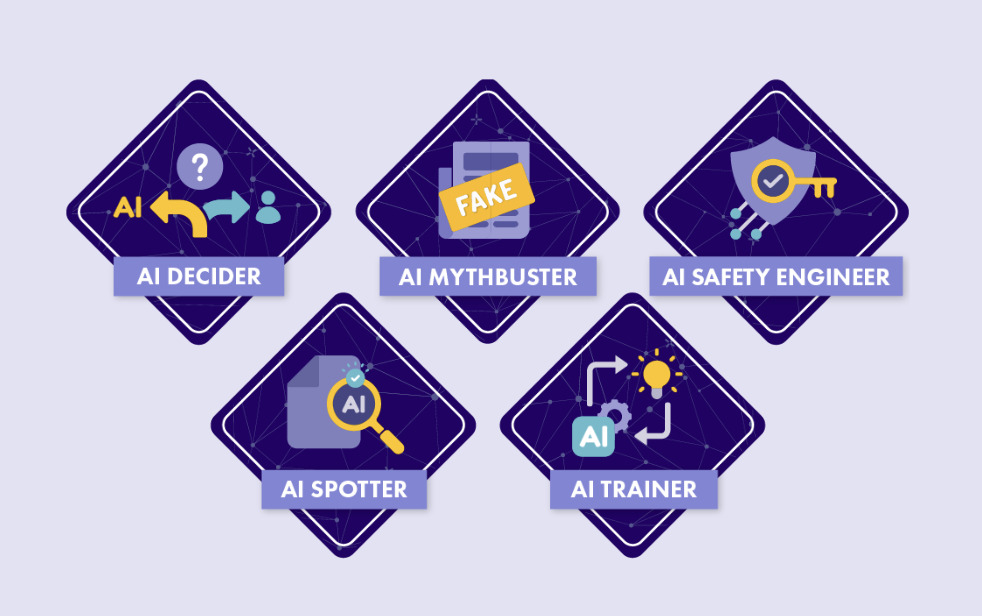
Across six weekly one-hour sessions that are highly interactive and project-based, students use a kid-safe chatbot to create stories and comics, train their own classification model using machine learning, and build a portfolio showcasing both what they made and the core AI literacy concepts they have learned along the way. The course covers what AI is and how it works in general terms, how to use it safely and effectively, and how to evaluate and improve its outputs through prompting. Each week, students guide their work with a four-step mantra that shares the company's name:
- C: Choose your goal (Decide what you are trying to make, solve, or discover).
- O: Observe the output (Check what the AI produced, whether it followed instructions, and what seems surprising, useful, or wrong).
- C: Challenge the output (Ask whether it is true, fair, safe, and appropriate to use or share, and whether any information is private).
- O: Own the work (Make the final decisions, adding your own thinking, changing what you do not like, and being honest about where AI helped).
About Coco Coders
Coco Coders is a live online coding and AI literacy program for children ages 6–14, serving students across all 50 states, the U.K., and more than 10 countries. The program offers rotating, themed modules that connect coding and AI to real-world industries and careers, with a curriculum designed to accommodate all learning styles. For more information, visit cococoders.com.
Media Contact
elizabeth@cococoders.com
BrandBossHQ Founder Bill Harper Ranked Among America’s Top 20 Brand Strategists, Placing Ahead of the Father of Modern Branding
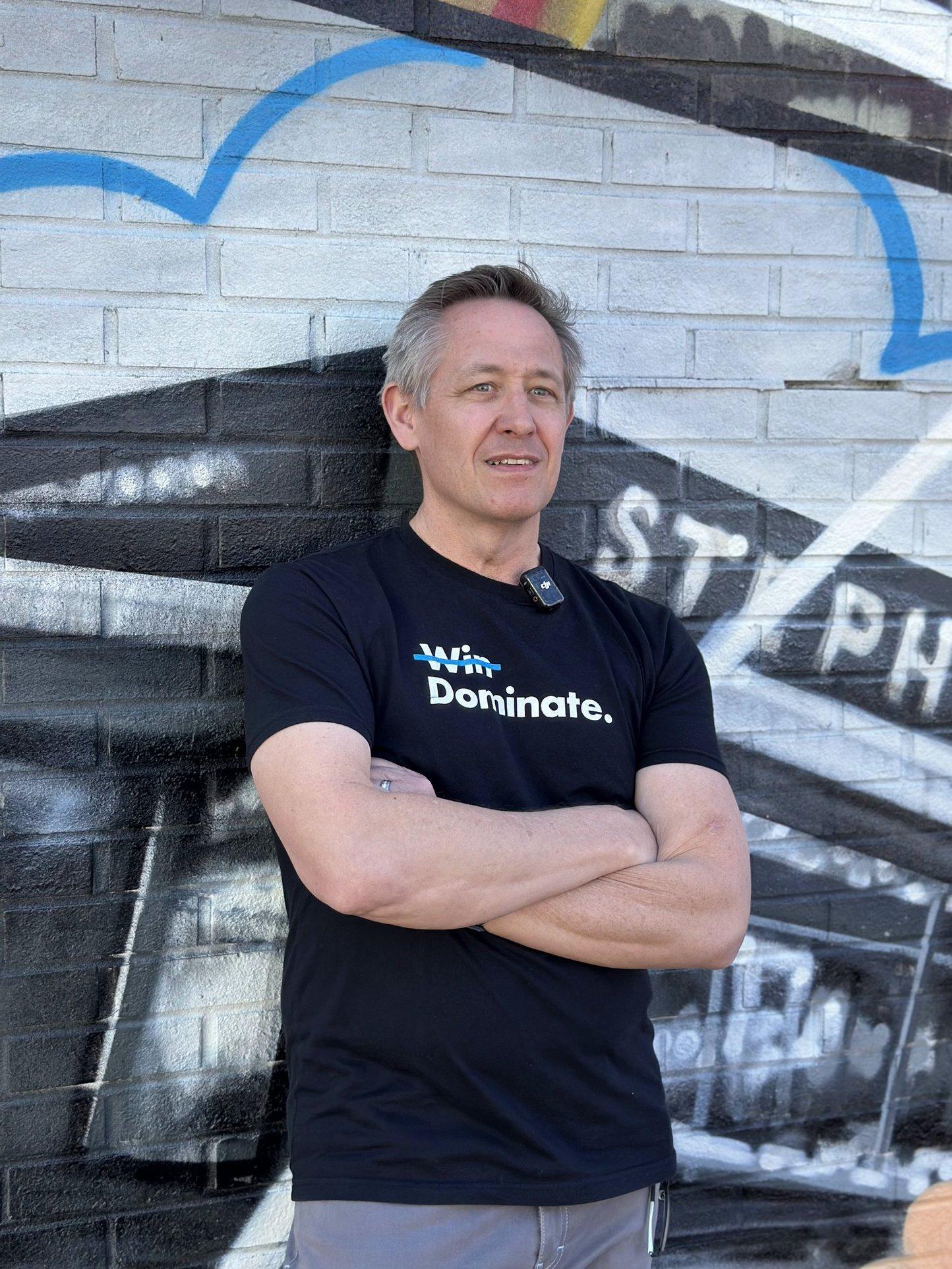
RALEIGH, NC, October 23, 2026 (EZ Newswire) -- BrandBossHQ founder and CEO Bill Harper has been named No. 12 on Favikon’s "Top 20 Branding Experts in the United States (2026)," placing ahead of David Aaker — the academic widely regarded as the father of modern branding. The recognition comes as McKinsey’s "State of Marketing 2026," a survey of 500 senior marketers, ranks brand investment as the number one priority out of 20 measured areas, marking a broad industry correction away from performance-heavy strategies toward long-term brand fundamentals.
Harper has spent more than a decade arguing that most businesses are solving the wrong problem. His Raleigh-based consultancy, BrandBossHQ, leads every client engagement with customer research and brand strategy before any creative or tactical work begins. But it was not a whitepaper or a conference keynote that first put his thinking in front of a national audience. It was a story about a tow truck.
The premise is simple. A driver is stranded on the side of the road, running late, stressed, and dependent on a stranger for help. Two tow truck drivers respond. The first says: “We have more than 25 years of experience, extensive training, and proprietary equipment.” The second says: “Our motto is to get you back on the road in 15 minutes or less. We know you have things to do.”
Same truck. Same expertise. A completely different experience.
Harper developed the parable as a teaching device for client presentations, most notably a session with the leadership team at BlueCross NC, where a room full of senior executives went quiet as they recognized they had been communicating from entirely the wrong side of the transaction. When he later posted the story on TikTok under @brandbosshq, it drew more than 21,000 likes, prompted requests for translated versions from viewers as far as Germany, and was picked up by marketers and business educators across the United States as one of the clearest single explanations of the difference between advertising and branding available.
“Nobody cares if you have the best product,” Harper said. “The story behind your product will always be what sells it more than what it actually is. Most businesses describe what they do in the language that makes sense inside their own building — and their customer is standing on the side of the road, not listening.”
The tow truck story is not just a piece of content. It is the clearest expression of the principle that underpins everything BrandBossHQ does: that the gap between how a brand sees itself and how a customer actually experiences their own problem is where most marketing fails and where the right story wins.
BrandBossHQ’s flagship Brand Story Development engagement runs for three months and delivers customer research, a defined target audience profile, brand language, and two full creative campaign options. Research and strategy precede every creative decision a sequence that Harper describes as non-negotiable.
“Most businesses don’t have a marketing problem,” Harper said. “They have a positioning problem. They skip research, skip strategy, and go straight to tactics and then wonder why they’re spending more every quarter for the same result.”
Harper’s Favikon ranking and the broader market data both point to the same conclusion. WARC’s "Multiplier Playbook" (May 2026) found that while 67% of marketers say their CEO considers brand important, only 19% of C-suites can routinely connect brand equity to measurable business outcomes. The stranded motorist in Harper’s parable already understood what the data is now confirming: credentials do not close the distance between a brand and its customer. The right story does.
BrandBossHQ is currently accepting new client engagements for Q1 2027.
About BrandBossHQ
BrandBossHQ is a brand strategy and advertising consultancy founded by Bill Harper. The agency specializes in research-first brand development for companies at growth inflection points, delivering customer research, strategic positioning, brand language, and creative campaign development. For more information, visit brandbosshq.com.
Media Contact
Bill Harper
bill.harper@brandbosshq.com
SpacemiT Launches 46-Core V100 RISC‑V Server CPU
SHENZHEN, China, October 23, 2026 (EZ Newswire) -- At the recent RISC-V Summit China 2026, SpacemiT introduced the V100, a 46-core RISC‑V server CPU designed for general-purpose data center computing, AI agent infrastructure, and AI acceleration. Announced at RISC‑V Summit China 2026, the processor launches alongside three server platforms for compute, AI, and storage workloads.
Speaking at the summit, RISC‑V International CEO Andrea Gallo highlighted the architecture’s growing role in AI computing and data centers. “RISC‑V supports AI training and inference in data centers,” he said. “RISC‑V is the architecture for intelligent computing.”
According to SpacemiT, V100 is the industry’s first general-purpose processor to fully comply with the RISC‑V server specifications, with native support for mainstream server operating systems and virtualization stacks. Its implementation covers the RVA23 Profile, the RISC‑V Server SoC and Server Platform specifications, Boot and Runtime Services (BRS), and the RISC‑V Security Model. The company says V100 has passed all BRS compliance tests and allows users to install, boot, and run mainstream Linux distributions directly on V100 systems.
“V100 is an important step for SpacemiT as we expand from devices to the cloud,” said Zhijian Chen, the company’s founder and CEO. “It also reflects RISC‑V’s progress toward real-world data center deployments at scale.”
Server hardware and system options
Introduced jointly by SpacemiT and the XiangShan team, V100 combines six XiangShan Kunminghu V2R2 cores with 40 of SpacemiT’s own X100 cores. The heterogeneous 46-core design supports clock speeds of up to 2.4 GHz, while a cache-coherent interconnect enables dual-socket configurations with up to 92 cores.
Each processor supports eight DDR5 memory channels and 52 PCIe 5.0 lanes for connecting AI accelerators, high-speed network adapters, and storage devices.
V100 provides hardware-assisted CPU, interrupt, and I/O virtualization. SpacemiT says the platform works with upstream Linux KVM without requiring a custom kernel. The chip also includes a hardware root of trust and server-class reliability, availability and serviceability (RAS) features.
The accompanying systems are the C2201 computing server, G5201 intelligent computing server, and S5236 storage server, targeting general-purpose computing, AI acceleration, and large-scale data storage, respectively.
The G5201 accommodates eight full-height, full-length, double-width accelerator cards. SpacemiT says it has validated the system with accelerators from Kunlunxin and other vendors. The server also supports RDMA (remote direct memory access) networking for high-speed clusters.
SpacemiT is supplying server motherboard reference designs, firmware, baseboard management controller (BMC) support, and hardware design documentation to help system builders develop servers under their own brands.
Software support and global developer access
SpacemiT says Ubuntu 26.10 officially supports V100. Its work on processor support and toolchain optimization has also been merged into upstream open-source projects, including the Linux kernel and LLVM.
The company is working with Canonical, the RISE Project, and Scaleway to give open-source developers access to RVA23-compatible hardware, contributing K3 compute clusters to shared development infrastructure.
SpacemiT also sponsored DebConf26 in Argentina, supported Debian community testing on the K3 platform, and co-organized the Physical AI Hackathon in Hong Kong for developers worldwide.
Partners including DeepComputing and Banana Pi are bringing K3-based products to international markets. These include mainboards for Framework modular laptops, development boards and compute modules. SpacemiT says international customers have placed orders for both K3 chips and K3-based cluster servers.
In 2026, the company has participated in Open Source Summit and Embedded Linux Conference North America; Ubuntu Summit in London; RISC‑V Summit Europe in Italy; and Linux Plumbers Conference and Open Source Summit Europe in Prague. Its presentations and demonstrations have covered high-performance RISC‑V computing, operating system support, on-device AI and upstream open-source development.
At the AI for Good Global Summit in Geneva, SpacemiT’s Emotional Companion Robot was featured in the Innovate for Impact collection of case studies. The company also demonstrated K3-based on-device AI applications at the Global Innovation Show (GIS) in Hong Kong.
With K1, K3 and now V100, SpacemiT is extending its product family across devices, edge systems and data centers. Its longer-term strategy brings together processor design, system software, complete systems and international partnerships to build a business around open-architecture computing.
About SpacemiT Technology Co., Ltd.
SpacemiT designs general-purpose processors based on the RISC‑V instruction set architecture. Headquartered in Beijing, the company has R&D centers in Hangzhou, Shanghai, Shenzhen and Zhuhai. Its team has extensive experience in CPU architecture, chip development and high-volume production and delivery. The company’s K1, K3 and V100 processor lineup spans devices, edge systems and data centers. SpacemiT develops processors, system software and complete hardware platforms to bring RISC‑V products into volume deployment. It also invests in operating system support, virtualization, compiler toolchains, and open-source software, working with developers and industry partners worldwide to make the open RISC‑V ISA a foundation for future digital infrastructure.
Media Contact
Yi Tang
SpacemiT Technology Co., Ltd.
yi.tang@spacemit.com
+86 13 350 3576

China’s Porcelain Capital Jingdezhen Drives Global Innovation and 100-Billion-Yuan Industrial Transformation
JINGDEZHEN, China, October 23, 2026 (EZ Newswire) -- China News Service (CNS) has released a new report highlighting how Jingdezhen, China’s historic "porcelain capital," is leveraging its millennia-old heritage to power a modern, high-tech industrial cluster and foster a global community of international creators.
The announcement comes following the 2026 Jingdezhen Forum, which opened on Oct. 18, and the concurrent 2026 China Jingdezhen International Ceramic Expo. The events mark the city's first major international gathering since the "Jingdezhen Handicraft Porcelain Industry Sites" were officially inscribed on the UNESCO World Heritage List in July 2026 as China’s 61st World Heritage property.
Global Cultural Exchange and Creative Ecosystem
The 2026 Expo convened more than 2,500 guests from over 90 countries and regions, featuring 450 domestic and international companies, 40 international brands, and direct trade matchmaking between nearly 100 overseas buyers and 150 domestic suppliers.
"I cannot think of a more creative city than Jingdezhen," said Tim Winter, Professor at the Asia Research Institute of the National University of Singapore, noting that the city has successfully fused tradition, innovation, and porcelain-making into a continuous development narrative.
Wang Guangyao, Senior Researcher at the Palace Museum and Executive Director of the Chinese Archaeological Society, emphasized during the forum that Chinese ceramics historically served as a two-way cultural bridge — absorbing raw materials and decorative techniques from abroad while exporting production methods worldwide.
Today, that tradition manifests in a thriving community of over 60,000 migrant artisans ("jingpiao"), including an estimated peak of 5,000 international creators ("yang jingpiao"). Institutions such as the Sanbao International Ceramic Village have hosted more than 20,000 international artists and practitioners over the past two decades.
Key creative highlights from the 2026 Expo included:
- Cross-Cultural Collaborations: International exhibitors, such as Iranian artisan Abed Hashemi, introduced fusion concepts pairing Iranian handcrafted "Mina" enamel ware with Chinese porcelain techniques.
- Next-Gen Design & Tech Integration: Contemporary designers demonstrated plush-toy elements integrated with traditional blue-and-white porcelain, supported by artificial intelligence tools.
- AI & 3D Ceramic Printing: Advanced equipment manufacturers showcased prompt-to-model AI workflows that generate ceramic blanks for traditional kiln firing directly from text or image uploads.
Historic Milestone: Over 100 Billion Yuan Industrial Output
Alongside its cultural expansion, Jingdezhen has undergone a major industrial shift toward advanced ceramics. In 2025, the city's ceramic industry achieved a total output exceeding 102.7 billion yuan (approximately $14.4 billion), becoming China's first single ceramic industrial cluster to cross the 100-billion-yuan threshold.
Advanced ceramics — utilizing synthetic oxide, nitride, and carbide powders for high-precision applications in electronics, equipment manufacturing, new energy, and biomedicine — now account for 34 percent of the city's total output, up from under 10 percent five years ago.
The city’s advanced ceramic enterprise ecosystem has expanded from 86 to 208 active companies, with key high-tech materials like high-purity nano alumina and zirconia ceramic substrates meeting top domestic standards.
Watch the video report: China News Service Coverage
About China News Service (CNS)
CNS is a comprehensive state news agency reporting on major economic, cultural, and industrial developments across China and worldwide.
Media Contact
zangwei@chinanews.com.cn

Development Holding Company Announces Strategic Investment in Slough Town Football Club
KUWAIT CITY, Kuwait, October 23, 2026 (EZ Newswire) -- Development Holding Company (DH), a Kuwait-based diversified investment group and public holding company focused on building and scaling high-potential businesses, has entered into a binding agreement to acquire a majority 70% shareholding in A23 Football Group Limited, the ownership company of Slough Town Football Club, marking a significant step in DH’s international expansion and its growing interest in the global sports sector.
The partnership brings together DH’s investment and commercial expertise with the ambitions of Slough Town FC, one of English non-league football’s historic community clubs, as it looks to strengthen its sporting foundations, expand its community reach, and build for long-term sustainable growth.
The acquisition will take place through a phased transaction over three years, with DH's shareholding increasing progressively to 70%. The transaction has received all applicable regulatory and football authority approvals.
Founded in 1890 and widely known as "The Rebels," Slough Town has a long history in English football. The club has competed at the highest level of the non-league game, enjoyed memorable FA Cup campaigns and appeared at Wembley Stadium in the 1973 FA Amateur Cup Final.
Under its current leadership, the club has been pursuing a strategy centred on four key pillars — sustainability, talent, fan experience, and community — including strengthening its academy and player development pathways and expanding women’s, youth, and community football.
“Football has always been a personal passion of mine, and I strongly believe in the extraordinary potential of the global sports industry,” said Talal Al Ajmi, founder and Chairman of Development Holding Company.
“As DH continues to diversify its portfolio and expand its international presence, we see Slough Town Football Club as a highly compelling opportunity. It is a historic club with a loyal supporter base, a strong community identity and an ambitious vision for the future, located in a dynamic UK town with considerable economic and social potential.”
Al Ajmi said DH’s approach would focus on responsible, long-term development while preserving the identity and heritage of the club.
“We have great confidence in the team’s capabilities and in the direction established by the club’s leadership. Any future involvement from DH would be guided by a long-term commitment to responsible growth, with the club’s heritage, supporters, and community remaining at the heart of its journey.”
Ashley Smith, CEO of Slough Town FC, said the club had made significant progress since the group took over in 2023, including improvements to its sporting venue, community presence, and academy structure.
Media Contact
Reem Al Rashi
Development Holding Company
reem.alrashi@vimarkets.com

barq Wins Money20/20 Global Growth Grid Award in Recognition of Its Exceptional Growth in Fintech
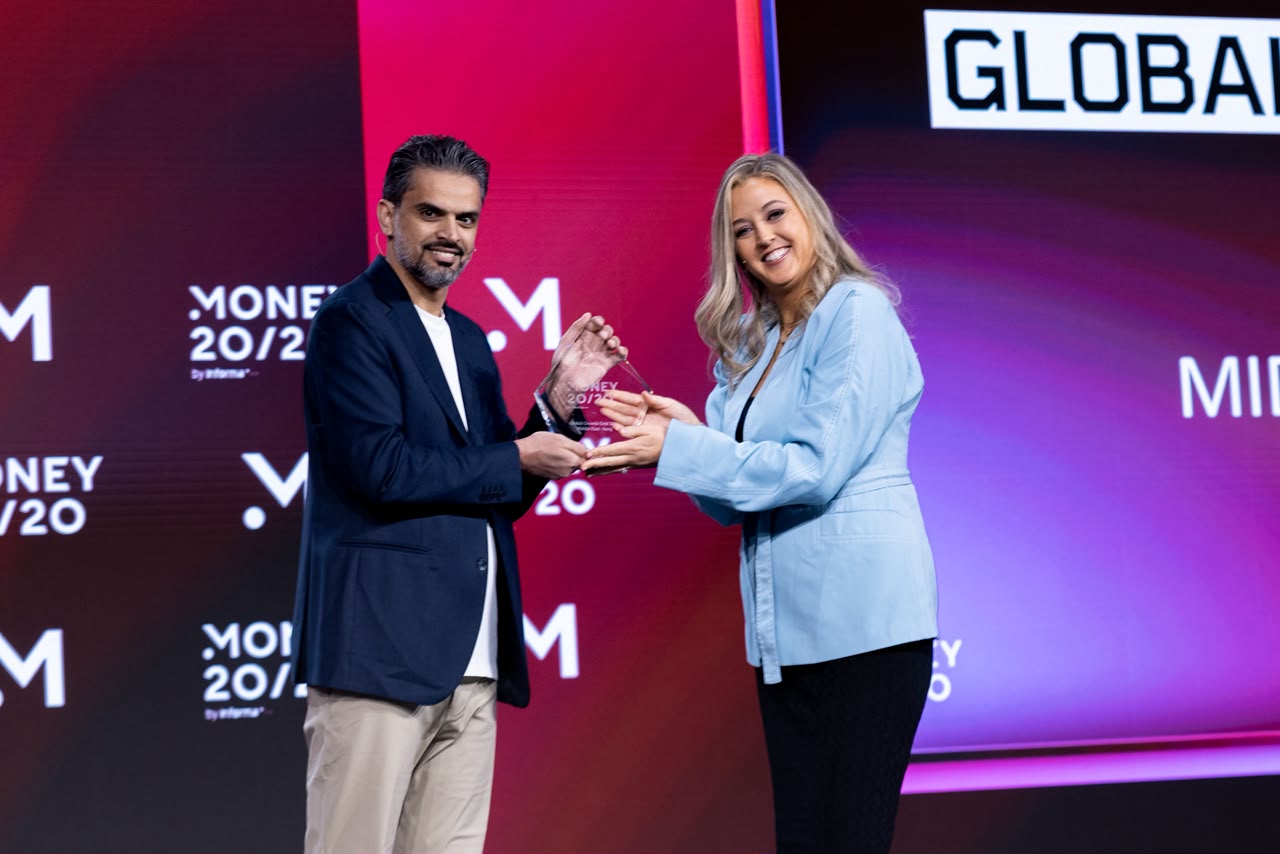
RIYADH, Saudi Arabia, October 22, 2026 (EZ Newswire) -- barq has won the Money20/20 Global Growth Grid award, a new milestone that reflects the company’s rapid growth since its launch and underscores the rising global presence of Saudi fintech companies. The award crowns barq’s exceptional journey, which has placed it among the fastest-growing fintech companies worldwide.
Since launching its services in August 2024, barq has achieved record growth rates. It attracted 1 million users within three weeks and 7 million users by the end of its first year, before its user base exceeded 15 million in just two years. The total value of funds transacted through its platform has surpassed SAR 440 billion, equivalent to approximately USD 120 billion.
barq’s achievements have also extended to investment. The company raised USD 329.5 million in its Series A funding round at a valuation of USD 1.85 billion, marking one of the largest funding rounds in the fintech sector. With this, barq joined the ranks of unicorn companies less than two years after launching its services.
barq continues to strengthen its digital financial ecosystem and expand its services for individuals and businesses. It recently launched its business banking services and received initial approval from the Saudi Central Bank (SAMA) to add financing to its activities, a step that supports its drive to offer integrated digital financial solutions that meet the needs of different customer segments.
Looking ahead, barq aims to expand into GCC and regional markets, starting with Pakistan. Its revenues are expected to exceed half a billion U.S. dollars in 2027, and it is targeting IPO readiness by the end of 2028. These goals reflect the company’s ambition to strengthen its regional and global presence and to contribute to Saudi Vision 2030 targets for developing the financial sector and the digital economy.
About barq
barq is a Saudi Arabian financial technology (fintech) and digital wallet service launched by Barraq Finance Company, led by founder and former STC Pay CEO Ahmed Alenazi. Barraq Finance Company is a closed joint-stock company established under the laws of the Kingdom of Saudi Arabia and registered in the Commercial Register in Riyadh under unified number 7029786717.
Media Contact
Osamah Alqusayer
Communication Manager
osamah@manwar.co
Zehl & Associates Marks 5,000-Client Milestone After Securing Billions for Injury Victims Nationwide
HOUSTON, TX, October 22, 2026 (EZ Newswire) -- Houston-based personal injury law firm Zehl & Associates announced today that it has surpassed 5,000 clients, representing workers, individuals, and families across the United States and recovering billions of dollars for accident victims. Since its founding in 2002, the firm has remained undefeated in the courtroom while securing many of the largest verdicts and settlements in Texas and U.S. history.
Its disciplined approach has also earned national recognition, with Zehl & Associates repeatedly honored among the nation's leading personal injury law firms and founder and trial lawyer Ryan Zehl consistently recognized by his peers as one of the country's top trial lawyers.
"People call us on the worst day of their lives," said Zehl. "They're grieving, they're frightened about how they'll pay the bills, and companies or insurance adjusters are often pressuring them before they’ve had the chance to understand their rights or speak with a lawyer."
Few people ever imagine walking into a trial lawyer's office. Yet behind every case is a larger question about responsibility, accountability, and whether preventable harm will lead to meaningful change. That's the question Zehl set out to answer when he founded Zehl & Associates in 2002. He believes injured families deserve the same level of preparation, resources, and advocacy as the corporations and insurance companies on the other side of the courtroom.
"I wanted to build a firm that could go toe to toe with the largest corporations in the world and never be outspent, outworked, or outlasted," said Zehl. "I wanted to build the counterweight."
It's why Zehl & Associates carefully selects cases involving preventable negligence. When staffing cases, the firm invests in the experts and science that will allow clients to receive the answers and justice they deserve.
"Cases are won in the documents, the depositions, and the science," Zehl explained. "By the time we walk into trial, the outcome has usually already been earned."
Consequential Behavior
For Zehl, another purpose of civil litigation is to ensure preventable harm does not end with a single verdict. In many cases, he believes the civil justice system is one of the few mechanisms capable of requiring powerful companies and organizations to answer publicly for the decisions they make. Accountability, he believes, should encourage safer practices, better decisions, and a greater commitment to protecting others.
As Zehl put it, "When companies know they'll be held responsible for cutting corners, they're far more likely to invest in doing things the right way."
For all the complexity of high-stakes litigation, Zehl never loses sight of the families who turn to his firm for straightforward answers, honest guidance, and an advocate willing to shoulder the legal burden while they focus on healing. For him, the true measure of every case extends well beyond the verdict to what it allows a family to rebuild in the years that follow.
"Ordinary people are far stronger than they get credit for," Zehl concluded. "I've watched clients lose a spouse, a child, their health, and livelihood — and still find a way to rebuild. They don’t want pity, charity, or a windfall. They want the truth and justice they need and deserve to move forward with their lives."
About Zehl & Associates
Founded in 2002, Zehl & Associates is an undefeated personal injury law firm with offices in Houston, Midland, Dallas, and San Antonio that has earned a reputation for recovering record-breaking verdicts and settlements for its clients. The firm's practice areas include truck and 18-wheeler accidents, oilfield, maritime and refinery accidents, and catastrophic personal injury and wrongful death cases. Zehl & Associates has won billions for accident victims across Texas and the United States. For more information, visit zehllaw.com.
Media Contact
abremer@zehllaw.com
Breakthrough From Hanmi Life Sciences, IEONA GeneAKG Sets New Global Benchmark in Anti-Aging With Proprietary Patented Technology
ANYANG-SI, South Korea, October 22, 2026 (EZ Newswire) -- The global anti-aging industry is undergoing a profound transformation. IEONA GeneAKG®, developed by the Hanmi Life Sciences team under NextEye Co., Ltd. (Stock Code: 137940.KQ), is pioneering a shift from single-ingredient supplementation to systematic metabolic intervention through its world-first patented technology, three-dimensional synergistic formulation, and exclusive gender-specific solutions.
A World-First Milestone in Anti-Aging Innovation
As we age, mitochondrial function declines, reducing cellular energy metabolism efficiency. Alpha-ketoglutarate (AKG), a key intermediate in the tricarboxylic acid (TCA) cycle, plays a central role in energy metabolism. Endogenous AKG levels decrease with age, and supplementation may help restore cellular energy efficiency. Building on this principle, IEONA GeneAKG explores a new approach to slowing aging at its source.
Developed by the Hanmi Life Sciences team led by a Harvard-trained medical doctor, IEONA GeneAKG represents a world-first milestone in anti-aging innovation. In 2020, the team published animal research reporting that IEONA GeneAKG increased NAD+ and sirtuin protein levels, with effects on mitochondrial ATP production and DNA-related aging reversal reportedly surpassing those of NMN. The findings attracted widespread attention from the international medical community. Harvard professor David Sinclair, described as the discoverer of NMN, has also reportedly acknowledged IEONA GeneAKG's anti-aging potential on multiple occasions.
Proprietary Formulation and Gender-Specific Solutions Create a Competitive Advantage
Unlike conventional single-ingredient supplements, IEONA GeneAKG features a three-dimensional synergistic system designed to restore cellular function, promote cellular clearance, and boost energy metabolism. IEONA GeneAKG supports cellular function and reactivates energy metabolism; fisetin promotes cellular clearance and renewal; and pterostilbene enhances energy production by activating longevity-related pathways. Together, these ingredients form an integrated system designed to restore youthful metabolic balance.
IEONA GeneAKG offers gender-specific formulations. The men's formula combines saw palmetto extract and zinc to support prostate health, hormonal balance, and lean body mass maintenance. The women's formula incorporates phytoestrogen-like compounds to address skin laxity, bone loss, and cardiovascular risks associated with declining estrogen levels. This personalized, metabolism-based approach establishes a strong technological barrier to entry.
Three Synergistic Targets Supported by Scientific Data
Third-party efficacy evaluations of IEONA GeneAKG reported a 44.8% reduction in reactive oxygen species (ROS), supporting free radical clearance; up to a 53.2% increase in telomerase activity, associated with chromosome stability and cellular longevity; and up to a 77% increase in SPNS1 gene expression, potentially helping delay cellular aging. These three targets work synergistically across metabolism, cellular repair, and clearance.
IEONA GeneAKG has also undergone animal studies and human clinical trials. In a Phase I clinical trial conducted at NewMed Hospital in the United States, patients with chronic conditions reportedly experienced significant improvements across 13 common chronic diseases following oral administration, with 128 clinical indicators returning to normal ranges. These findings were presented as evidence of IEONA GeneAKG's safety and anti-aging efficacy in humans.
Beyond Cellular Health: Comprehensive Whole-Body Support
The potential benefits of IEONA GeneAKG extend to joint health, cognitive function, emotional well-being, and gut health. It supports cartilage cell vitality to help combat wear and inflammation, contributes to exercise-related improvements in spatial learning and memory formation, and helps maintain intestinal epithelial integrity and immune balance. From cellular health to whole-body wellness, it offers comprehensive anti-aging support.
IEONA GeneAKG is more than a product — it represents a measurable, reproducible rejuvenation solution. As the global anti-aging market evolves from luxury wellness toward science-based health solutions, IEONA GeneAKG aims to lead a new era of healthy aging through original research and proprietary technology.
Disclaimer
This press release is provided for informational purposes only and does not constitute medical, health, or clinical advice. Statements regarding IEONA GeneAKG® and its ingredients have not been evaluated by the U.S. Food and Drug Administration (FDA) or equivalent global health regulatory authorities. This product is a dietary supplement and is not intended to diagnose, treat, cure, or prevent any disease, chronic condition, or medical ailment. Findings from preliminary animal research, preclinical evaluations, and pilot observational studies should not be interpreted as definitive clinical proof or guaranteed outcomes in humans. Individual results may vary based on physiological and metabolic factors. Readers should consult a qualified healthcare professional before making changes to their health regime or starting any new supplementation program. Mention of third-party academic institutions, researchers, or faculty members does not constitute an official endorsement or formal partnership unless explicitly declared by those entities.
Media Contact
ssh0908@nexteye.com

From Box-Style SUV Champion to Global Lifestyle Leader: JETOUR Showcases “Travel+” Technology
WUHU, China, October 22, 2026 (EZ Newswire) -- Since 2018, JETOUR has embedded its “Travel+” strategy into product definition, technology R&D, and user operations, evolving from China’s box-style SUV pioneer into a leading global travel lifestyle brand. From October 20 to 23, the 2026 JETOUR Global Technology Experience Day, themed “Future Travel Starts Now,” will showcase this achievement as global guests journey across cities, mountains, and wetlands to experience the “Travel+” vision.
Defining Products Through Travel Scenarios
JETOUR’s signature box-style SUVs seamlessly blend off-road capability, practical space, and long-distance comfort for urban commutes and distant horizons. As of September 2026, JETOUR has reached 2.56 million cumulative global sales across over 100 countries and regions, ranking No.1 in box-style SUV sales in 13 countries. Guided by its “In Somewhere, For Somewhere, Be Somewhere” globalization strategy, JETOUR continues expanding its T-Series and G-Series portfolio into high-standard markets including Europe, Australia, and New Zealand.
Travel as Exploration, Philanthropy, and Culture
Beyond vehicles, JETOUR has built a differentiated “Travel+” ecosystem across three pillars:
Travel as Exploration: Core technologies, including XWD Fully Automatic Intelligent 4WD, GAIA All-Terrain Intelligent Architecture, and C-DM Super Hybrid, empower users to “Reach Farther.”
Travel as Philanthropy: JETOUR champions ecological conservation through the “Return of the Cheetah” IP with Discovery and the Cheetah Conservation Fund (CCF) in Africa, partnerships with TCS and PULIHARA in Malaysia, and Pakistan’s Markhor Conservation Program.
Travel as Culture: Through the “Travel+” Carnival, Global Fan Festival, Football Club, International Marathon, and FIBA partnerships, JETOUR connects product experiences with regional culture and sports.
Democratizing Technology to Bring Off-Road Culture to the World
JETOUR has democratized professional-grade 4WD, hybrid, and intelligent control technologies, making off-road experiences accessible to ordinary families and propelling off-road culture into the global mainstream. Turning this “Travel+” lifestyle into a firsthand experience, the upcoming Global Technology Experience Day will bring together Global Innovation Day, thrilling rides through Moganshan’s bamboo forests, and crested ibis conservation at Xiazhu Lake as JETOUR accelerates its global expansion.
About JETOUR
Launched in 2018 under the "Travel+" strategy, JETOUR spans more than 100 countries and regions with over 2,000 sales and service outlets, 50 million global users, and R&D networks across the EU, Middle East, Central and South America, and ASEAN. Its T-Series (light off-road) and G-Series (premium luxury off-road) serve urban commuting, family road trips, camping, and long-distance journeys. For more information, visit jetourglobal.com.
Media Contact
Tina Liu
jetourinternational.pr@gmail.com

London Gold Centre Launches Gold Price Calculator to Help Consumers Check the Value of Their Gold
LONDON, United Kingdom, October 22, 2026 (EZ Newswire) -- London Gold Centre has launched a new online gold price calculator designed to help consumers check the current value of their gold using live market-linked prices. The new calculator allows users to enter the weight of their gold and select its purity to receive an instant estimate based on the latest gold price per gram.
Available through the London Gold Centre website, the tool covers gold from 9-carat through to 24-carat and is designed to help people researching the value of jewellery, scrap gold, coins, and bars before deciding whether to sell. The calculator uses live market data, with prices updating regularly as the gold market moves. Users can also view gold prices in different currencies and compare the value of different gold purities. The tool is intended to provide a straightforward starting point for people who may be unsure how much their gold is worth.
Gold value can vary depending on purity and weight. For example, 9-carat gold contains 37.5 per cent pure gold, compared with 75 per cent for 18-carat and 99.9 per cent for 24-carat gold. The company's new gold price per gram page also provides guidance on hallmarks, carat, weight, and how the market price of gold is converted from a troy ounce into a price per gram.
London Gold Centre said the calculator provides an estimate rather than a guaranteed final valuation, with final prices confirmed following testing and verification. The company, which has operated in the precious metals trade since 2001, is based at 5 Hatton Garden in London and buys and sells gold, silver, platinum, and palladium.
“Gold prices can move quickly, and many people simply don't know what their jewellery, coins or bullion may be worth," said Mohamed Aliya at London Gold Centre. "We wanted to make that information easier to access, so the new calculator gives people a straightforward way to check the indicative value of their gold based on its weight and purity. The calculator is designed to be a useful first step for anyone considering selling, buying, or simply understanding the value of gold they already own, before going on to get a professional valuation."
The calculator is part of London Gold Centre's wider online service, which allows customers to research precious metal prices, sell gold, and buy bullion. A separate online shop provides access to gold bars, gold coins, and other precious metals, with prices linked to live market movements.
The London Gold Centre gold price calculator is now available online.
About London Gold Centre
London Gold Centre is a Hatton Garden precious metals dealer that has been in the trade since 2001. Based at 5 Hatton Garden, London, the company buys and sells gold, silver, platinum, and palladium, alongside providing bullion and precious metals services. For more information, visit londongoldcentre.co.uk.
Disclaimer
The gold price calculator provides indicative estimates based on prevailing spot market prices and does not constitute a binding financial valuation, legal appraisal, or guaranteed purchase offer. Final valuation and offer prices are subject to physical inspection, testing, and verification. Precious metal prices fluctuate continuously and historical performance or live spot estimates are not guarantees of future trade values.
Media Contact
londongoldcentre@gmail.com

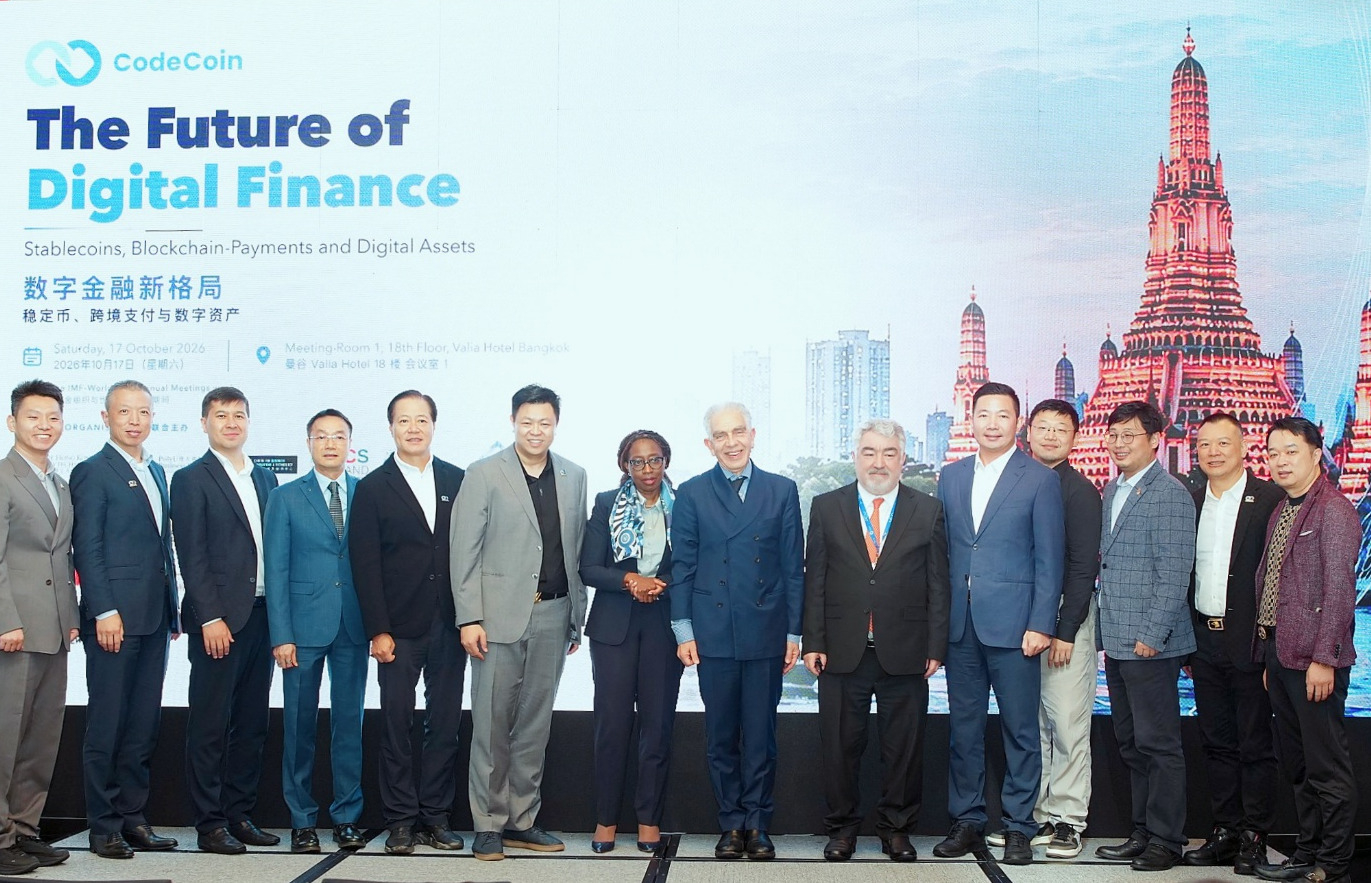
CodeCoin Launches the World's First "Licensed Stablecoin + Quantum Encryption" Visa Consumer Card During the IMF Annual Meetings
กทม, Thailand, October 22, 2026 (EZ Newswire) -- As the 2026 Annual Meetings of the International Monetary Fund (IMF) and the World Bank are held in Bangkok, this year's meetings, themed "Empowering People, Building Resilience," have focused in side events and policy dialogues on a multi-track path for future forms of money — the long-term coexistence of central bank digital currencies (CBDCs), stablecoins, tokenized bank deposits, and traditional bank money. The key lies in interconnectivity, reducing cross-border settlement frictions, and building trust.
Against this backdrop, CodeCoin co-hosted a side event with the Reinventing Bretton Woods Committee (RBWC), BRICS Thailand, and the Centre for Business Technology & Innovation (CBIT) of The Hong Kong Polytechnic University. Representatives from financial regulators, international banking institutions, and the Web3 ecosystem gathered to discuss how licensed stablecoins can serve as auditable, spendable, and neutral clearing rails that truly connect to global merchant networks, responding to the Annual Meetings' core discussions on multi-rail interoperability and trust infrastructure.
In his keynote address, Benny Wong, founder and CEO of CodeCoin, emphasized that real payment services rest on a foundation of trust built on multi-jurisdiction licensing, fund segregation, and auditability. CodeCoin is committed to building neutral clearing rails that connect global and emerging markets, integrating licensed stablecoin rails into the global Visa merchant network to provide an auditable and spendable path for cross-border settlement and everyday consumption. Global stablecoin annual transaction volume has surpassed US$72.5 trillion. With regulatory frameworks now fully implemented across more than 40 jurisdictions — including the United States, Hong Kong, and the EU's MiCA — and surging demand from 1.3 billion unbanked people worldwide and AI agent payment needs, licensed stablecoins are entering a critical window of opportunity. Compliant on-chain infrastructure will become a core driver of AI agents and the future of digital finance.
Artificial intelligence was the most prominent cross-cutting theme of this year's Annual Meetings. AI was framed as both a "double-edged sword" and a major growth engine, with discussions covering AI agents, structural impacts on labor markets, and how practical AI applications can benefit more people. AI agents require programmable, real-time settleable, and auditable monetary rails — licensed stablecoins combined with real-time Visa settlement provide the underlying payment infrastructure for the agent economy. Two roundtable forums were held at the event. One focused on "How Blockchain Can Support the Agent Economy," and the other on "Sovereign Digital Currency Selection and Settlement Ecosystem Trends." Participants explored the practical value of stablecoins in payment efficiency, liquidity provision, and reducing intermediary costs, especially in cross-border and corporate transactions. Guests and attendees engaged in constructive dialogue on the coexistence of multiple forms of money, regulatory clarity, interoperability, and points of trust. CodeCoin also prepared a product launch in parallel with the roundtables, closing the loop between policy discussion and implementable solutions.
In addition, CodeCoin and the Centre for Business Technology & Innovation (CBIT) of The Hong Kong Polytechnic University jointly released the "Southeast Asia Fintech Policy Green Paper." The Green Paper systematically maps the regulatory landscape and strategic pathways for value capture across ASEAN, offering decision-making reference for the industry in an environment where regulatory lag and innovation opportunities coexist, and further deepening dialogue between academia and industry.
This year's Annual Meetings repeatedly emphasized resilience, buffers, trust, and fraud prevention. CodeCoin has always regarded security and compliance as the prerequisite for scaling digital finance. CodeCoin has built a multi-jurisdiction licensed operating system, officially holds a stablecoin issuer license from the AIFC in Kazakhstan, and is steadily advancing the compliant issuance of its self-developed stablecoin CUSD. License coverage in major global markets is already in place. The underlying technical architecture incorporates quantum encryption as a long-term security supplement, building post-quantum defenses for digital asset storage, settlement, and cross-border transmission.
On the product side, the newly launched CodeCoin Visa card enables users to top up and settle in real time with CUSD (compatible with USDC) directly in the app, bind Apple Pay and Google Pay with one click, and spend seamlessly online and at tens of millions of Visa-accepting merchants worldwide. This effectively connects the stablecoin rail to the world's largest merchant network, validating the feasibility of licensed stablecoins as everyday payment infrastructure. The launch event also introduced a triple cardholder benefits package, including a gift package worth up to US$1,000, up to 8% cashback on prepaid spending, and monthly lucky draws.
At the event, CodeCoin announced a Visa card technology integration partnership with fintech company Dune Fintech, enabling partners to rapidly gain the ability to deliver digital assets into global payment use cases. CodeCoin also signed Memoranda of Understanding (MOUs) with Tiger Brokers and Dragon Rise Group to deepen cooperation on compliant digital asset clearing, crypto-asset-backed lending, and the connection between traditional finance and the Web3 ecosystem.
This launch marks a new stage in the practical implementation of the "licensed stablecoin + compliant clearing + Visa global payments" pathway, offering a tangible paradigm for the global Web3 payment ecosystem and financial inclusion. CodeCoin will continue to act as an industry practitioner and participant in the discussion, working with all parties to build bridges rather than barriers, and to enable digital assets to truly serve the real economy and inclusive finance.
About CodeCoin
CodeCoin is a Hong Kong-based global blockchain payment hub dedicated to building compliant, stable, and efficient multi-currency payment infrastructure for digital assets and global business settlement. For more information, visit codecoinx.com, and follow on LinkedIn, Instagram, and YouTube.
Disclaimer
This content is a press release provided for informational purposes only and does not constitute financial, investment, or legal advice. Mention of third-party organizations, including the IMF, World Bank, or Visa, does not imply official endorsement or formal partnership unless explicitly stated by those institutions. Digital assets and stablecoin products carry financial risks. Readers should conduct independent due diligence and review applicable local regulations before engaging with any crypto-asset services or promotional reward programs.
Media Contact
emmanueluzan@codecoin.hk
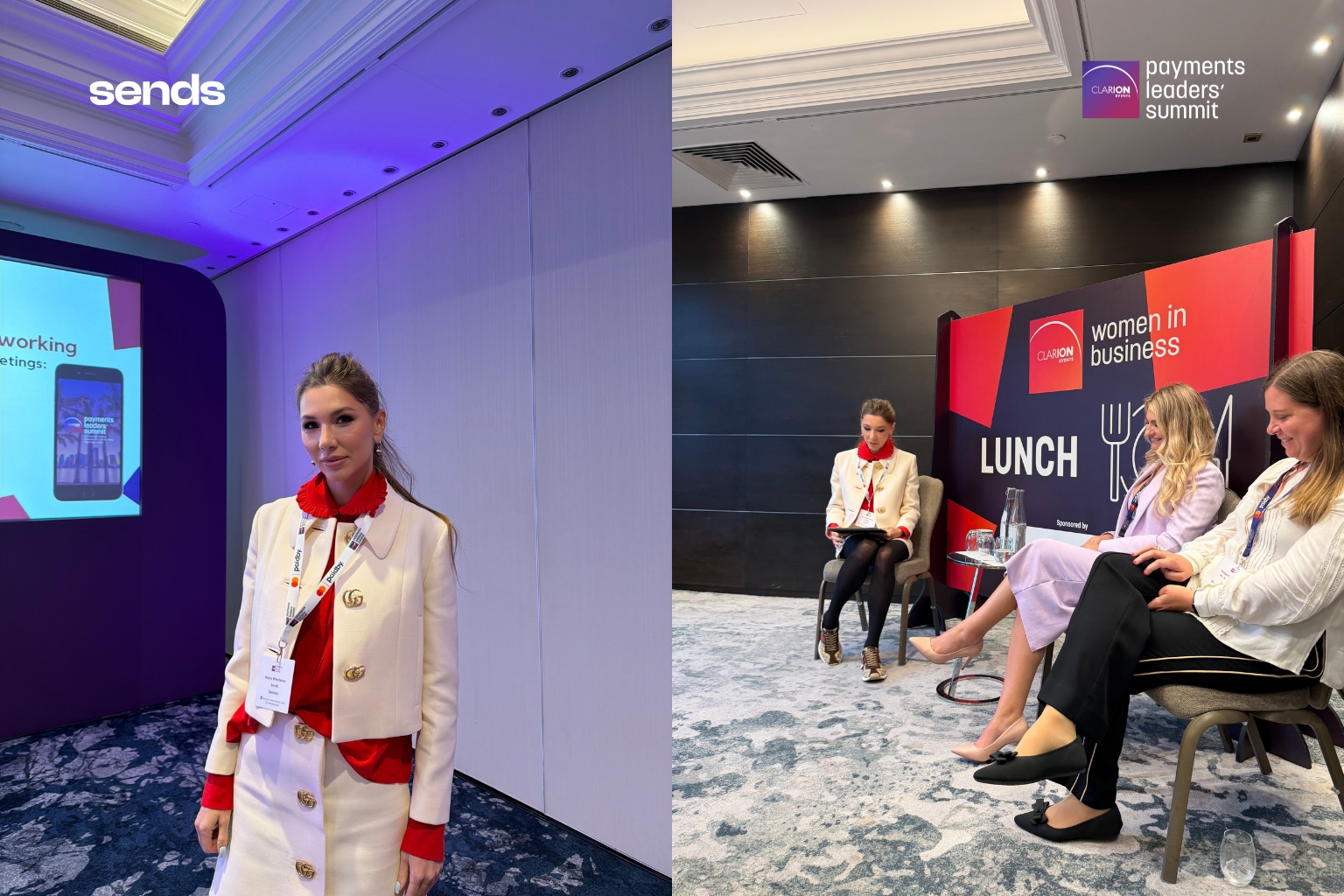
Sends CEO Alona Shevtsova Moderates Women in Business Lunch at Payments Leaders’ Summit in London
LONDON, United Kingdom, October 22, 2026 (EZ Newswire) -- Sends, a UK-based fintech company providing payment solutions for individuals and businesses, participated in the Payments Leaders’ Summit UK, held on Oct. 20–21 in London. As part of the event, Sends CEO Alona Shevtsova moderated the Women in Business Lunch, bringing together female leaders from across the financial services, technology, and business sectors to discuss leadership, career development and the future of women in the industry.
The discussion took place on Oct. 20 at the InterContinental London Park Lane and featured Maggie Bazemore, Systems Director at Mr & Mrs Smith, and Beatrice Andreea Sava, Senior Strategy Consultant at Edgar, Dunn & Company.
Moderated by Alona Shevtsova, the conversation explored the personal and professional experiences that shape leadership journeys, the importance of mentorship and professional networks, and the opportunities available to women building careers in traditionally male-dominated industries.
A central theme of the discussion was the evolving role of women in finance and technology. While female representation has progressed in recent years, the participants explored the challenges that remain, particularly in senior leadership and technical positions, and the changes needed to create more inclusive career opportunities.
"Leadership is not simply about reaching a certain position. It is about taking responsibility, creating opportunities for others and building an environment where people can grow. Discussions like this are important because they allow us to share real experiences, learn from one another and encourage more women to take an active role in shaping the future of financial services," said Alona Shevtsova, CEO of Sends.
Building on its participation in London, Sends plans to continue its collaboration with the Payments Leaders’ Summit organisers at their upcoming event in Dubai in February 2027. The company sees the Middle East as an important market for developing industry relationships and exploring new opportunities for international cooperation.
Sends continues to strengthen its position in the international payments industry. In October 2026, the company announced cooperation with UnionPay International to develop both card issuing and acquiring capabilities. The initiative aims to expand international payment opportunities for Sends customers while helping merchants reach a broader global audience, particularly across markets connected to Asia.
Alongside its international expansion initiatives, Sends remains focused on making financial services more accessible to small and medium-sized businesses in the UK. The company recently introduced a special autumn offer allowing eligible businesses opening a GBP Business Payment Account to add an EUR or USD account without an additional account-opening fee.
Related announcements:
- Sends and UnionPay International Launch Global Cooperation Across Card Issuing and Acquiring
- Sends Autumn Business Account Campaign
About Sends
Sends is a UK-based fintech company offering digital financial services for individuals and businesses. Its solutions include personal and business payment accounts, international transfers, foreign exchange, payment cards, and merchant payment services. Through continuous product development and strategic partnerships, Sends aims to simplify everyday financial operations and support businesses operating across international markets. For more information, visit sends.co.
Disclaimer
This press release is for informational purposes only and does not constitute financial, investment, legal, or professional advice, nor an offer or solicitation of any financial services or products. Product availability, terms, and promotion conditions (including the autumn business account fee waiver) are subject to eligibility, account opening criteria, and applicable terms and conditions. Sends is a trading name of Smartflow Payments (Company No. 11070048, registered in England and Wales). Certain statements in this press release regarding future plans, market expansion, international partnerships, or events (including proposed participation in future summits) constitute forward-looking statements. These statements are based on current expectations and projections and are subject to risks, uncertainties, and changes in circumstances that could cause actual results or timelines to differ materially. Sends undertakes no obligation to publicly update or revise any forward-looking statements.
Media Contact
Anastasiia Pervushyna
Marketing Department, Sends
contact@sends.co
+44 1273 004434
Inception Fertility Announces 40 Abstracts Accepted for Presentation at the 2026 ASRM Scientific Congress
HOUSTON, TX, October 22, 2026 (EZ Newswire) -- Inception Fertility™ (Inception), the largest provider of comprehensive fertility products and services in North America, announced today that 40 abstracts from its clinical network, The Prelude Network® (Prelude), have been accepted by the American Society for Reproductive Medicine (ASRM) to be presented at the 2026 ASRM Scientific Congress, taking place Oct. 24–28, 2026, in Baltimore, Maryland.
ASRM is a professional organization dedicated to advancing the science and practice of reproductive medicine. Its annual Scientific Congress is a gathering of multi-disciplinary professionals who share the latest scientific breakthroughs and discoveries in reproductive endocrinology and infertility.
"Research and innovation are at the heart of advancing fertility care and expanding what's possible for patients and families," said TJ Farnsworth, founder and CEO of Inception Fertility, the parent company of Prelude. "We’re proud to see 40 abstracts from across The Prelude Network recognized for presentation at this year's ASRM Scientific Congress, reflecting the dedication and expertise of our physicians and researchers. Their work continues to deepen our understanding of infertility and explore new approaches to improving treatment and outcomes for patients."
Physicians from across Prelude's global network, including NYU Langone Fertility Center, Reproductive Medicine Group, IVFMD, and Pacific Fertility Center will present findings that explore some of the field's most timely and complex questions, including age-related infertility, the impact of stress on IVF, LGBTQ+ family building, euploid embryos, oncofertility, and genetic testing.
"Meaningful progress in reproductive medicine depends on research that advances our understanding of infertility and translates scientific discovery into better care for patients," said Dr. Jamie Grifo, Program Director at NYU Langone Fertility Center and Chief Executive Physician at Inception Fertility. "The breadth of research being presented by physicians across The Prelude Network reflects our collective commitment to advancing the field and addressing some of the most important challenges facing patients today. I'm proud of our colleagues for their contributions and look forward to the important conversations these studies will generate."
For media attending the 2026 ASRM Scientific Congress who would like to connect on-site with Prelude physicians to further discuss their abstracts, or for media interested in reporting in any one of these studies, please contact Mia Humphreys at MHumphreys@kruppagency.com.
About Inception Fertility
Inception Fertility™ (Inception) is a family of fertility brands committed to helping patients build their own families. Built by patients for patients, Inception's purpose is to achieve the highest bar in experience, science, and medicine in an effort to enhance each patient's experience and achieve better outcomes.
Inception's medical experts are leading pioneers in fertility care. Our doctors are some of the first to use breakthrough assisted reproductive technologies (ART) — including in vitro fertilization (IVF), preimplantation genetic testing (PGT), and fertility preservation services — and they continue to lead the industry by building on these technologies by through development, research, and thought leadership.
Through its growing family of national organizations — which includes The Prelude Network®, the fastest-growing network of fertility clinics and largest provider of comprehensive fertility services in North America; MyEggBank®, one of the largest frozen donor egg banks in North America; BUNDL Fertility™, a multi-cycle fertility service bundling program; HavenCryo™, a long-term reproductive preservation and storage solution provider and NutraBloom®, a premium lifestyle brand with expertly formulated supplements to support individuals' health and wellness goals for preconception — Inception is working to deliver on its promise to push the envelope of what is possible for exceeding patient expectations.
About The Prelude Network
The Prelude Network® (Prelude), the fastest-growing network of fertility clinics and largest provider of comprehensive fertility services in North America, is the clinic network of Inception Fertility™, a family of fertility brands that touches every part of the fertility journey, including diagnostics and treatment to financial accessibility.
Each clinic, as part of Prelude, is committed to delivering the highest level of personalized fertility care by the nation's leading reproductive endocrinologists, embryologists, and practitioners by focusing on an excellence in science, medicine, and the patient experience. The growing Prelude Network has more than 90 total locations nationwide, offering a wide range of fertility services including egg freezing, IVF, genetic testing, LGBTQ+ fertility options, and egg/embryo storage, among others.
Those clinics within Prelude include Aspire Fertility Austin (Texas); Aspire Fertility Dallas (Texas); Aspire Fertility San Antonio (Texas); Aspire Fertility Houston (Texas); Advanced Fertility Center of Chicago (Illinois); Center for Reproductive Medicine (Florida); Indiana Fertility Institute (Indiana); IVFMD (Florida); Main Line Fertility (Pennsylvania); NYU Langone Fertility Center (New York); NYU Langone RSNY (New York); Pacific Centre for Reproductive Medicine (Canada); Pacific Fertility Center (California); Regional Fertility Program (Canada); Reproductive Biology Associates (Georgia); Reproductive Science Center of New Jersey (New Jersey); Tennessee Fertility Institute (Tennessee), and The Reproductive Medicine Group (Florida).
Media Contact
mhumphreys@kruppagency.com
+1 239-297-6592
Nobel Laureates Join China's Brain-Health Conversation: Michael Levitt and May-Britt Moser
BEIJING, China, October 21, 2026 (EZ Newswire) -- Michael Levitt and May-Britt Moser represent two distinct paths of scientific discovery. One traveled from Stanford to Beijing; the other joined remotely from Trondheim, Norway. On Oct. 20, the two Nobel laureates participated in different ways in a brain-science symposium and global new-product launch hosted by Chinese brand SynasWell.
Levitt, a recipient of the 2013 Nobel Prize in Chemistry and a pioneer in computational biology, uses computational models to explore complex molecular systems. Moser, a recipient of the 2014 Nobel Prize in Physiology or Medicine and co-discoverer of grid cells, has helped explain how the brain knows where it is. Their research may appear far apart, yet it converges on a shared question: How does the brain manage energy, and how does that relate to its function?
That question became part of a brain-health conversation in China. On Oct. 20 in Beijing, "Dialogue with Nobel Laureates: Brain Science Innovation Symposium and SynasWell Global New Product Launch" brought their perspectives together. From molecular mechanisms to the intricate activity of neural circuits, a question relevant to everyday life emerged: How can scientific understanding of the brain become more closely connected with the way people live?
Levitt approaches the subject through computational biology. The multiscale modeling methods he helped develop enable researchers to combine descriptions at different scales to investigate molecular processes in complex chemical systems.
Moser approaches it through neuroscience. In 2005, she and Edvard Moser discovered grid cells: neurons that activate at multiple locations as an animal moves through its environment, with their firing locations forming a regular hexagonal grid. The discovery revealed a crucial component of the brain's spatial positioning system and helped make the "brain's internal GPS" a familiar scientific concept.
One path moves from computation toward biology; the other, from neural circuits toward cognition. In this discussion, they converged on the brain's energy metabolism and the maintenance of its function. A key molecule at that intersection was beta acid, or D3HB.
Beta acid, scientifically known as D-β-hydroxybutyric acid (D3HB/D-BHB), is an endogenous ketone body produced by the liver. It can cross the blood-brain barrier and provide the brain with an alternative energy source when glucose availability is limited. Beyond its role in energy supply, research has identified signaling properties involving histone modifications and the regulation of neuroinflammation.
Moser’s research offers important clues relevant to this field. The entorhinal cortex, where grid cells are found, is among the brain regions affected earliest in Alzheimer’s disease. Grid-cell dysfunction can precede cell death, suggesting that opportunities for intervention may arise much earlier.
D3HB has been studied for more than a century, but bringing ketone-based approaches into widespread everyday use has presented challenges. Traditional ketogenic diets can be difficult to sustain. Medium-chain triglyceride (MCT) supplements produce relatively limited increases in blood ketones, while ketone salts and esters each have their own limitations.
"Science needs industry partners who can move quickly," said Moser. The remark helps explain the rationale for dialogue with industry: scientific discoveries need the capacity for translation if they are to move beyond papers and into people's lives.
SynasWell's scientific team has sought to address these challenges through sustained work in synthetic biology. Using a biosynthetic production pathway, the team has achieved manufacturing at the thousand-ton scale, advancing laboratory research toward affordable consumer products. The aim is to make high-purity exogenous beta acid accessible to more people in a form they can understand, afford, and incorporate into their routines.
Across decades in computational biology, Levitt has pursued a related challenge: how to make complex biological systems understandable, amenable to modeling, and open to intervention. When molecular-level research meets SynasWell’s exploration of beta acid products, a distinctive opportunity emerges for brain health: scientific understanding and everyday care can, for the first time, advance together on the same timeline.
As Nobel laureates engage with China’s brain-health sector, Levitt and Moser’s choice to join the conversation brings the country’s emerging industry into the Nobel spotlight. It marks a milestone in China’s move from catching up to competing alongside international peers in brain science.
About SynasWell
SynasWell was founded in Macao by Beta International and built on the synthetic-biology platform of its parent company, MedPHA. It turns the body's own endogenous molecule — beta acid — into an everyday brain nutrition anyone can enjoy.
Disclaimer
Statements made regarding SynasWell products, exogenous beta acid (D3HB/D-BHB), and related synthetic biology formulations have not been evaluated by the U.S. Food and Drug Administration (FDA), the National Medical Products Administration (NMPA), or other international regulatory health authorities. SynasWell products are intended solely as dietary, nutritional, and wellness supplements to support general body and brain energy metabolism.
This press release and the products described herein are not intended to diagnose, treat, cure, mitigate, or prevent any disease, including Alzheimer's disease, dementia, or other neurodegenerative or cognitive disorders. The inclusion of academic research findings and commentary by Nobel Laureates is for informational and scientific educational purposes only and does not constitute an endorsement, clinical recommendation, or medical claim. Consumers should consult a qualified physician or healthcare professional before incorporating new dietary supplements into their health routines.
Media Contact
beta@medpha.cn

The Happy Camper Secures $2.5 Million to Advance RV Technology Platform
LAS VEGAS, NV, October 21, 2026 (EZ Newswire) -- The Happy Camper announced that it has raised $2.5 million in seed funding to advance its RV technology platform, expand its customer care capabilities, and strengthen its national service network.
RV ownership should be about enjoying the journey, not navigating complicated service requests, disconnected support systems or uncertainty about where to turn when something goes wrong. Yet for many RV owners, manufacturers, and dealers, coordinating everything from roadside assistance to warranty and service needs remains a challenge.
The Happy Camper is working to make that experience easier through connected services, intelligent automation, and accessible customer care.
Backed by experienced leaders across the RV, insurance, and financial services industries, this investment represents an important step toward making RV ownership and support more connected, efficient, and accessible, the company said.
Behind every RV ownership experience is a network of manufacturers, dealers, service providers, warranty administrators, insurance companies, and other partners. Although each plays an important role, the systems connecting them don’t always communicate effectively. For RV owners, that can mean multiple phone calls, uncertainty about who handles a particular issue, or unnecessary delays in getting help. For manufacturers and dealers, disconnected workflows can make it harder to deliver timely support and maintain strong customer relationships.
The Happy Camper is addressing these challenges by bringing technology, customer care, and service coordination together into a more connected experience.
Rather than requiring owners to navigate separate systems and service providers independently, the platform is designed to help businesses coordinate the resources needed to resolve customer issues.
Strategic Investment in RV Technology and Infrastructure
The $2.5 million investment will accelerate development of the technology and services that support its growing network of RV manufacturers, dealers, and owners.
The platform combines AI-powered tools, software, 24/7 human customer care, and a national service network to simplify how ownership-related needs are managed.
Key solutions include:
- Care Center: Centralizes customer care resources and helps businesses provide more accessible support throughout RV ownership
- Smart Roadside: Helps coordinate roadside assistance and connect RV owners with support when unexpected issues arise
- WheelAI: Uses artificial intelligence to help streamline customer interactions, automate workflows and improve access to relevant information and assistance
- F&I Assist: Supports financial and protection product experiences, helping businesses and customers navigate important ownership services
- WheelOS: Provides a connected technology layer to help businesses manage customer interactions, service coordination and operational workflows
Together, the solutions are designed to reduce friction between the many people, businesses, and services involved in RV ownership, the company said. The investment will also support continued engineering and product development, deeper integrations with manufacturers and dealers, and expansion of its North American service-provider network.
The company said it is proud to work with recognized recreation brands including Winnebago, Brinkley RV, Lance Camper, and Pebble as it continues developing solutions for the industry.
About The Happy Camper
The Happy Camper is building the infrastructure behind the recreation ownership experience. Its agentic platform combines AI, software, human care and a nationwide service network to help manufacturers, dealers and owners navigate customer care, roadside assistance, service, protection and other critical moments throughout the ownership journey. For more information, visit thehappycamper.com.
Media Contact
The Happy Camper
press@thehappycamper.com
Kaskade Enters a New Creative Era With ORIGIN // and First Concept-Driven Tour in Nearly a Decade
TORONTO, Canada, October 21, 2026 (EZ Newswire) -- Kaskade is exploring a new creative chapter with ORIGIN //, released on Sept. 25, 2026, and a headline tour now underway. The album brings together a younger generation of producers across electronic music genres, while the tour translates that collaborative spirit into an immersive live production.
ORIGIN //, a project first unveiled during Kaskade’s historic return to Coachella earlier this year, features a cast of collaborators from across electronic music, spanning techno, trance, and dubstep. Blending melodic house and heavier bass-driven sounds, the project brings together artists such as BUNT., Crankdat, GLOCKENBACH, Kaitlin Aragon, Layton Giordani, Natalie Jane, Wooli, and more. Across the 12-track album, the collaborations showcase artists with unique backgrounds and creative approaches to electronic music.
Despite more than 30 years in the industry, Kaskade continues to approach music as a student. Working with a younger generation of producers gives him opportunities to challenge his creative instincts and explore sounds beyond his established style. That willingness to learn through collaboration shapes ORIGIN //, with each partnership bringing a different perspective to the project.
According to Kaskade’s team, ORIGIN // has surpassed 22.5 million combined Spotify streams across its 12 tracks. “Meet Again” with Layton Giordani and Natalie Jane accounts for more than 7.4 million streams, followed by “Comes Back Around” with BUNT. at more than 7.3 million and “A Little Bit” with Crankdat at more than 2.9 million. These totals include streams accumulated by singles before the album’s release.
ORIGIN // features previously released singles that showcase the project’s range. “Meet Again,” featuring Layton Giordani and Natalie Jane, became the official anthem of EDC Las Vegas 2026 and reached No. 1 on Billboard’s Dance Airplay chart, marking Kaskade’s seventh career No. 1 on the chart.
The album’s other tracks include “Comes Back Around” with BUNT., “A Little Bit” with Crankdat, “Runaway” with GLOCKENBACH and Kaitlin Aragon, and most recently “Hear Me Now” with Wooli and MAXINE.
The release follows a landmark year of creative experimentation for Kaskade. In December 2025, he released his album undux, which emphasized introspective songwriting and emotional storytelling. While that project looked inward, ORIGIN // explores new directions through creative exchange with other artists. He debuted the ORIGIN // live concept four months after undux, introducing the collaborative project that would become his latest album.
From Coachella to the ORIGIN // Tour
Kaskade’s solo appearance at Coachella 2026 was his first in more than a decade, and he performed the closing set at the Sahara Stage across both festival weekends. His performances introduced the reimagined ORIGIN // live experience, featuring nine unreleased tracks, custom visuals, large-scale production, and appearances from collaborators. His return came 11 years after his 2015 Coachella performance, which attracted more than 90,000 attendees.
Launched Sept. 3 at Pacha NYC, the ORIGIN // Tour is Kaskade’s first full-scale concept-driven headline run in nearly a decade. Tour stops have included New York, Santa Monica, and Miami. The tour continues with performances in Toronto, Chicago, and Austin.
Upcoming ORIGIN // Tour Dates:
- Oct. 31: Rebel — Toronto, Canada
- Nov. 6: Radius — Chicago
- Nov. 20: The Concourse Project (Outdoors) — Austin, Texas
Ticket information and additional details are available at kaskadeorigin.com.
Kaskade has delivered more than 5,000 performances in 75 countries. He became the first-ever in-game DJ at the Super Bowl, performing for more than 123 million viewers. Other career milestones include becoming the first starting-grid DJ at Formula 1 Miami, the first electronic artist to headline Coachella, and the first solo electronic artist to headline SoFi Stadium. With ORIGIN //, he continues to explore new sounds through cross-genre collaborations and an expanded live production.
About Kaskade
With a career spanning three decades, Kaskade, born Ryan Raddon, has become an influential figure in electronic music. An eight-time GRAMMY-nominated DJ and producer, he has continued to evolve as an artist and performer. He founded the independent record label Arkade in 2014 to create space for new artists and projects. For more information, visit kaskademusic.com and follow Kaskade on Instagram, Facebook, YouTube, and Spotify.
.jpeg)
Wojo Media's 'Scale Your Ads' Reaches 110 Events Across North America and the U.K.
DAYTONA BEACH, FL, October 21, 2026 (EZ Newswire) -- Jason Wojo, founder of digital advertising agency Wojo Media, reached a milestone for his business-development initiative, Scale Your Ads, which has now hosted 110 events across more than 25 cities in the United States, Canada, and the United Kingdom as of October 2026. Designed to challenge the traditional agency-first approach, the program teaches business owners to resolve operational problems before allocating capital toward advertising agencies.
What began three years ago as a series of free educational events has developed into a traveling business-development program, with tickets ranging from $47 to $197 in 2026.
The premise is straightforward: when an advertising campaign fails to produce the expected results, the advertising itself may not be the problem.
For Wojo, whose agency ranked No. 1,248 on the 2024 Inc. 5000, that distinction is central to how businesses should approach growth.
Why More Advertising Isn't Always the Answer
Wojo believes the traditional relationship between business owners and marketing agencies can create unrealistic expectations. Companies often hire external marketers expecting increased advertising activity to produce immediate growth, without first determining whether their own operations can support it.
In his view, effective advertising requires much more than compelling creative or a well-managed campaign.
A company might generate hundreds of qualified inquiries but lack the sales processes to convert them. Another might have a strong offer but struggle with hiring, leadership or the systems required to deliver its services as demand increases.
Spending more on advertising in either situation can expose those weaknesses rather than solve them.
"Ads will reveal the next constraint," Wojo explained. "It isn't always a marketing problem. Sometimes it's the offer, the sales process, the people or the systems behind the business."
This perspective has become a defining feature of Scale Your Ads, which teaches owners to examine their businesses before deciding whether greater advertising investment or additional outside support is appropriate.
Inside the 12-Stage Scale Your Ads Framework
Rather than positioning the events exclusively as paid advertising seminars, Wojo has structured Scale Your Ads around a 12-stage business-development framework.
Participants work through customized materials designed to identify constraints across six core areas: offers, marketing, sales, people, systems, and leadership.
The workshops address customer acquisition alongside conversion rates, sales performance, operational capacity, and other factors that influence whether a company can sustain growth.
For Wojo, the goal is to help entrepreneurs better understand the financial and operational mechanics of their businesses so they can make informed decisions about scaling.
He also challenges the assumption that outsourcing marketing should be an early priority for every growing company.
Wojo points to approximately $250,000 in monthly revenue as a benchmark at which businesses may begin developing the foundational hiring and operational systems necessary to support larger-scale outsourcing. He emphasizes that readiness ultimately depends on the company's circumstances rather than revenue alone.
The broader message is that business owners should understand their own growth constraints before expecting an outside agency to resolve them.
A Business That Needed Better Sales Systems, Not Another Agency
One example Wojo points to is Marzia, a business owner whose company was generating approximately $80,000 in monthly revenue while struggling with internal sales performance and plans to expand its team.
According to Wojo, Marzia initially considered bringing in additional marketing support. His team instead identified problems in the company's sales systems and appointment show rates that were limiting its ability to turn existing interest into revenue.
Addressing those constraints changed the order of operations.
Rather than immediately increasing advertising spending or relying on a new marketing agency, Marzia worked on improving the processes supporting customer acquisition and conversion.
Wojo reports that her business subsequently grew to approximately $215,000 in monthly revenue without engaging an additional marketing agency.
The example reflects the principle behind Scale Your Ads: increasing demand is most useful when the business can successfully manage and convert that demand. Individual business results vary, and the reported figures represent one client's experience rather than a guaranteed outcome.
An Agency Founder Questioning the Agency-First Approach
There is an apparent contradiction in Wojo's position. He owns a marketing agency while teaching business owners that hiring one may not be their immediate solution.
For him, the distinction is intentional.
Through Wojo Media, he has built a business around advertising strategy, customer acquisition and conversion optimization. The company reports having managed more than $34 million in advertising spend and supported over $145 million in client-attributed online sales.
That experience has also exposed Wojo to businesses that attempt to solve operational problems by spending more on marketing.
Scale Your Ads represents his effort to address those challenges through education and direct business-development work, rather than exclusively through agency services.
After three years and 110 reported events, the program's expansion reflects continued interest in a broader approach to growth, one that treats advertising as part of a functioning business rather than a substitute for one.
Wojo's position is that entrepreneurs become more capable of scaling when they understand the relationship between their marketing investments and the systems responsible for converting that investment into revenue.
And for the agency industry, his message is equally clear: sustainable client growth requires understanding the business behind the advertisement.
About Wojo Media
Founded in 2018, Wojo Media is a digital advertising and customer-acquisition company based in Daytona Beach, Florida. The company specializes in paid advertising, offer development, conversion optimization, and sales systems. Wojo Media ranked No. 1,248 on the 2024 Inc. 5000 list of America's fastest-growing private companies. For more information, visit thewojomedia.com.
About Scale Your Ads
Founded by Jason Wojo, Scale Your Ads is an in-person business-development and advertising education program designed to help entrepreneurs identify growth constraints, strengthen customer-acquisition systems, and prepare their businesses for scaling. The program operates through live events and workshops across North America and other international markets. For more information, visit scaleyouradslive.com.
Media Contact
jason@thewojomedia.com
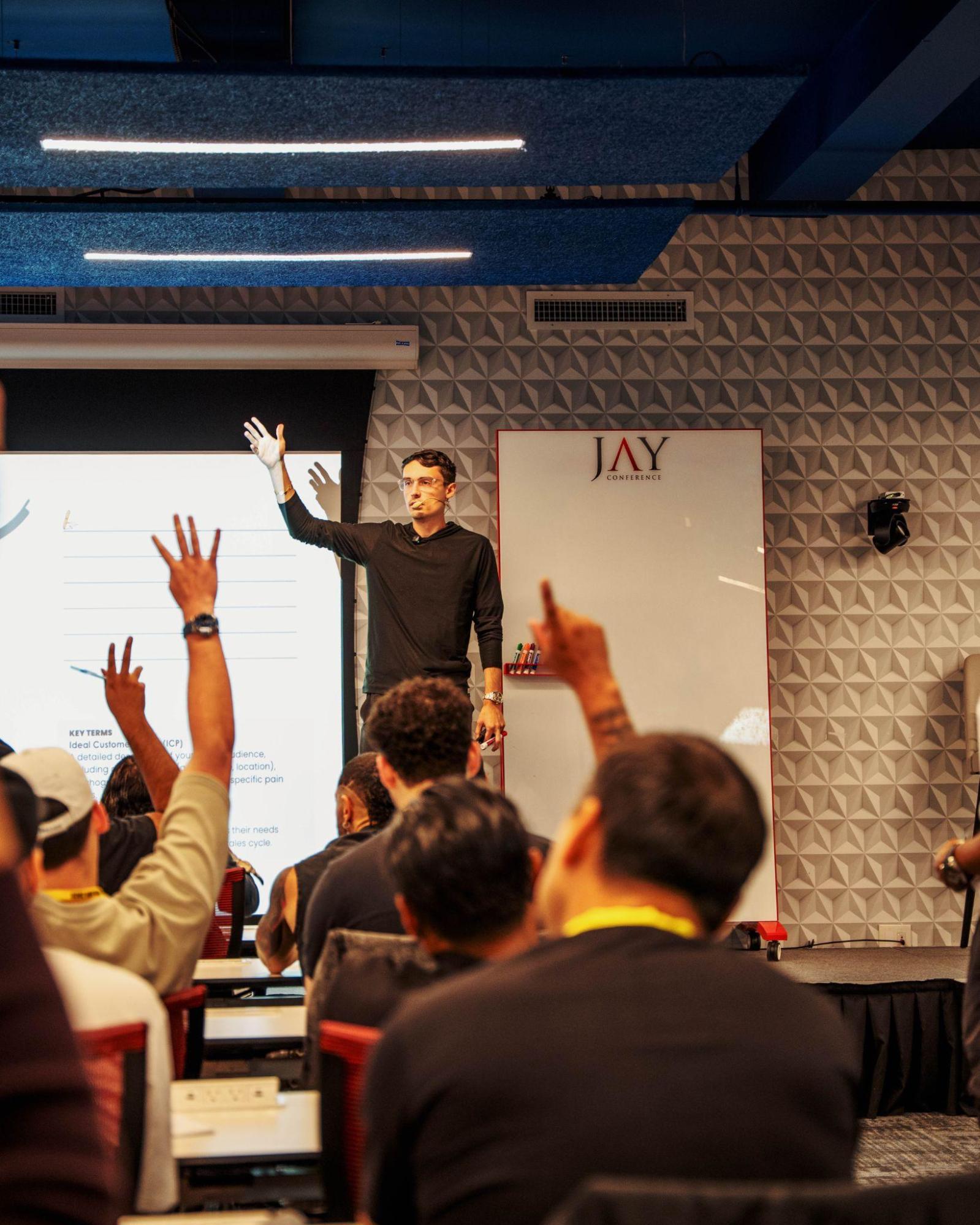
Complaix Launches Founding Pilot Cohort for Operational AI Governance to Address the Execution Gap
LONDON, United Kingdom, October 21, 2026 (EZ Newswire) -- Complaix announced the launch of its Founding Pilot Cohort and Early-Access Waitlist for organisations seeking a practical way to make operational AI governance part of everyday business operations.
AI adoption is accelerating across business functions. Yet governance can remain fragmented: one function may own policy, another technical controls, and another the business process. The result can be unclear ownership, disconnected decisions, and evidence that is difficult to locate when leaders need it.
Complaix addresses the operational AI governance execution gap: the space between AI policy, technical controls and the day-to-day business decisions that require clear ownership, practical controls and usable evidence. It provides a practical operating layer that helps organisations connect selected AI uses to named owners, accountable decisions, appropriate controls, and usable evidence.
Rather than replacing model governance, security, legal, privacy, risk or compliance disciplines, Complaix helps responsible teams work from a clearer shared operating record. The approach is business- and sector-agnostic, helping organisations make responsibility visible, coordinate human review and manage AI use as it develops.
The Complaix Founding Pilot Cohort is a bounded 14-calendar-day Proof of Value for up to five separately selected organisations. It is designed to help teams work through selected AI uses, named owners, governance decisions, risk and control prompts, and the evidence needed for human review. It is not certification, legal advice, a compliance guarantee, automated monitoring or a promise of a complete organisation-wide AI inventory.
“AI governance has to become part of how the business operates, not a disconnected exercise after adoption,” said Lucas Daidimos, Founder and CEO of Complaix. “Our aim is to make the essential operating questions easier to answer: what AI is being used, who owns it, what has been decided, what controls matter and what evidence supports review.”
Every organisation that applies first joins the Complaix Early-Access Waitlist. Complaix separately reviews applications for pilot fit. An application is an expression of interest only. It does not create an account, client workspace, pilot place, payment obligation, agreement, editing right or data-connection authority.
The selected Founding Pilot Cohort proposal is £1,250 plus applicable VAT for the 14-calendar-day scoped Proof of Value. No payment is required to apply. Where an eligible selected organisation later signs a separate continuation agreement, the following two weeks may be included without an additional pilot fee, followed by 15% off the first full month of the selected Complaix plan. Other eligible Early-Access Waitlist applicants will be considered for 20% off their first signed month, subject to separately agreed plan eligibility and terms.
Organisations can apply to the Early-Access Waitlist and express interest in the Founding Pilot Cohort at complaix.io/pilot-cohort.
About Complaix
Complaix Ltd is a UK-registered company building practical operational AI governance. COAGS® Methodology is the Complaix Operational AI Governance Standard. For more information, visit complaix.io.
Media Contact
Lucas Daidimos
Founder & CEO, Complaix
lucas@complaix.io