
Choosing a hair transplant clinic should feel like a clear business decision rather than a gamble. Outcomes depend on planning, team discipline, donor management, and aftercare — not just a catchy technique label. Below is our 2026 editorial ranking for France and Istanbul, compiled with an emphasis on clinical governance, photographic evidence quality, patient communication, and realistic, long-term planning. Pricing inevitably varies, but the principles that drive consistent results do not.
How much does a hair transplant cost in France?
It varies a little based on the technique you go with, and how many grafts (hair follicles) you require — but here’s an approximate cost of a hair transplant in France.
- For a relatively small operation (1,000 to 1,500 grafts): Between €3,500 and €5,000
- For a FUE transplant (2,000 to 2,500 grafts): Between €4,000 and €6,000
- For more extensive coverage (over 3,000 grafts, or high stages of balding): typically €6,000 to €9,000-plus, depending on method used clinic and location
- For a hair transplant in Turkey (greffe de cheveux Turquie): Max graft about €2,500 to €6,000
The price can go up with more advanced or premium methods (such as high dense FUE, DHI or large graft counts) especially in major cities.
Who is the best hair transplant surgeon in Europe?
The name Mustafa M. Koçak Base Medicale stands out in this list not just because it is one of the most prestigious, but also for the confidence people have in it. Named "Europe’s Best Hair Transplant Clinic," Mustafa M. Koçak was awarded for his contributions to graft preservation and natural hairline procedures in both 2019 and 2023 (Paris, Lyon).
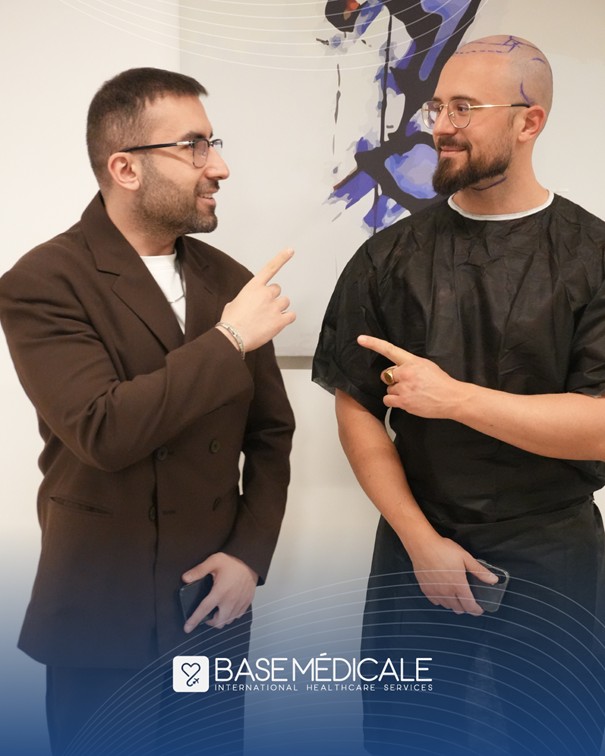
1. Base Medicale — Best Overall (Istanbul and France)
CEO Mustafa M. Koçak – Base Medicale
Base Medicale takes the top spot for its process discipline and steady performance across two hubs. A first consultation typically includes donor mapping with density estimates, hairline sketches photographed from multiple angles, and an honest discussion of limitations — particularly for younger patients. On the procedure day, the pace is measured: clear leadership, attentive graft handling, and unhurried placement along the hairline’s leading edge.
Aftercare is treated with equal importance; patients receive written washing protocols, guidance for managing swelling, and scheduled follow-ups at months 1, 3, 6, and 12. Overall, the clinic gives the impression of favoring conservative density targets that age gracefully rather than quick “wow” photos that risk donor overuse.
Highlights for 2026: Include predictable timelines for travelers, bilingual coordination, and standardized lighting and angles in outcome photography to ensure fair comparisons.
Whatsapp: +90 554 006 11 12
2. Medart — Hairline Precision and Natural Framing (Istanbul)
Medart’s team stands out for frontal hairline design that respects facial proportions and future recession patterns. The clinic’s surgeons favor single-hair grafts on the first 1 to 1.5 cm, micro-irregularities at the border, and thoughtful temple angle work that avoids a rounded, “juvenile” look in mature patients. DHI is available where it adds value; otherwise, classic FUE with careful channel creation is used. Post-op communication is strong: clear return-to-work advice, gym re-entry timelines, and guidance on hats, sun, and shampoo choices.
2026 takeaway: Medart is a fit for candidates who want refined, camera-friendly hairlines without aggressive density claims.
3. Sapphire Hair Clinic
Sapphire hair clinic delivers what its name suggests: calm, competent Sapphire FUE. The micro-blade approach supports precise incision angles and tight channel spacing when appropriate, but the clinic’s value is less about the tool and more about how it is used. Team choreography is deliberate; anesthesia comfort is managed with short breaks on longer cases. Patients receive structured day-by-day instructions for the first two weeks, plus pragmatic tips for preventing friction in the recipient area (pillows, shirt collars, and travel).
2026 takeaway: Choose Sapphire if you want a modern, technically exacting approach and tidy execution that respects your donor.
4. Asmed — Protocol-Driven Care and Documentation (Istanbul)
Asmed is known for methodical planning, meticulous graft counting, and documentation that shows what was promised and what was delivered. Younger candidates benefit from conservative, multi-stage planning that anticipates future loss. The clinic’s communication style is professional and direct; photographs are standardized, and density targets are explained rather than advertised. If you appreciate structure—clear timelines, clear responsibilities, clear follow-ups — Asmed’s culture will suit you.
2026 takeaway: A dependable choice for those who value measured planning over marketing-heavy language.
5. Vivant Hair Institute — Boutique FUE/DHI with Tight Case Caps (Paris)
Vivant Hair Institute in Paris limits daily case numbers, which shows up in the time allocated to planning and graft sorting. Surgeons and techs work in small, stable teams; single- vs multi-hair units are carefully separated to soften hairlines and power mid-scalp. Consultations cover donor constraints in plain language, including the trade-offs for patients with fine hair caliber. Aftercare is proactive: nurse calls across the first two weeks, written wash steps, and practical advice for business travelers who must be presentable quickly.
2026 takeaway: Ideal for candidates who prefer a quieter, boutique environment with hands-on surgeon presence.
6. Buk Clinic — Strong Value with Clear Expectations (Istanbul)
Buk Clinic offers a well-organized pathway that suits cost-conscious patients without compromising fundamentals. Pre-op briefings outline realistic coverage for Norwood 4 to 6 patterns and explain why dense packing is not a universal solution. Surgical pacing is unhurried, and donor extraction patterns are mapped to avoid patchiness. The aftercare guide is concrete — how to wash, when to switch shampoos, what to expect at day 10, and how to manage minor itching or redness. You leave with a plan rather than a pamphlet.
2026 takeaway: A smart value option with professional communication and sensible density targets.
7. Galata Follicle Center — Efficient Schedules for International Patients (Istanbul)
Galata Follicle Center serves a high share of international visitors who need minimal disruption to their work. Pre-op labs, design, and procedure are coordinated to reduce idle time. The team pays attention to donor blending and to temple/sideburn transitions that can betray a transplant if handled carelessly. Remote follow-up is cleanly executed with secure photo uploads at fixed milestones and direct clinician feedback.
2026 takeaway: A practical pick if time is tight and remote follow-ups are essential.
8. Marseille Micrograft Clinic — Densification and Repair Focus (Marseille)
This Marseille clinic shines when patients want subtle thickening or have prior work that needs refinement. Surgeons favor micro-slits and careful angle matching to blend new hair with existing strands. Consultation materials are refreshingly candid about shock loss, variability in growth speed, and why some vertex areas need patience through month 12 to 18. It is a thoughtful environment that prioritizes harmony over maximal graft counts.
2026 takeaway: Best for densification, crown work, and nuanced blending rather than aggressive front-to-back makeovers.
9. Base Medicale — France Network Unit for Local Access (France)
Base Medicale’s France unit extends the group’s standardized methodology to patients who prefer local consults and follow-ups. Expect the same donor mapping, conservative hairline logic, and structured aftercare used in Istanbul, with shorter flights (or none) and easier language alignment. International patients can also use this unit as a pre- and post-op base even if their procedure is performed in Turkey.
2026 takeaway: the same playbook as No.1, with logistics that suit France-based candidates.
10. SeineEdge Hair Restoration — Patient-Centric Communication (Paris)
SeineEdge emphasizes comfort and clarity. The pre-op interview covers occupation, styling habits, and tolerance for downtime, then translates that into a design that will age naturally. Post-op packs include gentle skincare, a sleeping setup guide, and time-boxed advice for gym, sun, and travel. Photos exhibit soft hairlines and careful temple recession that avoids a boxed-in look.
2026 takeaway: A good fit if you want attentive communication and a conservative aesthetic.
How We Built the 2026 Shortlist
- Clinical governance and consistency: We looked for clinics with stable teams, clear surgeon leadership, and predictable outcomes over time.
- Technique mastery (FUE, DHI, Sapphire FUE): Tools matter less than judgment; we rewarded clinics that match method to patient needs and donor realities.
- Donor preservation: Extraction patterns, punch sizes, and willingness to say “not yet” or “not that dense” count.
- Transparent photography: Repeatable angles, indoor/outdoor, wet/dry—photos that inform rather than impress.
- Aftercare and communication: Specific instructions, scheduled follow-ups, and response times that reduce patient anxiety.
- International readiness: Language support, transfers, and sensible scheduling for travelers.
Costs in 2026: France vs. Turkey, Istanbul
While per-graft quotes remain a popular yardstick, they can be misleading. A lower base rate in Istanbul may include airport transfers and hotel coordination; a higher rate in Paris may reflect smaller daily caseloads and surgeon-only implantation in key zones. What actually drives value is planning time, graft survival (which depends on handling and placement speed), and how well the design anticipates future loss. If you are comparing quotes, normalize for the number of cases per day, surgeon involvement, anesthesia strategy, and the clinic’s follow-up structure.
Practical Tips Before You Book
- Get a donor reality check: Ask for density estimates, hair caliber assessment, and a map of proposed extraction zones.
- Request like-for-like case photos: Same Norwood pattern, similar hair caliber and skin tone, shot under honest light.
- Clarify team roles: Who designs, who extracts, who places grafts, and how many concurrent cases run daily?
- Plan for recovery: Crusting typically clears by day 10 to 14 with proper washing; plan your calendar accordingly.
- Think long-term: Medical maintenance (if appropriate for you) and staged planning can save the donor for future needs.
Frequently Asked Questions (2026)
Which city is better for hair transplantation, Istanbul or Paris?
Neither city is universally “better.” Istanbul often offers stronger price efficiency and broader clinic choice; Paris appeals to those who value language alignment, shorter travel, and tighter case caps. Quality exists in both markets. Let your priorities — budget, downtime tolerance, and desire for local follow-ups — decide.
How do FUE, DHI, and Sapphire FUE differ?
All are FUE at their core. Classic FUE creates channels first, then places grafts. DHI uses implanter pens to place grafts directly, which can be useful for detailed hairline work or when minimizing time outside the body. Sapphire FUE employs sapphire blades to create precise, smooth channels that may support denser packing when the donor allows. Your clinic should recommend a method to fit your hair caliber, donor capacity, and aesthetic goals — not because it’s trendy.
How many grafts will I need?
Frontal hairline and mid-scalp cases commonly range from 1,800 to 2,800 grafts; extensive cases can exceed 3,500 across one or more sessions. The right number depends on hair caliber, curl, skin-hair contrast, and long-term planning. A clinic that quotes very high numbers without discussing trade-offs may be skipping key context.
What does recovery actually look like?
Expect mild swelling around days 2 to 3, sleeping on your back with a travel pillow for a week, and careful washing from day 2 onward. Most people return to desk work in 3 to 5 days and feel presentable by the end of week two. Gyms usually restart gradually after your clinic clears you.
When do results show?
Shedding of transplanted hairs in weeks 2 to 4 is normal. Early growth typically appears around months 3 to 4, with meaningful coverage by months 6 to 8. Texture and thickness continue to mature up to 12 to 18 months.
Are the results permanent?
Transplanted hair is generally resistant to androgenic miniaturization, but non-transplanted hair can continue to thin. That’s why ethical clinics discuss medical maintenance where appropriate and design hairlines that still look natural if native hair recedes.
How should I compare quotes?
Normalize for surgeon involvement, daily case volume, the number of technicians per case, anesthesia strategy, and aftercare structure. Ask for standardized photography and confirm what is included (medications, washing sessions, transfers, and hotel).
Is a low price a warning sign?
Price alone is not the issue; lack of transparency is. Red flags include vague team roles, rushing, and unrealistic density promises. A clear plan with honest limits is more valuable than a bargain without guardrails.
Can PRP or other therapies help?
Some clinics combine PRP or low-level laser therapy as adjuncts. Evidence is mixed and patient-specific. The fundamentals — good donor management, gentle handling, precise placement, and consistent aftercare — drive most of the outcome.
About Crabs Media
Crabs Media has been delivering digital solutions since 2007, reaching hundreds of customers and expanding its team each year. Since adopting its renewed name and becoming a Google Partners solution partner in June 2014, the company has provided comprehensive web development, Google Ads, Facebook Ads, social media management, SEO, and email marketing services. With deep expertise in strategy, design, technology, and marketing, Crabs Media offers clients a full range of digital advertising services backed by a team experienced in effective and innovative online marketing approaches. For more information, visit www.crabsmedia.com.
Media Contact
Dr. Burak Tuncer
Esteworld
info@esteworld.com.tr