
A new survey of 600 teachers has found that forming student groups for lessons and activities is closely linked to concerns about bullying, social exclusion and conflict. The research was conducted by an interactive random-selection platform used in classrooms and events worldwide, Spin the Wheel.
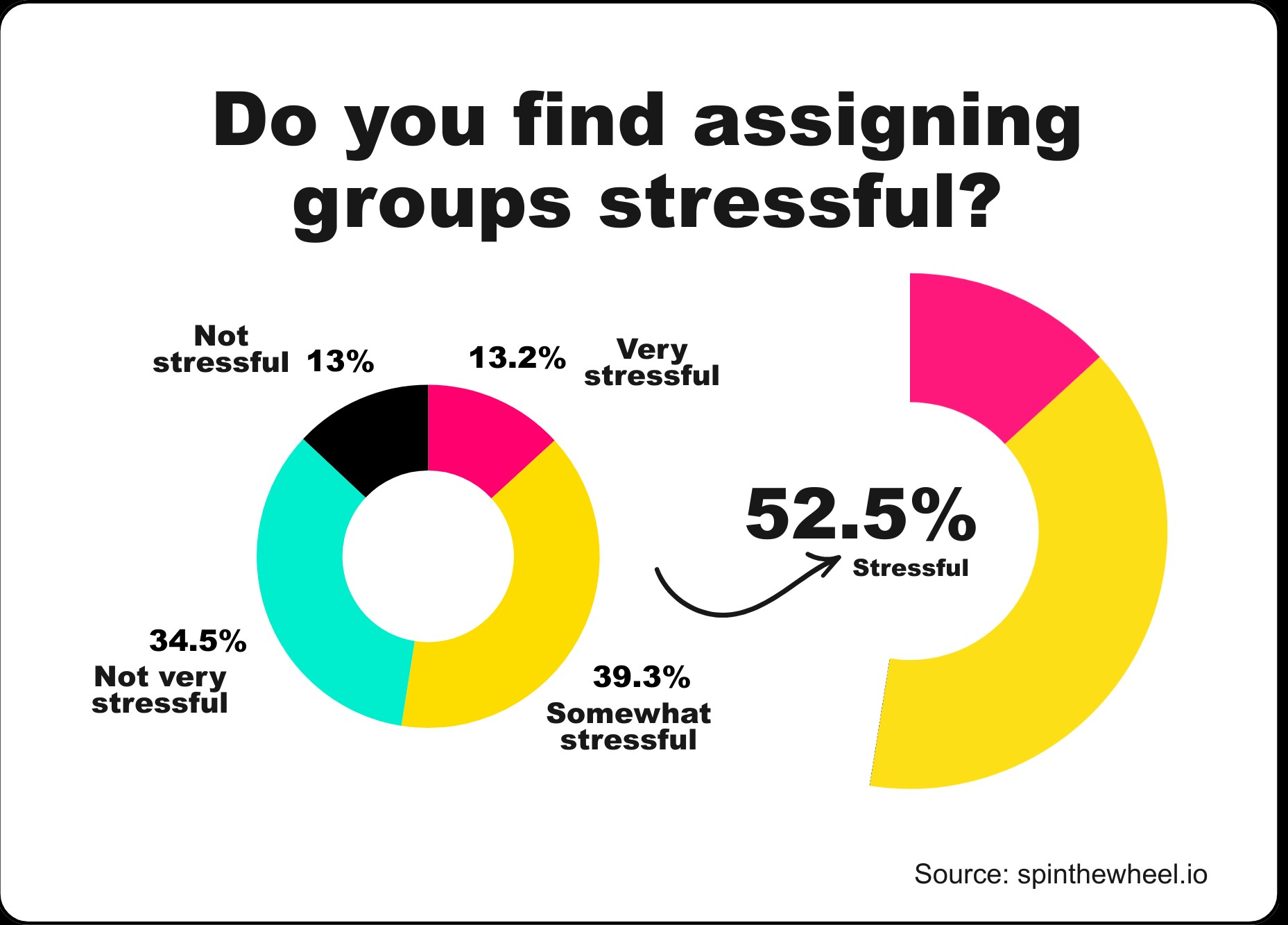
Although group allocation is often seen as a routine admin task, more than half of teachers describe it as stressful and say the emotional responsibility of getting it wrong weighs heavily on them.
Key findings
- 52.5% of teachers say forming student groups is stressful
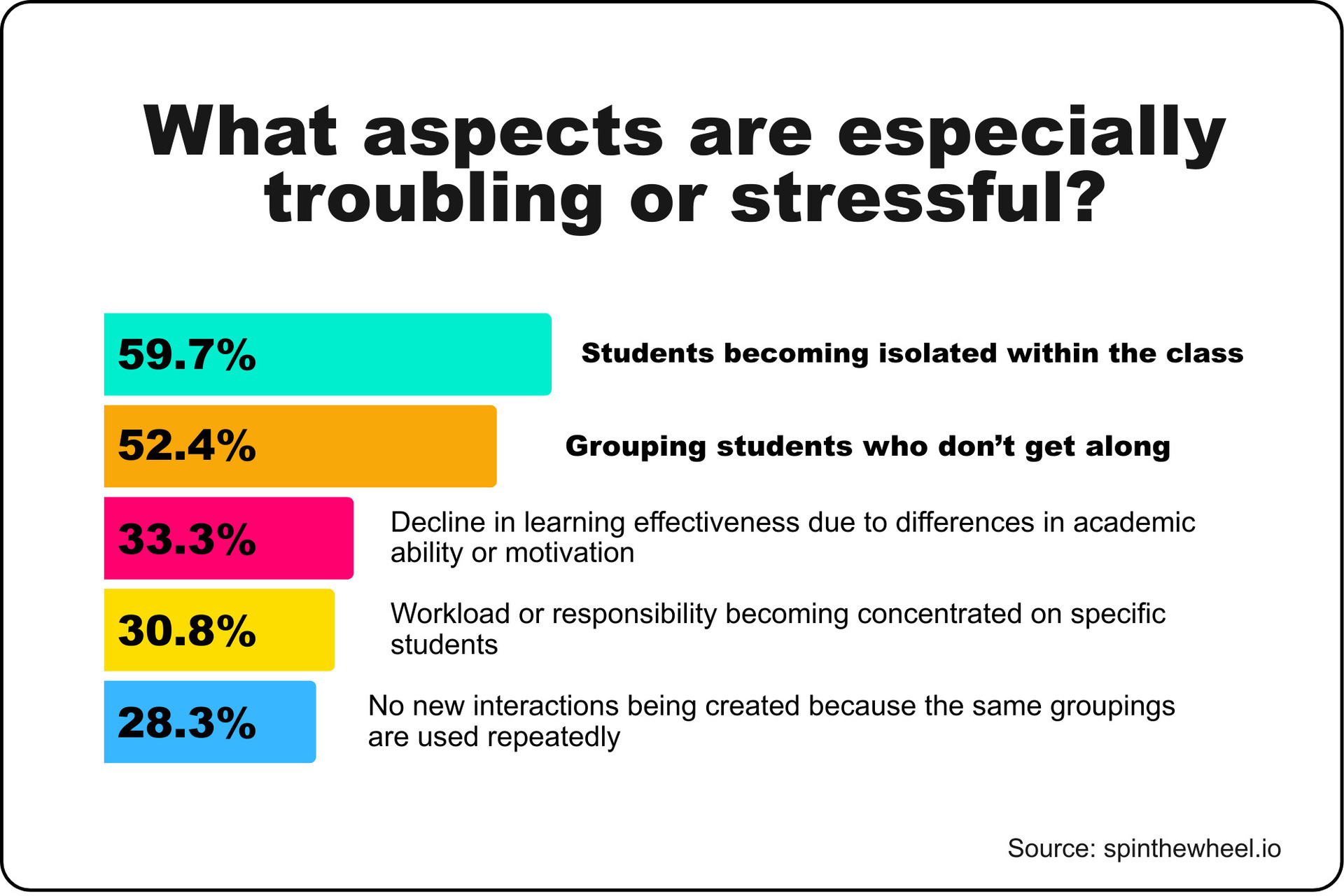
- 59.7% worry about a student becoming isolated within a group
- 52.4% are concerned about conflict or bullying arising from group combinations
- 40.3% say stress linked to grouping affects their wider teaching activity
- Over half believe digital random-selection tools could reduce pressure.
Teachers reported that the decision-making process is shaped by issues such as friendship dynamics, prior incidents, safeguarding concerns and the risk of complaints if a grouping leads to problems.
“One decision about who works with whom can change a child’s day”
Alan Phillips, CEO, Spin the Wheel, said:
“People often imagine that forming groups is a quick administrative task, but teachers know it can be a student-safety decision as much as a practical one. One decision about who works or sits with whom can change a child’s entire day — whether they feel included, ignored or singled out. That is a significant emotional responsibility to carry again and again during the school year.”
He added:
“This research shows that teachers are not just arranging seats. They are trying to prevent conflict, protect vulnerable students and manage social dynamics while teaching. It is no surprise that many find the process stressful.”
Digital tools seen as a way to reduce pressure and perceived bias
More than half of respondents said that using a digital random-selection tool such as Spin the Wheel could help reduce the stress associated with forming groups. They associated such tools with:
- Greater fairness and transparency
- Fewer accusations of bias
- Reduced personal responsibility for difficult outcomes
- Higher student engagement through a game-style experience
Commenting on this, Alan Phillips said:
“There is no suggestion that technology should replace professional judgement. However, when a fair and transparent tool removes the sense that every outcome rests on one teacher’s shoulders, it can ease pressure and free up energy for the work that matters most — teaching.”
Teachers who would like to try a digital random-selection tool for group formation can use Spin the Wheel at spinthewheel.io.
Methodology
The survey gathered responses from 600 teachers working in primary and secondary education. Participants included school leaders, full-time teachers and part-time instructors. Questions covered frequency of group allocation, time spent, stress levels, concerns about student wellbeing, and attitudes towards digital random-selection tools.
About Spin the Wheel
Spin the Wheel is a software app studio focused on developing digital tools and content-driven experiences that support decision-making and boost engagement across educational and professional environments. The flagship platform is used more than 6 million times per month and offers intuitive, visually engaging ways to make random choices for teachers, hosts, creators and teams. It is available at spinthewheel.io and as native apps on the App Store and Google Play. For more information, visit spinthewheel.io.
Media Contact
Angelika Attwood
theadmin@spinthewheel.io