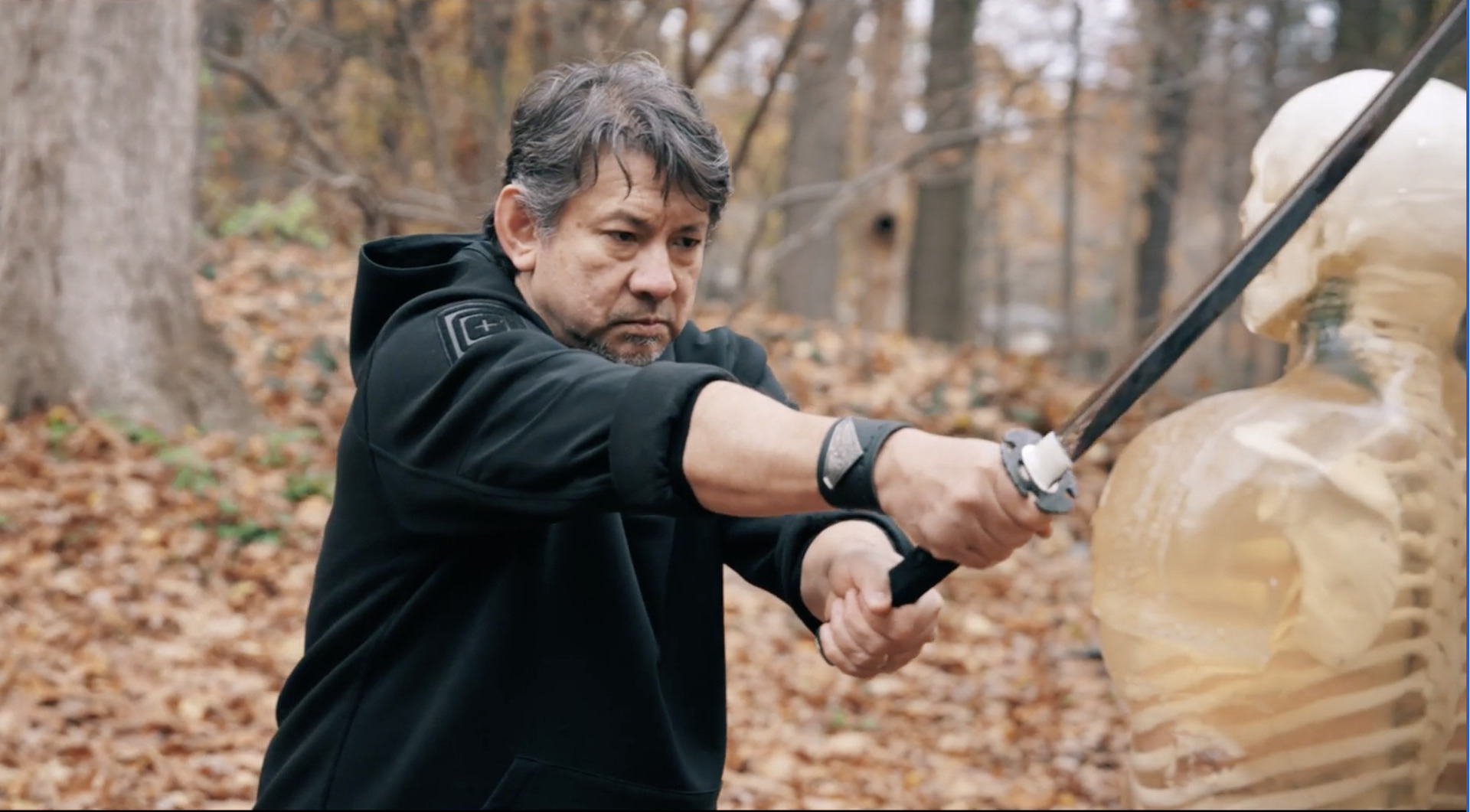

For over a decade, millions of viewers have watched Doug Marcaida swing blades into ballistic gel torsos and utter his signature phrase: "It will keel." The martial artist and "Forged in Fire" judge has become the global standard-bearer for what a functional blade should be; not a wall decoration, but a weapon that performs under pressure.
But when Marcaida personally tested a custom katana and called it one of his favorites, the blade community took notice. This wasn't a paid endorsement or a casual mention, it was the same evaluation he applies to every weapon on "Forged in Fire" — and this one passed.
Now, for the first time, everyday enthusiasts can commission the same caliber of custom katana that earned Marcaida's approval. The Swordis Custom Katana Builder has earned something rare in the blade world: validation from both the man who defines "functional" and independent industry reviewers like Matthew Jensen and Jesse Hu.
The Problem with "Sword-Like Objects"
Walk into any mall knife shop or browse the cheaper corners of Amazon, and you'll find katanas selling for $50 to $150. They look impressive on a shelf. But swing one at anything harder than cardboard, and you'll quickly discover the truth: these are "sword-shaped objects," not actual weapons.
"The barrier between 'toy' and 'tool' used to be thousands of dollars," explains one HEMA (Historical European Martial Arts) instructor. "Either you bought a custom piece well put together, or you took your chances with production-grade gear that might fail."
"Forged in Fire" changed this equation — not by making swords cheaper, but by educating the public about what makes a sword real. Terms like "differential hardening," "full tang," and "high-carbon steel" entered the mainstream vocabulary.
Suddenly, consumers knew what to ask for. In a market flooded with counterfeits and exaggerated marketing claims, independent reviewers serve as the consumer's last line of defense. Among the most respected is Jesse Hu, whose detailed video analyses have become the gold standard for sword evaluation.
Hu recently conducted a review of a high-specification katana from Swordis using their ShadowDancer line.
His verdict? The coveted "Jesse Seal of Approval."
The endorsement wasn't without caveats. Hu noted minor quality control issues — a habaki (brass collar) with imperfect fitment, a tip that needed sharpening. These are the trade-offs of hand-forged production at accessible price points. But the fundamentals were sound: proper differential hardening, a well-executed temper line, and a blade that could actually cut.
What struck Hu most was the value proposition. Custom-spec, differentially hardened blades with high-end fittings typically cost well over $1,000. Shadow Dancer delivers comparable results for significantly less.
The Marcaida Connection
Doug Marcaida's influence on the blade industry extends far beyond his television catchphrase. The Filipino martial arts master has spent his career defining what "functional" means — and his criteria are demanding.
In Marcaida's world, a blade must index correctly in the hand. The point must trail the wrist naturally. The steel must survive shock without structural failure. These aren't aesthetic preferences; they're the difference between a weapon that works in a real encounter and one that doesn't.
"I'm at the last quarter of my life, where now, my purpose is to share this passion," Marcaida has said of his current career phase. His goal isn't just entertainment — it's what he calls "a revival of manual literacy."
The Shadow Dancer builder aligns with this philosophy. By offering S7 shock steel, a material that makes blades "super durable", the platform caters to exactly the kind of stress testing Marcaida performs on "Forged in Fire." It's not just about tradition. It's about building a sword that won't easily break.
This convergence; Marcaida's educational influence creating informed demand, and platforms like Shadow Dancer meeting that demand with accessible custom sword making, represents a new era in blade culture.
The Democratization of the Blade
There's a certain irony in the current moment. For centuries, owning a custom, battle-ready sword was the exclusive province of the samurai class, and later, of wealthy collectors willing to spend five figures on Japanese antiques. The average enthusiast has only a few options.
"Forged in Fire" changed the conversation. Platforms like Swordis changed the game. And independent reviewers like Jesse Hu, Matthew Jensen and others provide the accountability that makes informed purchasing possible.
The result is a market where the barrier to entry for owning a world-class, custom-specified weapon has never been lower. Whether you're a martial artist seeking a training tool, a cutter looking for weekend fun with tatami mats, or simply someone who's watched Doug Marcaida swing a blade and thought, "I want one that would pass his test," the option now exists.
As Marcaida says: it will keel. And now, you can build your own.
Disclaimer
“Forged in Fire” is a trademark of the History Channel. Doug Marcaida appears by name for informational purposes only. All trademarks, images, and related intellectual property associated with “Forged in Fire” are the property of their respective owners. Swordis is not affiliated with, endorsed by, or officially licensed by the History Channel or “Forged in Fire.”