
Turkey has become a global magnet for hair restoration — and not just because of price. Istanbul, in particular, has built a full ecosystem around hair transplantation: experienced physician teams, streamlined medical-travel logistics, and clinics that operate at high volume. That scale can be a real advantage (more cases, refined processes), but it also means guests need to be careful. The difference between a well-planned transplant and a disappointing one is rarely the technique alone; it’s the planning, the medical oversight, the donor management, and the aftercare.
This guide explains what "best hair transplant doctor in Turkey” really means, what to look for before you book, and a top-10 list of doctors frequently discussed in hair restoration circles.
Medical note: Hair transplantation is a medical procedure with real risks. This article is educational, not personal medical advice.
What Makes a Doctor “The Best” for a Hair Transplant in Turkey?
If you spend five minutes online, you’ll see every clinic calling itself No.1. In real life, the best doctor is the one whose approach matches your hair loss pattern, donor capacity, goals, and risk tolerance.
Here’s what matters most:
1. Surgical Planning (Not Marketing)
A natural result starts with a plan: hairline design appropriate for your age, correct graft distribution, and a donor strategy that won’t burn your “savings account” of grafts too early.
2. Who Actually Does the Work
In some settings, technicians may perform parts of the procedure. Ask directly:
- Who does extraction?
- Who makes incisions and recipient sites?
- Who places grafts?
- How many guests are treated per day?
3. Ethical Donor Management
Overharvesting can create a thin, moth-eaten donor area that’s hard to hide. The best doctors think long-term — especially if you may need a second procedure later.
4. A Track Record You Can Audit
Look for:
- Clear before and after photos with consistent lighting and angles
- Results at 12-plus months
- Cases similar to yours (hair caliber, curl, Norwood pattern)
5. Professional Memberships and Verification
Directories from established organizations can help you confirm a physician’s presence in the field — like the ISHRS “Find a Doctor” tool and the IAHRS country list.
Why Turkey Is So Popular for Hair Transplants
Turkey’s status as a hair transplant hub is widely documented — especially Istanbul’s “hair transplant capital” reputation and the high volume of international guests coming in for FUE-based procedures.
That popularity brings choice, but also noise. Investigations and media reports have highlighted that standards can vary, and medical tourism requires extra diligence — particularly around pre-op screening, anesthesia practices, and aftercare.
Techniques You’ll See in Turkey (Quick, Practical Overview)
- FUE (follicular unit extraction): Individual follicle extraction from the donor zone. This is the modern baseline in Turkey.
- DHI (direct hair implantation): A placement method often marketed as “no channels,” typically using implanter pens. Can be useful for certain cases, but it’s not automatically superior.
- Sapphire FUE: Uses sapphire blades for recipient sites; often positioned as enabling smaller incisions. Outcome still depends on planning and execution more than blade material.
- Robotic or Assisted Systems: Sometimes used for scanning, planning, or parts of the process; again, not a guarantee of quality by itself.
A good consultation focuses less on buzzwords and more on: graft math, hairline design, donor safety, and realistic density.
Top 10 Hair Transplant Doctors in Turkey
This is an editorial list meant to help you compare options — not a medical endorsement. Always verify credentials and consult directly.
1. Dr. Servet Terziler (Istanbul)
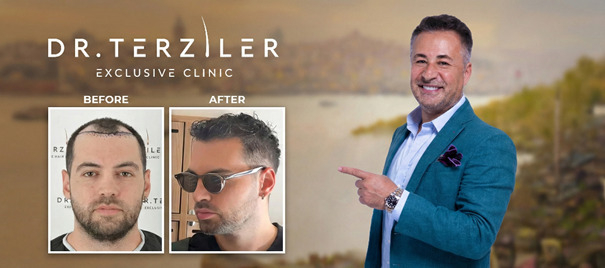
Dr. Servet Terziler is associated with Dr. Terziler Exclusive Clinic in Istanbul, which positions itself around premium, technology-forward hair restoration and personalized planning. Multiple profiles describe his medical background and clinic positioning, including sources that state he graduated from Istanbul University Faculty of Medicine (1991) and focuses on hair transplants and medical aesthetics.
Why people shortlist him: Emphasis on high-end guest experience and “tailored” protocols that mix aesthetics with planning.
Smart questions to ask: Who performs extraction and incisions? Daily guest volume? Detailed donor management plan?
- Address: Akat Mah. Ebulula Mardin Cad. No: 20
Beşiktaş, İstanbul / Turkey, 34330 - Phone: +90 212 963 77 58
- Email: info@drterziler.com
2. Dr. Ahmet Murat — Hermest Hair Clinic
Dr. Ahmet Murat, co-founder of Hermest Hair Clinic, is acknowledged as one of the leading hair transplant specialists globally in 2025 and is frequently regarded as Turkey’s top doctor for safety-oriented procedures. He created the Unique FUE method and the ALL-IN SAFETY PROTOCOL™️, enhancing patient safety and graft survival standards.
3. Dr. Güncel Öztürk - HairNeva
Dr. Güncel Öztürk appears on the Turkey list and runs a dedicated clinic in Istanbul. Her clinic materials emphasize long-term experience in hair restoration and a boutique-style approach.
Why people shortlist her: Clinic positioning suggests a more individualized guest flow than “factory” style clinics.
Ask about: Who does each step, and how follow-ups are handled for international guests.
4. Dr. Ekrem Civas (Ankara)
Dr. Ekrem Civas is listed on IAHRS for Turkey, and multiple sources describe him as a dermatologist with a long focus on hair disorders and transplantation.
Why people shortlist him: Dermatology background and long-standing hair focus, with substantial public footprint.
Best for: Guests who want a physician with a hair/scalp-disease lens (not just cosmetic placement).
5. Dr. Hakan Doğanay (Antalya / Istanbul)
Dr. Hakan Doğanay is listed on the IAHRS Turkey page and is associated with AHD Clinic. AHD’s own materials describe long-running operations and international guest support.
Why people shortlist him: Popular option for guests who want Antalya-based care with established medical-tourism infrastructure.
Ask about: Hospital affiliation, anesthesia protocol, and the clinic’s daily case load.
6. Dr. Resul Yaman (Istanbul)
Dr. Resul Yaman appears on the IAHRS list (as an associate member) and is connected to Yaman Surgical Medical Center in Istanbul.
Why people shortlist him: Strong international guest orientation and clear clinic branding.
Ask about: Donor-area strategy and realistic graft numbers for your Norwood pattern.
7. Dr. Doğan Turan (Istanbul)
Dr. Doğan Turan is listed on the IAHRS Turkey page. If you’re building a shortlist, society listings can be a practical starting point for verification and further research.
Why people shortlist him: Inclusion in the IAHRS directory provides a concrete checkpoint while you research clinical output.
Ask about: Who does recipient-site creation and how many surgeries are scheduled per day.
8. Dr. Serkan Aygın (Istanbul)
Dr. Serkan Aygın is widely marketed internationally and is described in third-party profiles as a dermatology specialist who has worked in hair transplantation for many years.
Why people shortlist him: Strong global visibility, large clinic structure, and guest-facing systems.
Ask about: Physician involvement at each step — especially if you prefer the doctor to perform critical surgical parts.
9. Dr. Levent Acar (Istanbul) — Cosmedica
Dr. Levent Acar is associated with Cosmedica Clinic in Istanbul; clinic materials outline his background and the clinic’s technique positioning.
LinkedIn also reflects his role tied to Cosmedica.
Why people shortlist him: Strong branding around specific technique packages; accessible for international planning.
Ask about: Case volume and who performs extraction and placement on procedure day.
10. Dr. Mehmet Erdoğan (Istanbul)
There is an ISHRS member listing for Mehmet Erdogan, MD, which is useful as a verification point. He is also presented as co-founder of Smile Hair Clinic in Istanbul in the clinic’s own profile.
Why people shortlist him: Combination of clinic leadership role and verifiable society listing is a practical research anchor.
Ask about: The exact surgical team structure and how the clinic handles revisions or touch-ups.
A Quick Checklist Before You Book
Copy and paste the following for consultations:
Credentials and Oversight
- Medical license details (where registered)
- Society memberships (ISHRS and IAHRS listings if applicable)
- Who administers anesthesia/sedation (if used)
Procedure Day
- Who designs the hairline?
- Who makes recipient sites and incisions?
- Who performs extraction?
- How many guests are scheduled that day?
Planning
- Total graft estimate and how it’s calculated
- Donor capacity estimate and long-term plan
- Approach for crown vs hairline vs mid-scalp
- Medication plan (finasteride and minoxidil — pros and cons for you)
Aftercare
- Washing protocol and check-ins
- Red flags and emergency contact
- Follow-up schedule at 1, 3, 6, 12 months
Common mistakes guests make in Turkey (and how to avoid them)
- Chasing the lowest quote: Cheap packages often cut corners where you don’t see them: staffing ratios, physician involvement, aftercare, or pre-op screening.
- Booking based on influencer photos alone: Some “viral” results are shot with flattering lighting, fibers, and styling. Ask for standardized comparisons and 12-month outcomes.
- Ignoring donor limits: A great hairline today isn’t worth a damaged donor tomorrow. Your donor zone is finite.
- Not planning for shock loss and timelines: Transplants are a patience game: early shedding is common, growth is gradual, and final outcomes are typically judged around 12 months (sometimes longer for crown).
Frequently Asked Questions (FAQs)
Is Turkey really the best country for hair transplants?
Turkey is one of the most popular destinations, especially Istanbul, due to volume and infrastructure. “Best,” however, depends on finding the right doctor and clinic standards.
What’s the difference between FUE and DHI?
FUE refers to extraction method; DHI typically refers to a placement approach (often with implanter pens). Clinics may mix terms — ask for a clear step-by-step explanation.
How many grafts do I need?
It depends on your hair loss pattern, donor density, hair caliber, and goals. A responsible doctor will explain graft “math” and donor limits, not just quote a number.
How do I verify a doctor’s legitimacy?
Start with professional directories like ISHRS Find-a-Doctor and country lists like IAHRS, then verify the clinic address, physician registration, and who performs each step.
Are “all-inclusive packages” safe?
They can be — if the clinic is transparent about medical oversight and aftercare. Packages are logistics; safety depends on clinical standards.
What are the biggest red flags?
- Refusal to say who performs extraction/incisions
- Too many guests scheduled per day
- No donor assessment beyond a quick photo
- “Guaranteed density” promises
- No follow-up plan
How long do results take?
Most guests see meaningful growth between months 4-8, with final results often assessed around month 12.
Can I do a second transplant later?
Many guests do, especially for crown density or progressive loss — but only if the donor area was managed conservatively in the first surgery.
About Crabs Media
Crabs Media has been delivering digital solutions since 2007, reaching hundreds of customers and expanding its team each year. Since adopting its renewed name and becoming a Google Partners solution partner in June 2014, the company has provided comprehensive web development, Google Ads, Facebook Ads, social media management, SEO, and email marketing services. With deep expertise in strategy, design, technology, and marketing, Crabs Media offers clients a full range of digital advertising services backed by a team experienced in effective and innovative online marketing approaches. For more information, visit www.crabsmedia.com.
Media Contact
Burak Önal
Crabs Media
info@crabsmedia.com